Can a nearby unit restart during maintenance? The S-OIL Onsan explosion
How were gas paths into the maintenance area isolated when parts of the process restarted?
30-second summary
At about 20:51 on 19 May 2022, a butane release at S-Oil’s Onsan refinery caused an explosion and fire, killing one contractor and injuring nine workers. The first-instance judgment on 15 January 2026 addressed isolation between equipment under maintenance and parts being restarted.
Equipment shutdown does not by itself prevent fluid reaching a work point. A partial restart requires review of open maintenance boundaries. The court outcomes below are first-instance findings; whether an appeal was filed has not been verified.
Work background and incident sequence
The incident occurred in the alkylate process, which uses butane to produce a gasoline blending component. Some equipment was under maintenance while other equipment operated. Butane escaped at the valve work area, followed by explosion and fire.
Firefighters escalated their response and worked overnight. Reporting of the fire authority’s announcement placed extinguishment at 16:57 on 20 May. Remaining flammable inventory prolonged exposure after the initial explosion.
On 11 August 2023, prosecutors announced charges against principal-contractor and subcontractor personnel and companies under occupational safety and chemical-control laws. They alleged inadequate risk assessment and safeguards, including closure arrangements for the valve work.
The announcement also described no-charge decisions on Serious Accidents Punishment Act allegations against the former chief executive and chief safety officer. Prosecutors considered actual authority and implementation of required procedures separately. These decisions did not resolve every other legal responsibility for the maintenance work.
On 15 January 2026, Ulsan District Court sentenced a production team leader to 1 year and 6 months of imprisonment without labor. Seoul Shinmun reported that the court found inadequate verification of gas isolation when directing a partial restart.
The plant manager received 10 months, suspended for 2 years; five other personnel received 8 months to 1 year, suspended for 2 years. Senior maintenance managers and the subcontracting company and its representative were acquitted.

The company’s KRW 120 million fine combined incident-related liability with separate safety violations identified afterward. A production executive’s KRW 20 million fine concerned a separate post-incident inspection violation, not the core explosion allegations. Those different outcomes must be kept separate.
Equipment and work principles
An isolation boundary is not created by drawing a line on a diagram. Identify potential flow through main, bypass, equalization and drain paths before selecting isolation. Actual connections and field identification matter more than equipment labels alone.
HSE HSG253 addresses selection, installation and verification of isolation. Appropriate arrangements depend on pressure, temperature, material and task. A single valve, double isolation with bleed, and positive separation have different limitations requiring equipment-specific assessment.
A zero reading may not represent another space if the connection is blocked or the gauge reads only a small isolated volume. Verify the instrument and the actual depressurization path. Low points may retain liquid, and trapped sections can later warm.
Conditions can change after isolation is tested. Restarting adjacent equipment or moving valves may repressurize the boundary. Define ownership of the isolation and changes that require revalidation throughout the maintenance period.
A permit communicates the conditions for opening particular equipment. An equipment number alone cannot describe isolation locations, test results or conflicts with other permits. HSG250 addresses coordination among tasks and permits as part of the permit system.
Maintenance completion comprises repair, closure, testing, personnel clearance, de-isolation and return to service. These may finish at different times. Partial restart authorization must not release isolation still needed for remaining work.
At PCA DeRidder, an adjacent tank retained a flammable atmosphere after water-pipe disconnection. At S-Oil, isolation against butane entering maintenance equipment was central. Both show the need to identify actual inventory and connections rather than relying on the task name or shutdown status.
Published chronology and investigation findings
Charging allegations and first-instance findings belong to different stages. Prosecutors’ allegations about risk assessment did not result in conviction on every charge against every defendant. The court reached different outcomes according to roles and conduct.
Statements urging an appeal were found, but an appeal filing or higher-court result has not been verified. The judgment is not described as final. Sites can still examine how they verify changes to operating and maintenance boundaries.
| When | Established account | Source |
|---|---|---|
| 2022-05-19 20:51 | Explosion and fire; 1 killed, 9 injured | Seoul Shinmun 2026-01-15 |
| 2022-05-20 16:57 | Fire extinguished | News1 2022-05-20 |
| 2023-08-11 | Charges and no-charge decisions announced | CBS 2023-08-11 |
| 2026-01-15 | First-instance outcomes by role | Seoul Shinmun/Busan Ilbo 2026-01-15 |
Consequences and emergency response
Both principal-contractor and subcontractor workers were harmed. Where operating actions affect contractors’ work points, progress must be coordinated across organizations. Separate completion reports do not establish safe restoration of connected equipment.
Approaching to manipulate more valves after a release can place people inside a flammable cloud. Predetermine shutdown points, remote stopping options and evacuation criteria rather than sending personnel into the release area.
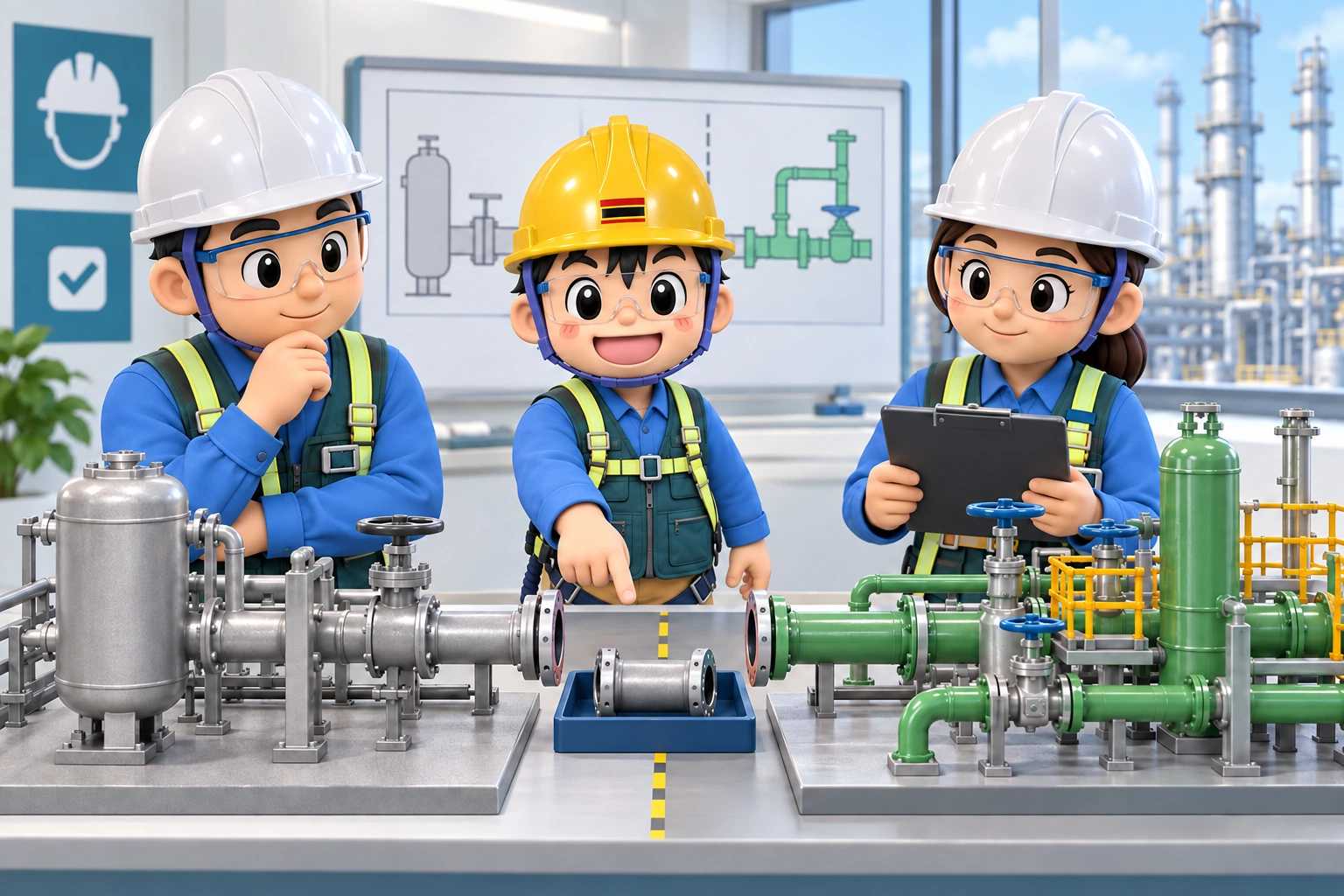
Questions for your site
| Question | How to check |
|---|---|
| Is the restart area connected to equipment still open for maintenance? | Mark bypass and common lines against field conditions and define the partial-restart boundary. |
| Where and how was isolation effectiveness tested? | Record depressurization, drainage and instrument verification, and revalidate changed conditions. |
| What happens to the permit if another team changes a valve? | Define responsibility and communication for suspending or coordinating affected permits. |
| Have remaining people, tools and openings been checked before de-isolation? | Have maintenance and operations confirm restoration and remaining work before authorizing de-isolation. |
Application at Korean sites
Comparable work in Korea is subject to the Rules on Occupational Safety and Health Standards, MOEL Ordinance No. 450, effective 2026-03-02. The following concerns present work; findings about the incident depend on its investigation and proceedings.
Article 277 specifies checks before use after repair or alteration and for changes of use, including feedstock. Connect corrosion review and maintenance records to return-to-service authorization.
Article 278 addresses task direction, prevention of hazardous material or hot-steam leakage, and flammable atmosphere testing during specified disassembly or internal work. First determine whether the proposed task falls within its scope.
Article 279 requires immediate work stoppage and evacuation where an imminent fire or explosion danger exists. It also requires restricted access and signs until the danger is confirmed absent.
References
- Seoul Shinmun (서울신문) · first-instance judgment dated 2026-01-15
- Busan Ilbo (부산일보) · first-instance judgment and separate violations · 2026-01-15
- Ulsan CBS (울산CBS) · indictment · 2023-08-11
- News1 (뉴스1) · fire extinguished · 2022-05-20
- HSE · HSG253 Safe isolation of plant and equipment
- HSE · HSG250 Permit-to-work systems
- CSB · PCA DeRidder, pp.24–30
- Rules on Occupational Safety and Health Standards (Korean)