What still supports the structure? The Ulsan boiler-tower collapse
Can the remaining members and connections carry the next stage of loads after preparatory demolition cuts?
30-second summary
At about 14:02 on 6 November 2025, Boiler Tower 5 collapsed during dismantling at Ulsan thermal power station, killing seven workers. Investigators examined preparatory weakening cuts. The essential demolition question is whether remaining members and connections can support the loads until the next stage.
Police booked client, main-contractor and demolition-company personnel on suspicion of occupational negligence causing death or injury. Later reporting identified residual strength after corrosion and the extent of cutting as issues. A demolition sequence needs to account for the actual condition of remaining members and loads at each stage.
Work background and incident sequence
Of nine workers present, two escaped and seven were buried. Further collapse threatened the search. Adjacent Towers 4 and 6 had also been weakened, making their stability a condition for rescue access rather than simply a debris-removal problem.
KTV reported on 11 November that search operations had been suspended for surrounding structural safety and that adjacent Towers 4 and 6 were demolished at noon to enable rescue work. Emergency rescue still required control of further collapse. Planning should consider access for responders as well as the workforce.
A joint inspection on 18 November examined the plan, actual work and cut locations and methods. Reporting highlighted weakening around 25 metres. Inspectors compared the cut condition of structural members with the planned method.
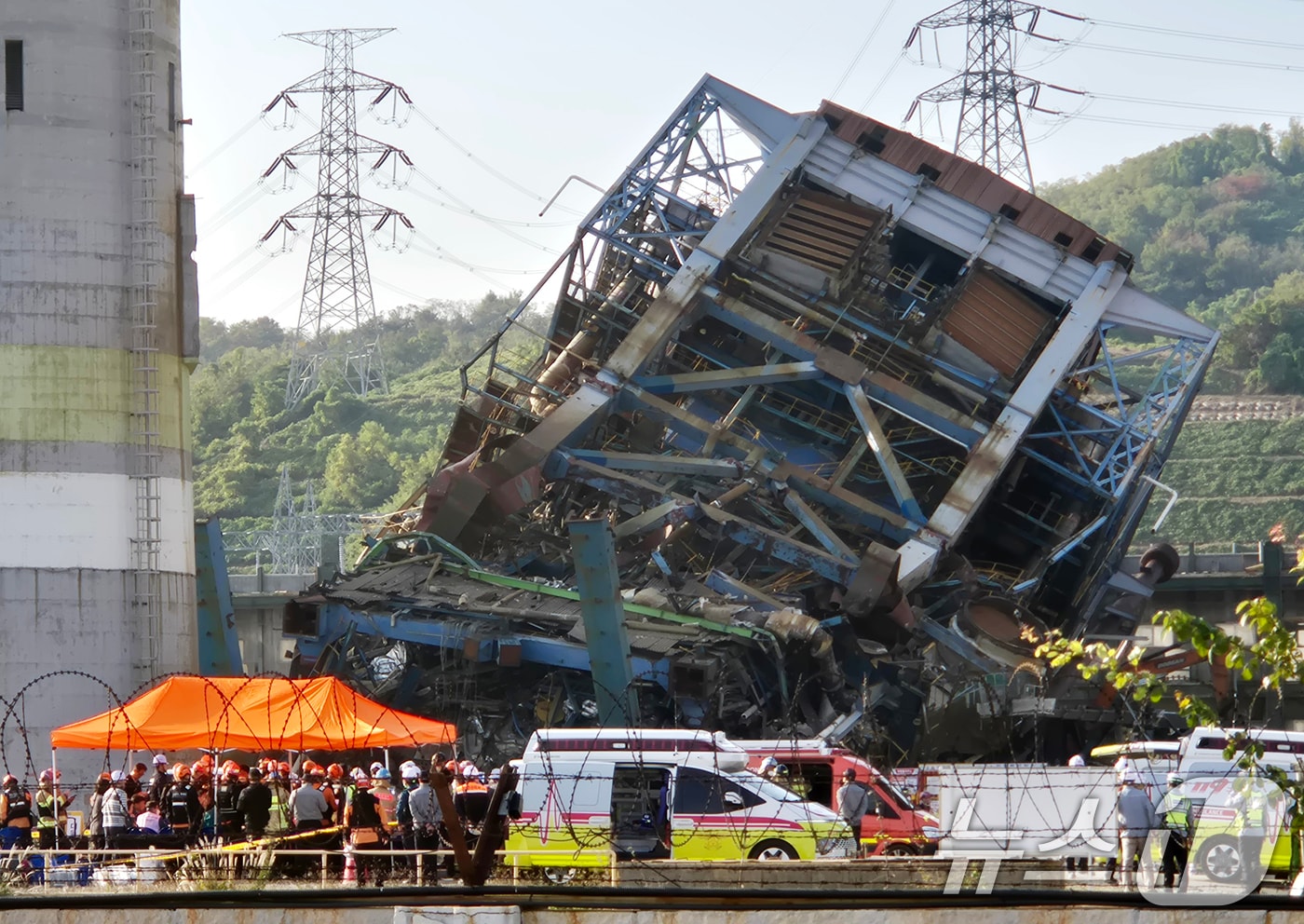
Following a second inspection on 3 December, police booked nine people. Ulsan MBC reported on 8 December that specifications required top-down weakening and that police were examining possible sequencing violations. The labour ministry was also examining serious-accident-law responsibilities.
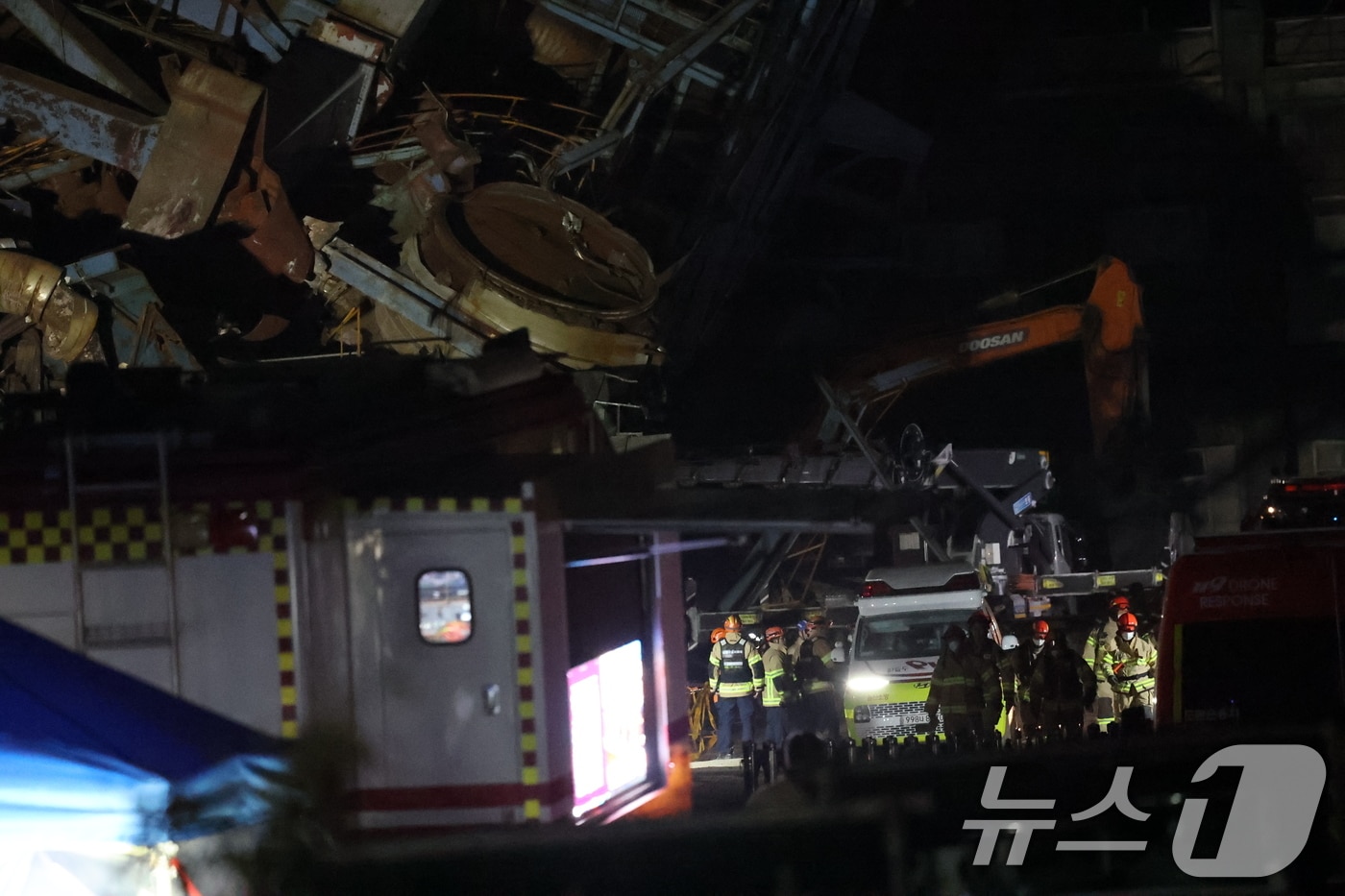
On 21 January 2026, Ulsan Maeil reported a forensic assessment of corrosion-weakened columns and cutting extent. Police said they were reviewing the findings but did not disclose details. The report also described earlier observations that cut geometry broadly matched the plan. The issue extended beyond drawing compliance to actual residual strength.
Equipment and work principles
Demolition changes load paths as members are removed. Parts that supported each other while intact may have different restraints after cutting. HSE guidance calls for stability at every stage and engineered temporary support where needed. Cutting and support installation must be planned as one sequence.
Preparatory weakening reduces resistance for the final demolition. Stability must nevertheless be maintained while people remain on or near the structure. Cutting extent cannot be chosen from access convenience or production rate alone; retained sections, connections and load paths need engineering assessment.
Original drawings are a starting point, not a measurement of present condition. HSE stresses adequate structural information and investigation. Record corrosion, modifications and missing members and feed differences back into engineering review. Equal cutting dimensions do not establish equal capacity when the remaining material differs.
Temporary support needs a defined load path and sequence: it must be effective before removal, stand on adequate support and remain effective after the next cut. HSE guidance calls for designed, installed and maintained support rather than reliance on customary practice alone.
Exclusion zones need review as structural state and demolition stages change. HSE calls for documented methods and sequences and controlled danger areas. A clear walkway is not permission to pass through a collapse zone. Coordinate other trades and equipment with the current exclusion plan.
At Didcot on 23 February 2016, a boiler-house collapse during demolition preparation killed four workers. ITV reported continuing police/HSE investigation in February 2026. This does not establish identical causes, but both involved major collapse before final demolition. Structural control must cover preparatory cutting, not only blast day.
Published chronology and investigation findings
January 2026 reporting stated that detention warrants for six contractor personnel were rejected on considerations including flight and evidence risks, defence rights and settlements. A detention decision addresses the need for custody during an investigation; it is not an acquittal on causation or negligence.
Practical review goes beyond possession of drawings: who checked condition, how the findings informed cutting and sequence, and whether revised instructions reached workers. Examine interfaces among client, designers and contractors without attributing unresolved causation to an individual worker.
| When | Established account | Source |
|---|---|---|
| 2025-11-06 about 14:02 | Tower 5 collapses; seven deaths | Hankook Ilbo 2025-11-18 |
| 2025-11-11 | Adjacent Towers 4 and 6 demolished | KTV 2025-11-11 |
| 2025-11-18 | Joint inspection | Hankook Ilbo |
| 2025-12-03 | Second site inspection | Ulsan MBC 12-08 |
| Reported 2025-12-08 | Nine booked; sequence investigated | Ulsan MBC |
| Reported 2026-01-21 | Corrosion/cutting findings reviewed; six detention warrants rejected | Ulsan Maeil |
Consequences and emergency response
All seven buried workers were recovered dead. Further-collapse risk constrained rescue access and methods. Escape and assembly arrangements need to account for overhead and adjacent structures, with work stopped and reassessed before entry when planned stability conditions change.
Questions for your site
| Question | How to check |
|---|---|
| Have load paths before and after cutting been reviewed? | Match retained members and support to the stage-by-stage engineering review. |
| Does cutting extent reflect current deterioration? | Feed survey differences back into the engineering assessment. |
| Have revised plans reached workers? | Connect approval, briefing and actual site condition. |
| Are adjacent structures and rescue access included? | Plan control and escape outside the collapse zone for the current stage. |
Application at Korean sites
Comparable work in Korea is subject to the Rules on Occupational Safety and Health Standards, MOEL Ordinance No. 450, effective 2026-03-02. The following concerns present work; findings about the incident depend on its investigation and proceedings.
Article 38(1)(10) requires prior investigation, retained results and a work plan for demolition. Work must follow that plan, and paragraph 2 requires workers to be informed. Changes in cutting sequence need a reviewed plan addressing loads and support of the remaining structure.
Article 51 requires compliance with drawings, specifications and demolition plans to prevent collapse under demolition loads, wind, vibration and impact. Article 52 requires safety assessment in specified circumstances, including additional loads and changes to principal structural members. Assess intermediate states as well as the intact structure.