Do not stand in the crush gap: The SK Energy Ulsan catalyst-replacement serious injury
How can the crush gap between forklift and steelwork be avoided while attaching bulk-bag loops to the forks?
30-second summary
At 2:36 a.m. on March 4, 2026, a contractor worker was seriously injured between a forklift-supported bulk bag and a steel structure during catalyst replacement in Ulsan. Busan Ilbo reported the incident on April 26. The worker had joined the previous day and was attaching the loops of a spent-catalyst bag to the forks.
The hazard includes the closing gap between the load and a fixed structure, not merely the direction of vehicle travel. If a person must approach the forks to attach loops, first establish an immobilized sequence and a protected position. Mutual visibility does not by itself remove the crushing hazard.
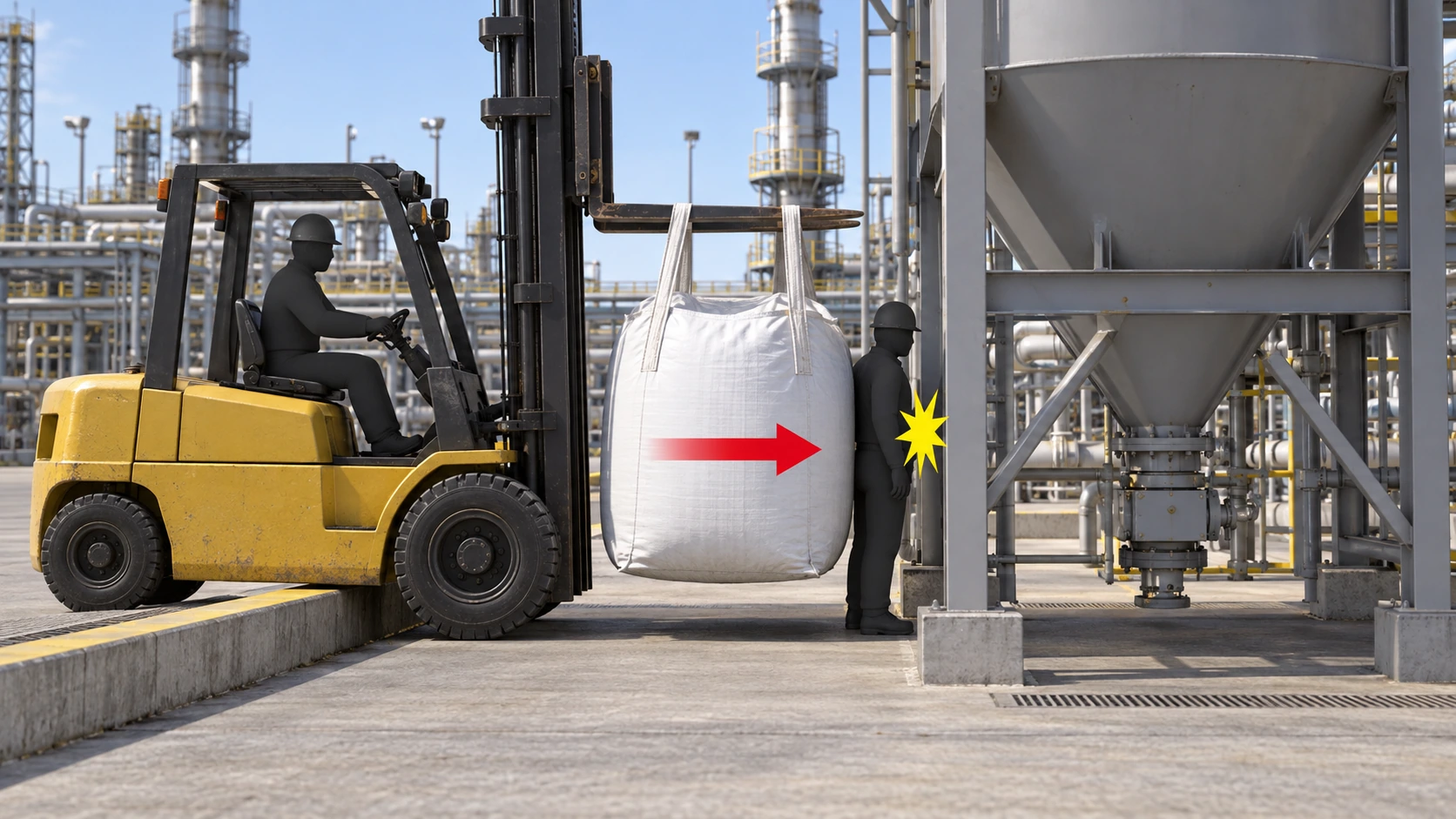
Work background and incident sequence
According to Busan Ilbo, the forklift caught on a bund edge while reversing, slipped and moved forward. The bag pushed the worker against the steel structure behind. Load movement and the fixed obstruction together formed the crushing space. Vehicle attitude at the edge and clearances between load and people require consideration in planning.
The worker was taken to hospital and underwent surgery. The article described serious injury and subsequent recovery. A hydrogen-pipe explosion at the same principal contractor’s premises in the previous year was a separate incident; its casualties must not be added to this catalyst-replacement incident.
The article reported a labor-authority investigation into alleged occupational safety breaches by the principal contractor and subcontractor. The adequacy of induction and instruction requires investigation. Deployment the day after joining does not alone establish that no training occurred; assess the actual hazards and deployment arrangements.
Equipment and work principles
A bulk bag changes shape with its contents and suspension points. Attaching or releasing loops can tilt the load or reduce personal space even with stationary forks. Small vehicle movements can move the bag towards a fixed structure. Assess escape clearance separately during attachment, lifting and reversing, rather than from a static load position.
A bund edge limits liquid spread but creates a level change for vehicle movement. Planning needs to cover crossing position, wheel contact, load height and waiting positions. Any temporary vehicle-access arrangement also requires assessment of its effect on the bund’s containment function.
HSE workplace-transport guidance prioritizes physical separation of pedestrians and vehicles. Separate the attachment stage from normal travel and define signals permitting approach and restarting movement. A signaller needs a visible position outside gaps between vehicle and wall, beneath loads or in the load’s crushing path.
A new worker needs more than generic forklift warnings. Demonstrate the attachment position, when the vehicle is stopped and how movement is halted if the operator loses sight. At night, examine lighting and shadows from both viewpoints. These are arrangements for comparable work, not a finding that training was absent in this incident.
In a pipe-handling case in the MOEL’s 2024 white paper, a pipe rolled from forklift forks and crushed a worker placing chocks inside a rack. The load differs from a bulk bag, but both tasks expose a person entering the load’s movement area to secure it. Combining signalling and securing can change the person’s position during handling. Establish a sequence and space that avoid entering between loads before they are stable.
Published chronology and investigation findings
| When | Established account | Source |
|---|---|---|
| 2026-03-03 | Worker joined the employer | Busan Ilbo joining-date paragraph |
| 2026-03-04 02:36 | Crushed between bulk bag and steel structure during catalyst replacement | Incident paragraph |
| Outcome | Serious injury; hospital treatment, surgery and recovery reported | End of incident paragraph |
| 2026-04-26 | Investigation of alleged breaches reported | Labor-authority paragraph |
Consequences and emergency response
Moving the load arbitrarily to release an injured person can worsen crushing even after the vehicle stops. Communicate the positions of vehicle, load and fixed structure when requesting rescue, and control movement while responders approach. Emergency plans need access routes and command arrangements for confined crushing spaces.
A review should cover the route across the bund, attachment method and position beside the fixed structure, rather than operator behavior alone. Consider whether the task can avoid a person standing close to the forks. Any revised attachment or accessory must match its permitted use and rating.
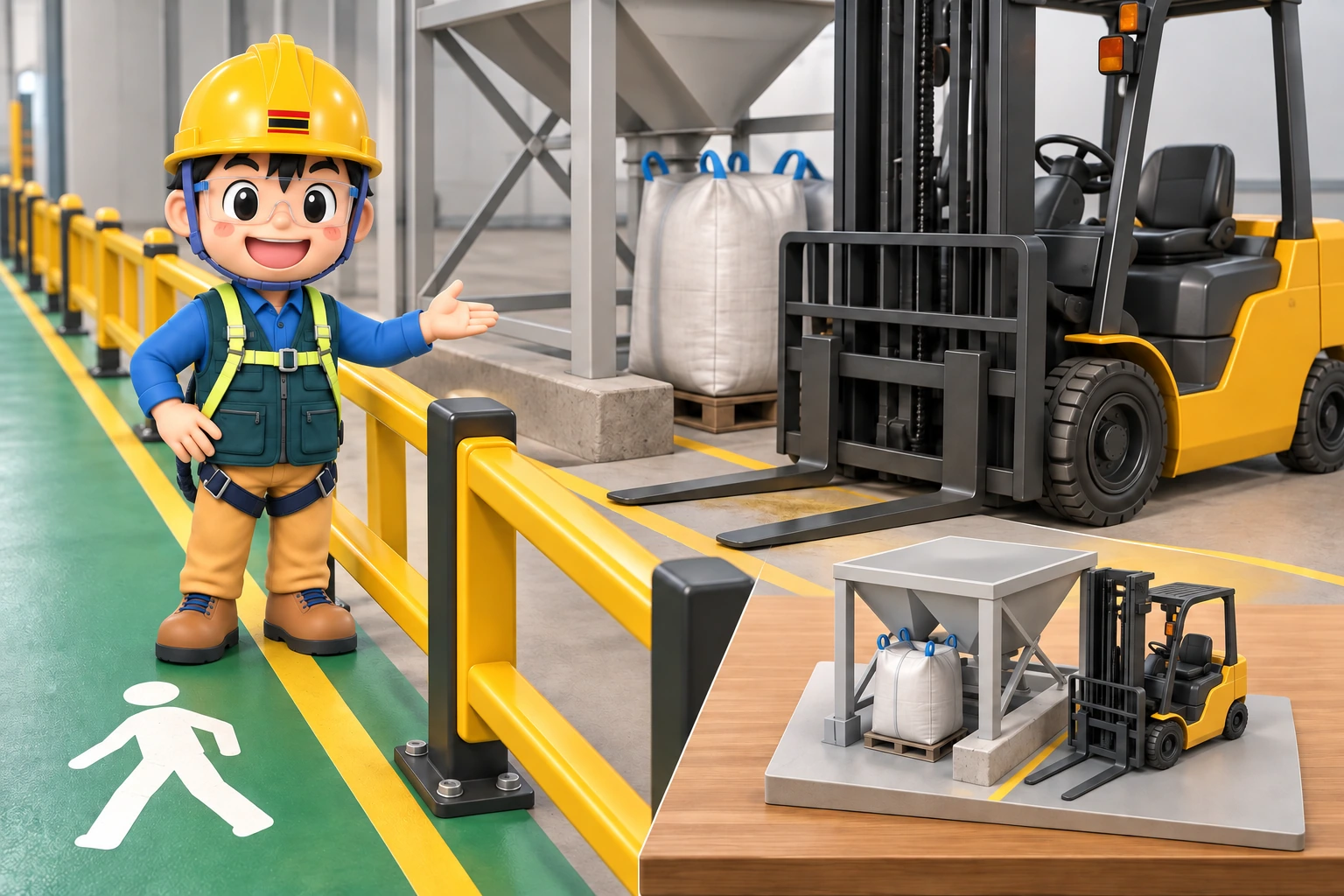
Questions for your site
| Question | How to check |
|---|---|
| Is vehicle movement reliably stopped during attachment? | Confirm approach and restart sequences with both people. |
| Does anyone enter the gap between the load and structure? | Review positions for attachment, lifting and reversing on site. |
| Has the route across the bund edge been assessed? | Review level changes, wheel contact and containment with facility personnel. |
| How is movement stopped when the operator loses sight of the worker? | Test night-time visibility and signals from actual positions. |
Application at Korean sites
Comparable work in Korea is subject to the Rules on Occupational Safety and Health Standards, MOEL Ordinance No. 450, effective 2026-03-02. The following concerns present work; findings about the incident depend on its investigation and proceedings.
For forklift operations, assess the vehicle-handling scope of Article 38 and prepare the required investigation and Annex 4 plan. Include bund edges on the route and the position of the person attaching the load in the actual survey.
Article 39 requires task direction for specified plans and sets exceptions for vehicle handling. Where people attach and guide loads, assess actual access and collision exposure.
Article 172 restricts access where vehicles or transported loads may endanger people and provides conditions for directed movement. Operators must follow the direction. Align waiting positions and approach and movement signals with these requirements.