Observe pipe supports and insulation cladding before handover
Identify the pipe section, separate support and cladding observations, and connect visible changes to assessment and reinstatement checks.
Identify the pipe section and viewing position
Identify the pipe and section before examining a support. Parallel lines sharing a column are not necessarily the same system. Match field identification to the drawing and record a nearby bend or branch that helps relocate the point. If identification is unclear, ask operations instead of completing the check under an assumed name.
Start from the normal walkway. Do not enter between equipment or climb supports to see behind or beneath a pipe. Retain unseen surfaces as unverified and include the required access method in maintenance preparation. If falling cladding or parts appear possible, move away and request access control before attempting a closer photograph.
Agree on viewing direction when several people inspect the same support. “Left” or “behind” may identify a different part to someone approaching from the opposite direction. Use pipe direction, column face and visible connections to locate the finding, linking overall and detailed views. Record viewing restrictions rather than guessing about inaccessible areas.
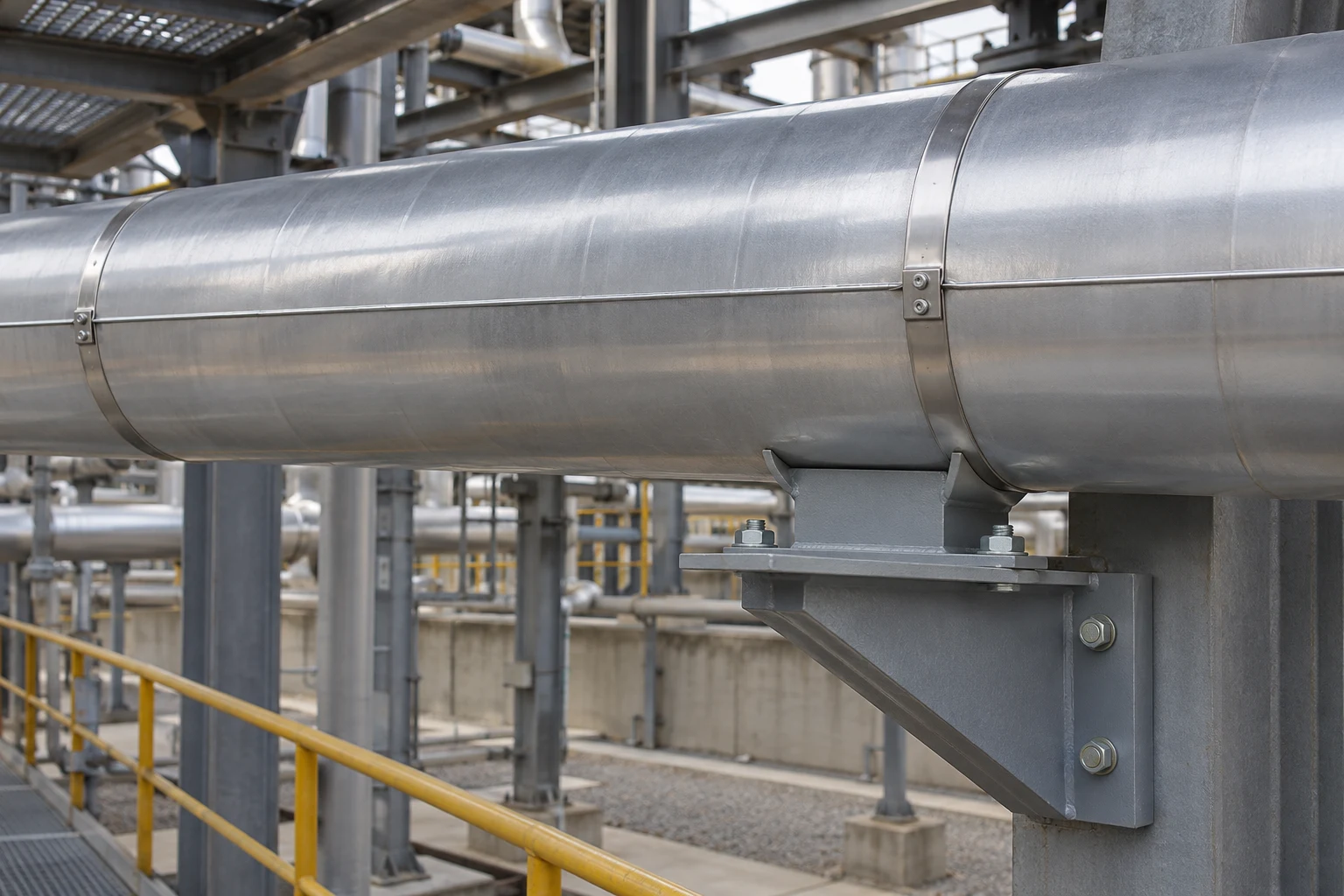
- Cladding: distinguish visible dents and damage locations.
- Cladding seam: record the location of open or lifted edges.
- Fastening band: report visible displacement or interference without handling it.
- Pipe support: report visible changes to the bearing plate and connections.
Separate corrosion duties from visual observation
Article 256 addresses prevention of explosion, fire and leakage caused by corrosion of parts contacting specified hazardous substances in applicable chemical equipment and piping. Exterior rust alone does not establish internal thickness or fitness for service. Report visible changes as information for the team defining the equipment assessment.
KOSHA GUIDE B-M-20-2026 covers visual inspection of hangers and supports for damage, bending, corrosion and displaced base plates, with records of findings. Describing visible condition differs from evaluating load and displacement requirements. Visible bolts or an upright support do not prove adequate supporting function.
If an undocumented temporary support or changed fixing is visible, request its installation basis and review record. Longstanding presence does not establish an approved arrangement. Describe discrepancies between the equipment and records and have the responsible team assess them; do not remove or reposition parts to restore an assumed original condition.
Separate observations of the bearing and fixing
Distinguish the part carrying the pipe from the part connecting it to the structure below. Record base-plate position, visible bolts and fixings, and apparent bending of auxiliary steel separately. Explain which face was checked if one photograph cannot show everything. Do not mark hidden fixings complete or assume they match the other side.
Compare an apparently changed position with earlier information from the same direction. Operating conditions and support design affect the movement that requires assessment. Do not tighten bolts or push a part back merely because a difference is visible. Give operations the observation time and conditions, separating the difference from assumptions about its cause.
Report materials resting against or hanging from the support, including their contact position. Moving them may disturb the pipe or support, so agree ownership and a safe method first. Link the finding to work preparation to prevent use as a storage hook or temporary step, and have remaining deformation or damage checked separately after removal.
Handover sequence
| Stage | Owner | Decision or check | Record |
|---|---|---|---|
| Prepare | Inspector | Identify the pipe and the area visible from a safe position. | Location and viewing direction |
| Inspect cladding | Inspector | Separate visible dents, gaps and wet areas. | Condition by location |
| Inspect supports | Inspector | Observe supports, bearing points and visible fasteners. | Component and surroundings |
| Report findings | Inspector and equipment owner | Separate observations from items requiring further assessment. | Findings and owner |
| Plan follow-up | Equipment owner | Assess the inspection scope and safe work conditions. | Follow-up plan |
| Hand over records | Equipment owner and next inspector | Carry forward confirmed results and unresolved items. | Results and open items |
Distinguish insulation cladding from the pipe inside
On an insulated line, the metal jacket, bands and seams are visible first. Locate dents, openings or missing cladding by face and joint. Intact cladding does not verify the underlying pipe, while damaged cladding does not establish the extent of internal corrosion or leakage. Report the observed part accurately for further assessment.
The piping checklist in the KOSHA practical guide distinguishes damaged or missing insulation from possible infiltration and retention of leaked liquid. Report visible wetness or staining and its location to operations. Do not approach to identify a substance by smell, touch it or open the cladding gap to inspect beneath it.
If a band or cladding edge appears lifted, also describe its relationship to pedestrian access. Do not press it down by hand or tape it over and close the finding. Report any access hazard and let the maintenance team determine repair methods and conditions after reviewing the equipment and materials. Keep visible cladding and hidden internal checks distinct.

Distinguish urgent conditions from routine records
A stain and an active release or apparently unstable part require different priorities. If imminent leakage or falling-object danger is suspected, move away and notify operations and the response system rather than approaching for more evidence. Identify the location and approach direction so others do not enter before necessary precautions are arranged.
Routine records should include both observations and unverified matters. Combining a stain beneath cladding with an assumption of an internal leak may imply a confirmed diagnosis. Describe the visible face, form and time separately from the unknown cause. If using an earlier photograph, confirm that it depicts the same section.
After reporting, connect the finding to management of the affected location. A report alone may leave other teams unaware of a required access restriction. Confirm responsibility and communication and inform affected work teams of current conditions. The observer should not switch roles to plugging a leak or propping up the support.
Provide information for work preparation
Give operations information identifying the pipe and current conditions, and maintenance the visible defect and access requirements. Make the requested check clear even when sharing the same photograph. Record support displacement and cladding damage separately so completion of one does not close both. Include any related work already under way.
Removing cladding, repairing a support or using inspection equipment requires preparation beyond routine observation. Review the equipment and substance, temperature and pressure hazards and connect the task to a team with the necessary authorization and precautions. Do not loosen bands, remove pins or adjust spring settings to assist an inspection; report visible identity and condition instead.
Keep outstanding status visible if repair cannot be scheduled immediately. Identify the reviewing team, current access or service restrictions and where the result must return. Preserve information that lets a different person find the same location and link new changes to the earlier report. Distinguish temporary management from final reinstatement.
Link reinstatement to the original findings
Compare the reported repair scope with the original location and items. Distinguish cladding restoration from assessment of the support, and separate maintenance verification from what is visible on re-observation. New cladding does not prove completion of an assessment of the hidden pipe. Close evidence-dependent items only by linking the relevant records.
After support adjustment or replacement, an observer should not declare completion merely because the position resembles an earlier view. Record the work team’s scope and verification and reconcile remaining restrictions with operations. Update identity and location information if the routine observation target has changed so the next person checks the current arrangement.
Check remaining materials, tools and temporary access controls separately from equipment repair. Completed repair may still leave the walkway altered by maintenance materials. Coordinate cleanup and obtain release decisions through the established responsibility structure. Close-out should show both reinstated items and anything passed to later verification.
Make the location findable on the next round
The recipient should reconcile photographs and location descriptions with the same physical part. A support number or an overall cladding photograph may not identify the inspected face. Link location, checked face and current status and mark remaining observations. Use the local recording system while distinguishing observed facts from maintenance judgments.
Re-observe the present condition rather than copying the previous record. Distinguish a new change from difficulty comparing a different viewpoint. Retain a limitation when the condition cannot be checked. Refer repeatedly inaccessible points for better access or identification arrangements instead of resolving them through unsafe approach.
Pipes, supports and insulation cladding are connected but remain different inspection targets. Match the location, separate visible changes and refer them for appropriate specialist checks. Observation is an information-transfer process, not an opportunity to test equipment by hand. Link findings and results to the same target so unresolved conditions remain visible in subsequent preparation.