Checking maintenance authorization after a reported backup-power transfer
After a backup-power transfer is reported, distinguish indications from confirmed supply and recheck the contractor permit and access boundary.
Pause work when a transfer is reported
A crew preparing maintenance near special chemical equipment hears from operations that the supply has changed. The message does not yet identify which equipment transferred. The permit lists the location and isolation conditions checked earlier. The lead pauses tool entry and accounts separately for personnel already inside and those waiting. The first report should include location, ongoing work, personnel inside and the boundary that needs confirmation. Matching the affected equipment to the contractor's scope helps avoid continuing affected work or suspending unrelated work.
When lighting drops or an alarm sounds, workers may focus on the task in front of them. Between loss and restoration of power, lighting, access equipment, nearby equipment and the job location can change in different ways. Report changed conditions to the work lead instead of guessing whether the task can continue. Follow the directed route without crossing barriers. If communication is lost, keep the confirmation unresolved and follow the site emergency procedure.
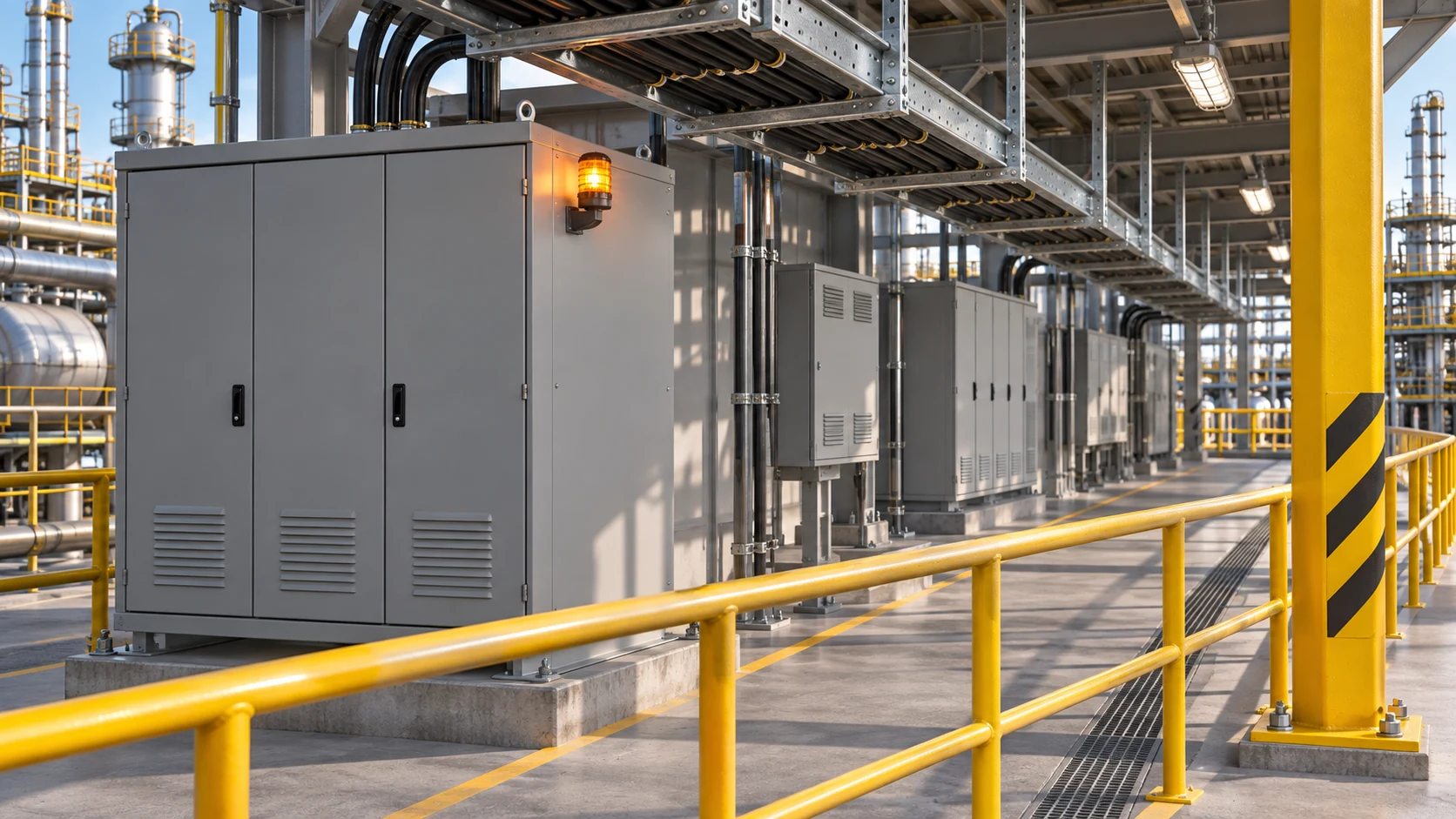
- Power cabinet: Match the permit equipment to the observation point.
- Amber indicator: Record a lit lamp separately from verified supply.
- Overhead cable tray: Report where it crosses the work area.
- Yellow boundary post: Confirm access before choosing a tool-entry route.
Separate indications from confirmation of supply
A lamp may visibly be lit, but its meaning depends on the equipment. Combining a field lamp observation with the transfer reported by operations makes two kinds of evidence look interchangeable. Record the lamp location, readable identifier and time separately. It is reasonable to report a lit indicator while leaving the source of supply unresolved. Also distinguish electrical personnel's confirmation of actual supply from operations' confirmation of protective functions.
A waiting crew may first notice a lamp on a neighboring cabinet. In a row of similar enclosures, color and position alone do not identify the job equipment. Include both the permit equipment reference and the observed cabinet location in the request. If a label is obscured, do not open a door or cross a barrier to read it. Separate what can safely be observed from what another function must verify so the next shift can retain the restrictions without repeating the same investigation.
Which permit conditions may have changed?
A permit covers the equipment, scope, access boundaries and safeguards. Following a transfer report, ask operations and electrical personnel about the parts within their respective responsibilities. Establish whether electrical isolation, access or work holds changed and how already-staged tools should be handled. A phone report that supply returned does not resolve every item. Record each response against the specific condition it confirms and leave other items open.
A closed enclosure or quiet equipment does not establish electrical status. Determining the relationship between normal and backup supplies or approaching terminals belongs to authorized personnel following their procedure. Distinguish a request for confirmation from confirmation received. If someone proposes a different task while waiting, recheck the original authorization's scope. Before restarting, the crew should know who can verify the permit and how to reach them.
Handover sequence
| Stage | Owner | Decision or check | Record |
|---|---|---|---|
| Receive | Crew | Pause the job and account for people | Location and time |
| Identify | Work lead | Match permit to equipment | Equipment |
| Observe | Crew | Separate indication from report | Indicator location |
| Request | Electrical and operations | Confirm respective conditions | Response scope |
| Handover | Shift crews | Review holds and waiting points | Open items |
| Restart check | Work lead | Reconcile permit and access | Authorized scope |
Keep responses from different functions distinct
Operations can confirm process and protective function status, while electrical personnel confirm supply and relevant isolation. Area control communicates access restrictions and the work lead reconciles the permit for the crew. Several functions may report completion for the same unit, so identify which item each confirmed. Treating an operations response as electrical isolation or an open route as authorization to resume can lead to a wrong field decision. Check the other conditions even when one response has arrived.
When a crew is split across locations, relayed messages can alter equipment names or boundaries. Read back the area and reference in the original response, then confirm each crew's waiting point and restrictions. Do not change a field sign to match a conflicting record. Tell the function controlling the restriction what sign remains and where. Clearance for another crew is not evidence that your own work is authorized.

Check passage and tool entry separately
After a work hold, someone may want to move equipment out or go back for tools. Permission to walk through a route may not cover moving equipment or approaching the installation. Recheck the waiting and staging areas and record where tools remain. Do not retrieve items that require an unauthorized return to the work location. Brief the entire crew on changed boundaries before anyone moves.
When reporting personnel still in an area, include their last confirmed location and time. Accounting for people is distinct from re-entering to inspect equipment. Report urgent hazards through the site emergency procedure. While waiting, record directions received and responses still needed separately. If barriers move, describe the entry side and new limits, not just the old route name, so another crew approaching from elsewhere can find the same boundary.
Backup-power requirements and the crew's role
Article 276 of the Korean occupational safety and health standards addresses reserve motive power for special chemical equipment and its auxiliaries. Article 308 covers emergency power where sudden stoppage could cause a disaster such as fire or explosion. Check applicability against the actual installation and hazard. The contractor passes the job location and open questions to electrical personnel and operations, who can verify actual conditions, rather than inferring the meaning of a lamp or the extent of supply from the provisions.
Automatic transfer, supplied loads and possible restart depend on the installation. Maintenance records equipment identity, permit scope, reported changes and confirmations from each responsible function. Restoration of supply leaves restart potential and isolation as separate permit checks. If unusual sound or odor is suspected near an electrical room or enclosure, hold access and report it under site procedure rather than approaching to investigate.
Read back restart conditions at shift change
A shift record saying “power normal” does not show who verified supply or whether the permit is valid again. Separate equipment location, confirmed items, outstanding responses and the scope on hold. After authorization is confirmed, check the controls still posted at the entry. If the record and field differ, hold restart and identify the location and task affected. A read-back of the same equipment and restrictions exposes omissions.
Operations may report protection status before electrical personnel or the work lead respond. Preserve confirmations in sequence so the record shows when each condition changed. Brief separately the teams resuming and those still waiting in the same area. If another supply change is reported after restart, recheck the current crew location and permit instead of carrying the old confirmation forward. Walk through the updated boundary with the crew before resuming.
Record what remains after the supply changes
If nearby equipment may move after power returns, its change can affect work even when it was outside the original task. Include people and access directions in the restart request, along with the equipment identifier. Ask electrical personnel how the job equipment relates to supply and ask operations about work conditions nearby. Maintain the applicable hold until each required response arrives.
If indicators change several times after supply returns, do not use one observation as the conclusion for the entire record. Keep observations in time order and link them to items actually confirmed by electrical personnel. A report received after a break is not a firsthand observation. Distinguishing older observations from current responses reduces unnecessary approaches to the cabinet.
When another crew checks equipment supplied by backup power, establish how the relevant permits relate. Crews in the same area can use different circuits and routes and face different restrictions after transfer. Record each crew's job and waiting location and obtain updates from the function controlling the boundary. A tool retrieval by one crew is not a signal for another to approach equipment. Record changes to field signs separately.
When clearance comes by radio, read back the equipment and scope in plain field language. Communicate supply confirmation and barrier release separately rather than merging them into “all clear.” Hold work if the message or equipment name is unclear. When crew members received conflicting instructions, show the discrepancy to the function maintaining the current record and confirm how the response applies to the permit.
At completion, record when maintenance finished and when supply status was confirmed separately. A response about a different load is not evidence for completing your job. If an issue that could affect protection remains, give operations the related work location and boundary. Confirm that the receiver can distinguish where work is allowed and where the crew must still wait. Organize entries by permit scope rather than grouping similar job titles.
Temporary lighting does not establish that lighting has returned throughout the area. Confirm what can be traversed safely and the electrical isolation status separately. If any entry condition remains unresolved, agree the waiting point with the work lead and hold tool entry.