Verify safety functions before closing maintenance actions
After an action is reported complete, establish what has actually been restored. Distinguish protective function, test evidence and permit completion before return to use.
Checks that remain when completion is reported
When maintenance personnel report that a corrective action is complete, distinguish the work performed from the conditions for returning equipment to use. A replaced part, a guard back in position and a functioning protective feature each call for different evidence. The recipient first checks the work object and completed scope, then separates the evidence needed for visual and functional checks. Connect the results to permit completion and operations handover.
Article 92 of Korea's Occupational Safety and Health Standards Rules addresses stopping machinery and preventing operation by others during maintenance where workers may be endangered. Article 93(2) requires protective devices to be capable of normal function after repair, adjustment or replacement. Together they distinguish protection during work from restoration of protection afterwards. One completion message does not establish both conditions.
Define the function, method, acceptance criteria and verifier for the equipment and approved site procedure. Tell the action owner which evidence is missing from the completion criteria. If a test cannot be performed safely, leave verification incomplete and refer the return-to-use decision to the responsible person. Record the reason and the next verifier so outstanding work remains identifiable when personnel change.
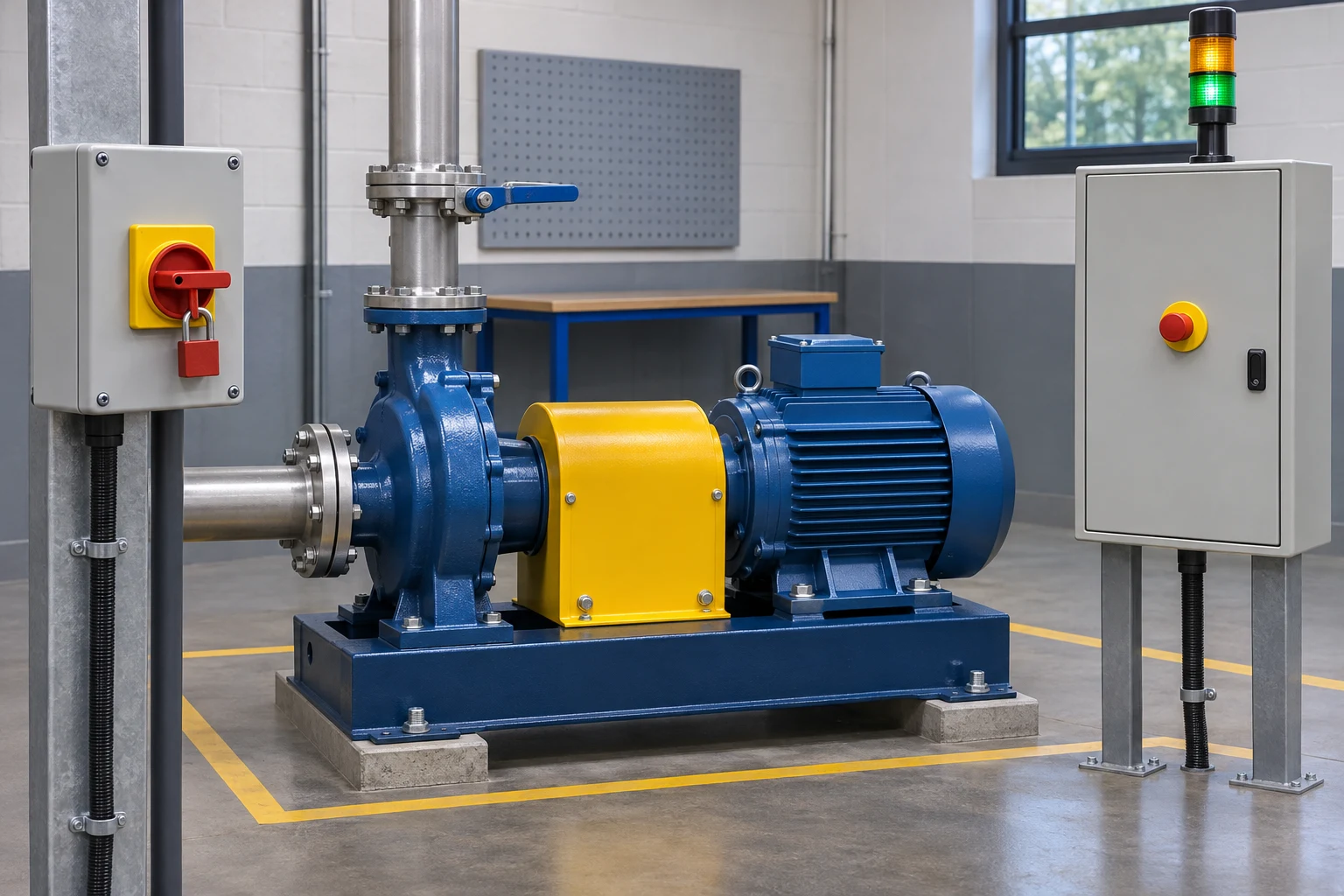
- Coupling guard: check location and fastening against equipment criteria.
- Control-panel stop button: define the stopping scope and observation point for the approved test.
- Indicator: distinguish visible illumination from tested alarm function.
Compare results with criteria established before the job
Defining completion criteria during preparation is more useful than tailoring them to a photograph after the work. Identify both the component being changed and the function to be restored, with a method for checking the result. For guard restoration, for example, a location photograph and a fastening check are different evidence; any additional protective function requires its own verification.
KOSHA’s Practical Safety Guide (Other Chemical Products Manufacturing, 2023) covers access restrictions, locks and notices, atmosphere measurement appropriate to hazards, and permit arrangements as pre-job precautions for non-routine work. During preparation, match the applicable items and their implementation to the actual equipment. After work, relate the originally controlled danger zone to the protective function to be restored. Use consistent equipment identification so the preparation record also identifies the objects requiring post-job checks.
Link the pre-job hazard to the post-job function. Where access to a danger zone was controlled during work, define the protective condition required afterwards. A tick against a pre-job precaution does not establish the post-job condition. Make clear that preparation and completion records concern the same equipment but answer different questions, so an earlier check is not incorrectly reused.
Connect completion checks to the current permit guidance
The current safe-work-permit document found on KOSHA's official portal is C-C-49-2026, published on 30 January 2026. The former P-94-2021 identifier is not presented as the current number. The document identifies itself as technical recommendations supporting legal compliance and improved site safety. Keep statutory obligations distinct from operational recommendations.
Section 7.3(2)(c)⑤ addresses notifying electrical personnel after the worker confirms completion of electrical isolation work. Appendix form 2 records completion time, attending personnel, workers and restoration condition, and includes confirmation of power restoration requested by the operations representative. Item 25 of appendix form 4 checks for a return signature on completion. Connect these separate confirmations to the responsible people instead of treating one completion message as all of them.
Returning or signing a permit is not itself a functional-test result. Conversely, a test record does not establish that all related permits have closed. Identify the evidence for restoration under Article 93 and for completion under the permit procedure, ensuring both concern the same equipment and work scope. Responsible departments should also account for other work remaining on the equipment before deciding on return to use.
- ActionCompletion report
- VerificationCriteria, conditions and observations
- Permit completionRestoration and return confirmation
- Operations handoverOutstanding conditions and return-to-use decision
Separate a guard's appearance from its protective function
For a fixed guard, distinguish a photograph of it in place from confirmation that it is secured. Missing fasteners, damage and changed clearances are assessed against equipment-specific criteria. Show both the overall location and the relevant detail, without inferring hidden fastening conditions from a photograph. Any physical or measured inspection requires a safe stopped condition and the responsible person's procedure.
Where a guard has an interlocking function, define visual and functional checks separately. Use manufacturer information and an approved test procedure to determine conditions; do not test a response with a person exposed to the danger zone. If the test requires a state change, control related work and personnel and have the test leader confirm readiness. Include hazards created by the test itself in the plan.
Record the expected response beside the observed response. A closed guard or a lamp colour alone may not identify which function was checked. State the tested function and observation point, and distinguish functions not tested. Do not approve all associated protection on the basis of one result; leave out-of-scope elements identifiable for further review.

Make isolation and alarm test records specific
Before checking a shutdown function, define which input is intended to affect which equipment. Normal stop, emergency stop and power isolation can serve different purposes. Qualified personnel use the approved method and record whether they checked a control indication, the actual equipment response, or both. If the observed response differs from the expected one, refer it for investigation and leave that function unverified.
Likewise, an audible alarm or lit indicator does not establish that the entire alarm path was checked. The signal-injection point and observation point determine the scope. Use the equipment's permitted safe test method rather than creating a genuinely hazardous condition. Coordinate with field and operations personnel so test indications are not mistaken for a real event. Equipment procedures determine the particular signals and criteria.
Where measurements are required, retain the criterion, instrument and test conditions as well as the result. Judge acceptance against the equipment’s approved criteria. Missing conditions hinder comparison and make it unclear which device and function a value represents. Tie the record to its test object so the verifier can assess it, and keep an unacceptable result unresolved even if the physical repair has been reported complete.
Distinguish photographs, test records and verification decisions
Photographs can show arrangement or visible condition, while test records show responses observed under defined conditions. The verifier's decision compares that evidence with the completion criterion. Combining these different forms of evidence into one completed box loses the scope of each check. Linking evidence to the criterion it supports matters more than increasing the number of photographs.
Assign the roles of reporter and verifier through the site procedure; this does not mean adding a separate department to every job. Make clear who performed the action and who checked what evidence so the judgement can be understood after personnel change. If the verifier has not visited the equipment, distinguish what the documents establish from what still requires a field check. Do not record an unperformed check as complete.
Where a problem remains, specify the further action, criterion and recheck method. Replacing a failed result with a new photograph can obscure what was resolved. Link the original issue, additional action and recheck result within the same item. This approach does not require a particular software system; identifiable items and distinct states can also be maintained on paper.
Hand verified functions over for the return-to-use decision
Pass functional-verification results to the responsible operations department for its return-to-use decision. Where test settings or conditions were temporarily changed, complete their approved restoration and communicate the result. State remaining conditions rather than reporting success while leaving temporary arrangements unexplained. For equipment with overlapping jobs, one job's completion must not be interpreted as release of another job's controls.
Connect permit closure records to the work scope, restoration condition and required checks. Compare the completion and return-confirmation items in current KOSHA Technical Support Regulation (KOSHA GUIDE) C-C-49-2026 to identify missing records. Keep unfinished verification distinct from the action owner’s completion report and visible to whoever decides on return to use. Record receipt of the completion report separately from the verifier’s decision.
If the same problem recurs after return to use, the closure record should support review. Retain evidence enabling the responsible person to compare tested functions with actual operating conditions and to identify issues outside the test scope. Recording what was checked under which conditions is more useful than making a result look successful. Connecting action, verification and operational handover makes the completion report a proper starting point for verification.
The receiving operations representative distinguishes completed work from areas still under control. Where visual or functional checks remain on hold, agree with the verifier how those conditions affect return to use. Resolve records pointing to different equipment or work identifiers before completing handover. Identify both the sender and recipient of outstanding conditions so communication and resolution can be tracked separately.
From completion report to operations handover
| Stage | Responsible people | Progress and decision criteria | Record |
|---|---|---|---|
| Completion report | Action owner → verifier | Communicate equipment, completed scope and outstanding work | Report time, object and outstanding items |
| Visual check | Designated verifier and maintenance personnel | Compare guard position, fastening and damage against completion criteria | Observed areas, photos/inspection results and corrections |
| Functional check | Qualified test personnel and verifier | Compare expected and actual responses under approved test conditions | Method, criteria, conditions, observations and decision |
| Permit completion and return | Worker, attending representative and permit personnel | Compare completion and restoration status and confirm permit return | Completion time, restoration and verification/return records |
| Operations handover | Verifier → operations representative | Review evidence and remaining controls for the return-to-use decision | Equipment, sender/recipient and outstanding conditions |