Permit-to-work changes: suspend, reassess and authorise restart
Is this still the work that was authorised?
A permit records a specific task and its conditions. Being within its validity period does not authorise a different tool or method. Reassess changes in location, tools, equipment state and nearby work. If the conditions no longer match, suspend the work, assess the change and obtain revalidation or a new permit as appropriate.
Suspended work is not completed work. Equipment may be open, isolated or sharing a boundary with another job. Record why work stopped and its actual condition so the next shift does not mistake unfinished equipment for equipment ready to operate.
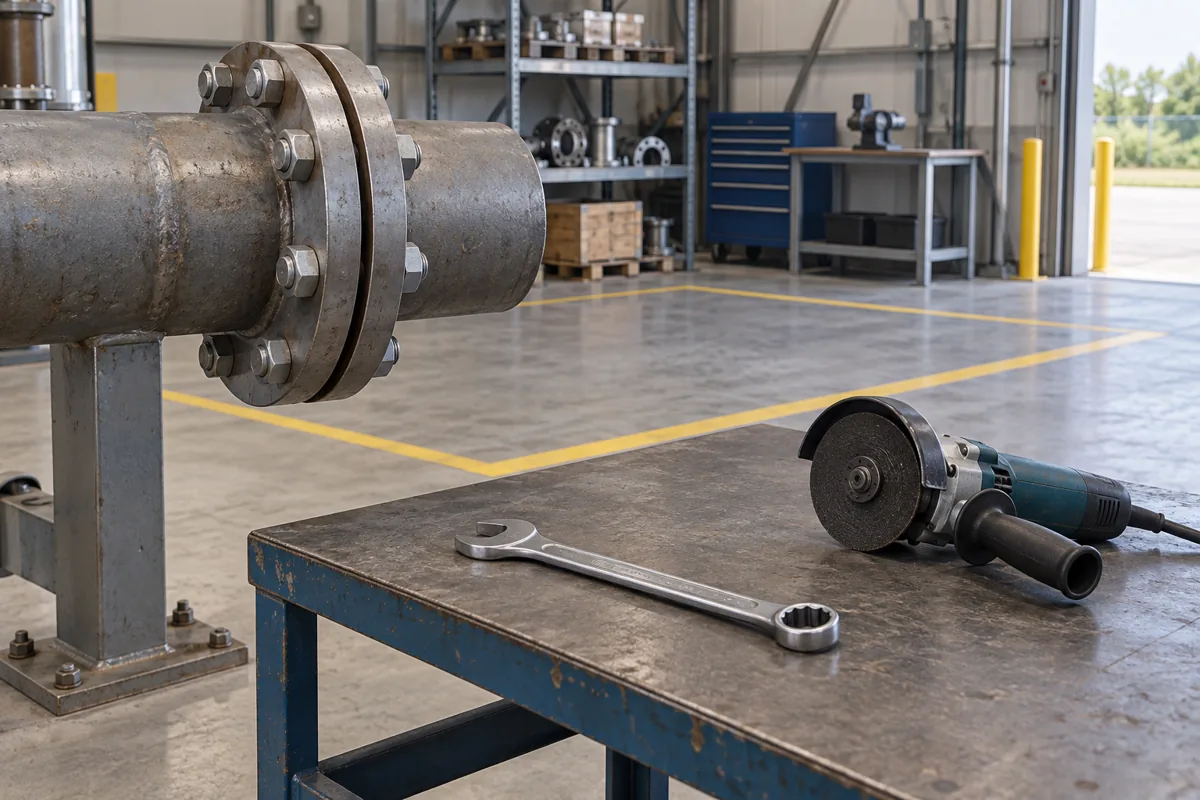
- Bolted joint: reassess tool-related hazards even if the workpiece is unchanged.
- Hand tool: compare it with the originally planned method.
- Cutting tool: reassess new spark and rotating-tool hazards within the permit scope.
- Boundary: examine effects on adjacent work.
Field practitioner note
The job name can stay while the hazard changes
Removing and cutting the same bolt have different heat, spark and combustible exposures. An unchanged end result does not make the method change insignificant. Compare the authorised method and controls with the actual work, not just the task title.
Extending the work can cross an isolation boundary or encounter another team or equipment connection. The same equipment name does not establish the same risk area. Identify both work and isolation boundaries on drawings and in the field.
Time can bring changes in people, nearby operation and energy state. Do not assume the initial monitoring or watch arrangements persist. A validity period does not guarantee unchanged conditions; the system needs a way to identify and assess changes.
Figure 3 highlights the checks described here.
Separate four decisions after a change
First establish a safe stopped state so equipment or openings are not abandoned while documents are reviewed. Under imminent danger, withdraw and communicate rather than remain exposed to resolve paperwork. Permit administration must not delay necessary immediate protection.
Record the specific change: a tool, opening, shift change or lost ventilation. “Slightly different work” does not define reassessment. Compare the original and current conditions to identify new hazards and controls that no longer apply.
Check interacting permits, shared isolation points and work areas, and whether restoration for one job affects another. HSG250 treats permit interactions and handover separately. Correcting one document must not leave another team working under changed conditions.
Finally, establish who can authorise restart after field verification. Check actual controls and the workers’ understanding, not only a note that measures were added. Follow the site’s revalidation or new-permit process and communicate the change before work resumes. Retrospective signing does not authorise work already done.
Close the work with a clear distinction between suspension and completion. Identify remaining openings, isolation and temporary arrangements for the next job. Completion of work and return to operation need their respective checks and handover rather than an assumed automatic transition.
Figure 2 highlights the checks described here.
- 1 SuspendStop the work first when conditions change.
- 2 Identifyspecify the changed tool or scope.
- 3 Reassessreview effects on other activities and controls.
- 4 Reauthoriseconnect the decision to the site permit process.
- 5 HandoverCommunicate changed conditions so the next workers use the current conditions.
Operating changes can affect an unchanged task
HSG250 gives the example of process sampling releasing hazardous material during hot work. The work team may be using the same tools in the same place while operating activity changes the conditions. Change detection therefore cannot rest with the work team alone; operating and maintenance activities must be coordinated.
An adjacent activity without a permit can still affect permitted work. HSG250 calls for links between related permits, assessments and work information managed by different authorities. Cross-references serve to reveal field interactions, not simply connect document numbers.
For an indefinite suspension with equipment left safe, HSG250 describes cancelling the permit and treating resumption as a new job. Extending the same document does not verify changes during the intervening period. The system must reassess the current state and remaining isolation.
HSG250’s Piper Alpha example addresses failure to communicate that a removed pressure-relief valve had not been restored. Handover needs equipment condition as well as progress. Distinguish how far the work has advanced from which operating safeguards are available.
Worker confirmation of completion, verification for permit closure and operational acceptance are different decisions. Tool removal alone does not establish readiness. HSG250 distinguishes these steps so the document is not closed while equipment control remains unclear.
HSG250’s monitoring guidance goes beyond checking completed boxes to field visits at start and completion, with intermediate checks suited to risk, complexity and duration. Observing whether controls remain in place reveals differences between documented completion and actual conditions.
HSG250 discusses dilution of supervision when excessive permitting falls to one person, avoidance of self-authorisation and additional review for high-risk work. These are considerations for workload and independent review, not a numerical Korean staffing limit.
Legal conditions depend on the task
Article 241’s hot-work preparation, verification and posting requirements and Article 619’s confined-space checks apply to their specified work. They do not establish one statutory permit form for every task at every workplace. A change may also bring the job within another provision’s scope.
HSG250 is British permit-to-work guidance for petroleum, chemical and related industries. It supports suspension, revalidation and interaction management but does not define Korean authorisation roles or mandatory form names. Site procedures must reflect applicable Korean provisions and the work.

Record a change in concrete terms
The table supports communication of a change and identification of information needed for restart. It is not a substitute for the workplace’s authorisation system. Hand over both the revised work point and isolations still in place.
| Point | Question | Follow-up |
|---|---|---|
| Change | What changed in tool, location or method? | Compare authorised and current conditions |
| Suspension | What remains open or isolated? | Distinguish completion from suspension |
| Restart | Are field verification and authorisation connected? | Check effects on interacting permits |
Reissue is not identical in every system
The permit procedure and risk determine whether revalidation or a new permit is appropriate. Renaming a document does not make the conditions safe. The restart decision depends on verified equipment state, method and effects on other work.