Rescue preparation before a nitrogen emergency
Unprepared rescue entry can create further casualties. HSE addresses rescue equipment, training and emergency arrangements before work.
Understand the situation
News of a collapsed colleague creates urgency, but unprepared entry into a hazardous atmosphere can add casualties. Rescue preparation begins before work, not with a search for phone numbers after an emergency.
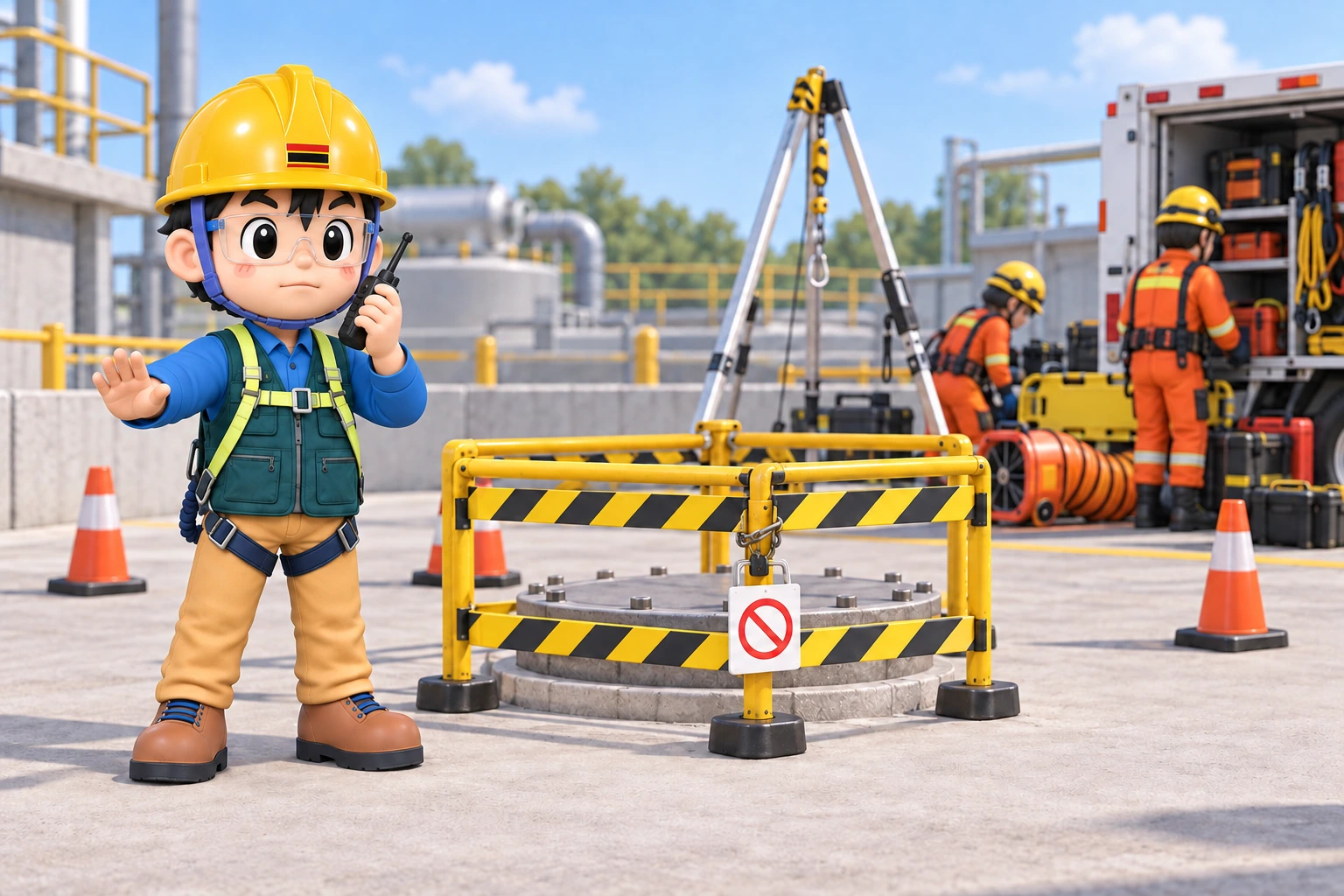
Review the task
Separate alarm, access-control and trained-rescue roles. Address the actual location and access route, and exercise the method with suitable equipment and competent responders.
Check your workplace
- Who receives the alarm?
- Are rescuers and equipment available?
- Is non-entry rescue feasible?
Apply the lesson
The linked FFG article contains the incident account and investigation sources. This briefing focuses on alarm, withdrawal, preventing unprotected entry and connecting to the planned response.
Avoid a common mistake
A name on a contact list does not prove availability. Responsible staff should confirm coverage across shifts, equipment location and access, then hand over changes.
Putting it into practice
Read SM-031 on the FFG nitrogen release and discuss alarm, access-control and trained-rescue roles. Do not treat unprotected entry as rescue.
Technical insight
Rescue readiness belongs in the entry plan
Entering before understanding the atmosphere can expose a rescuer to the same hazard. Raising the alarm and carrying out an entry rescue require different arrangements.
Exercises can test responder access, location information and equipment access. A rescue plan must fit the actual opening and internal layout, not just the name of the space.
Korean safety resources
- KOSHA · Safe work guide for preventing confined-space asphyxiation
Korean-language PDF: permits p.20, safety measures p.24, rescue p.44. Legal references reflect the edition’s publication period.