Safety meeting records: actions, owners, deadlines and verification
30-second summary
A risk may remain after a safety meeting ends. Record the decision, implementation and verification of its effect separately, so the next meeting does not repeat the same unresolved discussion. Monthly reading reviews belong in this process too: record the work examined and the change made, rather than treating the number of articles read as an improvement.
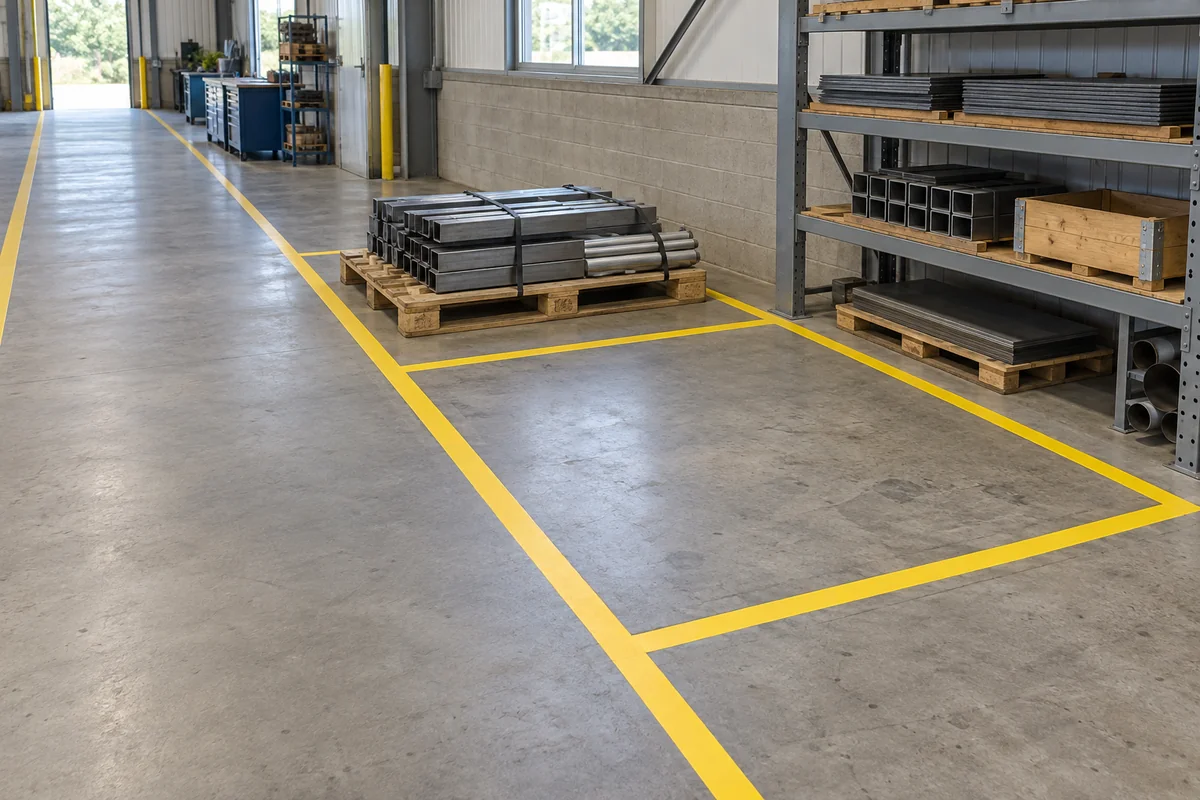
- Walkway: check the currently clear walking space and whether materials return to it.
- Storage zone: check that the material remains within its designated area to verify the condition after action.
- Boundary: locate the line separating storage from the walkway so the inspection covers the same area.
- Next delivery position: identify the clear space and plan the next delivery without blocking the walkway.
Turn monthly reading into a question about the work
A monthly review does not turn every article into an agenda item. Select topics relevant to present work and check publication, revision and scope. For an incident, look for a comparable substance, equipment or work stage. For legislation, distinguish promulgation from commencement. Record why irrelevant material does not apply, avoiding the same review next month.
Turn the selected material into an answerable field question. After reading a lifting case, ask whether an actual load route crosses a pedestrian passage, rather than only whether the case was taught. An unknown answer creates a verification task; an identified gap creates an improvement action. Unknown conditions must not be labelled safe or complete.
Connect learning and improvement records without merging their status. Reading, field verification and completion need not occur on the same day. Begin the next review with open actions and corrected source material. Consider equipment conditions and Korean requirements before adopting a measure from an overseas case; copying another site's approach is not completion.
When a completion label hides the actual condition
A “complete” status can describe very different conditions. Ordering an item is not installation, and installation does not establish that it works during the task. A cleared passage may be blocked again by the next delivery. A photograph of moved materials can close a record without addressing the unloading point or storage arrangement.
Minutes are not a physical safeguard. They carry information about the equipment condition that remains and the controls the next crew must maintain. “Fix leak” without identifying the equipment can lead to inspection of the wrong item. Record the location, object and defect together, with an internal identifier that points to the same object in the field.
Responsibility for implementation and responsibility for verification need consideration. The performing department can report completion, while the equipment user checks performance under operating or access conditions. “Anyone may check” leaves no named verifier. Assigning everything to one person can also stall decisions during that person's absence. Match verification duties to the relevant work and authority.
As reports travel upwards, a brief completion label can displace the underlying condition. Review residual risk, responsibility for temporary controls and the next check alongside completion rates. Decide whether work is possible while the item remains open. Extending a deadline is not a reason to continue work where the risk cannot be adequately reduced.
Figure 2 highlights the checks described here.
- 1 Identify the hazardLink the risk to the actual location where action is needed.
- 2 Carry out the measureCheck implementation to distinguish a decision from a physical change.
- 3 Check the physical conditionInspect the actual state to check that it matches the completion record.
- 4 Check the effectCheck whether risk has decreased where the measure was applied, and use that result to judge its effect.
- 5 Hand over unfinished measuresHand over open actions so the next team checks the remaining hazards.
Before the meeting: bring the unresolved condition
Start with decisions that remain open: why they are late, whether work continues and whether temporary protection remains effective. If the reason is “awaiting materials”, ask how exposure is prevented before delivery, rather than checking only the purchase order. A procurement date is not proof that the hazard has disappeared.
Describe the object to be changed instead of blaming attitudes. Naming the passage, stored material and operation that creates the obstruction supports decisions about storage or delivery sequence. For recurring defects, examine why the earlier measure did not last. Reusing the same photograph as a new achievement does not explain recurrence.
Gather information from the affected workers. The passage users and unloading crew may face different constraints, and equipment users may know access routes others overlook. Ask whether the proposal is workable before the meeting. A change developed without their input may create another hazard or remain unimplemented.
During and after the meeting: connect action and verification
Attach an action, performing department, due date and acceptance condition to each decision. For a passage clearance, identify where the material goes and where future deliveries will be placed. Evidence should describe the field condition. Follow internal photography rules and supplement photographs with worker or functional checks where images cannot establish the result.
Acceptance depends on the change: position and fixing for a barrier, a usable connection for a diversion, and awareness of the revised sequence for affected crews. A purchase order, attendance sheet or photograph is not universal proof of reduced risk. Decide what evidence is needed before requesting it.
Reconsider the decision if conditions change during implementation. Moving materials must not block another exit, and temporary barriers must not compromise escape routes. Connect a revised deadline to the reason and interim protection. Erasing the original date hides repeatedly deferred actions.
Before closure, consider performance when the work resumes. An empty passage in a photograph may differ from the same passage during deliveries. If the defect recurs, reopen the issue and record the conditions that brought it back. Link any new record to the earlier decision so repeated temporary fixes remain visible.
Field practitioner note
Example: a passage obstruction beyond the meeting
The following is a hypothetical recording example. When a worker reports that stored material restricts passage, first identify the passage and obstruction rather than writing “housekeeping completed”. Ask both passage users and those responsible for deliveries; this helps distinguish a temporary movement problem from inadequate storage. Leave an unknown cause as a verification task rather than filling it with a guess.
Before deciding to relocate the material, check whether its destination would obstruct other equipment access. The performing department reports the move, while users verify that the route is usable. If photographs are permitted, show the relationship between the cleared route and new storage location. Where photography is restricted, use an authorised field-verification record.
If material returns, do not merely add another violation count. Check whether the new storage location was communicated, is actually usable and was incorporated into later deliveries. Revisit the original control conditions before attributing recurrence to worker carelessness. This supports correction of the storage and delivery arrangement instead of repeating the move every month.
A monthly reading review can connect to this example. After reading about lifting zones, check whether the passage intersects a load route and refer a real intersection for lifting-plan review. Keep the training record separate from the passage-change action. One “read” entry must not close both activities.
Prioritise decisions by the remaining risk, not by which actions are easiest to close. Distinguish ongoing exposed work from work waiting to restart. Review whether repeated interim protection has effectively replaced a long-term improvement requiring materials. A useful next check can coincide with a change in hazard conditions rather than only the next meeting date.
Figure 3 highlights the checks described here.

Before closing an action
Example — an obstructed passage: record the location and reason for storage, decide the destination and future unloading point, then check passage usability and recurrence. This is a suggested recording method.
The table below distinguishes the relevant outcomes. Absence of a photograph does not alone establish incompletion, and possession of one does not establish completion.
| Stage | Object | Condition |
|---|---|---|
| Finding | Which passage segment is blocked | Which materials moved and where |
| Delivery | Where the next vehicle unloads | Storage position outside the passage |
| Completion | Passage usability after relocation | Recheck after the next delivery |
Risk assessment implementation and meeting records
Article 36 of Korea's Occupational Safety and Health Act requires not only identifying hazards but developing and implementing improvements. It also addresses worker participation, communication and records. Where a meeting decision forms part of a risk assessment, connect it to that assessment and its action. Not every informal note is the same statutory record.
Where a contractor's workers work at the principal contractor's workplace, the applicable duties under Article 64 include consultation arrangements and checking work timing and content. The action list proposed here is an everyday management aid. It does not replace required consultation or risk-assessment records with an incomplete list. Check the applicable system and retention requirements separately.
HSE's handover guidance emphasises preparation by the outgoing party, exchange between both parties and cross-checking by the recipient. These communication principles can help after meetings. UK technical advice is not presented as a Korean legal requirement.
Scope
Follow the site's applicable risk-assessment, consultation and change-control responsibilities and approvals. Use the action list to connect those processes. Where interim controls cannot adequately reduce risk, stopping the task and providing further protection takes priority over the date entered in minutes.