A stuck pig is a changed condition: The Ulsan KET pipeline-cleaning fatality
What should be checked before adding pressure when a pig becomes stuck during pipeline cleaning?
30-second summary
During pipeline cleaning in Ulsan on the night of 15 January 2024, an expelled pig struck a worker, who died early the following day. The work removed water and residues before gas supply.
When a pig stops, establish its location and pressure conditions on both sides before considering further action. A falling reading at one point may not reveal pressure trapped behind a pig or debris.
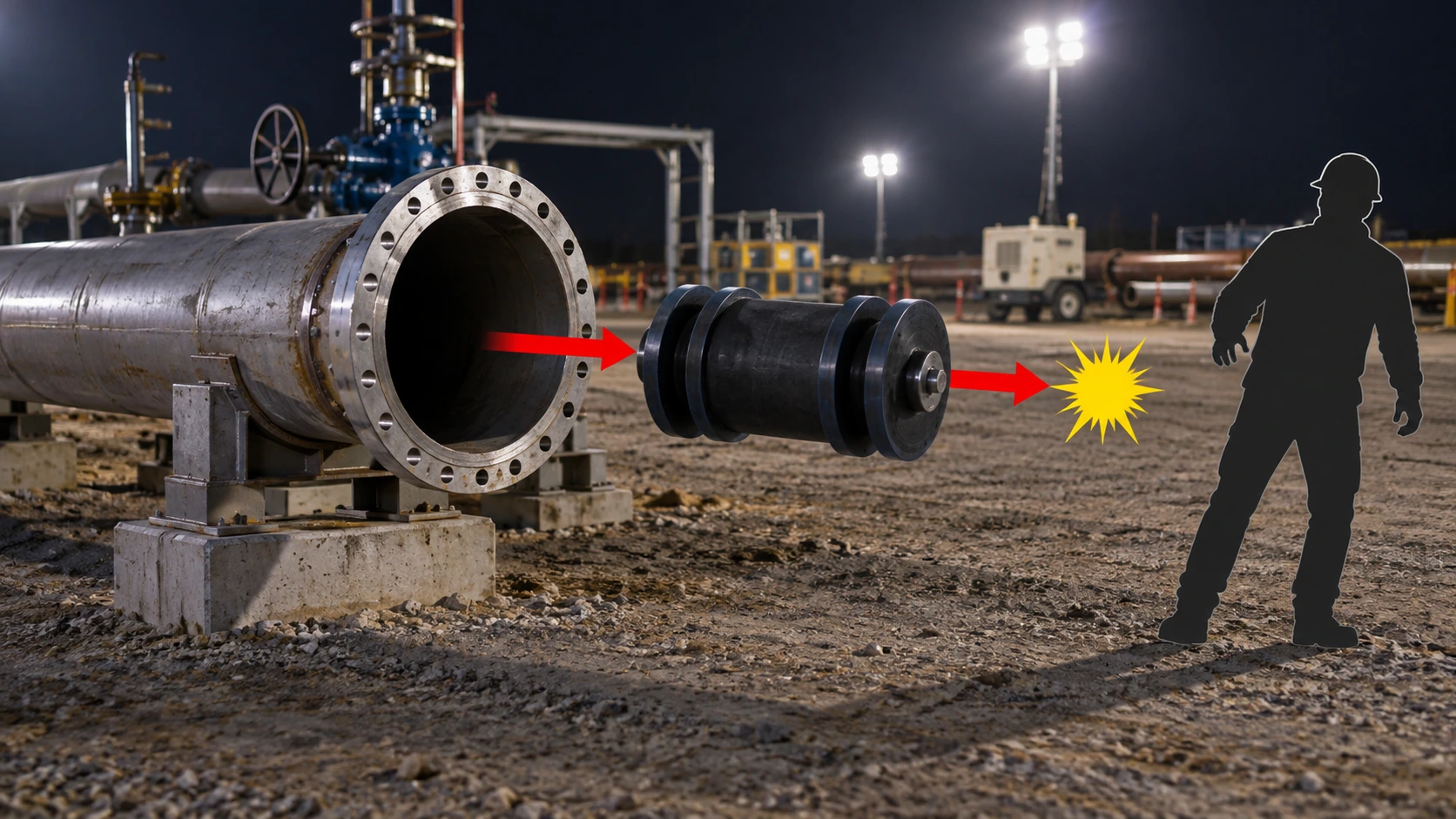
Work background and incident sequence
Cleaning was taking place on the Ulsan underground pipeline Phase 2, Section 2 before gas commissioning. Hankyoreh described work to remove water and residues. Even before normal gas service, cleaning pressure and moving equipment can carry striking energy.
The incident occurred around 10:30 p.m. on 15 January. Reporting described a roughly 20 kg pig lodged in the pipe being expelled by internal pressure and striking the worker’s abdomen. Its reported dimensions were about 50 cm in diameter and 95 cm long. He was taken to hospital but died early the next day.
Police and the labour authority were investigating. The available report does not give pressure settings, the detailed pressurization sequence or a final investigative outcome. Site training should use actual system drawings to examine blocked sections and access positions rather than inventing incident parameters.
Equipment and work principles
A pig travels through a pipeline to clean it or displace liquid, driven by a force difference across it. A blockage changes the conditions from normal travel. A delay is not a reason for arbitrary continued pressurization, and anyone looking into an outlet may stand in the path of the pig or components.
HSE treats opening pig traps as a high-hazard operation. Pig location, pressure on both sides, bypass isolation and safe venting matter. Debris can block a drain and create a false impression of depressurization; the procedure must address this for the actual installation.
Closing a supply valve does not remove energy already trapped inside. Establish which valves and bypasses connect to the section and how depressurization will be verified at the point to be opened.
In the DuPont La Porte incident, blockage-clearing work was connected to pressure problems elsewhere. The substance and consequences differed, but the comparison highlights the danger of judging a connected system from one crew’s local view. Trace the actual isolation boundary and connected fluid and pressure paths.
MMS Safety Alert 173, issued on 28 August 1997, describes two operators killed while opening a pig launcher. It had neither a pressure gauge nor a relief valve, and all valves were closed, so pressure could not be determined before opening. Trapped gas suddenly escaped and tore the lid from its hinge assembly.
The Ulsan account concerns an expelled pig, while the MMS event involved an ejected lid. Both direct attention to the pressurized space and personnel position. Closing valves does not remove stored energy. Provide instruments, safe venting and verification before opening, rather than using the closure itself to test pressure.
Published chronology and investigation findings
Abnormal recovery needs a method separate from routine cleaning. Unexpected arrival or pressure behaviour should trigger access control and assessment. Cracking a closure or flange to test pressure can create a release path directly toward the worker.
The controlled area should consider closures, connections and possible fluid or tool paths, not only the pipe axis. If reading an instrument or operating a valve requires entry into the hazardous area, its location also warrants review.
| When | Established account | Source |
|---|---|---|
| Before commissioning | Removal of pipeline water and residues | Hankyoreh 2024-01-16 |
| 2024-01-15 around 22:30 | Pig expelled by internal pressure struck worker | Hankyoreh 2024-01-16 |
| After transfer | Hospital treatment | Hankyoreh 2024-01-16 |
| 2024-01-16 early morning | Worker died | Hankyoreh 2024-01-16 |
Consequences and emergency response
One worker died during pipeline cleaning. Although it may appear incidental to commissioning, this operation uses pressure to move an object. Pressurization, retrieval and blockage recovery need distinct treatment in the work and commissioning plans.
When crews change or work continues into the night, the next crew needs the last confirmed pig location, vent status, isolation boundary and any prohibition on repressurization. Handover must convey the system’s energy state as well as the schedule.
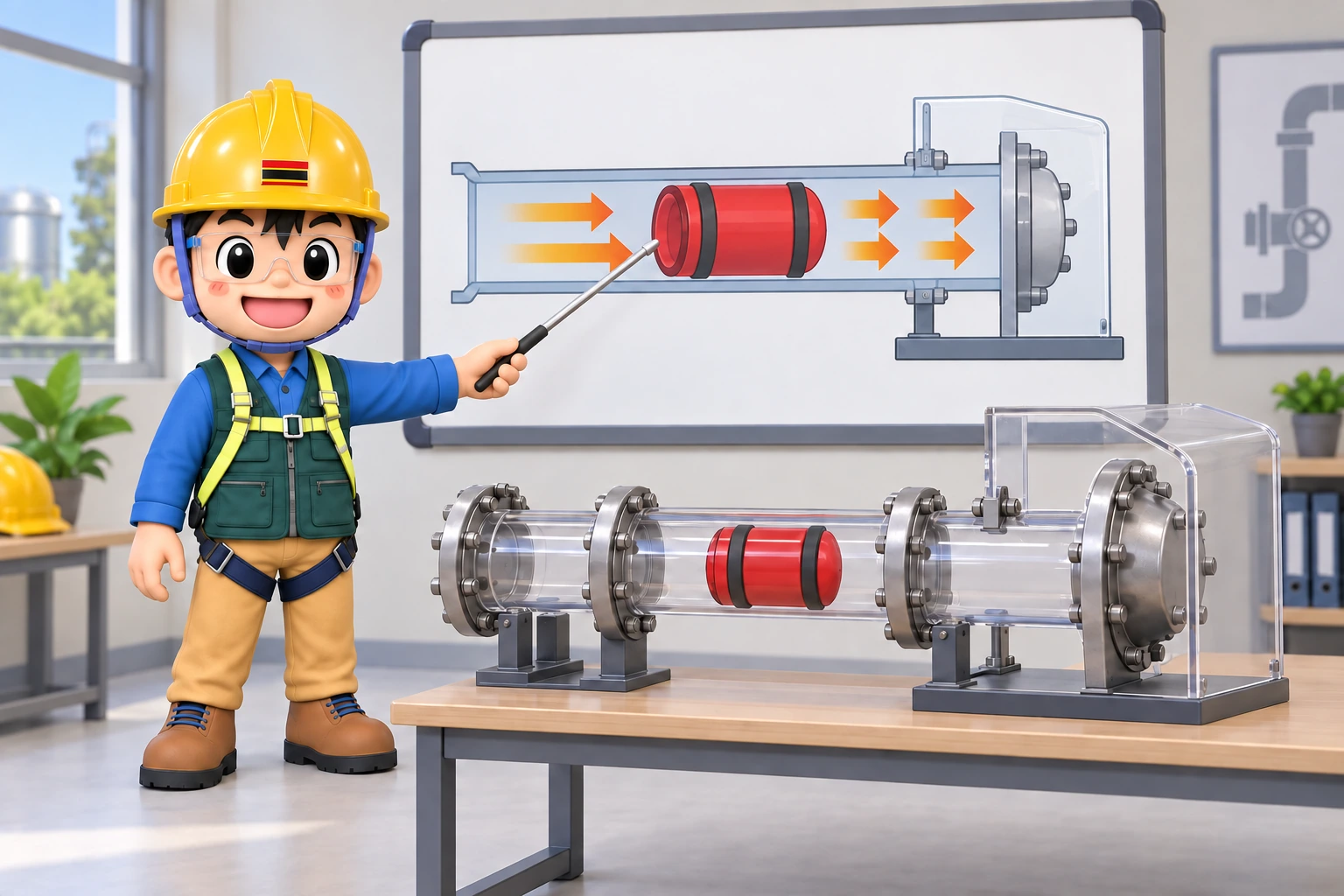
Questions for your site
| Question | How to check |
|---|---|
| Where is the pig? | Compare travel indication with the last confirmed arrival. |
| Is pressure checked on both sides? | Review pressure points and spaces separated by blockage. |
| Can blocked venting be detected? | Address obstruction and verification of discharge paths. |
| Are bypasses isolated? | Trace branches and bypasses connected to the main line. |
| Are controls outside the release path? | Mark controls, instruments and waiting positions on the layout. |
| Are blockage stop conditions defined? | Reassess departures from normal conditions before further pressure is applied. |
Application at Korean sites
Comparable work in Korea is subject to the Rules on Occupational Safety and Health Standards, MOEL Ordinance No. 450, effective 2026-03-02. The following concerns present work; findings about the incident depend on its investigation and proceedings.
Article 92 addresses stopping for hazardous cleaning or maintenance and preventing restart through locking, signs and other measures. Paragraph 4 additionally addresses stored compressed gas or liquid. Remaining energy needs attention after stopping and isolation.
How I would approach this incident at work
I first check drawings and the equipment itself to establish whether the opening point, pressure gauge, vent and drain are connected to the same section.
If there is no safe way to check residual pressure, or the results disagree, I postpone opening and obtain a technical review.