A temporary walkway is still a structure: the Shaheen walkway collapse
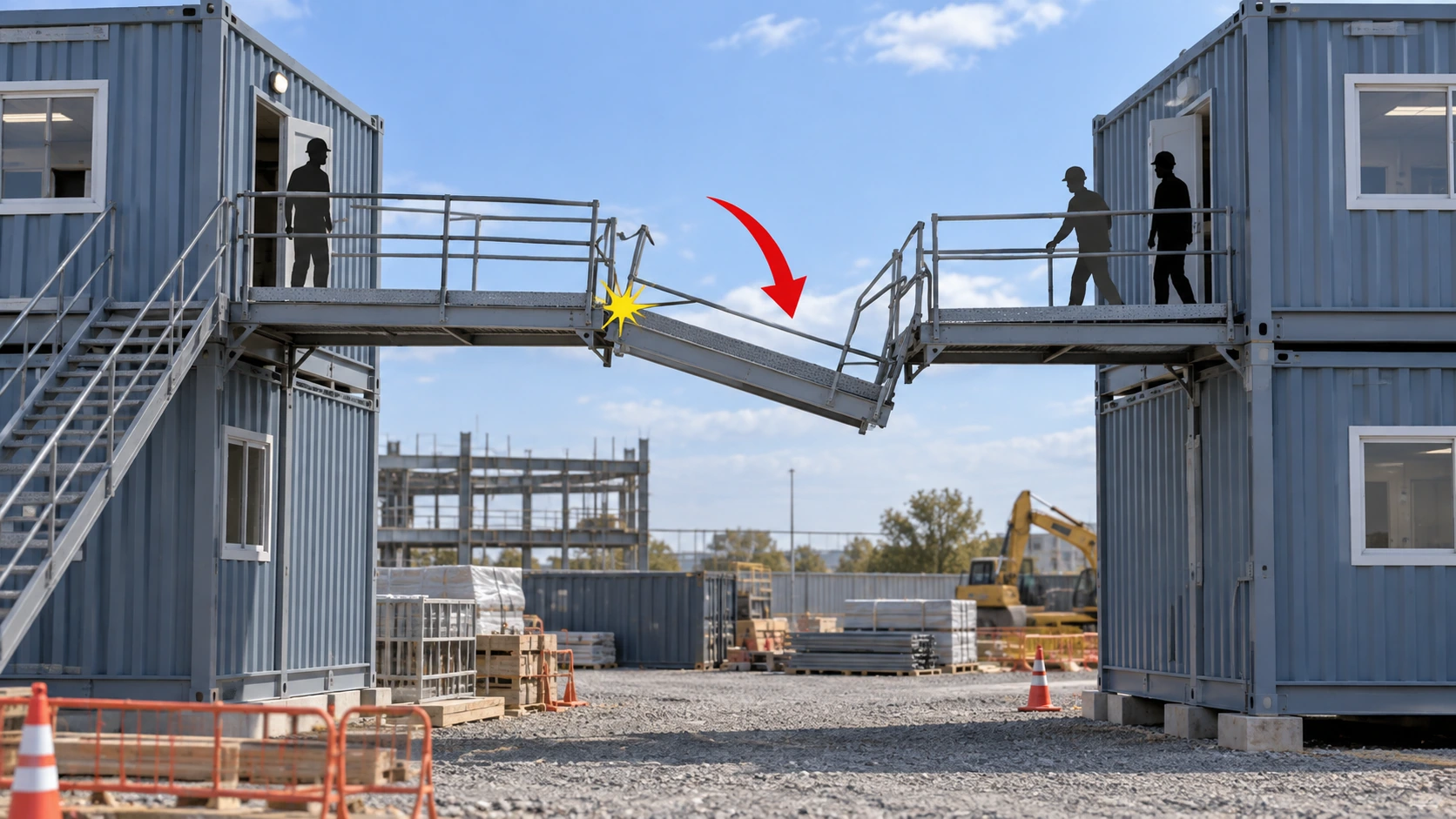
Workers were injured when a temporary walkway between site cabins collapsed at the Shaheen project in Ulsan on 19 November 2025.
30-second summary
What happened: A temporary walkway between upper-level site cabins collapsed.
Harm: Workers fell about 2 m; casualty counts differed by reporting party.
Investigation: Overloading was the company’s initial explanation. A final structural investigation result has not been announced.
At your site: Check intended use, queuing, supports and connections together.
Incident sequence and working conditions
Maeil Labor News reported workers gathering to use clock-out cards at the Shaheen project. The walkway connected the upper floors of site cabins and served both passage and waiting for clock-out processing.
The union and company used different categories for admission, hospital attendance, immediate transfer and medically diagnosed injury. Police, fire personnel and the Ulsan labor office visited the site; a further joint investigation was planned.
Equipment and process principles — technical explanation
Walkway loads pass from the deck through supports and connections to the supporting structure. HSE scaffolding guidance includes maximum users, anticipated loads and special arrangements such as bridges in design information. Deck thickness alone does not define the whole structure’s use conditions; installation and intended use must match the design.
Article 22 requires a safe, usable passage and generally no obstruction within 2 m above its surface. Article 55 requires the maximum scaffold-platform load to reflect structure/materials and prohibits exceeding it. Identify whether the structure is a scaffold platform or a pedestrian connection before selecting the applicable requirements and assessment.
Article 23 provides numeric requirements for sloping temporary passages: normally no more than 30 degrees, with slip-resistant construction above 15 degrees. The slope limit has exceptions for stairs or a robust handrail on a passage under 2 m high. Assess a horizontal connection’s allowable load separately using its structure, materials and connections.
Publicly reported timeline
| Time | Reported fact | Source |
|---|---|---|
| 2025-11-19, about 17:00 | Walkway collapsed with more than 20 people gathered for clock-out; fall about 2 m | Maeil Labor News, 2025-11-20 |
| November 20 report — union | More than 20 injured; 6 hospital admissions | Union account in the same report |
| November 20 report — company | 25 hospital visits (including 3 immediate transfers); 1 medically diagnosed minor rib fracture | Company account in the same report |
Harm and response
The health status of people who fell can change through medical assessment and admission. Track personnel by on-site assessment, transfer and diagnosis rather than only a public total, while managing scene preservation and restrictions on structural reuse.
Questions for your site
| Question | How to check |
|---|---|
| Does a queue form on the walkway? | Mark clock-out and waiting positions to distinguish transit from queuing. |
| Was actual use supplied to the designer? | Compare expected users, loads and circulation with design conditions. |
| Are deck, connections and supports sound? | Check damage, looseness, settlement and deformation against installation records. |
| Do tags match inspection records? | Reconcile use/prohibition status, signatures and checks after changes. |
| Are openings and the area below controlled? | Inspect covers/hatches and access boundaries below. |
| Can people move when the walkway is closed? | Define alternative circulation/clock-out arrangements and reopening authority. |
Application at Korean workplaces
Match Articles 22–23 on passages to intended use. Scaffold work also engages Article 55 on maximum load and Article 58 on inspection/repair. Article 58 requires checks of platforms, joints, connecting fittings and uprights before work following adverse-weather stoppage or scaffold assembly, dismantling or alteration, with defects repaired. Review changed use or connections before reopening.
Rules on Occupational Safety and Health Standards: MOEL Ordinance No. 450; effective March 2, 2026.
References
Related cases
The scaffold checklist covers decks, guardrails and access before use; the formwork-support video addresses assembly drawings and support. Compare load paths and physical verification while keeping walkways and formwork supports distinct.