Scaffold pre-use checks: access, platforms, guardrails and alterations
A sound-looking platform is only one part
Scaffold checks go beyond the presence of boards. Workers and materials load the platform, supporting members, standards, bases and ground. Ties and bracing restrain lateral movement. Altering one part can change the whole structure even if the platform looks unchanged. Begin with the intended task, loading and changes since erection.
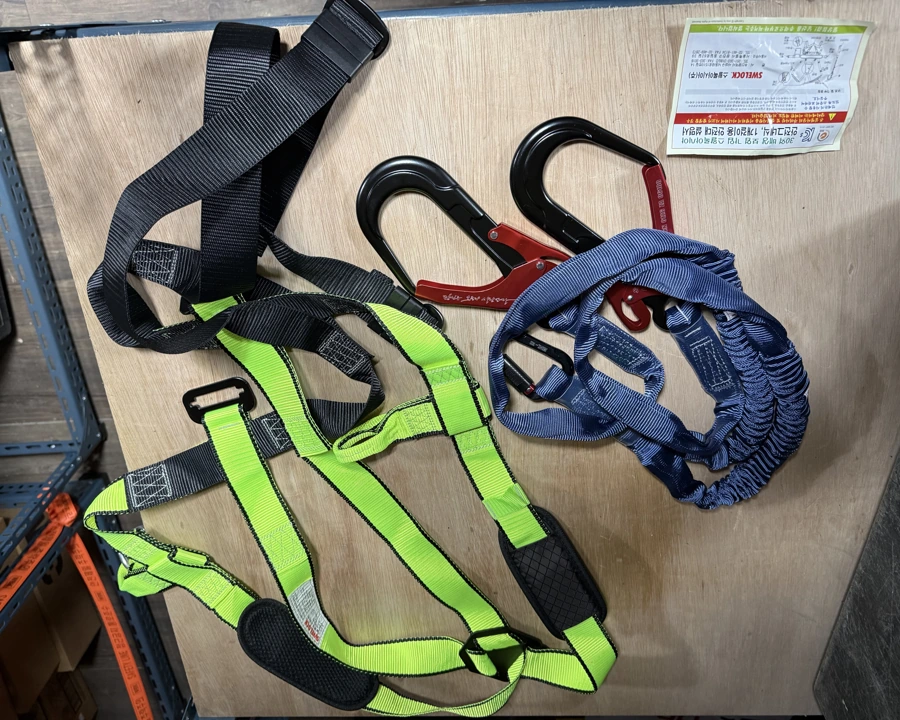
Before scaffold work, lay out the harness and lanyard to check for damage and inspect their connections. Check anchorage information when choosing an attachment point, rather than selecting a member simply because it is part of the scaffold.
A user’s pre-use observation and an assessment of structural or erection conditions have different roles. Users should not improvise repairs to connectors or reinstall ties. Keep the affected area out of use and refer repair and release decisions to someone competent in that scaffold system and design.
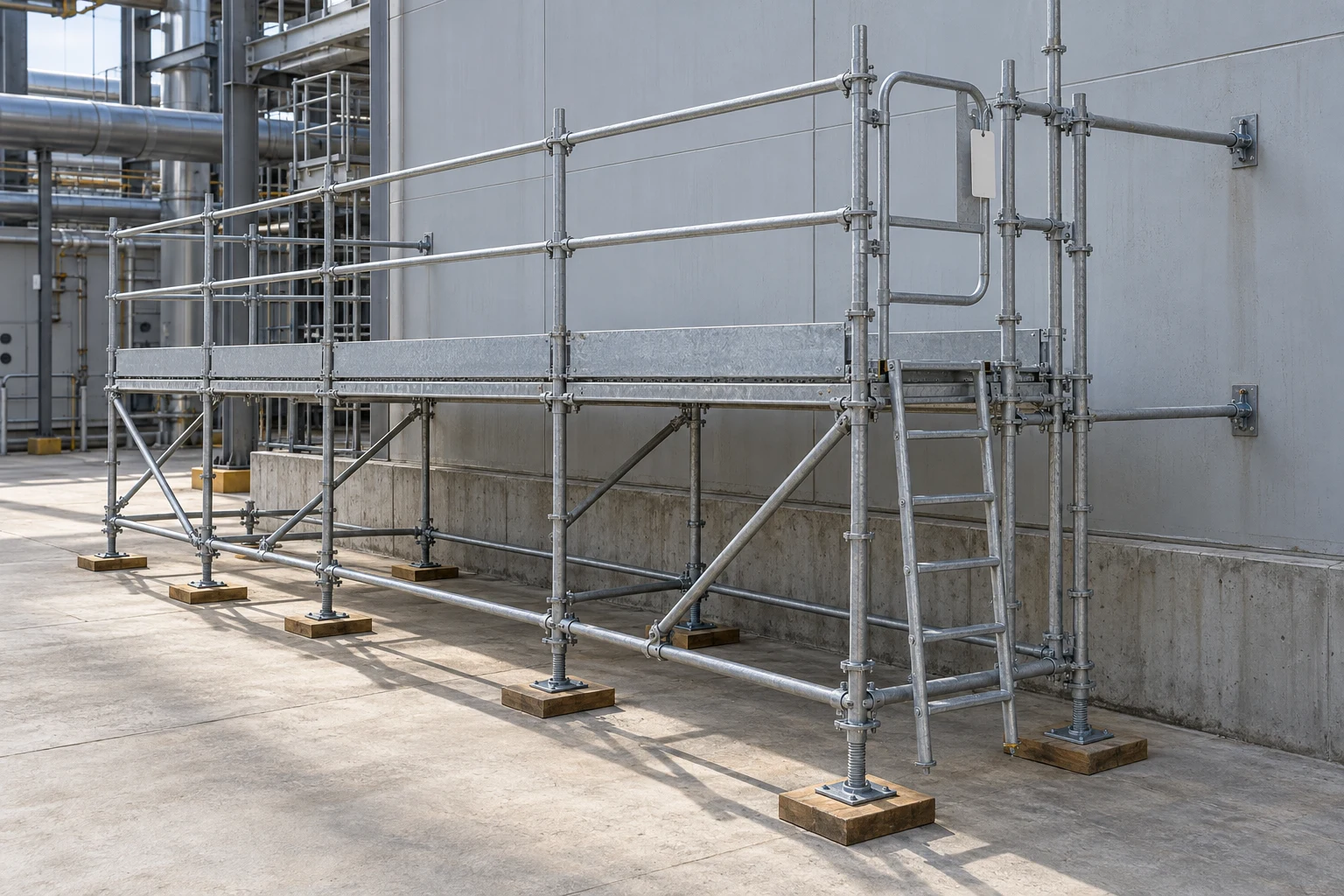
- Guardrails and toe boards: Before climbing, check for missing members and loose connections, and recheck altered sections before use.
- Access ladder: Before access, inspect the rungs and securing points and use the designated access route.
- Wall tie: Before work, inspect connections for loosening or unauthorised removal; stop use and request a check if anything is wrong.
- Base support: Before use, check for settlement and tilt, and recheck whenever ground or base conditions change.
Loads do not act only downwards
Boards transfer load to their supports. If one end has inadequate support or a fixing is loose, a change in foot position can cause lifting or slipping. Width, support and restraint are separate checks. Material strength alone does not establish the stability of an installed platform.
Standards carry load through bases to the ground. Settlement, poor drainage, excavation or vehicle activity near the base can affect the structure above. Inspect the support and surrounding work as well as the platform level. Improvised packing with unstable materials is not a suitable foundation solution.
Ties and braces are not surplus obstructions. They transfer lateral forces and restrain deformation. Removing even one to pass materials requires assessment. Adding netting or sheeting also changes wind exposure; the scaffold can no longer simply be treated as the original arrangement.
Loading includes tools, materials and waste as well as people. Materials placed at several levels can make a single visible platform a poor indicator of total conditions. Connect the planned loading limits and positions to clear site information, including the delivery team.
Figure 2 highlights the checks described here.

- Check the platform as the starting point of the load path into the supporting structure.
- Follow the standards and connections to trace support below the platform.
- Check bases and ground together to assess where scaffold loads are transferred.
- Check brace connections that restrain deformation of the scaffold.
- Check ties linking the scaffold to the permanent structure.
Before access, find what has changed
Identify the scaffold type first. Tube scaffolds, system scaffolds and suspended scaffolds have different support arrangements and requirements. Do not mix proprietary components without approval or transfer one type’s tie spacing to every scaffold. Make the erection specification available for comparison with the installed arrangement.
Recheck the purpose of use. Brief inspection access differs from sustained work with materials. Added hoisting or equipment loads require review rather than reliance on the original handover. Consider load positions, any proposed opening of guardrails and the passage remaining after materials are placed.
Follow the access route from ground level, looking at bases, standards, joints and ties. Identify members removed for other work, loose connections and unsupported board ends. Request inspection of inaccessible parts rather than assuming they are sound. Establish safe access before attempting the inspection itself.
On the platform, separate gaps, edges, fixings and openings in the inspection. Materials can conceal a cover’s restraint or opening markings. Examine corners, access points and loading openings where edge protection changes. Housekeeping does not replace structural fall protection.
During use, do not exceed loading limits or block access for supposedly temporary storage. Stop use after impact, marked movement or visible deformation until the condition is resolved. Platform or guardrail changes should not be improvised by users. Identify the exact affected bay in both the change request and the subsequent release.
Materials left after the final worker leaves affect the next shift’s loading. Handover should identify remaining materials, restricted bays and outstanding repairs. A use-status sign without later changes can perpetuate an obsolete decision. The sign communicates an assessment; it does not perform one.
Read the provisions for the scaffold type
Article 55 requires a maximum platform load appropriate to structure and materials. Article 56’s platform requirements must be read with their scaffold, height and exception conditions. Copying isolated width or gap figures does not establish compliance across different scaffold types.
Article 58 requires inspection and repair after adverse-weather stoppage or erection, dismantling or alteration before work on the scaffold. These events require an assessment of their effects in addition to ordinary pre-use observations. Schedule pressure is not a reason to defer repairs.
For removal of tube-scaffold ties or supports, check Article 59’s conditions for alternative stability measures. System scaffolds also require consideration of Articles 69 and 70. Do not reduce connections without the manufacturer’s criteria and structural plan. Inspection intervals in UK guidance are not Korean statutory intervals.
Field practitioner note: no suitable attachment point
Three distinct conditions at handover
Erection complete, inspection complete and suitable for the intended task are distinct states. A changed purpose or load can leave review outstanding after erection. Recording location, type, levels, work, loading and restrictions helps keep those decisions separate; this is a handover recommendation, not an additional prescribed form.
Opening an edge for access or loading changes protection at different moments. A brief opening still leaves an exposure. Define worker position and who verifies restoration, and assess whether the alteration and the original task can proceed simultaneously.
A missing rail and a settled standard require different responses. Replacing the visible rail does not address foundation movement. Assess connected load-transfer elements as well as the observed defect, and do not renew release while the cause and extent remain unresolved.
Excavation or deliveries near a scaffold can alter support without modifying the scaffold itself. Work affecting the base or vehicle impact exposure needs coordination even when planned by another team. Include these interfaces when reviewing changed site arrangements.
Article 69 addresses secure system-scaffold connections, retention and base contact. An inserted component is not necessarily secured against movement. Check manufacturer tie-spacing criteria; relocating connections for convenience can require structural review.
Article 70 addresses designated access and vertically overlapping work because movement and tasks interact. Climbing braces departs from the intended access arrangement, while material above can affect workers below. Harness use does not remove those requirements.
Questions for handing over an altered bay
The record should identify the changed location rather than mark the whole scaffold satisfactory. The questions below connect a change request to the assessment of that location; they are not a substitute for a structural inspection. A photograph that does not identify the bay cannot close that record.
| Point | Question | Follow-up |
|---|---|---|
| Changed bay | Which member at which level was moved? | Identify restrictions for the alteration and original task |
| Foundation | Is there excavation, settlement or impact near the base? | Separate visible rail repair from support assessment |
| Loading | Does the delivered material remain within the defined conditions? | Confirm shared loading information with users and delivery teams |
| Reuse | Has post-change inspection and repair finished? | Connect Article 58 checks to release of the affected scaffold |
What photographs and tags cannot establish
Photographs cannot show every connection or ground condition. Even a released scaffold needs a check for subsequent loading, removed members or added sheeting. Product-specific loading and component compatibility require the relevant documentation.