A rooflight is not a walking surface: the Korea Zinc Onsan fall
How should rooflights and fall-protection connections be checked along a rooftop access route?
30-second summary
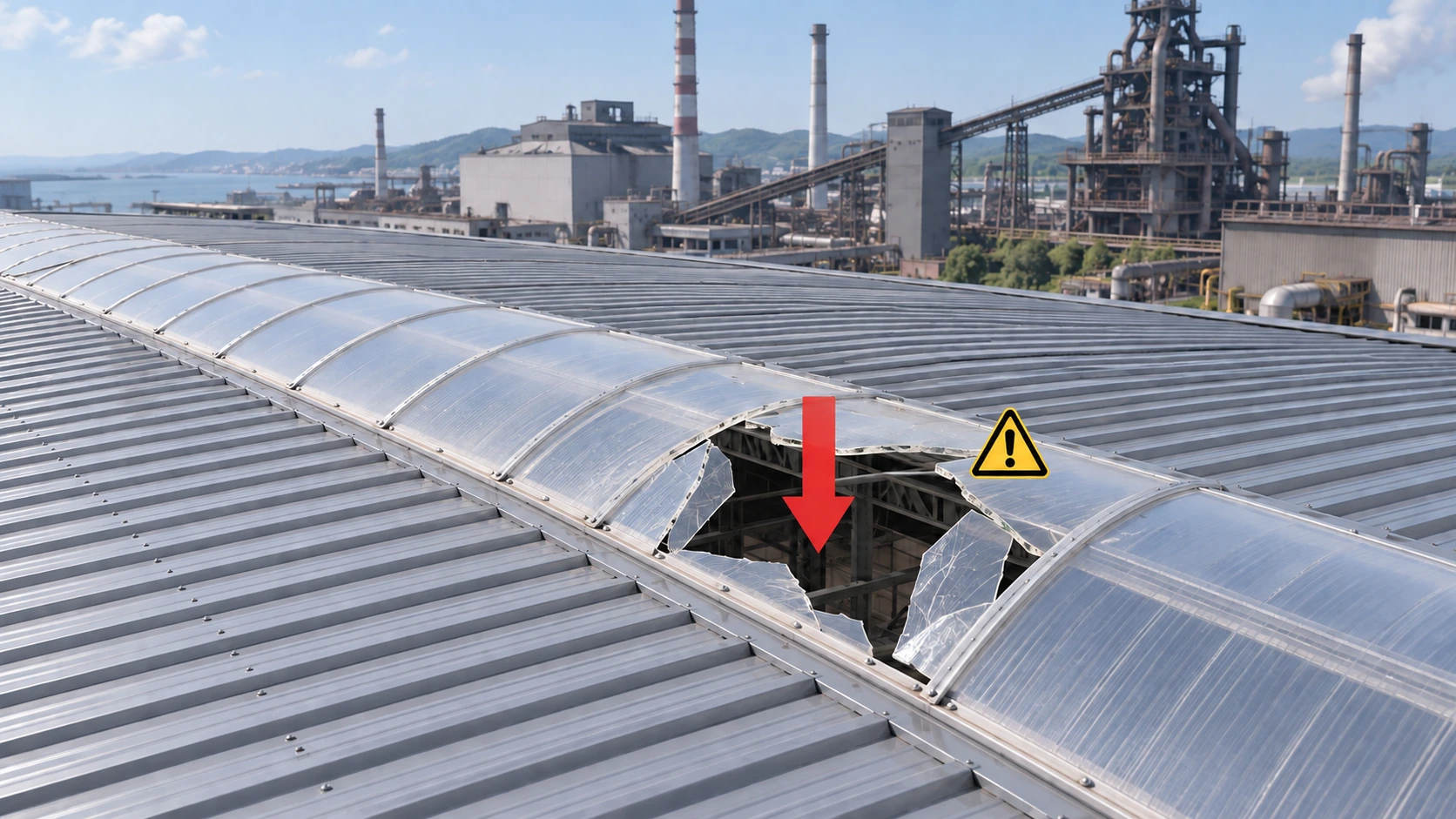
On 16 September 2026, a contractor worker fell to his death while working on a roof at Korea Zinc’s Onsan No. 2 plant. Reporting citing the company disclosure described a broken rooflight and a failed safety-belt rope.
Work on a fragile roof requires both recognition of weak areas and measures preventing access to them. Protection needs to cover the route to the work position as well as the position itself.
Work background and incident sequence
The fall occurred at about 3:29 p.m. during roof panel work. The following day, News Tomato cited a company disclosure stating that the worker stepped on a rooflight, which broke. The roof element did not support him as a working surface.
The report also carried the company’s statement that the safety-belt rope failed. It did not give investigation findings on why it failed, its anchorage or the movement involved. Material condition, wear and edge contact need actual inspection; the article does not establish any of them as the cause.
Adjacent roof panels and rooflights may have very different load capacities. Moving between positions or carrying materials can bring a person toward a fragile element. Planning should address actual access routes, material placement and the return route.
HSE advises treating roofs as fragile unless a competent person confirms otherwise. Dirt or paint can obscure rooflights. The approach is to match records to actual conditions and first consider work from below or from suitable access equipment rather than relying on appearance.
Equipment and work principles
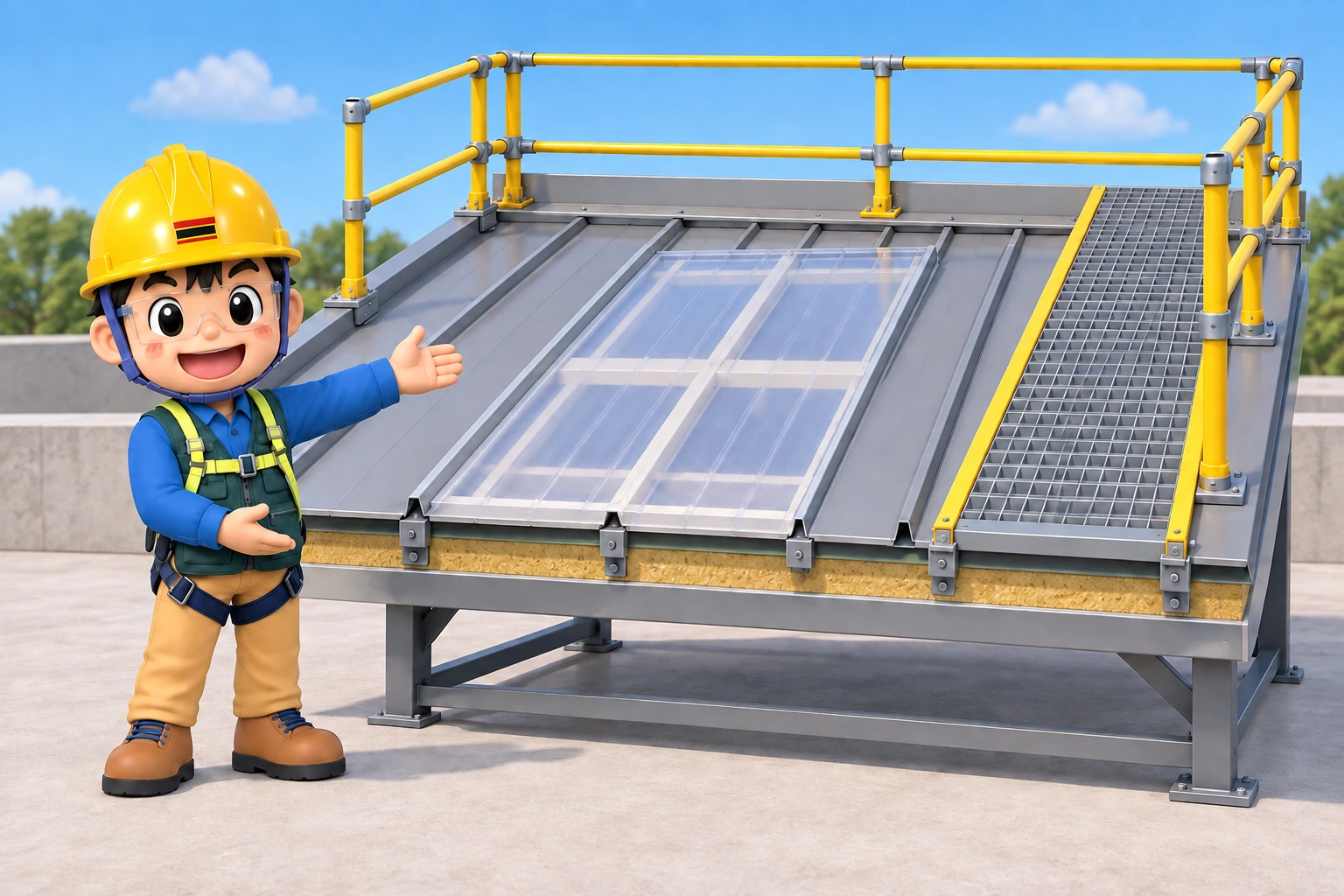
A person’s load reaches the roof through a relatively small contact area. A light-transmitting panel resembling the surrounding roof is not necessarily a walking surface. Location markings need to be supported by appropriate covers, access protection, staging and routes bearing on suitable structure.
The first question is whether the task can be completed without going onto the roof. If not, establish a protected working surface and access boundary. Personal protection requires consideration of anchorage, connectors, travel and space below as a system, rather than only evidence that a harness was issued.
Travel restraint and fall arrest impose different movement conditions. Determine whether access to a fragile area can be prevented, how connections change during movement and whether the manufacturer’s conditions are met. Not every metal roof component is a suitable anchor.
Rescue planning includes risks to rescuers. Rushing across an unprotected roof or loading the same fragile area can expose another person. Rescue access and equipment need planning before the job rather than improvisation afterward.
A worker also died through a rooflight at a Kentucky demolition site in 2022. The FACE account describes a witness seeing him walk backwards onto it, without guardrails, covers or personal fall protection. The Korea Zinc account instead mentions worn equipment and rope failure. The equipment circumstances differ, while the rooflight in the worker’s route is a useful common issue.
At the Kentucky site, demolition created interior edges as well as perimeter edges. A route planned for the initial roof arrangement may no longer remain protected later. Panel replacement similarly changes openings and remaining support; review permissible movement at each stage.
Moving protection to handle materials immediately creates an unprotected interval. Check cover placement and fixing before access, and provide alternative protection before planned removal. Route assessment should also account for obscured views or movement without a clear forward view.
Published chronology and investigation findings
The published account raises questions about both the rooflight and the rope system. Site checks should separately examine prevention of rooflight access, continuity of protection to the work position and suitability of personal equipment for actual movement.
HSE notes that short maintenance jobs also present fragile-roof risks. Exposure depends on whether a fragile element can be stepped on, not merely time spent there. Planning should prevent short duration being used as a reason to omit access protection.
| When | Established account | Source |
|---|---|---|
| 2026-09-16 around 15:29 | Fall during roof panel work at Onsan No. 2 plant | News Tomato 2026-09-17 |
| Sequence | Company account: rooflight broke when stepped on | Reporting citing company disclosure |
| During the fall | Company account: safety-belt rope failed | Reporting citing company disclosure |
| Consequences | 1 contractor worker died | News Tomato 2026-09-17 |
Consequences and emergency response
One worker died during roof work. Improvement should connect instruction on rooflight locations to real covers and access routes. Materials or equipment must not obstruct the protected route and force an alternative step.
Covers and access controls must remain clear to the next entrant. When trades or contractors change, check that markings match actual protection. A temporarily moved cover leaves work incomplete until the required protection is restored.
Questions for your site
| Question | How to check |
|---|---|
| Are rooflights mapped against the protected route? | Match drawings to the site and brief the route. |
| Can the task be done from below? | Consider access from below or suitable elevated access equipment. |
| Can the cover support its intended loads? | Check construction, fixing and installation. |
| Does the connection system suit the travel? | Check anchors, connections and clearance against instructions. |
| Are materials obstructing the route? | Assign storage outside the access route. |
| Would rescuers have to cross the same roof? | Plan rescue access and equipment before work. |
Application at Korean sites
Comparable work in Korea is subject to the Rules on Occupational Safety and Health Standards, MOEL Ordinance No. 450, effective 2026-03-02. The following concerns present work; findings about the incident depend on its investigation and proceedings.
Article 45 requires edge protection, strong rooflight covers and staging at least 30 cm wide over weak roofing where falls or trips are a risk. Paragraph 2 alternatives concern the edge measure in paragraph 1(1), not a blanket exemption from rooflight covers.
How I would approach this incident at work
I check fall hazards around openings and along the approach to the work position.
Before work resumes, I check whether the worker can carry out the required movements from a stable platform without leaning out.