Could a small leak become a rupture during diagnosis?: The Chevron Richmond refinery fire
A pipe rupture released flammable material and caused a fire at Chevron Richmond, United States, on 6 August 2012. The case connects leak response with corrosion inspection coverage.
Incident sequence and circumstances
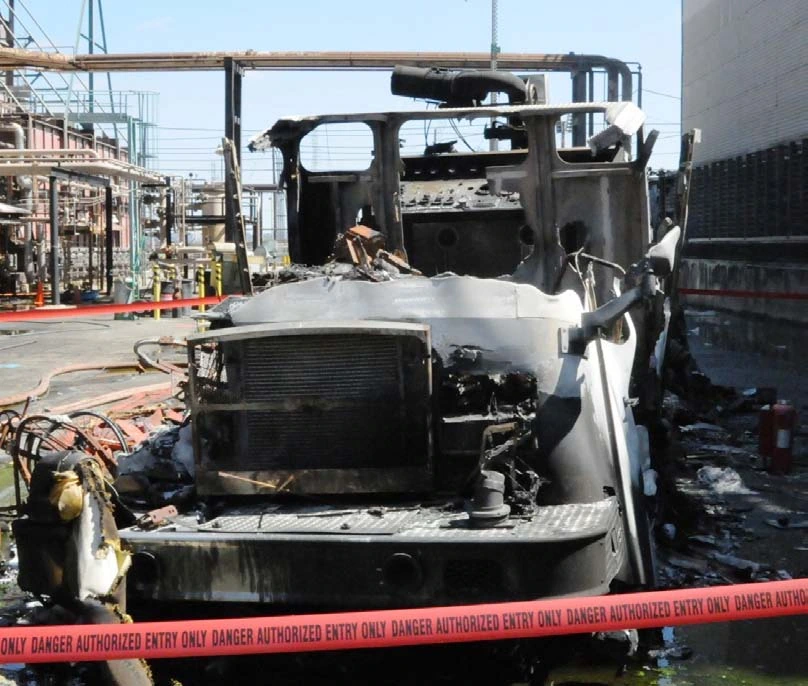
On 6 August 2012 at Chevron Richmond, a small leak in operating pipework escalated into rupture while it was being investigated. Hot flammable material formed a vapour cloud and ignited.
The CSB interim report examined carbon-steel thinning from sulfidation. Silicon-content differences could produce unequal corrosion within one circuit. The visible size of a leak did not establish the remaining strength of the pipe.
A live-process leak escalated
CSB described a major rupture while personnel were assessing a leak in an operating unit. The released material formed a vapor cloud.
Investigation identified wall thinning from sulfidation corrosion.
CSB: Chevron Richmond interim report

Check your workplace
- Does coverage include the potentially vulnerable components?
- Are material and replacement records linked to thickness data?
- Are shutdown triggers and decision authority clear before a leak?
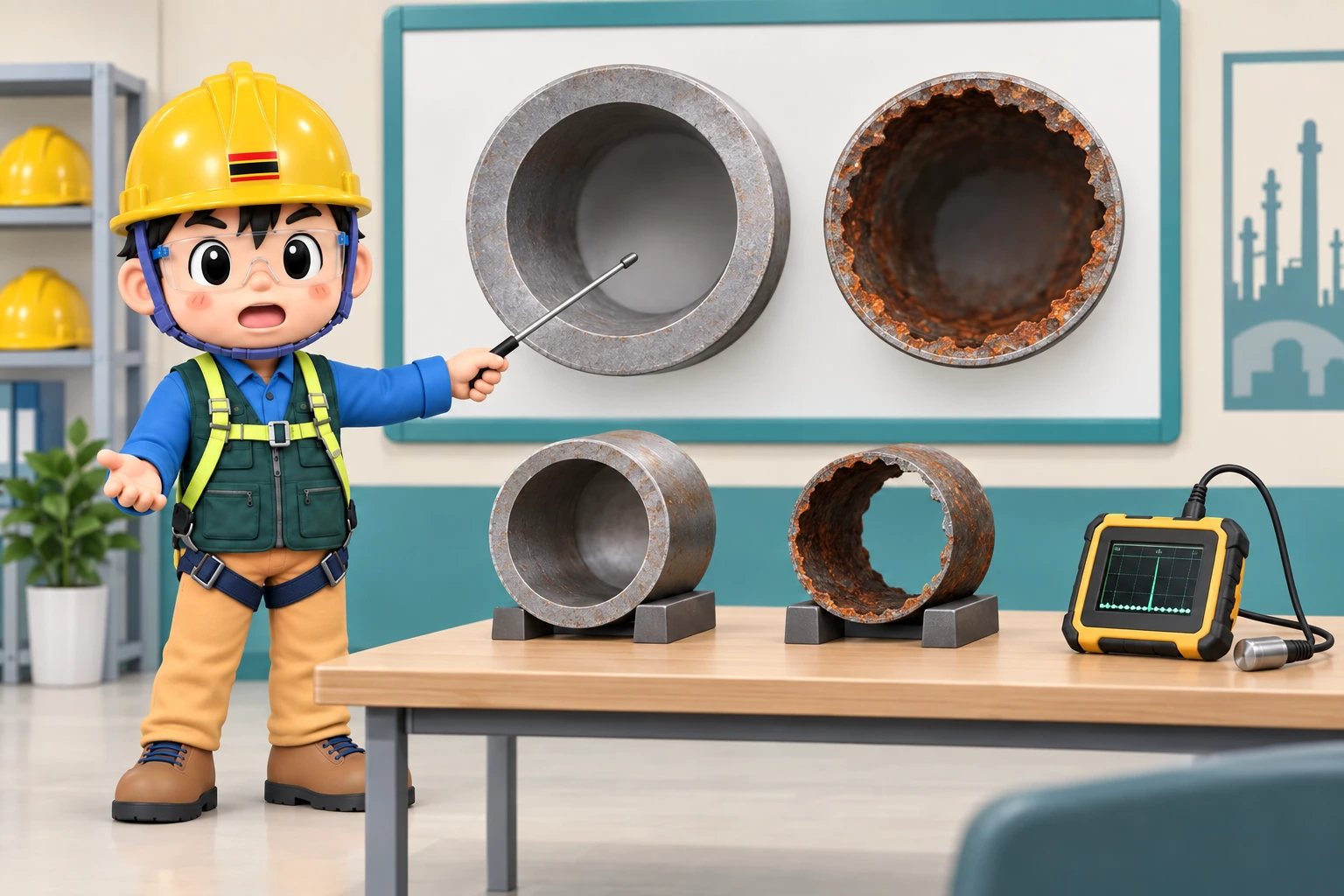
A circuit does not necessarily corrode uniformly
CSB explained how silicon content in carbon-steel components can influence sulfidation corrosion. A satisfactory measurement at one location cannot establish the condition of every component in the circuit.
CSB: Chevron Richmond investigation
Ask what the inspection actually covered
A passing thickness result has limited meaning without its location. Link measurement positions to drawings, material identity and replacement history.
Inspection scope should follow the damage mechanism. Competent assessment of operating conditions, remaining thickness and corrosion history should determine further inspection, replacement or material-upgrade priorities.
Control exposure while making shutdown decisions
An apparently small leak does not establish equipment stability. Gathering more people near the source increases exposure if it escalates.
Predetermine exclusion, assessment from safety and shutdown authority for hot flammable-service leaks. Workers should not improvise contact or impact testing of leaking equipment.
Putting it into practice
Overlay material identity and monitoring locations on the circuit drawing to identify gaps. In leak-response exercises, practice exclusion and shutdown decisions as well as diagnosis.
Technical insight
A sound measurement point does not validate an entire circuit
The Chevron investigation shows that sulfidation damage can vary between carbon-steel components within a circuit. A satisfactory thickness measurement at one point does not establish the condition of unmeasured components.
Combine material and replacement records with monitoring locations on the piping drawing to identify coverage gaps. During a leak, consider escalation while diagnosis continues and establish exclusion and shutdown authority in advance. Inspection coverage and operational response should inform one another.
Sources
- CSB: Chevron Richmond investigation미국 / United States
- CSB: Chevron Richmond interim report미국 / United States
- Frank Schulenburg incident photograph: CC BY-SA 3.0 licence사진 이용 조건 / Photograph licence