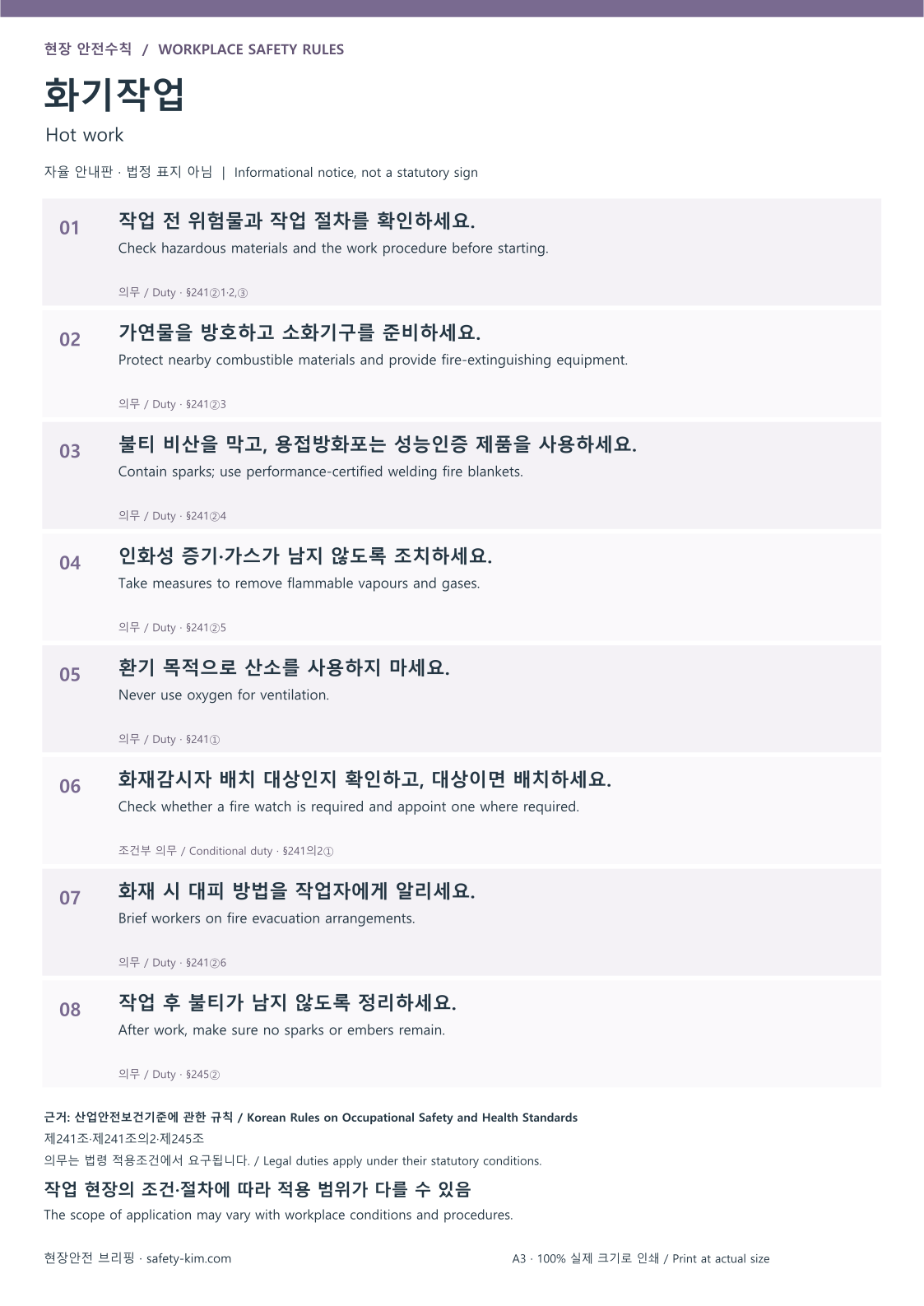
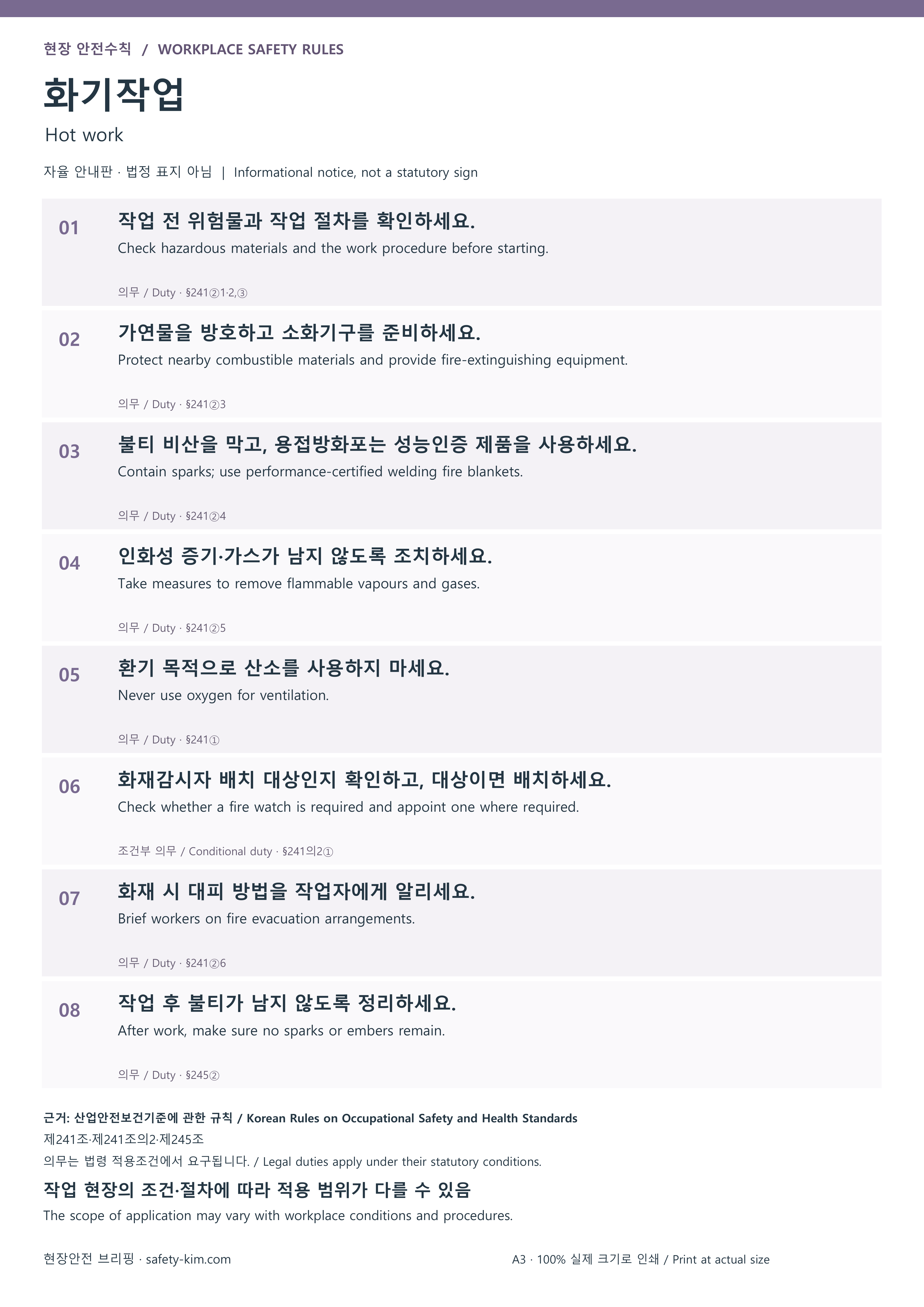
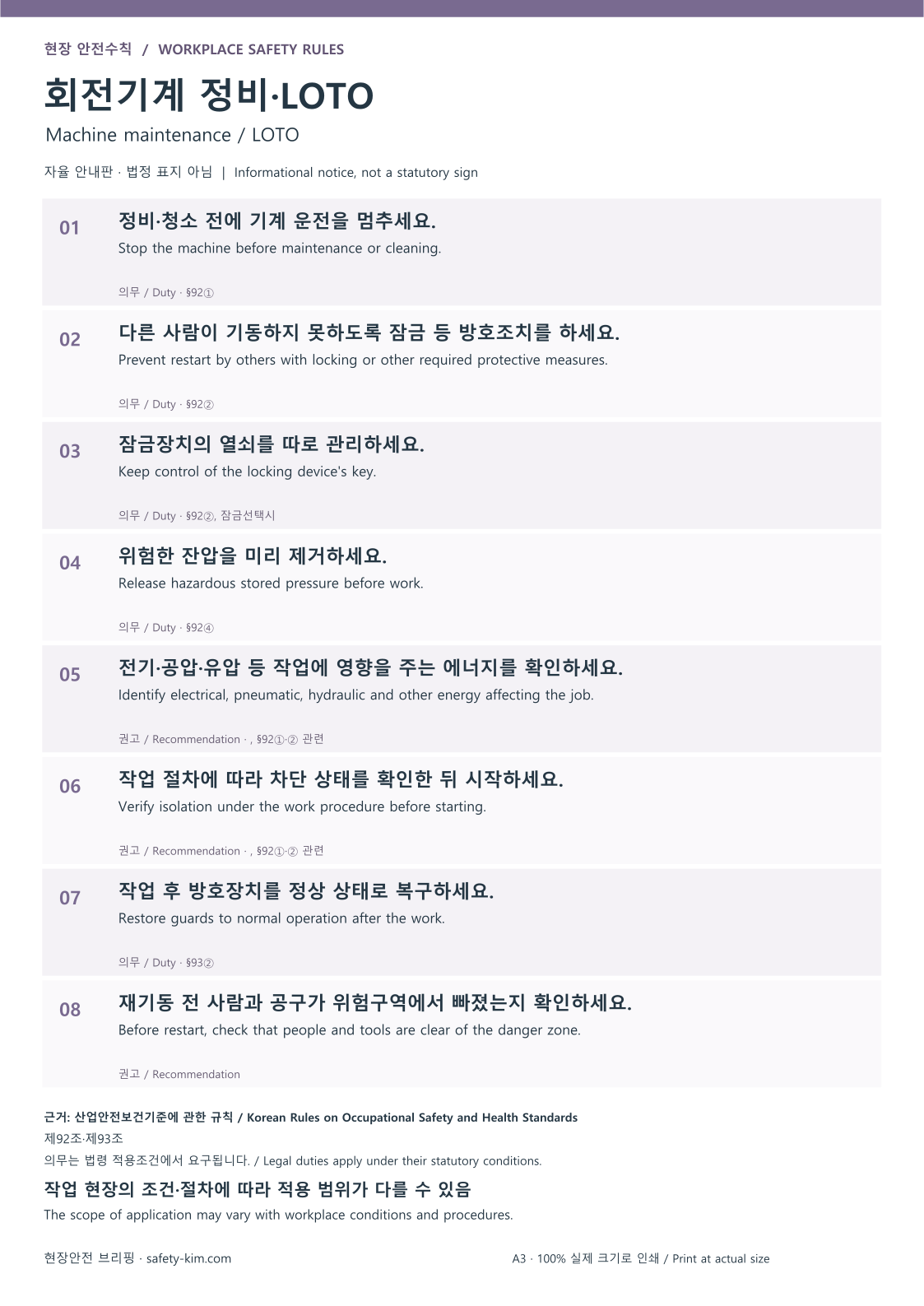
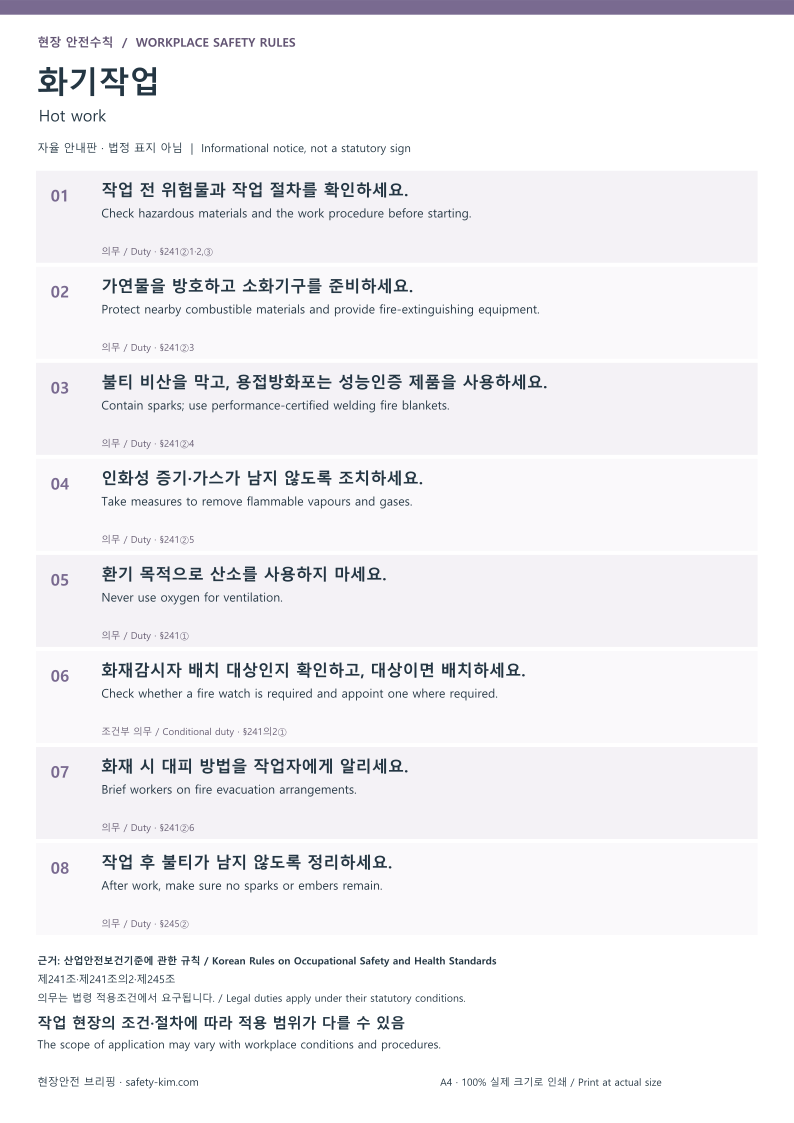
Hot work
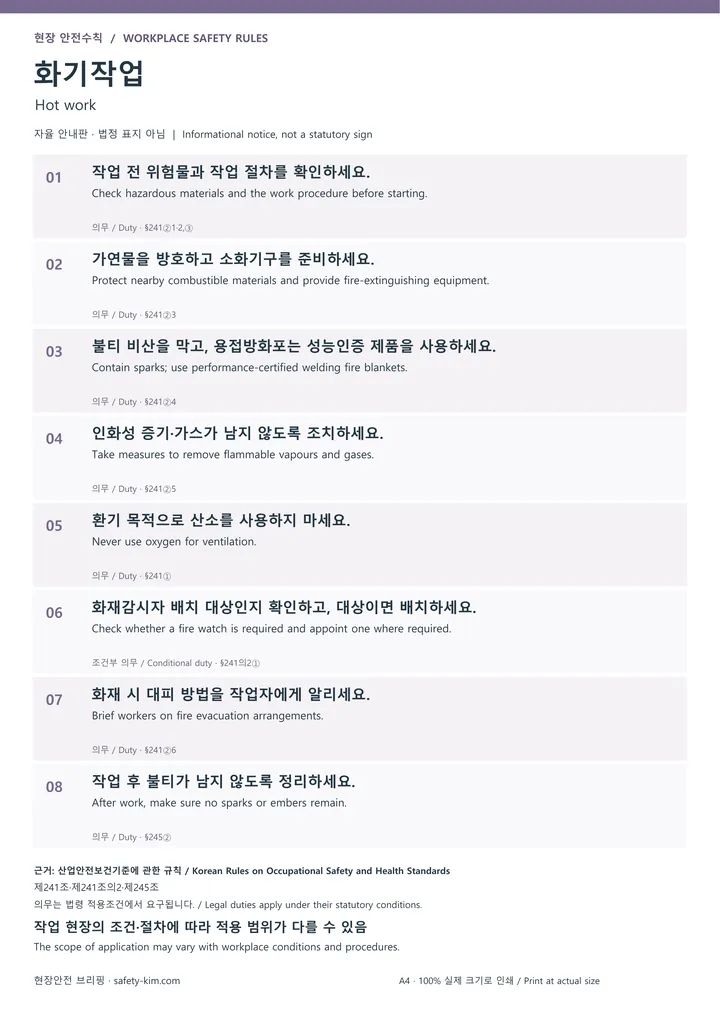
Relevant provisions: 241, 241-2, 245
Download by size and format
A4 · 210×297 mm
Print at 100% actual size
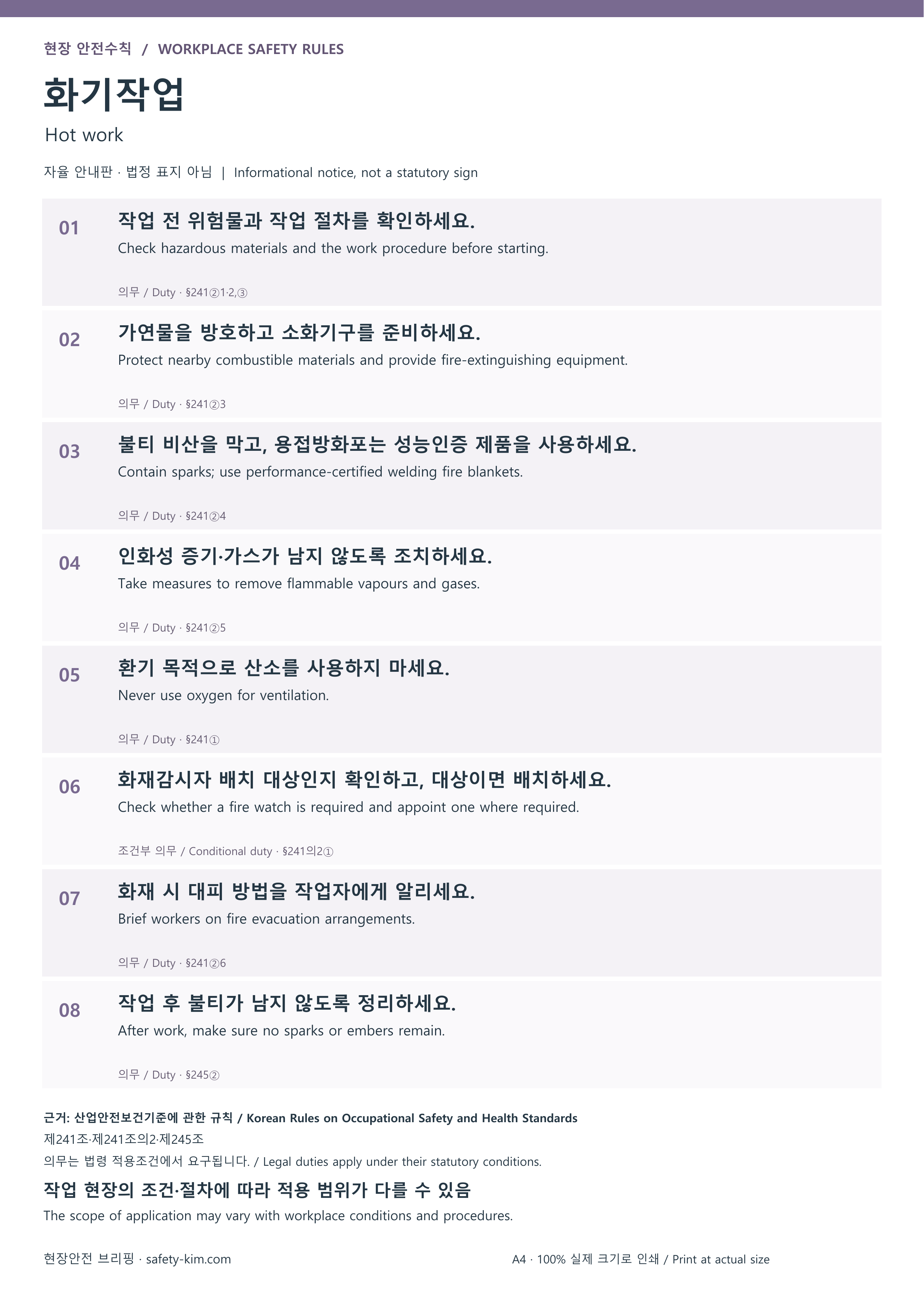
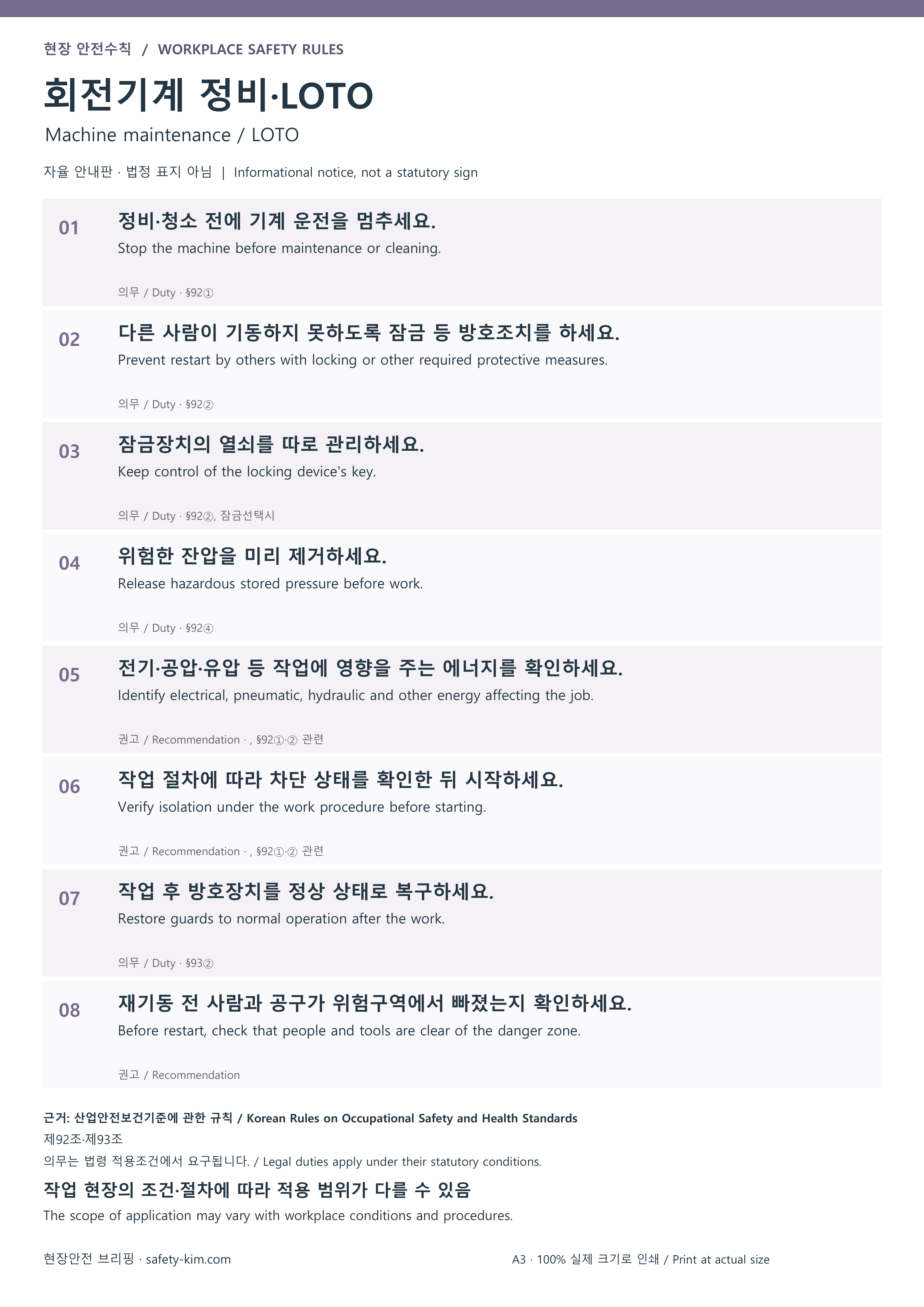
A3 · 297×420 mm
Print at 100% actual size

Five notices cover hot work, confined spaces, work at height and scaffolds, lifting and rigging, and machine maintenance/LOTO. Each downloadable file includes Korean and English.
These are informational notices, not statutory signs. Each item is marked as a legal duty, conditional duty or recommendation, and duties show the relevant provision.
A3 is recommended for workplace display. The provision references beneath each item print small on A4; check the printed text size and the distance from which it can be read.
The scope of application may vary with workplace conditions and procedures. Check the conditions of the task and the relevant provisions before posting.
Korean Rules on Occupational Safety and Health Standards (Korean)
Relevant provisions: 241, 241-2, 245
Print at 100% actual size
Print at 100% actual size
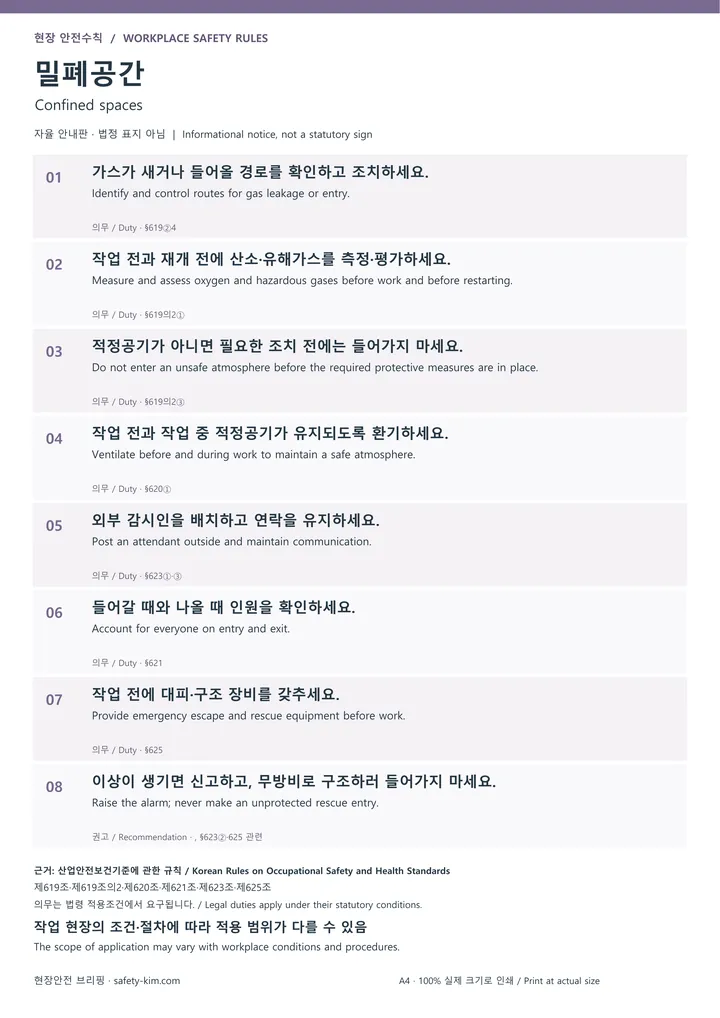
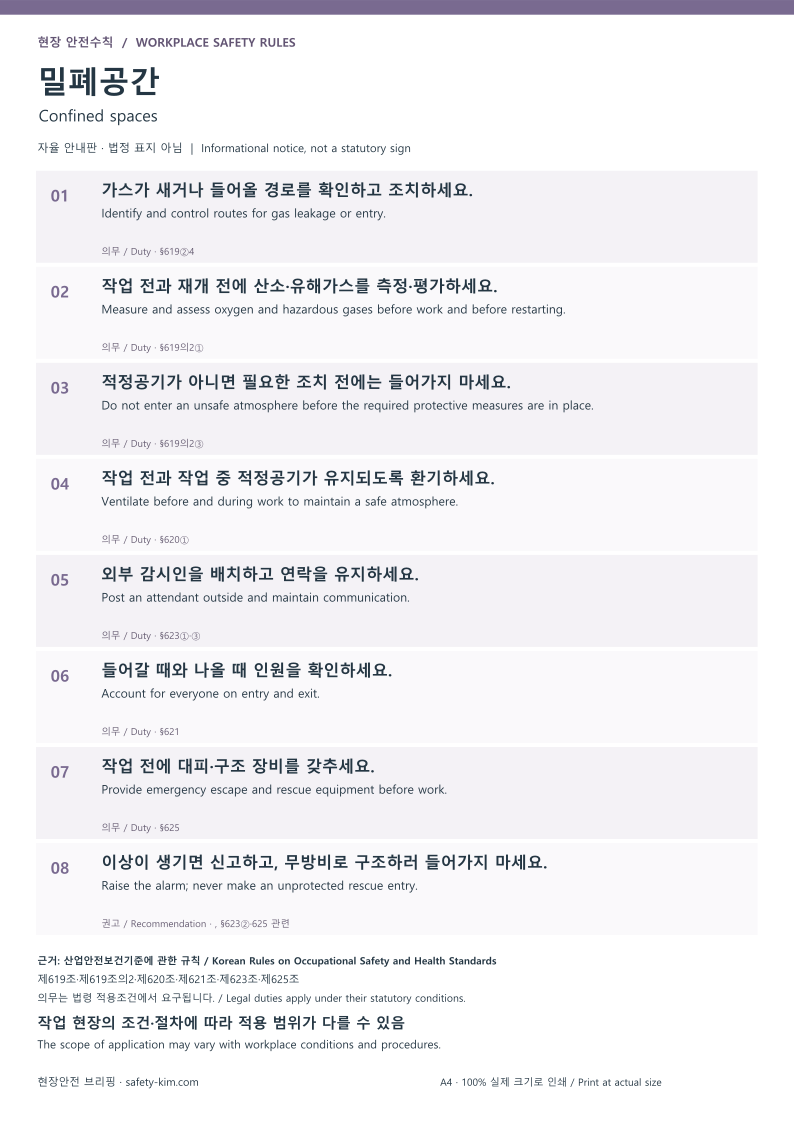
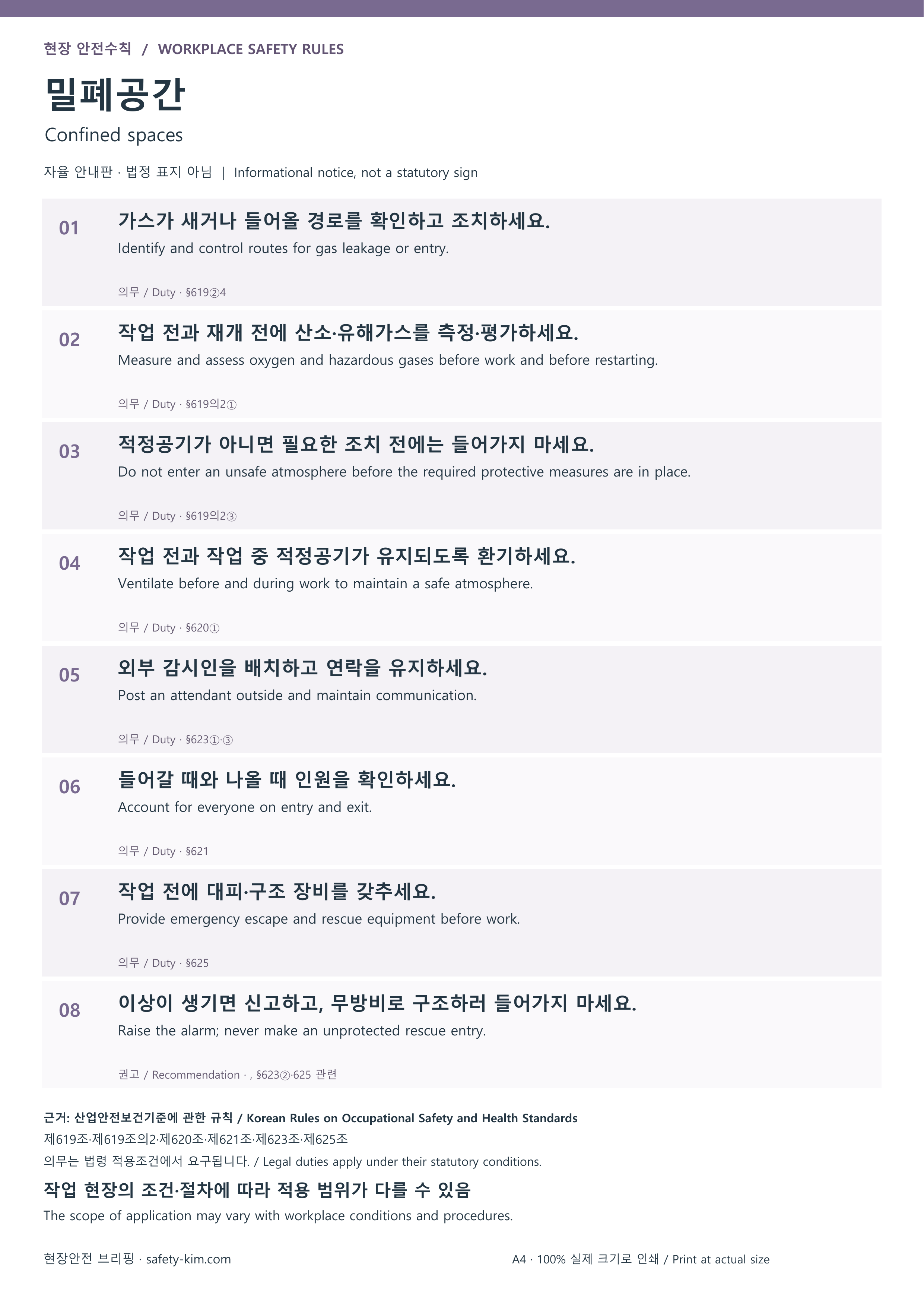
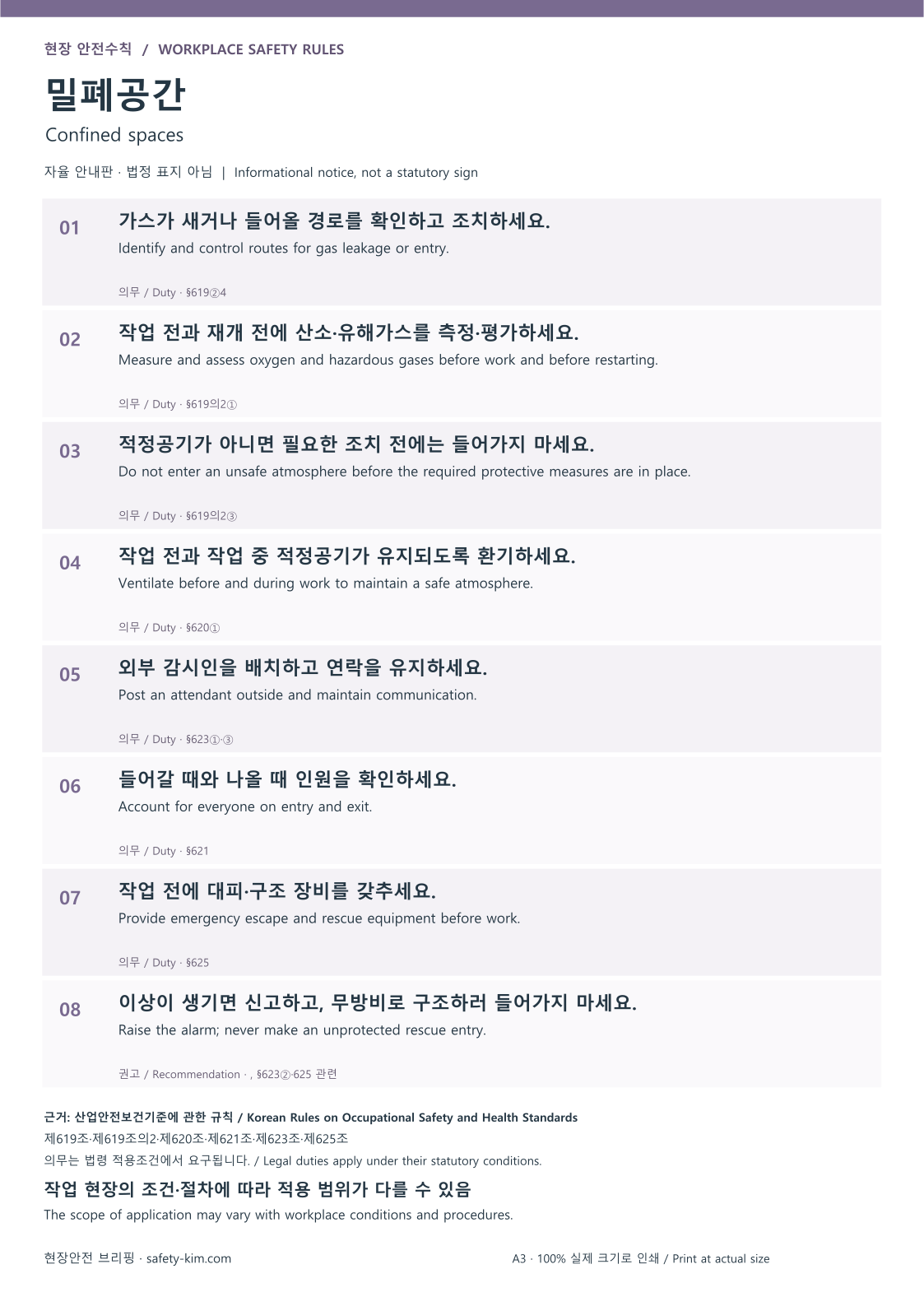
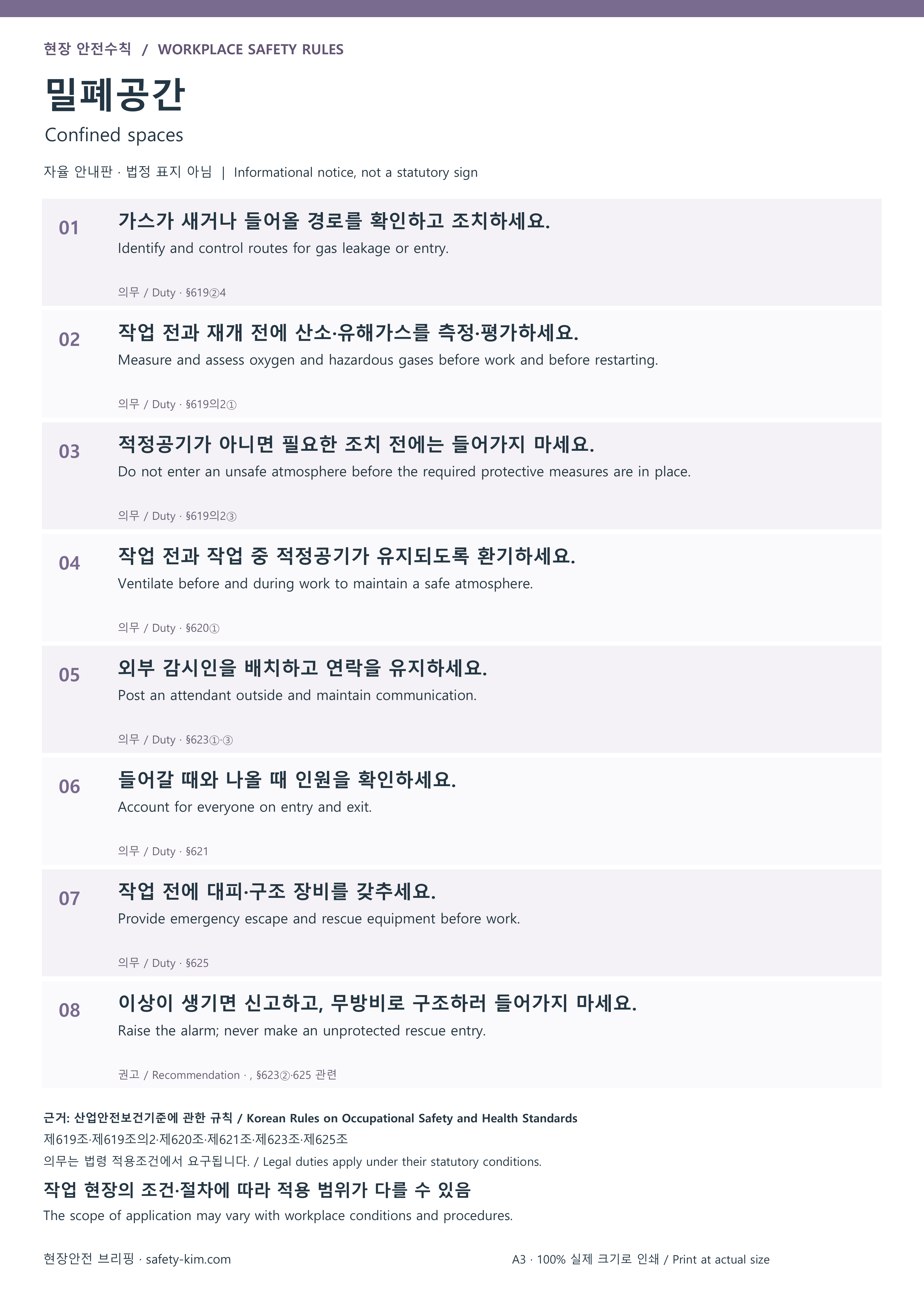
Relevant provisions: 619, 619-2, 620, 621, 623, 625
Print at 100% actual size
Print at 100% actual size
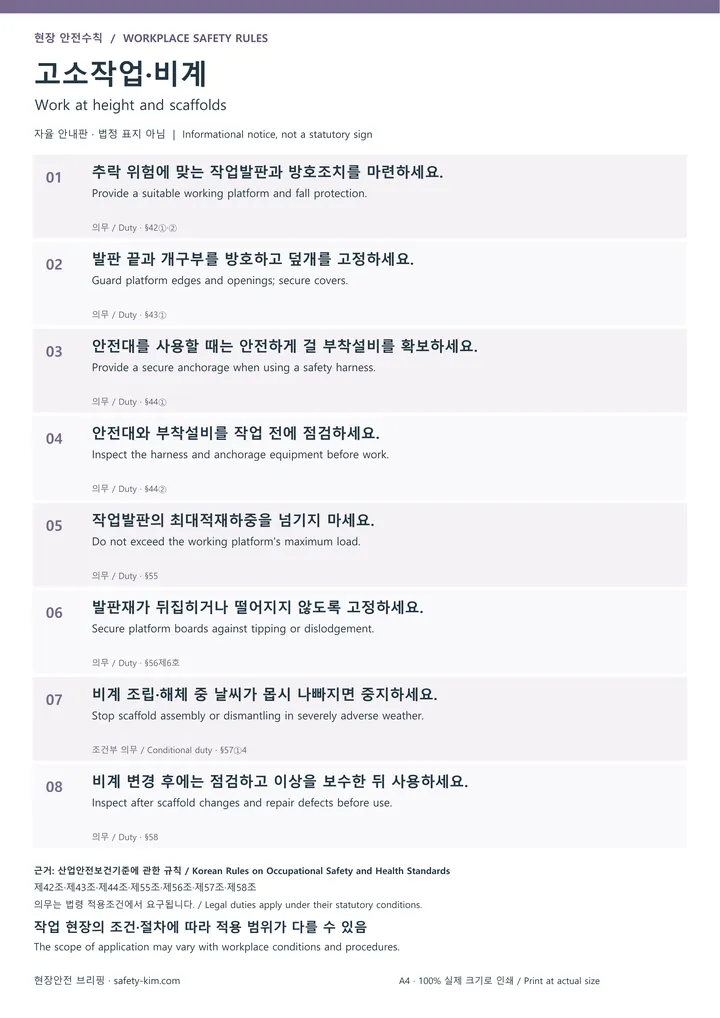
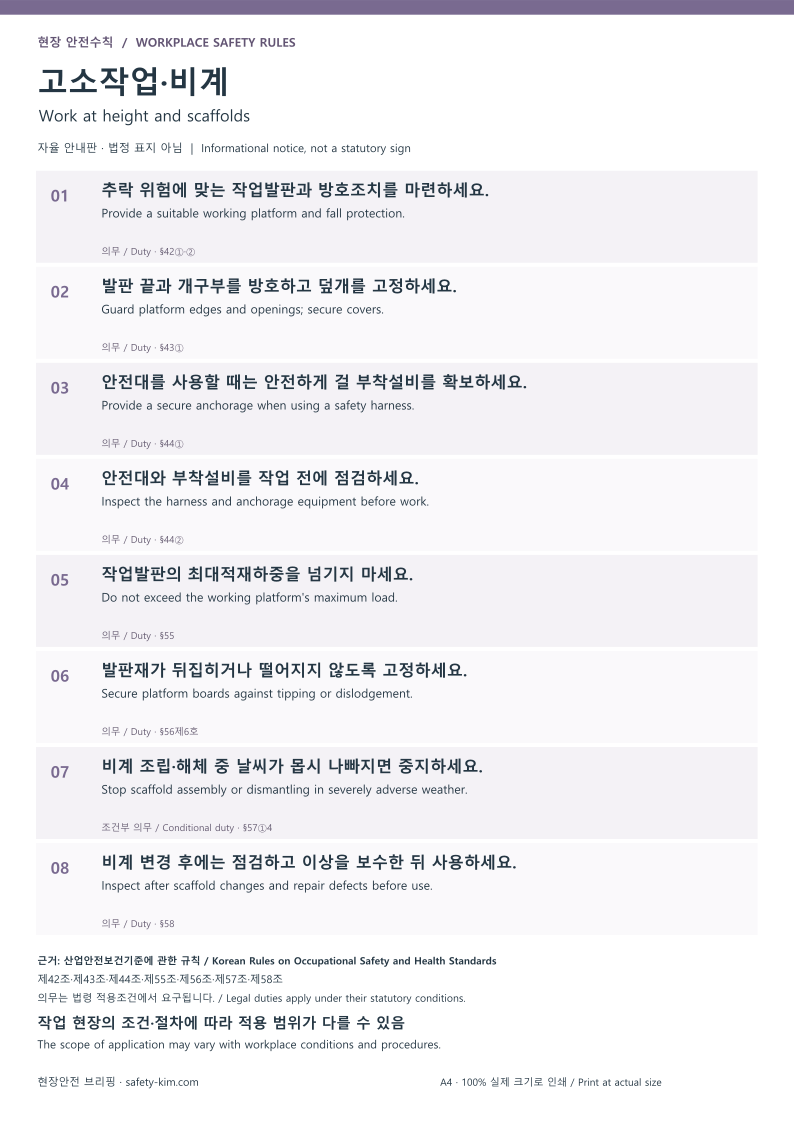
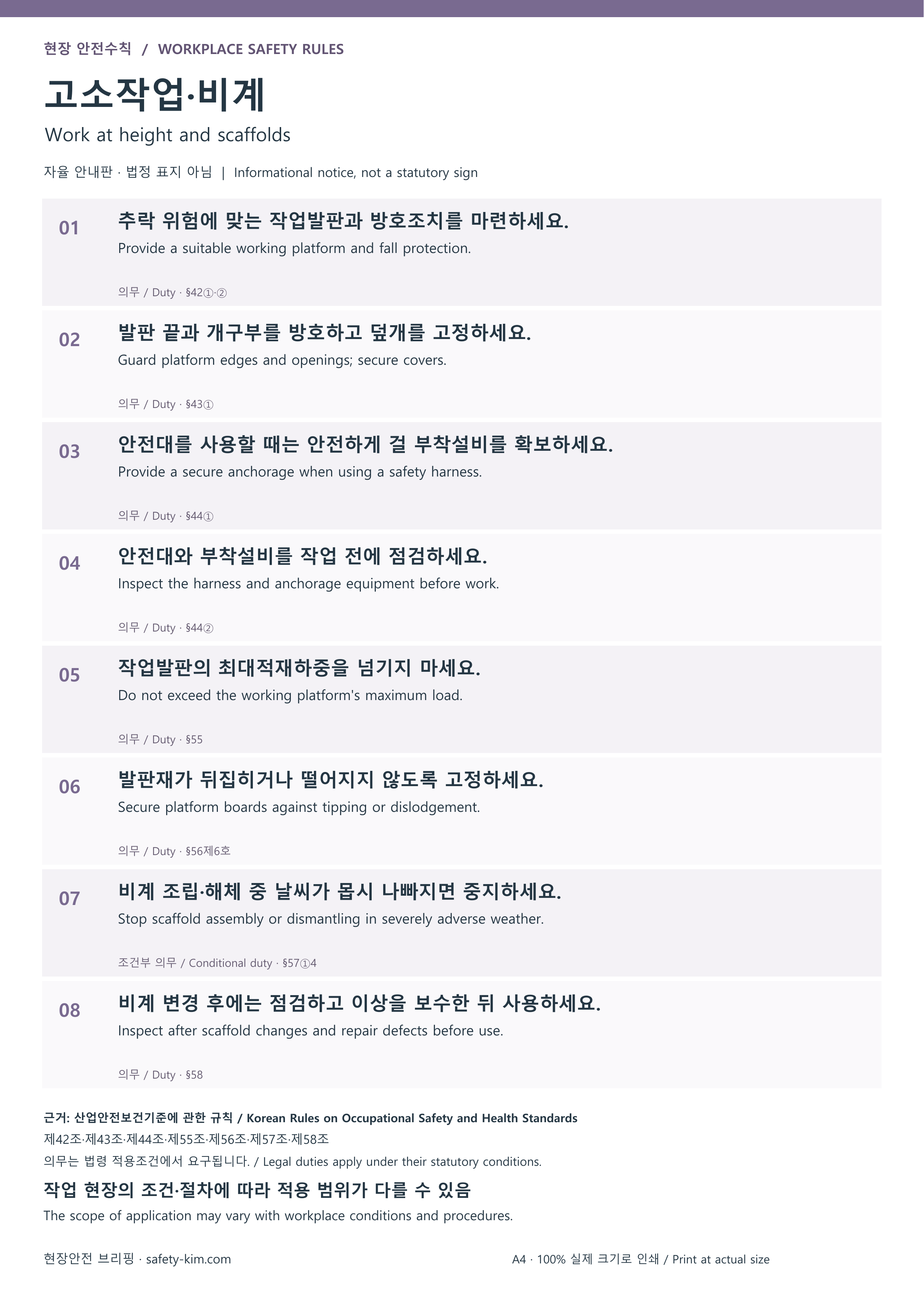
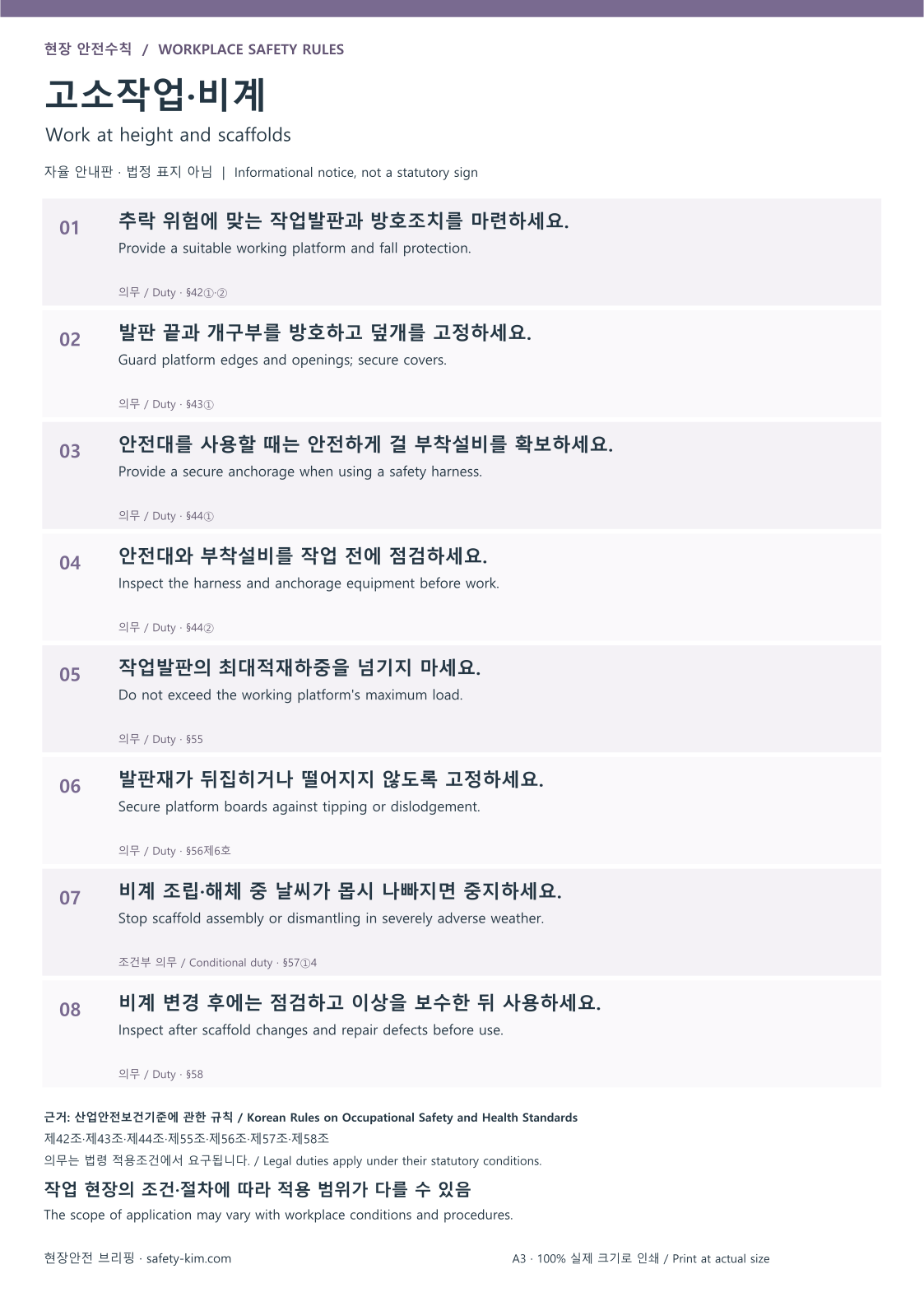
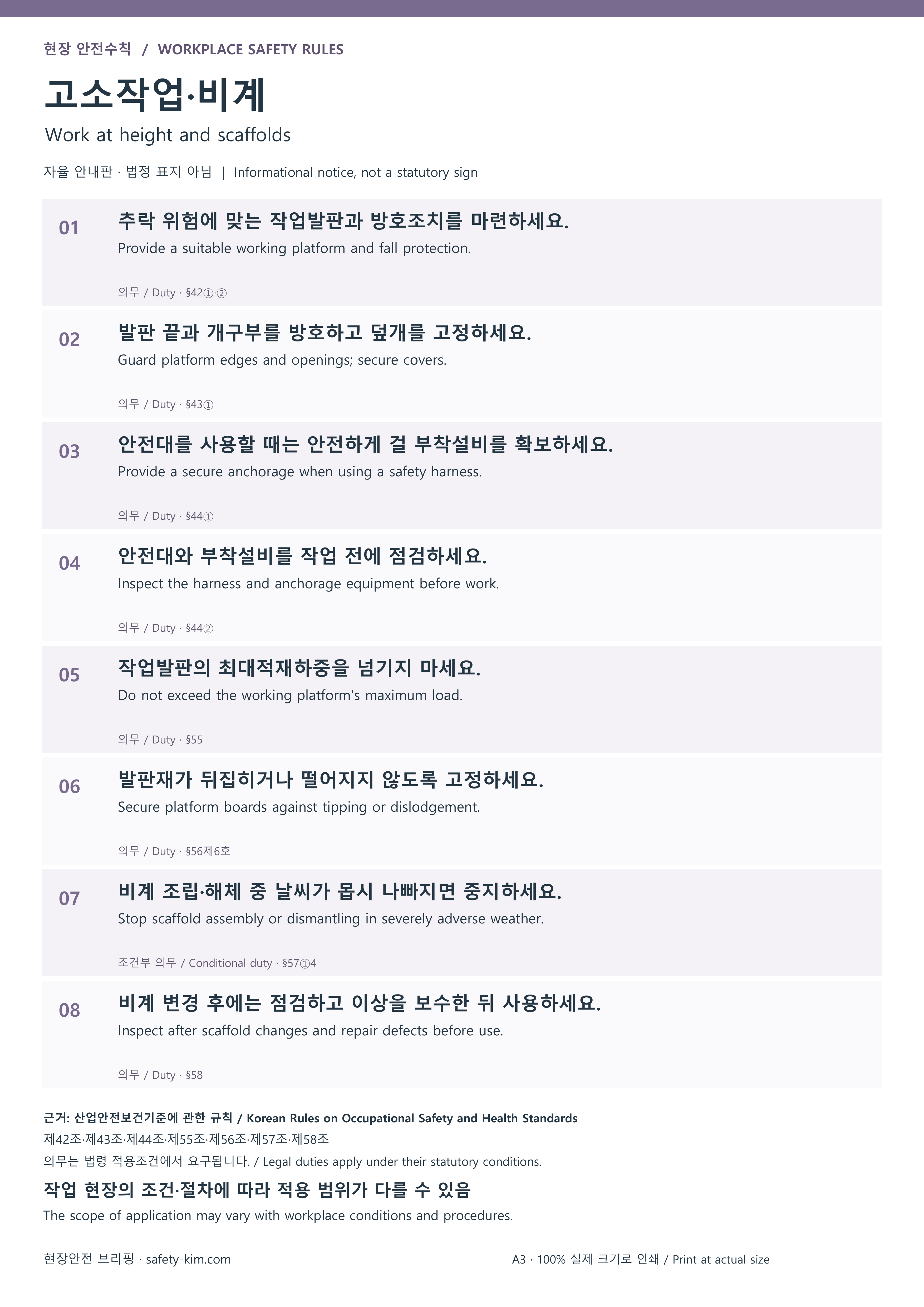
Relevant provisions: 42, 43, 44, 55, 56, 57, 58
Print at 100% actual size
Print at 100% actual size
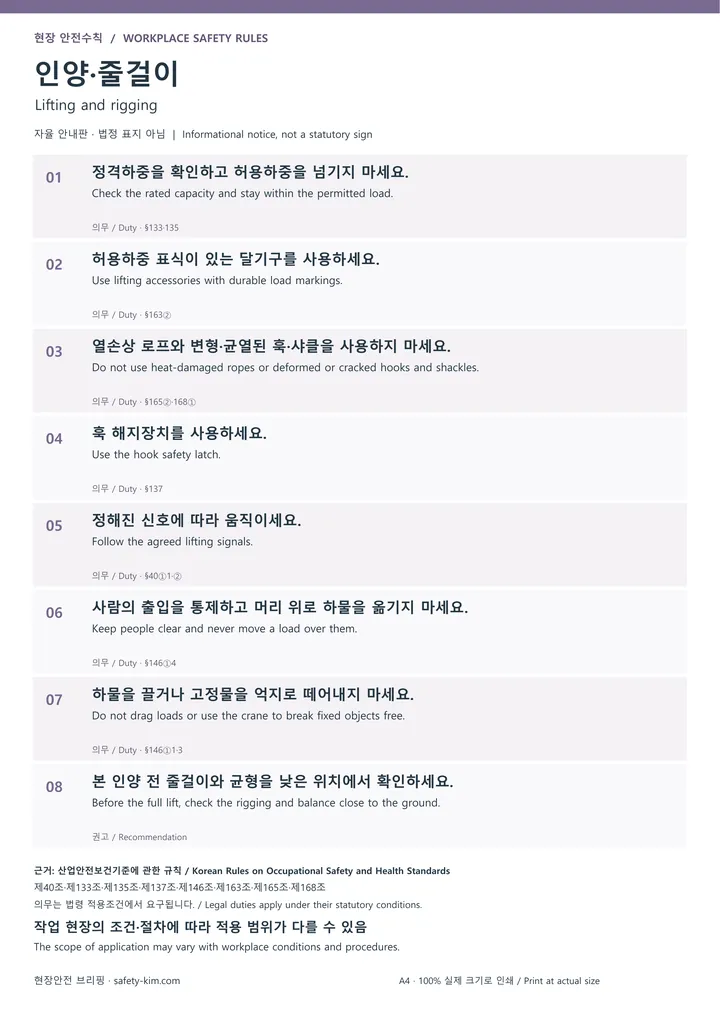
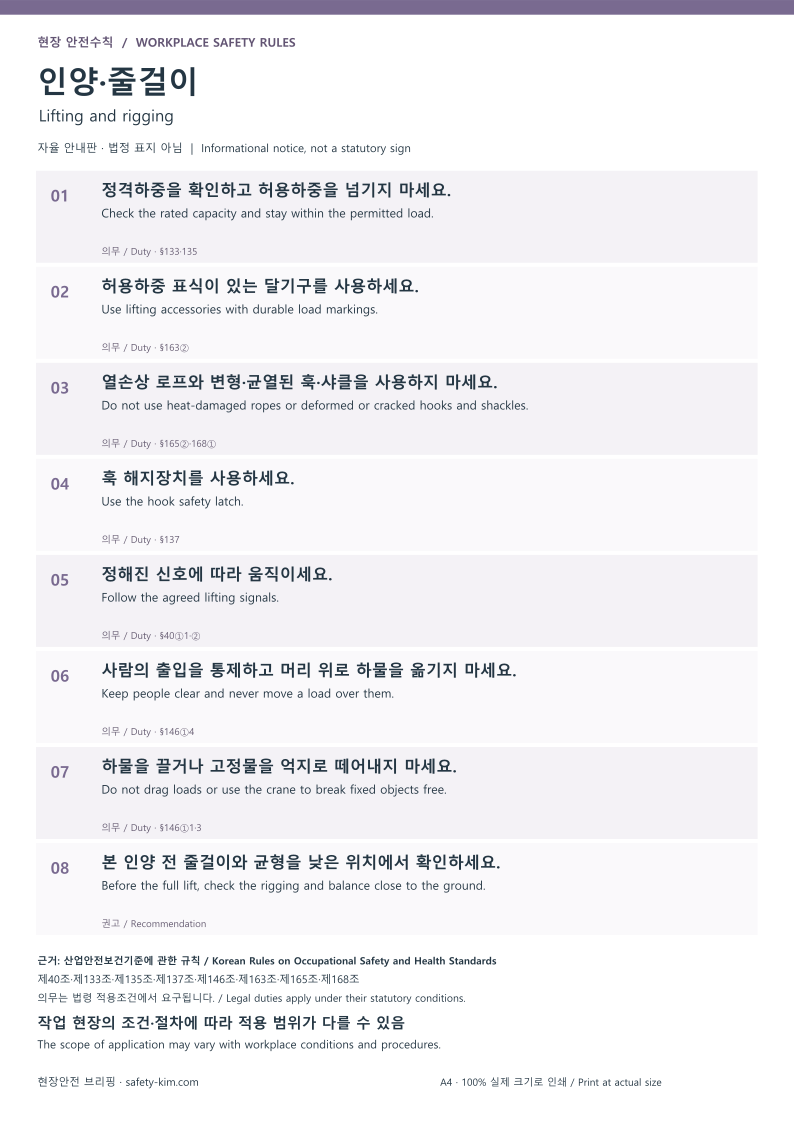
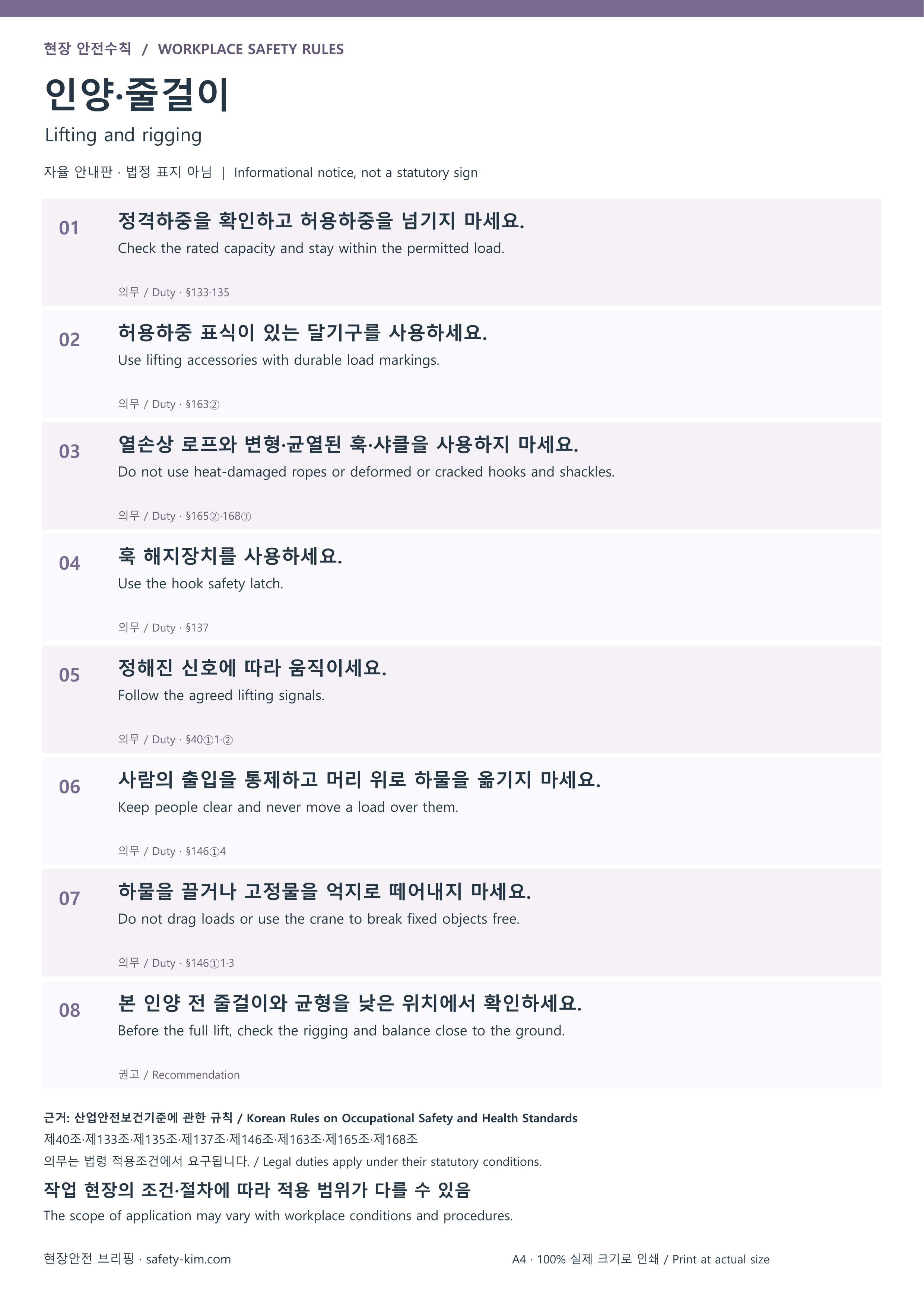
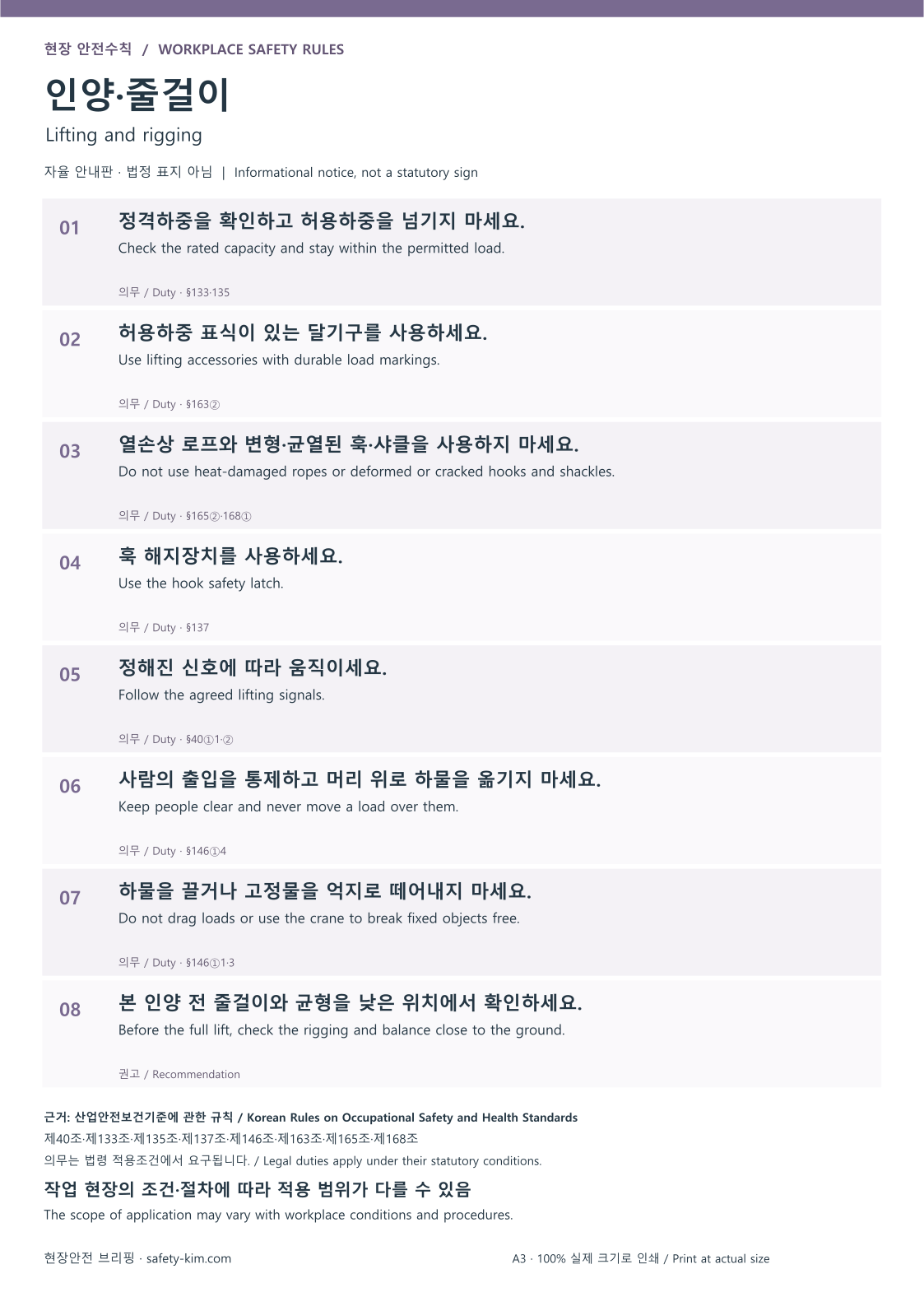
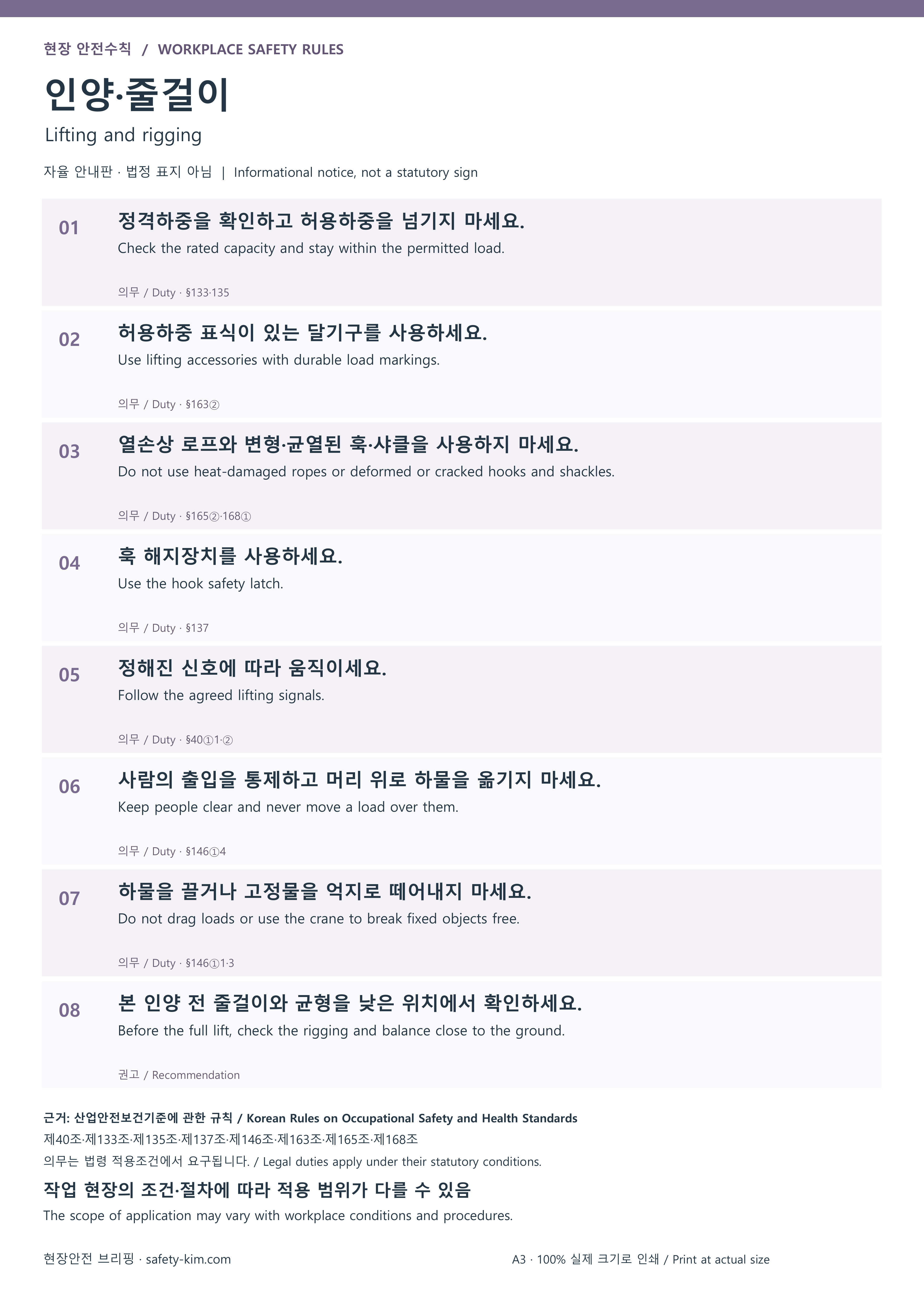
Relevant provisions: 40, 133, 135, 137, 146, 163, 165, 168
Print at 100% actual size
Print at 100% actual size
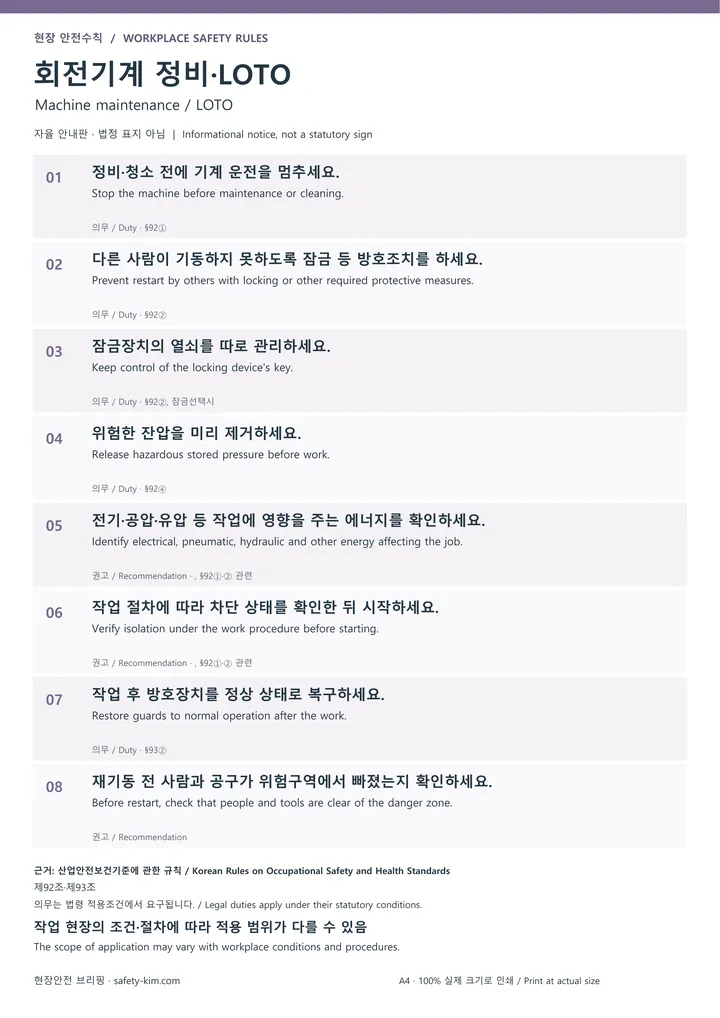
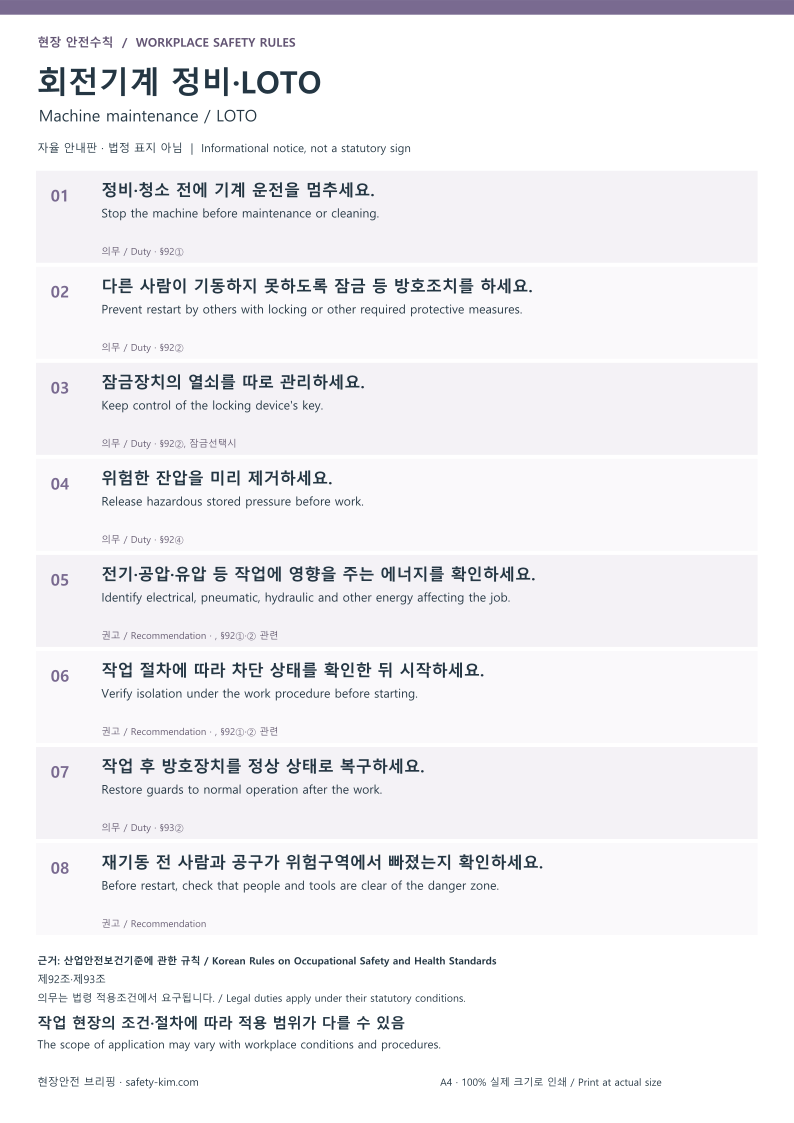
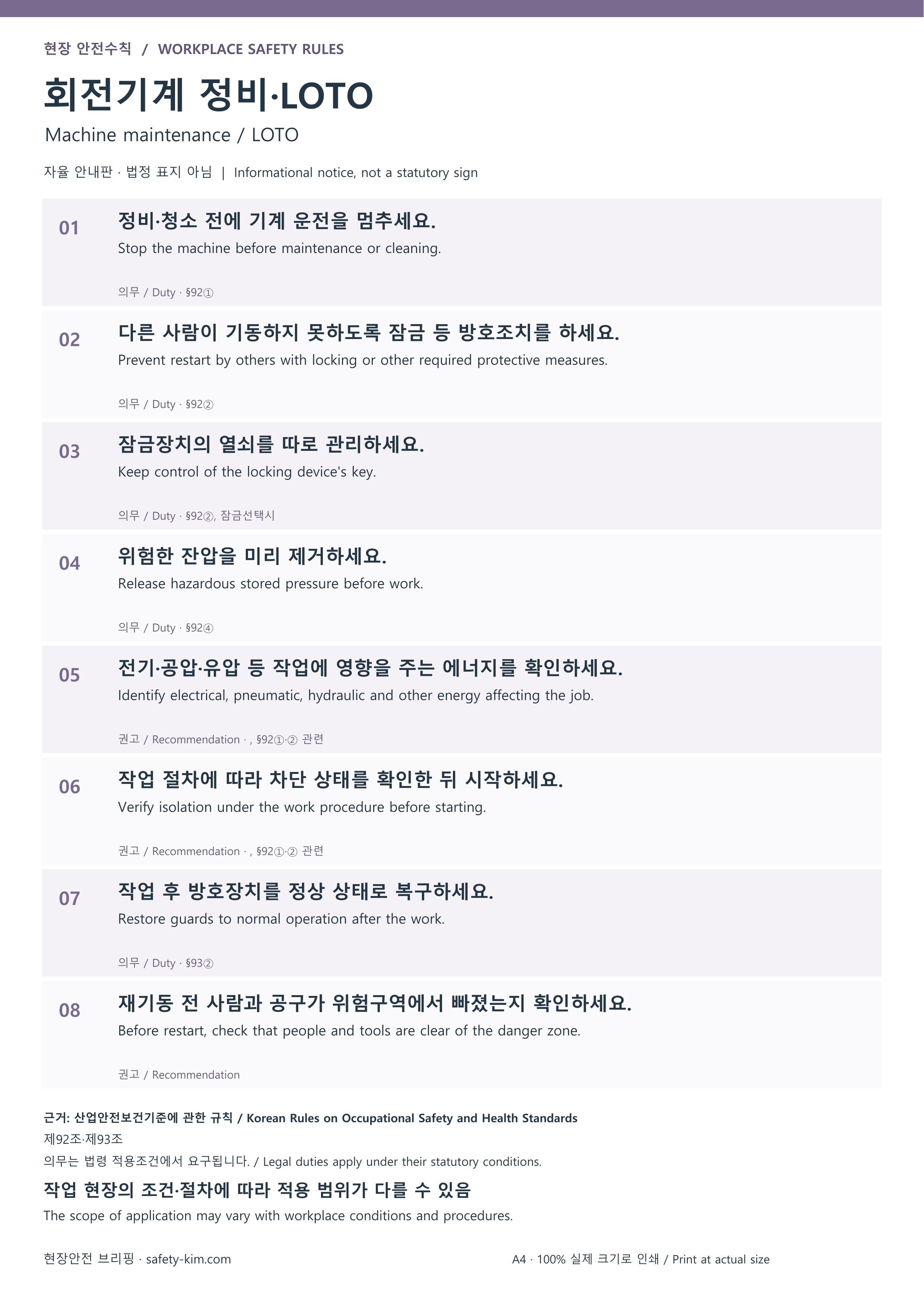
Relevant provisions: 92, 93
Print at 100% actual size
Print at 100% actual size
Select a poster by the task and the point where workers need to check an action. Agree on the area and conditions with the work lead for activities such as confined-space entry, lifting and hot work. Check that the relevant information can be read where workers enter the route or prepare for work. Distinguish required safety signs from supporting briefing material.
Record the task, language and version of each download. When posting both Korean and English, check that they cover the same work and actions. If a sign is outdated or describes another task, agree with the area owner which version applies. Check that the wording fits the current permit and local controls. Revisit the posting and field markings if an access boundary or temporary control changes.
During a briefing, ask workers to point out where and what they will check. If an access boundary changed, identify the actual entrance and waiting area and say who confirms the conditions. If the guide and permit cover different limits, have the work lead confirm and explain the current conditions. Use recurrent confusion to make the next poster’s actions and check points more specific.