Check access, enclosure condition and identification at distribution panels
Check obstructions, enclosure condition and labels outside a closed panel, and keep electrical verification separate from external observation.
Match the panel identity and access boundary
Start by matching the door label to the equipment being checked. Similar cabinets may supply different circuits or fall under different management. Reconcile field identification with the record and describe the location if the label is obscured or illegible. Do not open the door to search for a breaker when the identity is uncertain.
Establish authorized access before entering an electrical room or locked area. Observing a door and signs from an external route differs from entering to inspect electrical condition. A nearby key or an open door is not permission to enter. Explain the purpose to electrical management and observe from the designated position.
After replacement or relabeling, do not identify a panel solely from an old photograph. Compare the present label and record and refer discrepancies to electrical management. Keep uncertain identification open until its relationship to the supplied equipment is established. A location photograph helps identify the observed cabinet but does not prove circuit connections.
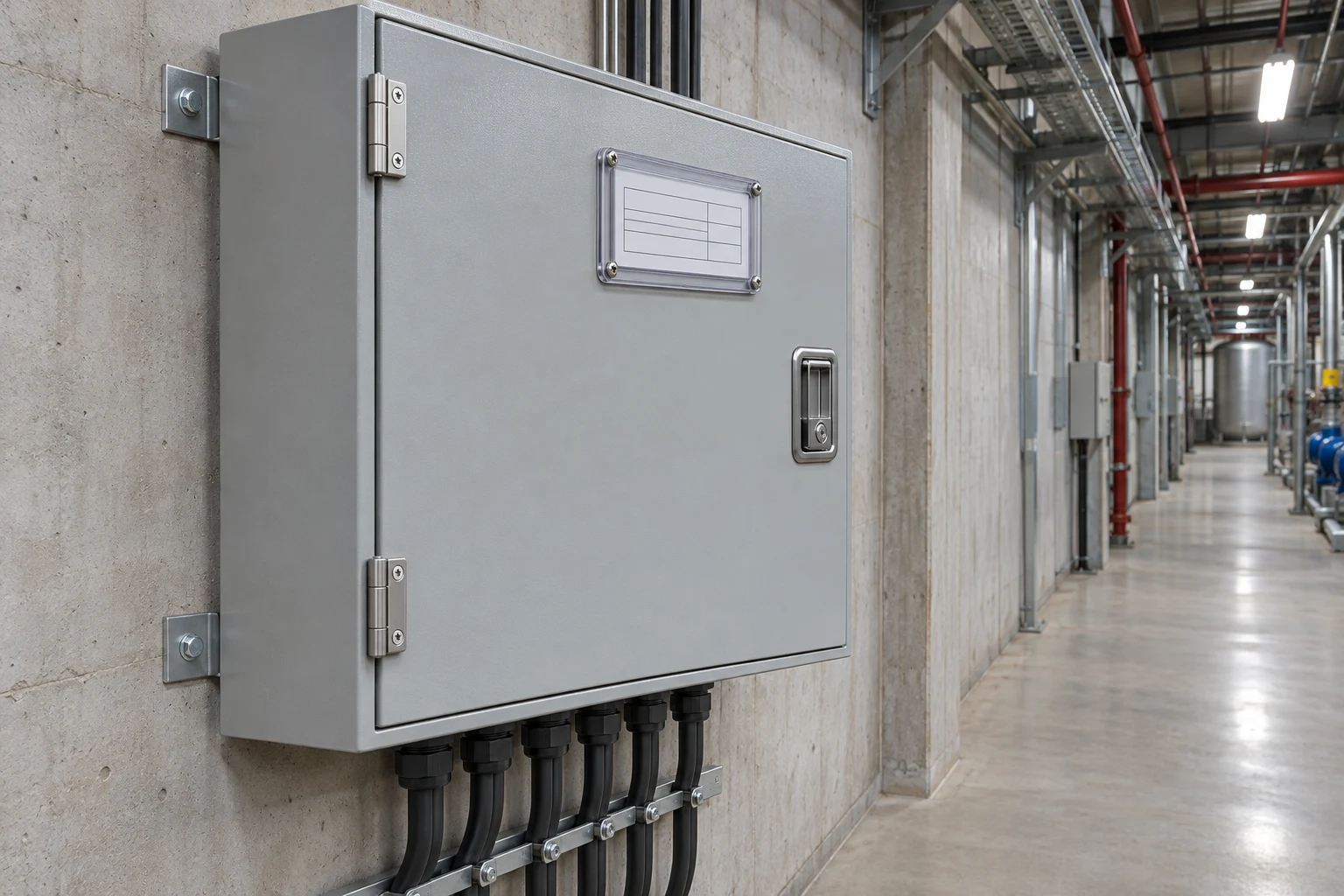
- Label window: check whether circuit and management information can be read.
- Door latch: report visible damage or closing problems to electrical management.
- Door hinge: record visible deformation or impact marks at the fixing.
- Cable entries: report externally visible damage and objects pressing on the cables.
Distinguish a closed enclosure from electrical work
Article 301 addresses protection of live parts presenting an electric-shock risk and secure fastening of doors or hinged panels. Record visible distortion or fixing damage and report its location to electrical management. Do not approach a gap to look inside or shake the door to test its fastening.
Article 318 restricts electrical work presenting a shock risk to qualified people, including checks using equipment or tools to establish effectiveness. Distinguish the observer reporting a defect from the person performing internal inspection. Reading labels and observing the enclosure does not verify internal insulation or earthing; refer the required electrical checks to a suitably qualified team.
Name checks according to what was actually observed. A closed door is a door-condition observation, not verification of protection under every condition. If a checklist asks about internal state, clarify the required work instead of checking it off from outside. Distinguish routine observations from qualified electrical tasks to avoid complete-looking records with missing verification.
Describe how stored objects affect access
When materials or a cart stand in front of a panel, distinguish what each object obstructs. The approach route, position for checking controls and door movement area are related but separate. A remaining strip of walkway does not prove that inspection and maintenance space is available. Record the specific obstruction and its location.
Article 310 and KOSHA GUIDE B-E-15-2026 address inspection and maintenance space and routes around electrical equipment. Equipment, voltage, work conditions and applicable exceptions must be considered rather than declaring compliance from one improvised distance. Link the verified area to material management and work preparation, and prevent it from becoming temporary storage again.
The layout during an idle period may differ from the layout during inspection preparation. Incoming maintenance materials or another team can obstruct a previously clear area. Coordinate use of the space with work preparation and material teams and establish who needs to know when it changes. Floor markings alone do not prove that required working space remains available.
Handover sequence
| Stage | Owner | Decision or check | Record |
|---|---|---|---|
| Access | Observer / electrical management | Confirm access boundary and identity | Location and labeling |
| Space | Observer | Distinguish route and door obstructions | Object location and owner |
| Enclosure | Observer | Observe closed door, hinges and labels | Visible defect location |
| Coordinate removal | Material / preparation teams | Check connections and adjacent work | Removal scope and restrictions |
| Electrical review | Electrical management / qualified team | Change procedure if internal inspection is needed | Preparation and verification |
| Handover | Electrical management / recipient | Link reinstatement and access status | Completion evidence and next check |
Identify who will move an obstruction
Immediately pushing or lifting an object can affect attached cables, hoses or adjacent work. First identify the team using it and its connections, then have a safe relocation method agreed. Tell the electrical inspection team that access remains restricted so preparation is not recorded as complete before the obstruction is resolved.
After removal, check continuity between the entrance, approach and panel area, not just disappearance of the object. Moving a cart in front of another panel or exit merely relocates the obstruction. Coordinate its storage location with the responsible team and preserve both the electrical work area and ordinary passage without independently redesigning the wider transport route.
If the owner is unknown, do not assume an object belongs to the electrical team because it stands beside a panel. Identify the removal responsibility using its location and connections and retain the obstruction status until resolved. Distinguish a verbal removal report from verification of the present route. Never disconnect another team’s cable or hose just to clear access.
Report visible changes to doors and hinges
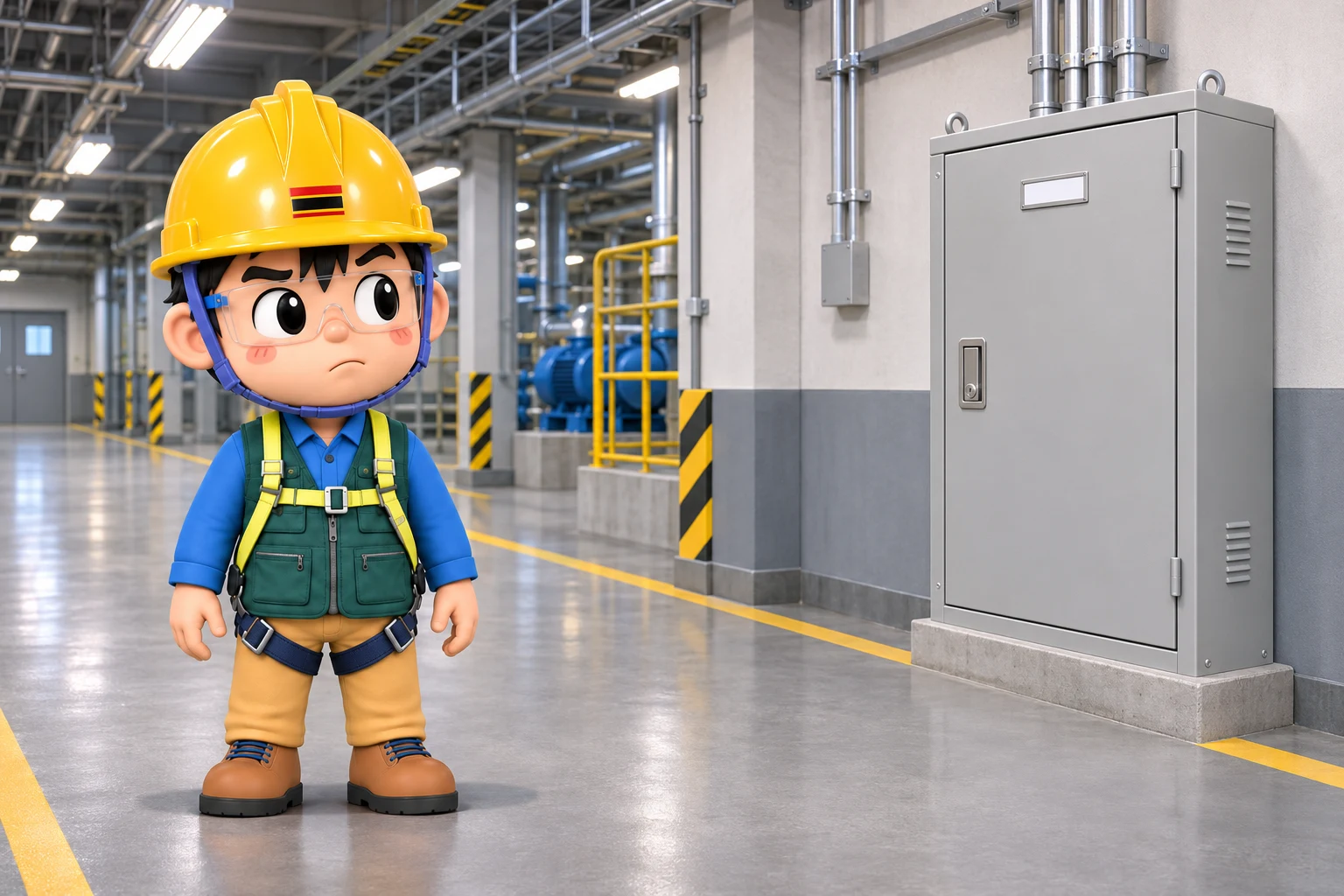
Record visible changes separately at the door edge, handle, hinges and fixings. From a safe position, look for apparent distortion, damage to the latch or impact marks around a hinge. Do not force a door into alignment or tie a damaged latch shut and mark it normal. Report the location so electrical management can define the repair scope.
Where bottom entries are visible, record only externally observable damage or support changes. Do not pull cables or turn glands to check tightness. Also report objects pressing on cables or conditions exposing the enclosure to impact. If live parts are exposed or imminent danger is suspected, stop routine observation, prevent approach and move to safety while requesting the necessary response.
Report nearby transport or storage conditions with impact marks without inferring an internal fault. Keep surface marks, closing problems and hinge deformation as separate observations. Do not conceal the finding behind temporary coverings or stored materials. Communicate electrical management’s access restriction and collect further information only from outside that boundary.
Separate label content from legibility
Circuit names, voltage indications and management information help identify the panel and who to contact. Check both their presence and legibility. If labels overlap or obsolete information remains, ask electrical management which record governs. Observers must not rewrite circuit names from memory or change voltage indications.
The electrical equipment section of the KOSHA practical guide addresses panel identification, door locking and protection of live parts together. Clear labeling does not establish internal safety. Record ambiguous identification and enclosure damage separately. Describe poor lighting or objects blocking the view, and do not fill inspection records with guessed content.
After relabeling, check whether the change resolves the original query, not merely whether print is clearer. Compare the responsible team’s confirmation with the present label instead of independently deciding that a label belongs elsewhere. Distinguish verified identity from remaining queries. Tell work preparation early if upcoming work needs circuit information that is still unresolved.
Carry outstanding conditions into work preparation
Separate access obstructions, enclosure defects and uncertain identification when briefing an inspection or maintenance team. Clearing materials and completing electrical verification involve different responsibilities. In permit preparation, completion of an external observation is not equivalent to completion of the precautions needed for electrical work.
Opening the panel or making electrical measurements moves the task into qualified electrical work with its own hazard review and procedure. A routine observer must not operate a breaker or remove an internal cover merely to close out a finding quickly. Electrical management coordinates preparation with the work team and communicates access restrictions and effects on adjacent activities.
Communicate changes in work scope so space and access conditions can be reviewed. A brief external check must not continue directly into an internal inspection. Retain the finding while electrical management and the work team arrange the required preparation. Tell waiting teams what may proceed and what is on hold so a clear area is not mistaken for unrestricted access.
Close out with information the next person can locate
Combine panel location and identity, the affected part and current access status in the handover. If materials have been cleared but identification or door repairs remain outstanding, retain those separate statuses. Connect the label to the surrounding location and explain which part a photograph is intended to document.
After a completion report, link electrical management’s verification to current labeling and the status of access restrictions. Do not reopen the panel yourself to recheck internal repairs. Tell the teams managing the route and storage locations about changed conditions to prevent renewed obstruction, and keep remaining restrictions visible for the next work preparation.
At close-out, connect each initial obstruction, defect and label issue to its own result. One completion mark for storage removal and door repair can hide unfinished work. Separate the responsible team’s verification from what the observer rechecked and do not infer unseen internal condition. Use the record as a starting point while checking for new storage or label changes on the next round.