Report enclosure and entry abnormalities on fixed Ex equipment
Identify visible abnormalities on the closed enclosure and entries, connect area and equipment documents, and hand over use status and professional verification.
Identify the fixed equipment and the abnormal location
When enclosure damage or a loose cable entry is suspected, identify the exact equipment and part. Similar boxes nearby can lead to the wrong object being reported. From a safe position, record the site identifier, installation location and visible condition. Provide information that lets operations and electrical personnel find the same object rather than opening the enclosure or turning parts to investigate.
Article 311 of the Occupational Safety and Health Standards Rules requires electrical equipment with explosion protection suitable for the substances in a hazardous area and maintenance of normal operating condition. Check both original suitability and preservation of the protection. Refer damage or modification concerns to the person who can examine operating conditions and maintenance history, using current observations rather than recollection alone.
Separate observations from suspected causes. Describe reproducible locations such as deformation, a possibly missing fastener or damaged entry surroundings, and retain unresolved items. Do not approach hazards or shake components to improve the report. Let the responsible people determine use restrictions, access control and follow-up inspection from safely obtained information.
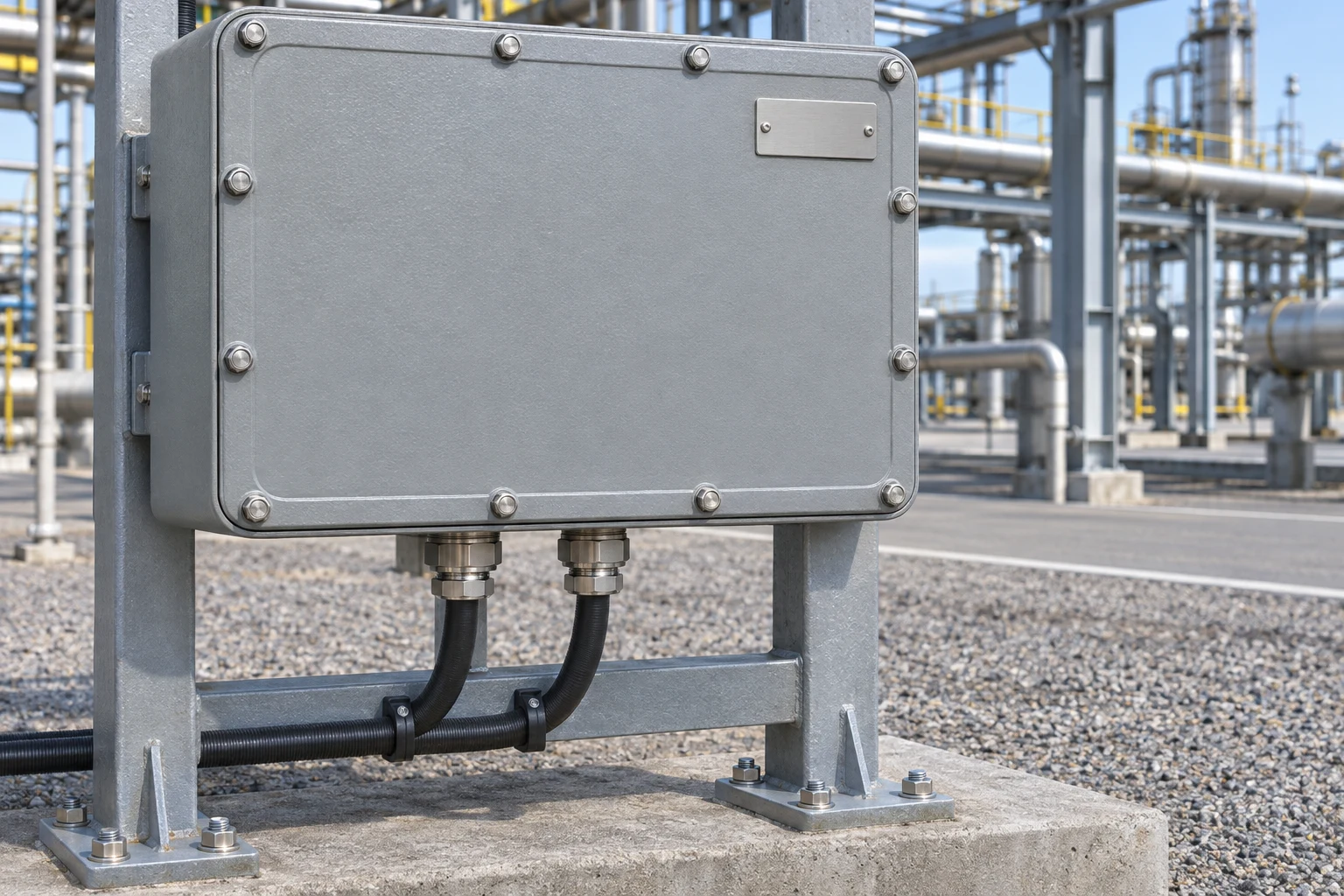
- Enclosure fastening: record suspected damage or missing parts from safe external observation.
- Cable entry: report visible entry-device and cable conditions against the same equipment.
- Identification plate: match the equipment to applicable manufacturer and certification documents.
- Mounting support: ask the responsible person to assess effects of loads and support on the equipment and connections.
Connect area conditions and equipment documents
Use the hazardous-area classification and drawings under Article 230 as starting information for the installation location. Compare the actual position with managed area information. Do not infer classification or protection from enclosure colour or thickness. Report relocation or process changes so the responsible person can examine current area conditions alongside equipment limitations.
KOSHA Technical Support Regulation (KOSHA GUIDE) B-E-21-2026 addresses information and protection integrity for design, selection and installation. Match certificates, instructions and drawings to the actual equipment type. Documents for a similar product can have different accessories or conditions. Establish the match before using them to define inspection or maintenance.
Keep unreadable identification or missing documents unresolved and request the necessary information. Link location, readable markings and maintenance records to the request. Distinguishing verified items from open comparisons helps the inspector locate remaining work. Have competent personnel assess inconsistent area and equipment information before deciding further action and use status.
Record visible enclosure and fastening conditions separately
Consider the cover, body, fasteners and connections as parts of the protection. From safe external observation, distinguish deformation, corrosion, impact marks and missing components. Identify the face and connection so a close-up does not lose the overall location. Refer effects on protection and required inspection methods to personnel who understand the relevant construction.
The initial-inspection items in B-E-21-2026 include enclosure damage, unauthorised changes, bolts and cable entries. Use them to identify what technical documents and professional inspection need to address. The finder reports the observed location; the inspector selects scope for the protection type. Distinguish external observation from inspection of internal joints and other features.
Do not close a finding by fitting a similar-sized bolt. Verify required components and conditions against manufacturer and certification information. Forcing a cover or machining a surface can affect other protective features. Report the condition and use status, and hand over for maintenance within the prepared scope using verified suitable parts.
Handover sequence
| Stage | Owner | Decision or check | Record |
|---|---|---|---|
| Identify | Finder and operations owner | Location, observation and current use | Object, part, time, unknowns |
| Connect documents | Electrical and equipment owners | Match area and equipment information | Classification, type, documents |
| Manage use | Authorised owner | Decide restrictions and inspection scope | Controls, owner, request |
| Inspect and maintain | Competent personnel | Protection, suitable parts and work conditions | Scope, action, evidence |
| Verify and accept | Maintainer, verifier and operations | Protection, open actions and readiness basis | Results, decision, recipient |
| Retain history | Management owner | Recurrence, conditions and follow-up | Equipment history and next owner |
Connect entry conditions with cable protection
Examine the entry device, cable and enclosure connection together. Record visible bends, sheath damage or deformation around the entry and nearby support conditions. Do not pull cables or tighten glands as an improvised check. Ask electrical personnel to distinguish equipment operation from preservation of the required entry protection.
KOSHA’s Practical Guide identifies packing, clamping, sealing and protection from external damage at cable entries. Determine the actual entry method and accessories from documents before assessing the finding. Retain hidden features as unverified. The condition of unused-entry closures also needs assessment against the protection method and suitable component information.
Document tape or improvised fillers covering gaps or damage and refer them for competent assessment. Concealing a gap does not establish restored explosion protection. The maintainer should verify suitable parts, methods and the scope of change, with supporting evidence. Include both the enclosure connection and cable support so effects on neighbouring components can be assessed.
Hand over use status and the boundary of professional inspection
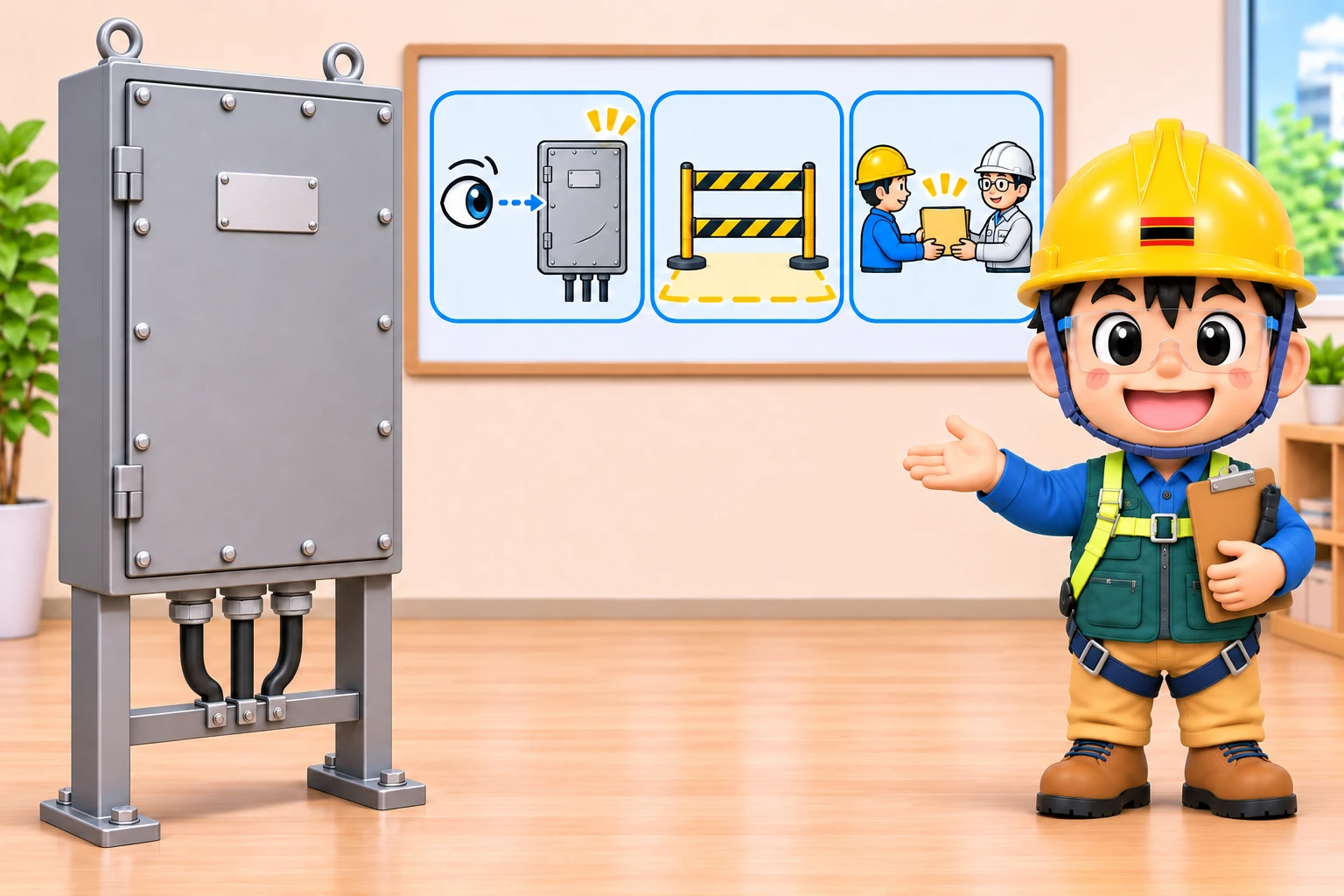
Report current use and controls alongside the time and location of the finding. An inspection request without status information can lead to continued use or unprepared intervention. Assign responsibility for use restrictions and access under site procedures. Separate observed facts from the responsible person’s decisions to keep later verification clear.
Electrical work with shock hazards requires preparation under Article 319 and applicable procedures. Opening or internal inspection belongs within work reviewed by authorised competent personnel for both electrical and area hazards. Users should request inspection rather than remove covers to investigate. Allocate responsibility for verifying power state and surrounding hazardous conditions during preparation.
KOSHA’s Practical Guide addresses the knowledge, tools, components, isolation scope and area information needed for maintenance. Agree the inspection scope and required documents with the maintainer. Assign open preparation items and next checks to prevent improvised work. The recipient should verify that restrictions, requests and work scope identify the same equipment.
Verify maintenance scope and component suitability
Connect the finding to components that may be affected by the repair. Work on enclosure fastenings can influence cable support or entry loading, so have the maintainer review related conditions. Record the evidence for suitable replacement parts. Appearance or thread engagement alone is insufficient; use manufacturer instructions and applicable certification conditions.
B-E-21-2026 connects the protection of used or repaired equipment with verification and, where needed, manufacturer or certification-body involvement. Retain evidence that the equipment has been restored to its protective conditions, not only a description of the work. Keep changes requiring further assessment explicit and obtain the necessary information before deciding on reuse.
KOSHA’s Practical Guide addresses preserving unaffected protection and restoring the whole equipment after maintenance. Distinguish the part worked on, components used, neighbouring features checked and open conditions. Separate a replacement action from overall readiness and connect maintainer and verifier records so unchecked items are not concealed by a completion mark.
Collect the evidence needed for return to use
Connect the cause, action and post-maintenance verification to the same equipment. Relevant people should understand what changed and the basis for readiness. Align operations checks with electrical verification of protection and maintenance scope. Where checks remain, assign responsibility for maintaining restrictions and the next verification time.
The recipient should match records to the installation and identify open conditions. Receive applicable documents and work conditions for changed components or methods. Follow site procedures for authority to release restrictions and notify affected people. Link the maintainer’s completion report to the recipient’s verified use conditions.
Assign locations and responsibilities for any follow-up observation. Recurring entry damage or continuing external loads require examination of underlying causes. Group repeated findings in the maintenance history to support decisions about installation or support changes rather than repeated component replacement alone. Distinguish completed verification from further observation at handover.
Keep discovery through acceptance in the equipment history
Keep findings and maintenance results linked to the same equipment. Make identification, location, restrictions, responsible people, documents, parts, results and recipient traceable together. Locate photographs and drawings by face and component for comparison. Retain uncertain causes as hypotheses and identify additional checks.
The next inspector should examine verification conditions as well as completion marks. Compare current documents after changes to area conditions, location or accessories. Record newly observed conditions and refer them to the relevant owner. Apply the inspection methods and intervals established for the equipment, area and site management requirements.
Maintain the links between equipment and documents, observation and professional judgement, and maintenance and acceptance. The finder identifies the object safely, competent personnel assess and address the protection, and the recipient confirms outstanding conditions and use status. Records referring to the same equipment show whether reporting led through to inspection and a use decision.
Related reading
Original sources
- Korean Occupational Safety and Health Standards Rules — Articles 230, 311 and 319
- KOSHA Technical Support Regulation (KOSHA GUIDE) B-E-21-2026 — general requirements and Annex 2 initial inspection, printed pp. 2–3, 76–78
- KOSHA Practical Guide 69: Other Chemical Product Manufacturing (2023) — printed pp. 218–221