Check emergency exit doors, signs and connecting routes
Check the designated exit, signs and access on both sides, preserving fire-door conditions while handing over unresolved usability checks.
Confirm the designated exit and connecting route
First establish that the door is a designated emergency exit, not merely the nearest ordinary entrance. Reconcile its sign and location with site information and identify the route from the work area. Ask facilities or safety management if the identity is unclear so everyone checks the same exit.
Use the established inspection method under normal conditions. Check the approach and explain the inspection purpose without disrupting nearby work. During fire or smoke conditions, follow emergency response and evacuation instructions instead of testing the door using a routine inspection sequence. Establishing the type of situation comes first.
Include the connecting space rather than deciding usability from the inside view alone. Record an unseen or restricted outside area and refer it for verification. A clear area in front of the door and a verified onward route are different findings. Record the start and end of the checked section so others can cover the remainder.
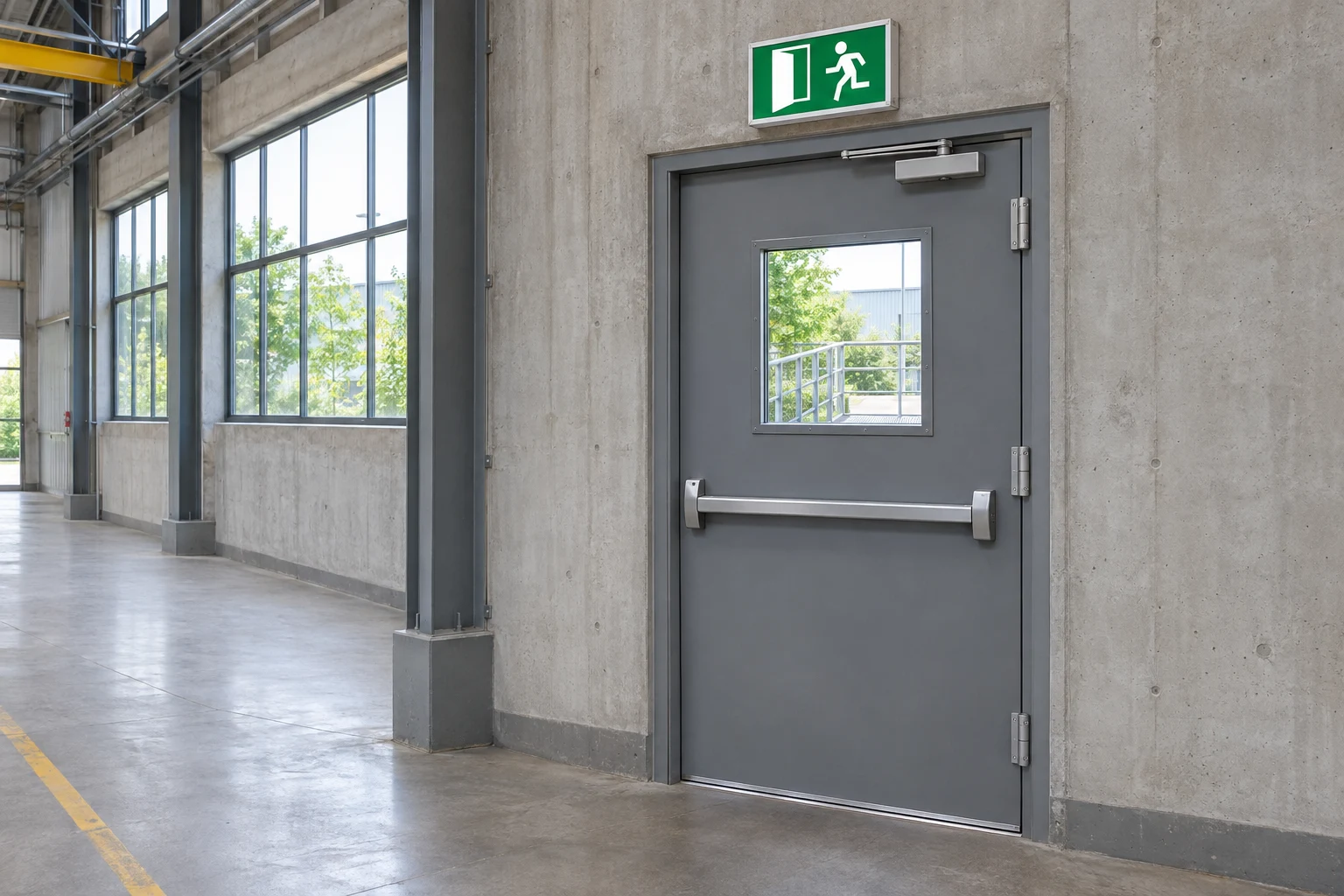
- Exit sign: check obstruction and legibility from the approach.
- Door opening device: report visible damage or usability problems to facilities.
- Door hinge: record visible changes at the fixing.
- Lower door and frame: distinguish visible interference and damage locations.
Distinguish usability from applicability requirements
Article 17 addresses emergency exits for workplaces handling specified hazardous substances and other applicable conditions. Relevant doors must open in the evacuation direction, be openable from inside and remain usable. Check applicability and installation conditions rather than extending one specification to every building entrance.
Article 18 requires emergency exits, routes and emergency equipment to remain readily usable, while Article 22 addresses usable safe routes and marking of important points. Routine observers distinguish barriers at the door from barriers along the approach. Refer questions about opening direction or device suitability to facilities management with the relevant records; do not modify them yourself.
Keeping an exit usable does not mean keeping its door permanently open. If it is a fire door, closed-position requirements must also be managed. Do not wedge it open or disconnect closing devices for convenience. Refer uncertain door types or conditions so evacuation access and fire-spread protection can be considered together.
Separate the presence of a sign from its visibility
Distinguish a sign being installed from an approaching person being able to identify the exit. Look for materials or notices blocking it and conditions making it hard to distinguish. If a changed route conflicts with old signs, request clarification. Do not turn an arrow or relocate a sign to another door on your own.
The fire-preparedness section of KOSHA GUIDE A-G-15-2026 addresses exits, illuminated or other guidance signs, exit locations and evacuation routes together. One illuminated sign does not establish adequate guidance along the whole route. Locate points of obstruction or ambiguity from the work area to the exit, including viewing direction.
The KOSHA practical guide covers maintained routes, emergency identification and safe passage near entrances. Identify the specific damaged or unreadable sign. Explain where guidance is difficult to see rather than recording only a replacement request, so the result can be checked from the same position. Do not judge regulatory sign performance or dimensions from appearance alone.
Handover sequence
| Stage | Owner | Decision or check | Record |
|---|---|---|---|
| Locate the exit | Inspector | Check the routine approach route and emergency exit location. | Door location |
| Check the sign | Inspector | Observe whether the sign is obscured on approach. | Obscured position |
| Check access | Inspector | Identify objects interfering with travel and door use. | Object location and owner |
| Check door condition | Facilities owner | Check usability separately from fire-door closing function. | Door condition and follow-up |
| Resolve impediments | Responsible owner | Address access impediments within assigned responsibilities and report remaining issues. | Actions and open items |
| Hand over results | Facilities owner and next inspector | Record door and route findings separately. | Results and follow-up timing |
Record obstructions on both sides of the door
Distinguish the approach from the door’s movement area when carts or materials are nearby. Space for one person to squeeze past does not prove unobstructed emergency use. Record objects near the door separately from obstructions along the connecting route and define the cleanup scope. Do not clear one route by blocking another.
Identify how far the outside area has been verified. Do not close the whole finding after clearing only the inside while the exterior remains unseen. Connect with the team responsible for the outside area. If construction or other work affects a designated exit, notify the emergency management structure to review routes and guidance.
Do not pull or disconnect cables, hoses or materials in use to clear the area. Agree a safe method with the owning team and communicate the remaining obstruction until resolved. Recheck both the door surroundings and connecting route afterward. Distinguish a cleanup report from the result of an actual recheck.
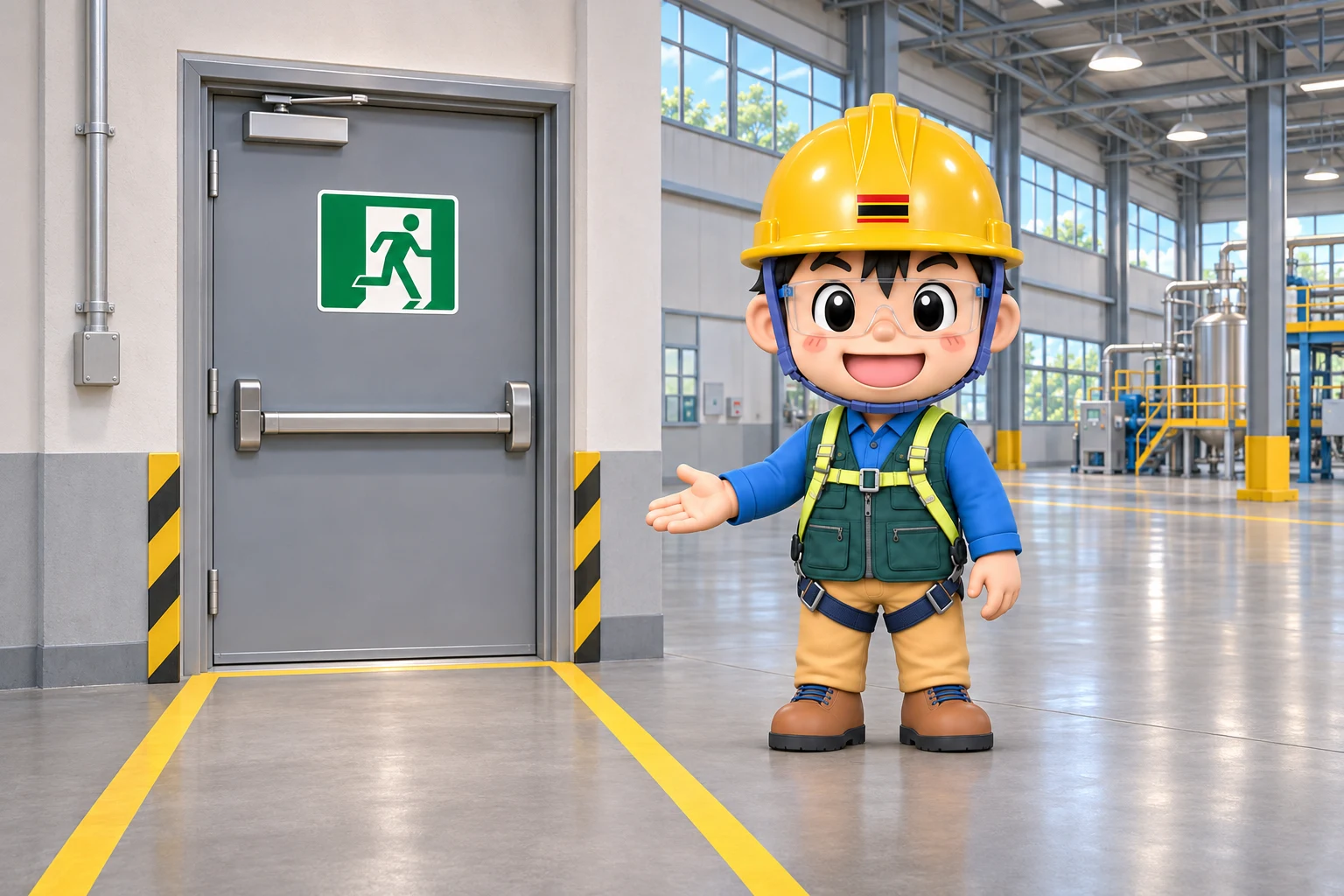
Connect door and opening-device checks to the inspection system
Distinguish apparent distortion of the leaf, damage around the frame and visible changes to handles or opening devices. Intact appearance and verified usability are different, so follow the established routine method and responsibility. Do not dismantle a device or remove locking parts to change operation. Report any abnormal result with its location.
Locate suspected interference at a hinge or lower edge. Do not attempt to resolve it by forcing or repeatedly striking the door. Manage nearby movement and the outside connection during checks, and clarify an uncertain purpose or method first. Separate a door defect from an obstruction caused by an object on the floor.
Where fire doors or shutters are installed, consider required closure and nearby storage together. Following the guide’s preparedness checks, do not secure a door open when it must remain closed, and keep shutter and route areas free of stored objects. Confirm the actual door type; refer convenience-based requests to disable closing devices for facilities and safety review.
Communicate unresolved usability problems promptly
Identify the affected exit and approach section when use is obstructed. Add location and viewing direction because a photograph may omit the inside/outside distinction. Route door defects to facilities, stored-object issues to the owning team and the overall restriction to safety management.
Do not describe the exit as available merely because its sign remains visible. Identify the unresolved obstruction and action owner and have the emergency management structure review guidance and routes as needed. Do not designate another exit or cover an existing sign yourself. Ensure affected teams receive consistent information about the changed condition.
Calling storage temporary does not remove the present obstruction. Establish who will clear it, when and what will be checked, while recording the remaining condition. Distinguish a request sent from an obstruction resolved. If an emergency arises, share the status and follow emergency instructions rather than the routine repair timetable.
Verify the door and route separately after restoration
Reconcile completion with the original items at the same location. Verified door operation does not resolve objects remaining on the connecting route, and a cleared route does not resolve a door defect. Link facilities verification to present observations and retain unseen exterior sections as outstanding.
If a sign or door device changes, include consistency between guidance and usability in the check. A new sign alone does not establish review of the changed door and route. Obtain the responsible team’s verification and reconcile worker guidance with safety management. Link earlier queries to their results so the next inspector need not guess.
If verification and handover are performed by different people, record rather than merely describe the scope. Identify the door, section, method and remaining restrictions. Check under the established management criteria that no temporary wedging-open arrangement remains. Record the present condition of the door, guidance and route separately.
Carry the conditions into later layout changes
Material deliveries or maintenance may change the area after inspection. Tell teams preparing work near the exit which locations must remain clear and what needs checking instead of assuming the verified state will persist. Have proposed temporary storage reviewed for its effect on exit use before placing it; convenience does not make an obstruction acceptable.
Use earlier records as a reference but recheck current signs and routes. If an object repeatedly returns, connect storage arrangements and preparation methods to the relevant team’s review rather than recording removal alone. Do not claim a frequency without records. Use documented locations and circumstances to support a solution beyond one-off relocation.
Routine exit management connects identifiable guidance, an accessible route and a door usable under its required conditions. Keep results and outstanding restrictions separate and compare restoration at the same location. Maintaining that connection in records and site information allows necessary checks to restart when the work layout changes.