Check treads, handrails and landings on fixed equipment stairs
Distinguish tread edges, handrails, post fixings and landings, then connect visible changes and unverified areas to responsible inspection and access conditions.
Identify the fixed stair and its current access state
Before approaching equipment, establish which platform the stair serves. Nearby entrances can be confused when several stairs occupy one area. Match the starting point, destination level and posted restrictions, and report any unresolved part of the intended route by location.
A fixed stair combines treads, supports, handrails and landings. A satisfactory observation of one component does not establish the condition of the others. From the visible entrance area, distinguish tread edges, handrail continuity, post fixings and landing surfaces.
Article 22 of Korea’s Occupational Safety and Health Standards Rules requires safe passageways maintained in a usable condition. Check the reason and owner of restrictions and use site-designated access. Resolve unclear access conditions at the entrance rather than climbing an unverified stair to investigate.
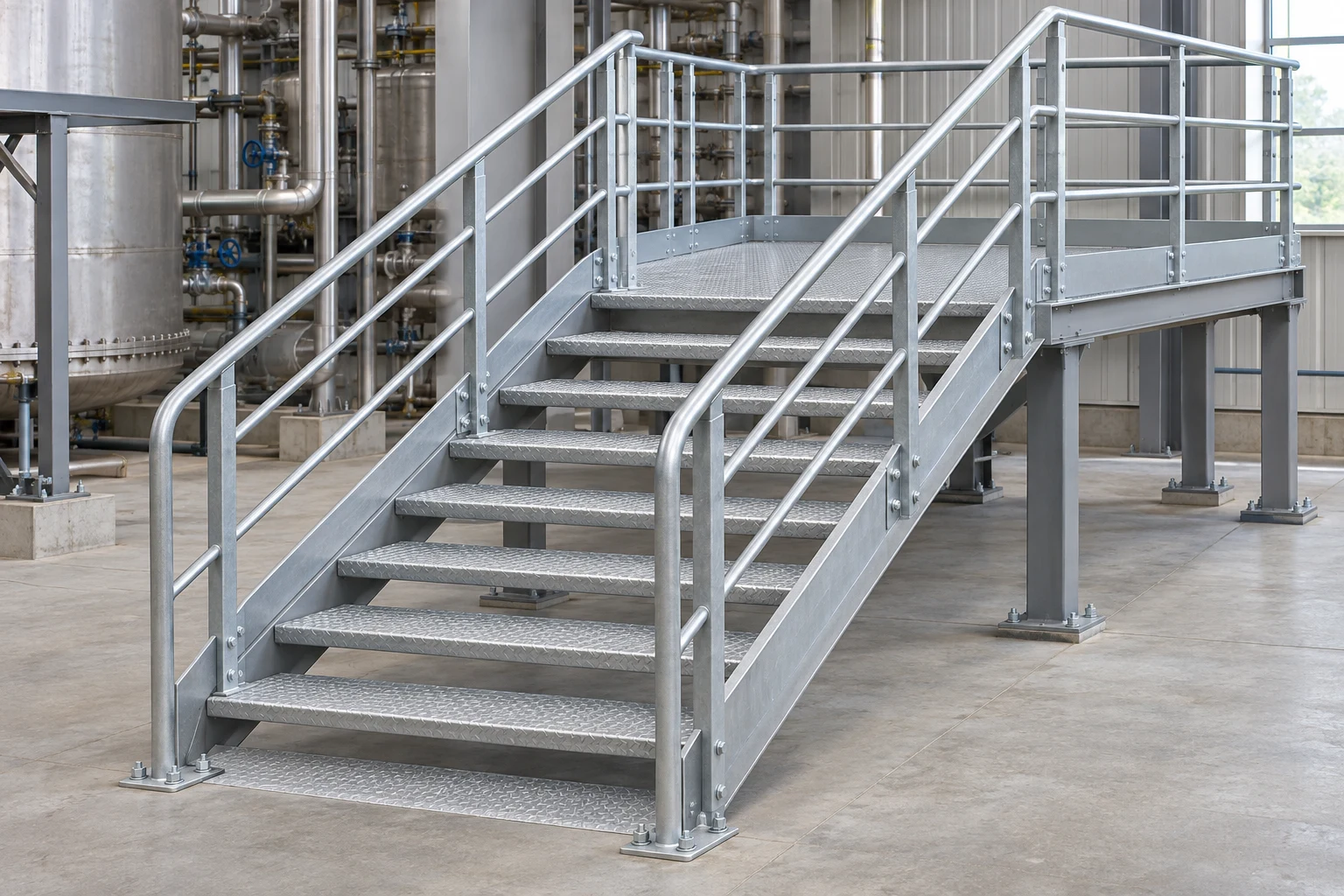
- Tread front edge: record visible damage to the surface and edge.
- Handrail: check continuity and visible deformation.
- Guardrail post fixing: compare visible changes at the connection.
- Landing floor: observe the surface joining the top tread.
Connect the stair type to the relevant records
Match installation records to the actual stair identity. Maintenance or emergency stairs can have different applicable conditions. Have the equipment owner review the rules and exceptions in Articles 27 and 29 for width and overhead clearance, rather than selecting an arbitrary acceptance dimension.
Articles 28 and 30 address landings and open-side guardrails with conditions on their application. Observe installed components while separately checking the applicable equipment requirements. Resolve differences in stair purpose and structure before assuming that another stair’s arrangement applies.
Distinguish tread support, handrail connections and landing junctions in the records. Where parts were replaced, note where new and retained components meet. Record discrepancies by component to avoid treating old drawings or another stair’s repair history as the present condition.
Distinguish tread surfaces from their front edges
Check the surface receiving the foot separately from the front edge leading to the next step. Distinguish visible damage or deformation from lifted or missing edge components. Even repetitive stairs can contain a replaced or overlaid tread; identify positions that differ from neighbouring steps. The tread-edge connection to its side support may be visible from a different direction than the surface. Distinguish visible and hidden connections so a one-sided observation is not passed on as verification of both sides.
KOSHA Technical Support Regulation A-G-2-2025 addresses slip resistance at tread edges and landings and hazards from sharp edges or welds. Record visible conditions without running a hand along an edge or loading a tread to test deflection. Refer closer inspection to personnel with appropriate access conditions.
On grating treads, distinguish openings in the walking surface from support components. Article 26 also addresses falling-tool hazards through open flooring. Compare intended use and structure against responsible records and identify damaged or missing parts. Do not establish tread strength by body loading.
Handover sequence
| Stage | Owner | Decision or check | Record |
|---|---|---|---|
| Identify | User and site owner | Stair, destination, restrictions | Identity, start, destination |
| Observe treads | User and inspector | Surface, edge, visible connections | Step, change, obscured area |
| Check railing | Inspector | Handrail, post, fixing | Component and viewing direction |
| Match landing | Site and equipment owners | Top junction, storage, repair history | Location, records, differences |
| Address issues | Authorised owner | Access limits and required inspection | Section, owner, unknowns |
| Hand over conditions | Owner and recipient | Action scope and remaining limits | Completed parts and next checks |
Separate handrail continuity from post connections
Observe the hand-contact member separately from the posts supporting it. Note visible deformation, opened connections or corrosion at bends and ends. An intact-looking rail does not resolve the condition of its post bases; include those as distinct inspection locations.
Article 13 addresses guardrail components, support and structural requirements. The technical regulation also considers post, fixing and frame strength and corrosion resistance. Identify visible posts and fixing plates, and report missing parts or changed connections for structural review.
Pushing a rail or leaning on it to test movement can introduce danger. Refer visible concerns to access control and responsible inspection. If posts are unnumbered, use fixed features such as the entrance or landing to locate them, distinguishing upper from lower connections. Describe the post-base plate together with the adjacent floor to locate the connection. Distinguish a floor-side change from deformation of the post and record observations before proposing an unverified cause.
Check the junction between the top tread and landing
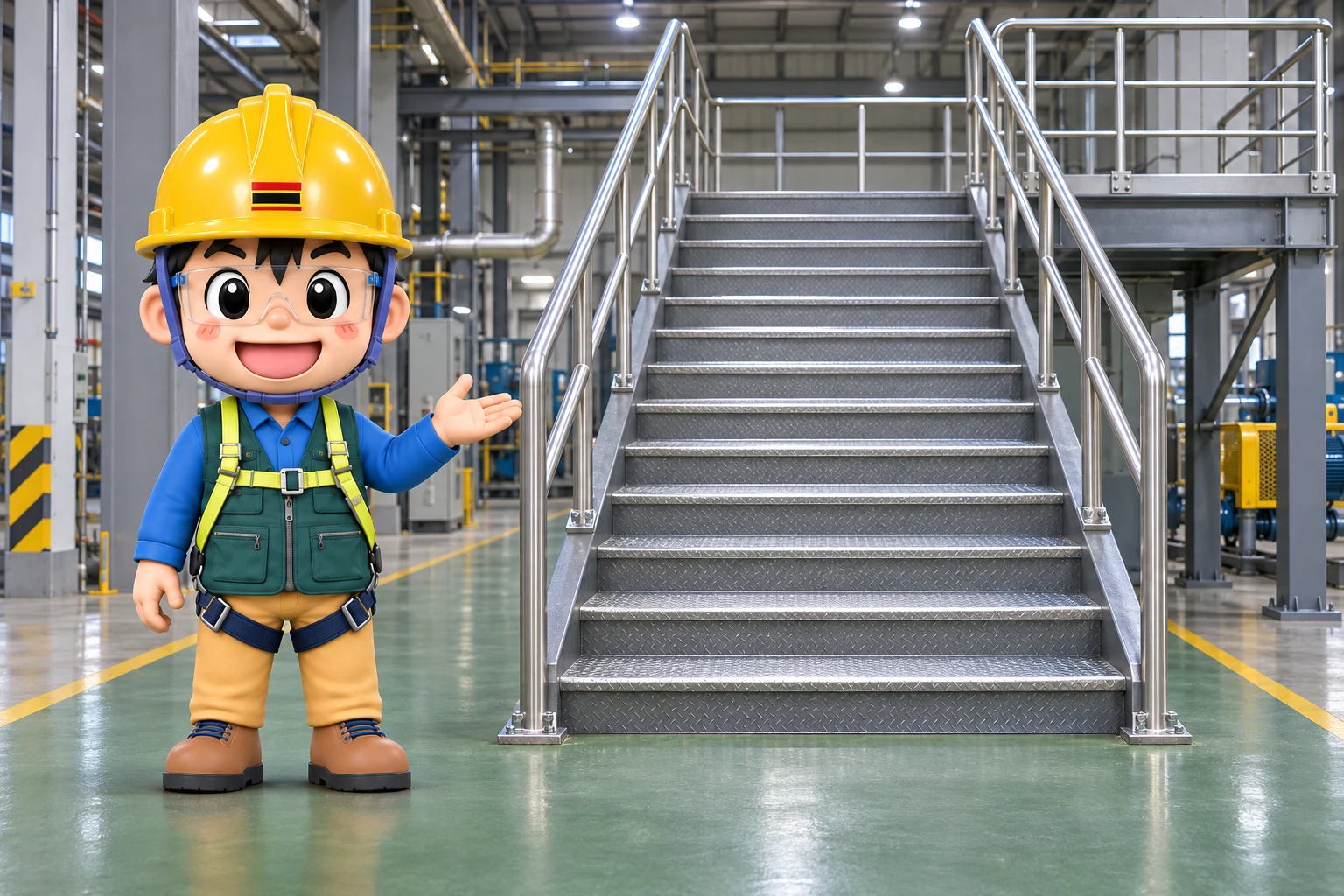
Observe the connection to the top tread as well as the flat landing surface. The technical regulation addresses consistent step rise and top-tread connections. Report noticeable level differences or overlays against the equipment records instead of placing temporary boards to adjust the transition. Identify the transition into the level section to distinguish its repair scope from other steps. Record areas hidden by materials and establish safe removal conditions with the person responsible for those materials.
Materials on a landing can alter the route where people turn or join another passageway. Article 27 restricts installation and storage of objects other than handrails. Record both the objects and obscured floor areas, and have the responsible owner establish safe removal conditions.
Check signs and restrictions around the landing alongside tread conditions. Where a usable section meets a route under repair, verify access to the destination. Use the owner-designated route rather than entering restricted areas or crossing guardrails.
Connect repair history to visible changes
After tread replacement or surface overlays, match the worked location to its present condition. Connect the junction with neighbouring steps, supports and fixings to the records. A general repair-complete message can overlook damage outside the work scope or a changed transition.
A-G-2-2025 considers stable fixing, connection and support, together with the corrosion environment. Distinguish visible rust from confirmed damage, without inferring residual strength or replacement need from appearance alone. The equipment owner determines inspection scope using materials, service conditions and repair records.
The KOSHA Practical Guide provides supporting points on tread edges, sharp features, posts and corrosion. Start with current legal and equipment requirements. Linking observed locations to repair history helps distinguish recurring concerns from changes first found after the latest work.
Refer defects to access control and responsible inspection
Report damaged treads or rails and missing fixings before continuing through an affected section. Identify the stair, step and component so the control area can be established. Separate actual observations from upper sections or hidden parts that remain unchecked.
Placing barriers or removing objects also requires safe access. Avoid stepping on a damaged tread to attach a sign or leaning on an unstable rail to move materials. Report entrance observations and affected destination work so the owner can establish restrictions and inspection methods.
Record the viewing direction of photographs and descriptions. Right when viewed from below differs from right when looking down. Use the entrance as a reference and include observation time and obscured areas so the next person can find the same component.
Hand over reopening conditions and unresolved components
After inspection or repair, establish which component received which action and the resulting use conditions. Distinguish tread replacement from post-fixing repair. Retain restrictions and ownership for unresolved sections instead of passing on only a general completion message.
The recipient matches records to the stair and compares restrictions with communicated conditions. Differences from earlier photographs need an explanation and verification result. Separate documented information, direct observations and responsible decisions so visual checks are not mistaken for structural acceptance. Where restrictions remain, distinguish the affected section and confirm that the recipient can locate it. Component-level completion records and current controls should travel together to prevent unintended expansion of the usable area.
Follow the tread surface through rails, posts, landings and their junctions. Use designated routes under established conditions, and report new changes by component. A traceable location-and-condition record helps keep the whole stair within management scope after partial repairs.