Control and verify recovery of oil- or water-wet walkways
Restrict the wet area and provide a safe alternative, then verify residual moisture, surface defects and renewed ingress before reopening the checked section.
Identify the wet area and its spread
When oil or water wets a walkway, examine both the affected area and directions of approach. A single visible patch can miss liquid tracked by footwear or spreading toward a lower area. Record the safely observable boundary and nearby traffic and notify the responsible person. Prevent access rather than stepping onto the patch to test slipperiness.
Article 3 of the Occupational Safety and Health Standards Rules requires safe, clean floors without slipping or tripping hazards. Article 4 also addresses cleanliness and waste handling. Consider residual films and surrounding traces as well as visible liquid when defining the controlled area. Distinguish requesting cleaning from restoring safe pedestrian use.
Record a reproducible location and condition: proximity to equipment, a route junction, continuing wetness or spreading traces. Keep unknowns explicit. Do not assume an unidentified liquid is water or improvise treatment; refer it to the substance and equipment owners. Link initial observations and later changes so access restrictions can be adjusted.
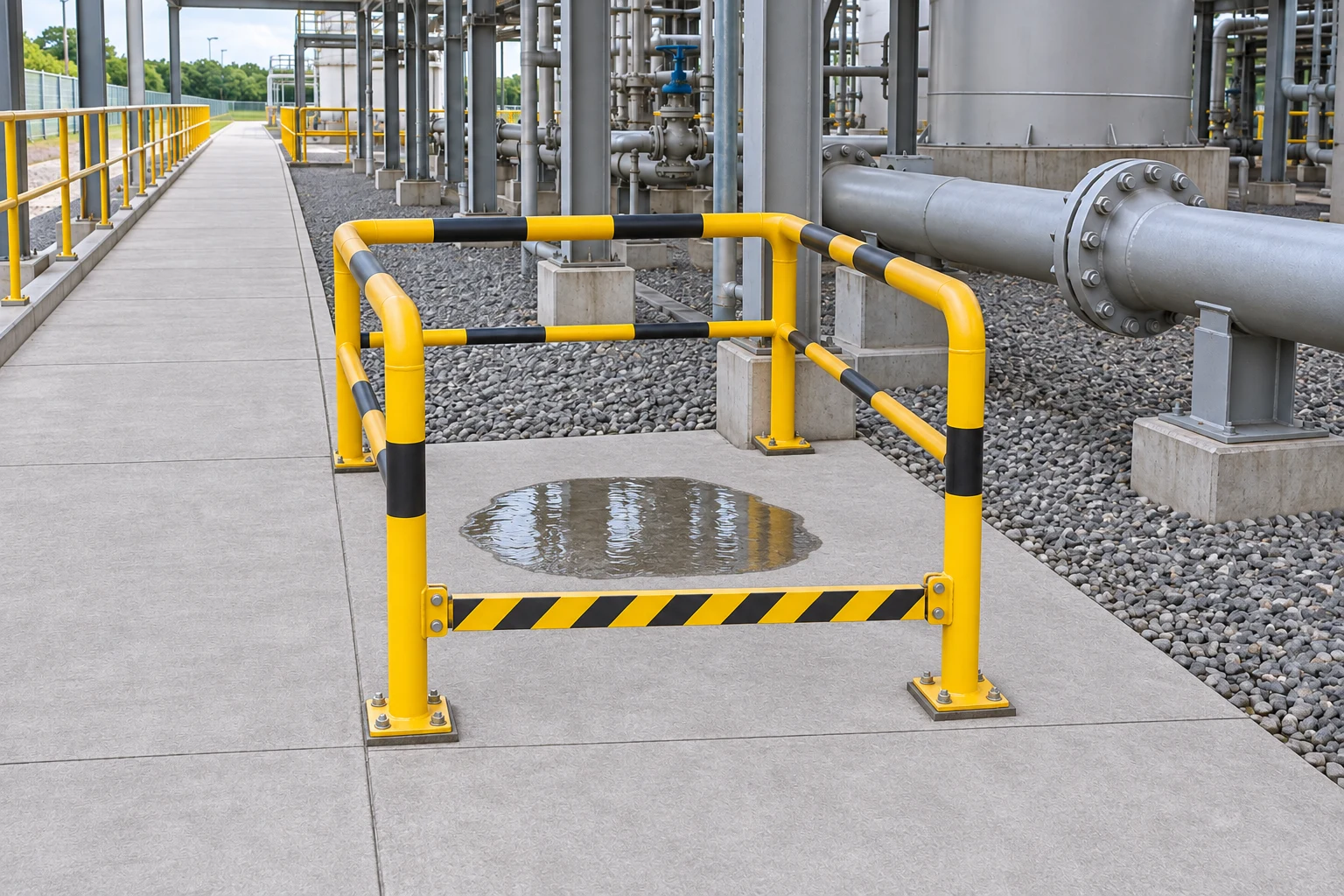
- Wet surface: check the affected area and spreading traces from a safe position.
- Access barrier: contain the affected area and retain control until recovery is verified.
- Pipe connection: connect source verification and action status with the equipment owner.
- Dry alternative route: verify floor, obstacles and passage conditions through to the destination.
Block the wet section and provide a usable alternative
Review each approach so people recognise the restriction before reaching the wet area. Obscured signs can delay recognition. Place suitable barriers and information and check that the affected area lies inside the boundary. Reassess restrictions if liquid spreads beyond them or is tracked elsewhere.
Article 22 requires safe, usable passages and identification of their main sections. After closing a wet section, verify a route that actually reaches the destination. Examine its floor, obstacles and lighting rather than merely telling people to walk around. Coordinate with other owners if the alternative enters another restricted work area.
KOSHA Technical Support Regulation (KOSHA GUIDE) G-11-2017 addresses warning of damp conditions after cleaning and providing alternative routes. Maintain control from before cleaning until recovery conditions are verified. Assign checks that barriers and information remain in place and that the alternative is understandable. Connect closure and provision of a safe route in the same preparation stage.
Identify the source and substance before arranging removal
Coordinate with the relevant department to identify why the floor is wet and whether liquid continues to enter. Removing visible contamination may be temporary if the source remains. Request action from the equipment owner rather than operating equipment or blocking a leak by hand. Define the information exchanged when floor recovery and source repair have different owners.
Suitable removal methods and equipment depend on the substance and conditions. Do not mix unidentified substances or wash every contamination with water. Have the responsible person establish protection and collection methods from substance information and site procedures. Route collected materials and used absorbents through the designated handling arrangements while keeping pedestrians outside the work zone.
KOSHA’s Practical Guide discusses slipping from cutting or hydraulic oil leaks, floor checks before, during and after work, and leak control and cleanliness. Record the substance and source-control status for recovery decisions. If wetness returns, review continued ingress alongside removal. Leave both the unresolved source and temporary controls clear for the recipient.
Handover sequence
| Stage | Owner | Decision or check | Record |
|---|---|---|---|
| Identify extent | Finder and site owner | Wetness, spread and approaches | Location, state, unknown substance |
| Restrict and divert | Passage owner | Barriers and usable alternative | Boundary, route, verifier |
| Prepare removal | Equipment, substance and cleaning owners | Source, substance and suitable method | Owners, method, holds |
| Remove and check | Cleaning and floor owners | Residue, wetness, defects and renewed ingress | Treated area and open conditions |
| Decide reopening | Release owner and recipient | Safe walking condition and follow-up | Time, scope, decision, receipt |
| Hand over open work | Coordinator and action owners | Maintain controls and respond to changes | Open work, timing, next check |
Match cleaning to the floor and check what remains
G-11-2017 addresses suitable cleaning and maintenance for the floor and residual moisture or detergent. Determine the method from floor material, condition and contamination. Consider whether treatment could damage the surface or leave another slippery film. Share scope and handling requirements before working with cleaning and pedestrian areas separated.
During cleaning, check whether tools and collected materials create new trip hazards or obstructions. Allocate storage positions that keep the alternative route clear. Where work is divided into sections, distinguish active cleaning from verified areas. Consider both worker position and pedestrian approaches when moving controls.
Do not release restrictions simply because liquid is less visible after wiping. Check residual moisture, deposits and contamination carried beyond the area. Maintain barriers and information while further action is required for safe walking. Identify the section and condition examined so a statement that cleaning is finished does not conceal unresolved hazards.
Distinguish dryness from defects in the floor
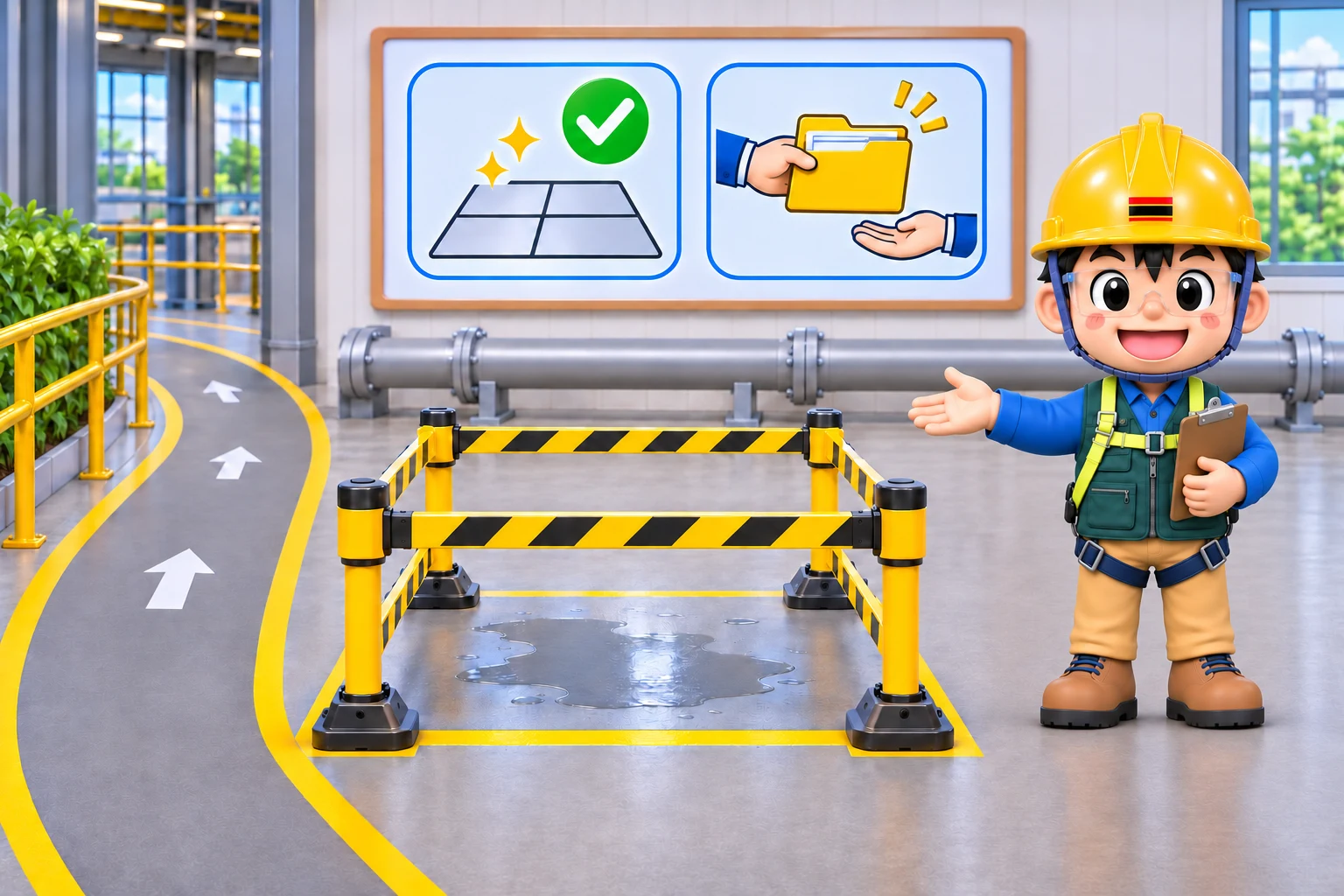
After cleaning, inspect the surface itself as well as residual wetness. Damage or defects can leave a hazard after contamination is removed. Do not send pedestrians through or ask them to test a potentially slippery movement. Use safe inspection methods and record locations requiring repair for separate action.
G-11-2017 addresses suitable repair of floor defects and controls pending repair. A report that wiping is complete still requires confirmation of any repair work. Identify the repair area, responsibility for maintaining restrictions and the next task. Where cleaning and repair owners differ, keep their verified scopes distinct rather than merging them into one completion mark.
Check continuing sources of liquid when verifying a dry, clean surface. A remaining leak or adjacent cleaning can change the verified condition. Agree current ingress and outstanding work before reopening. Assign follow-up observation where needed and keep hazardous sections separated from usable routes.
Match the area and verification record before reopening
The release owner should match the treated section to the actual location and check contamination, wetness, surface defects and renewed ingress. Examine the route people will use rather than opening an entire area after checking only part. Coordinate required actions and retain unresolved conditions. Define the verified usable scope before reopening.
G-11-2017 advises retaining barriers and warnings until the floor is dry and safe to walk on. Verify condition before removing controls. Inform users when returning from an alternative route to the original passage. If restrictions remain, distinguish open and closed sections clearly.
Link the release record to location, time, verifier and findings about the source and surface. Hand over remaining repairs or observations with their owners and status. The person reporting completion and the recipient should understand the same physical scope. Make the release conditions and continuing checks traceable for the next owner.
Hand over unfinished sections with control ownership
Keep incomplete source repairs or floor recovery explicitly open with the required controls. Connect the person checking restrictions to the person performing the corrective work rather than recording only a departmental request. Allocate interdepartmental tasks and an overall owner. At shift change, hand over the restricted location, usable alternative and open work alongside the request reference.
Set follow-up timing from remaining risk and the conditions under which temporary controls can be maintained. Reassess plans if a leak spreads or the alternative route becomes impracticable. Assign checks of actual conditions rather than leaving barriers unattended indefinitely. Report location and changes so passage management follows the present state.
When work passes to another owner before completion, separate verified facts from pending decisions. Identify cleaned areas, residual wetness, source-action progress and repair needs. The recipient should verify that controls remain and the alternative is usable. Keeping physical and recorded states aligned reduces mistaken reopening of unfinished sections.
Review recurring wetness together with recovery conditions
Connect repeated findings by time, extent, action and recurrence. Distinguish repeated cleaning from correction of the source. Refer surface damage or conditions that collect liquid for appropriate repair and management review. Record observed conditions without presenting an unverified cause as established fact.
Before future cleaning or maintenance, separate the work area from the passage that must remain usable. G-11-2017 addresses cleaning during lower use and suitable maintenance; apply this in planning an available route during work. Include both removal preparation and verification of a safe surface in the scope, and distinguish finishing cleaning from reopening the passage.
Recovery connects identifying and controlling the area, suitable removal, and verification of the surface and renewed ingress. Maintain controls and the alternative where conditions remain unresolved and hand them to the next owner. Track outstanding actions after verified sections reopen. Managing the same location and state through discovery and release reduces the gap between a completion report and actual passage conditions.