When floor grating is removed: guarding openings and reopening access
When a grating panel is removed, will regular users of the route know that the floor has changed? Removing flooring involves the opening, the alternative route and the level below, as well as the panel itself. Distinguishing conditions from protection before removal through reopening after reinstatement helps identify risks that remain after temporary work.
Define the changing boundary before lifting the panel
Installed grating is part of the floor supporting people and materials. Removing it turns the same location into an opening, so consider approaches and nearby routes rather than defining the work area solely by panel size. Distinguish where regular users must divert, side approaches available to other workers, and work areas below. This makes the missing floor's location clear before work instead of repeating a general access-control procedure.
Article 43(1) of the Rules on Occupational Safety and Health Standards requires protection at platform and passage edges or openings where workers could fall. It specifies a sturdy structure with sufficient strength, including guardrails, fences, vertical fall-protection nets or covers. A safer preparation sequence is to establish the removal area and protective method before lifting the panel, rather than looking for barriers afterwards. Include whether people could approach the exposed part during removal itself.
Before work, share the panel removal location separately from the route that will remain available. The area marking and handover methods recommended here are practical ways to implement the legal protection duties. Use hazard indications as information, distinct from physical protection. Accessible areas can change during lifting, the open period and reinstatement, so review the controlled area against the work sequence. Share an alternative route first if neighbouring teams need to pass the area.
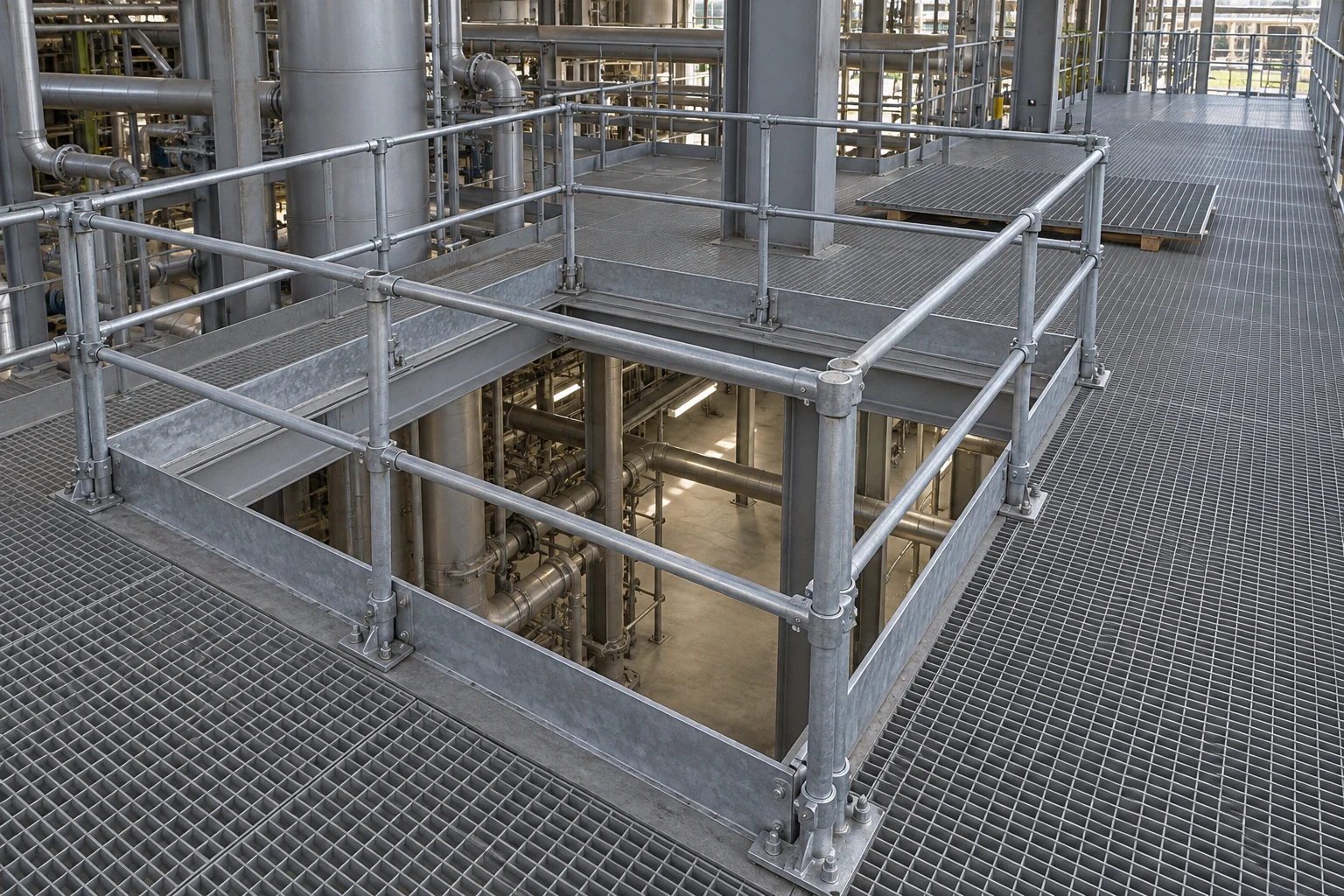
- Guardrail post fixing: while the grating is removed, check posts and fixings for looseness or damage.
- Opening edge: Recheck the exposed area and protective boundary when the work area changes.
- Removed grating: Confirm its reinstatement position and store it separately from walking routes.
- Adjacent route: Clear obstacles from the alternative route and share the usable path before passage.
Check cover placement together with retention
Article 43(1) requires covers to be installed so that they cannot overturn or fall. This is why inspection includes support and retention rather than ending with the appearance of a panel over the opening. Examine how the cover meets its supports and where it could move under foot traffic or nearby work. Select materials and retention methods after reviewing the actual opening and use conditions; the presence of a spare panel alone does not establish adequate protection.
Strength and retention are separate checks. A strong material can expose the opening again if it shifts, while a fixed cover still needs review against its intended conditions. The Ministry of Employment and Labor's opening-inspection guidance also addresses material strength and secure installation together. Workers communicate traffic and material-handling conditions on the cover, and the responsible person establishes suitable protection. Confirm specific design values through information reviewed for that installation.
The fact that an opening lies beneath the cover must remain clear. Article 43(1) also requires the opening to be indicated so it can be recognised in dark conditions. It is useful to check for signs obscured by materials or removed together with a temporarily moved cover. Where a cover could be mistaken for ordinary flooring, check the indication from the approach route. Separating visibility from cover retention reduces the risk of managing only one of them. Recheck visibility if the approach changes or new materials are placed nearby. Knowledge of the location within the work team is distinct from communicating the risk to other people using the route.
Treat a guardrail as a connected structure
When guardrails are used, apply the structure and installation requirements in Article 13. Top rails, intermediate rails, toe boards and posts have distinct roles, and the provision includes permitted alternatives and exceptions. Look beyond the presence of individual components to whether the posts support the rails and maintain the boundary around the opening. If an accessible gap remains, include it in a review of the protective arrangement.
Temporary guardrail attachments can be affected by other work. Releasing a section for material delivery or moving it for convenient passage changes the original installation. The location still requires protection before that work is complete, so establish measures for the changing section first. Separating posts and attachments, the floor opening and the adjoining route helps identify and address the particular changes caused by other teams. Actual structural strength and installation suitability are reviewed by a person checking the site conditions and applicable criteria.
Article 20, item 1 also connects these locations with restrictions on entry by people other than the relevant workers. Distinguish access management from the structure protecting the floor edge. Even with entry instructions, workers may still need to work beside the opening. Manage approaching people while checking protection at the actual work position. Review approach and work location separately rather than treating completion of one measure as completion of the entire arrangement.
- Before removalPrepare the removal area, protection and alternative route
- While openMaintain access boundaries and work-position protection
- After reinstatementCheck support, fastening, gaps and remaining materials
- ReopeningShare the inspection outcome and usable route
Plan temporary removal of protective structures
Article 43(2) separately addresses situations where installing the protective structures is extremely difficult or they must be temporarily removed for work. It first requires a fall-arrest net meeting the criteria in Article 42(2); where installing that net is difficult, it requires necessary fall-prevention measures such as use of a safety harness. Review the need for removal and the alternative measures before dismantling protection, rather than removing an obstruction and considering precautions afterwards.
If a harness is used, address its anchorage as well as wearing it. Article 44 requires equipment for safely attaching a harness when workers wear one at a location with a fall risk at a height of at least two metres, and requires pre-work checks of the harness and associated equipment. Do not transfer that height condition to all opening protection under Article 43. Article 43 addresses places where workers could fall, so assess each provision's conditions separately.
While work requires the opening to remain exposed, share responsibility for maintaining protection and the point at which it will be restored. This is an operational recommendation, not a new universal time or staffing requirement absent from the law. Information about the opening must also continue across a pause or handover. Passing on its location, remaining protection and the next worker's approach helps prevent a work stoppage from being mistaken for permission to pass.
Keep removed panels separate from the walking route
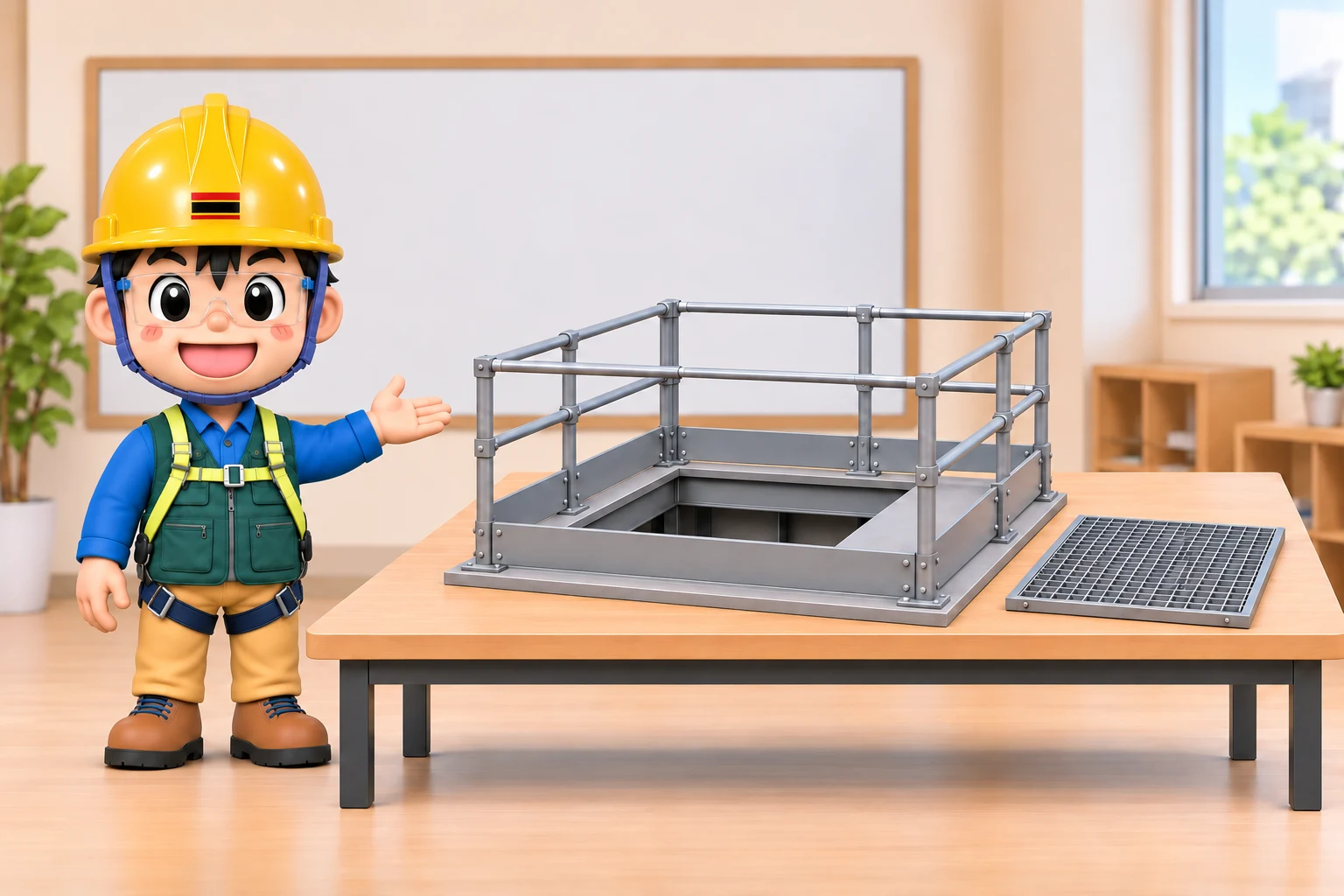
Article 22(1) and (2) require safe routes maintained in usable condition and indications at their main parts. Temporary storage of removed grating needs review alongside those routes. If removed panels and tools occupy the proposed diversion, access conditions have changed again. When choosing a storage position, distinguish the potential for a panel to move or fall from the route people will use.
Manage removal sequence and reinstatement positions. Similar-looking panels still need checking against the actual supports and fastening method. Compare the original installation conditions and intended replacement location instead of fitting a panel somewhere else by convenience. This is a practical reinstatement sequence rather than assembly instructions for a particular grating product. Follow the equipment information for installation and fasteners, and refer any mismatch before reopening the route.
Falling-object risks extend beyond the upper side of the opening. Article 14 also requires measures where objects could fall or fly towards floors and passages. Follow possible paths of tools and parts through the opening, and coordinate work and passage below. Consider a person's fall path separately from an object's fall path instead of treating both protections as the same task. When changing the upper boundary, also review what must be communicated to the level below.
Decide when the reinstated floor can reopen
Distinguish a covered opening from a floor ready for use. Check that the panel seats correctly on its supports, fasteners match the original installation conditions, and no gaps or raised edges remain. Moving a panel by hand alone cannot establish the whole structure's suitability, so follow installation information and the responsible procedure. Connect work completion with reopening by retaining the opening controls until the reinstatement check is complete.
Releasing the controls is the final communication that floor conditions have changed. Share the inspection outcome and usable route rather than leaving other teams to infer reopening from workers' departure. Clear remaining materials, tools and temporary barriers that obstruct passage. As a practical management method, identify the person who confirms completion and the recipients of that information. Handover is needed alongside the legal protection duties because different teams use the same floor at different times.
Preparation before removal, protection while open and verification after reinstatement are different states of the same place. A check at one stage cannot automatically replace the next stage's verification. Connect the checks so that the floor people see corresponds with its actual availability for passage. Scaffold installation and selection of ladders or mobile elevating work platforms are covered in related articles. Temporarily dismantling and reinstating an existing floor requires the state-by-state checks described here.