Portable ladders and elevating work platforms: check the ground and work position first
Where will you stand, and what must you reach?
A ladder has been brought to inspect equipment near the ceiling. Have you considered the place for your feet, the point your hands must reach and the surface supporting the equipment together? Jobs at the same height can require different equipment and precautions because of walkways, obstructions and ground conditions. Locate the work first, then decide how a person can remain there safely.
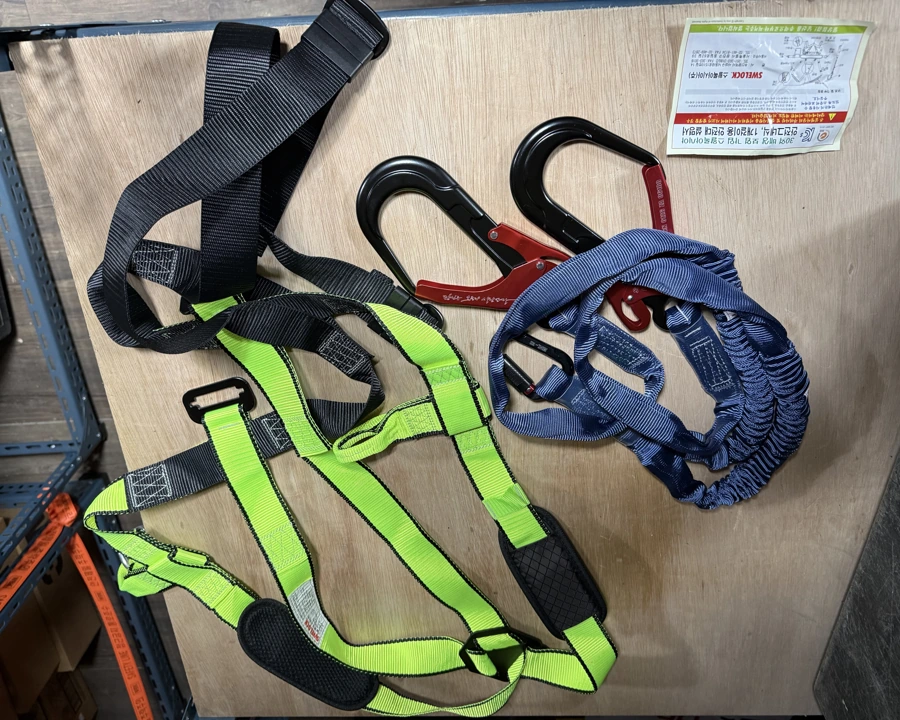
Lay out the harness to check its webbing and connections, and compare the hooks with the intended anchorage. When connecting it to a work platform, check the platform’s designated attachment location.
Article 42(4) of the Rules on Occupational Safety and Health Standards (산업안전보건기준에 관한 규칙) sets conditions for using a portable ladder in place of a work platform. Article 186 sets installation, movement and use measures for elevating work platforms. Separating the checks helps reveal conditions that a single observation, such as low height or new equipment, can overlook.
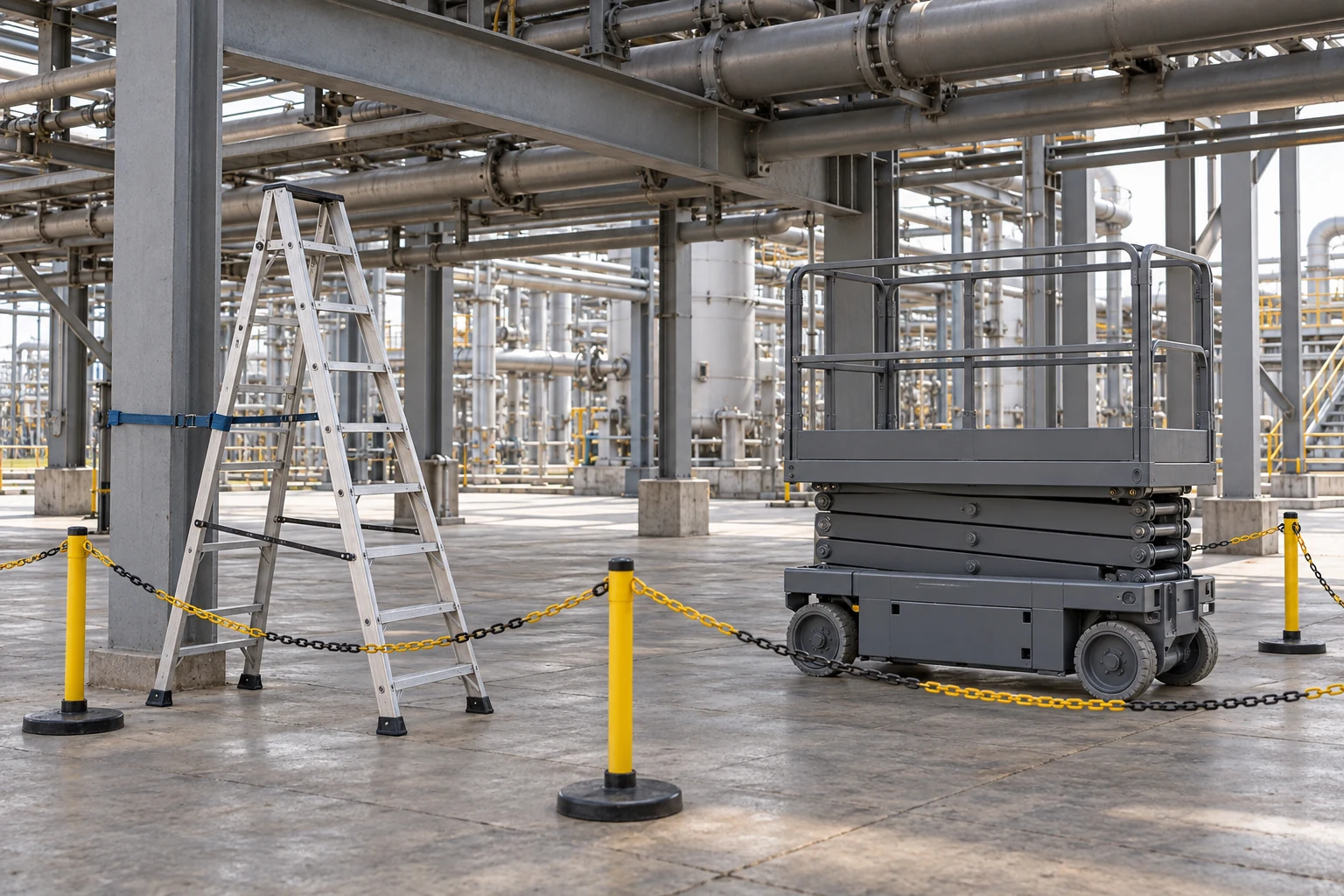
- Ladder spreader braces: Before climbing, check that the ladder is open and its spread-limiting devices are engaged.
- Ladder feet: Before use, check for slippery or sinking ground and confirm support at each foot.
- Platform guardrails: Before use, check the rails and entry point for damage or an open access point.
- Work cordon: Before work, separate nearby pedestrian traffic from equipment travel routes.
- Overhead structure: Before raising the platform, identify collision or trapping points at pipes and beams and set the travel limits.
Ladder work starts with the conditions for its use
Article 42(1) requires a work platform, for example by erecting scaffolding, where work at a location with a risk of falling or overturning may endanger workers. Paragraph 4 permits portable-ladder work when installing both a work platform and a fall-protection net is difficult. The ladder must have at least three supports and a structure that can stand stably on the ground. Consider the feasibility of a platform and net before selecting a ladder simply because one is nearby.
The supporting surface must be level, firm and non-slip. At least one measure against overturning is required: secure the ladder to a firm structure; fit outriggers or use a ladder with outriggers; or have another worker support it. Check both the selected measure and whether it remains effective. Assigning a person to hold the ladder does not replace the separate requirement for suitable ground.
Before use, inspect for deformation and other abnormalities, and promptly repair or take other necessary measures if any are found. Check the maximum working load marked by the manufacturer. Before stepping up, ask whether the marking is readable and whether the available information allows the tools and materials to be considered against the permitted load.
Height, standing position and protection are separate checks
Measuring only the ladder's overall length can miss the height of the work. Article 42(4)4 permits work only at a location no more than 3.5 metres above the surface on which the ladder is installed. Marking the reference surface and the work position helps everyone understand what was checked.
Item 5 prohibits working while standing on the top platform or the rung immediately below it, except for ladders no more than 1 metre high. That exception concerns this standing-position provision. Ground conditions, overturning prevention, maximum working load and the other requirements still need to be met. If reaching the task would require standing on a prohibited rung, reconsider the equipment and its position.
Item 6 requires a safety helmet and, where the working height is 2 metres or more, a safety harness as well. Article 44 requires suitable attachment facilities when harnesses are used at locations 2 metres or more in height with a fall risk. Harnesses and associated equipment must be checked for abnormalities before work. Look at the available attachment arrangement as well as whether the person is wearing the harness.
- Conditions: Ladder: conditions where platform and net installation is difficult / Platform: distinguish installation, movement and use.
- Ground and stability: Ladder: level, firm, non-slip ground plus anti-overturning measures / Platform: as level as possible plus outriggers, brakes, etc..
- Position and load: Ladder: height, standing position, maximum load / Platform: rated load and protective devices.
- People and attachment: Ladder: helmet; harness at 2 m or more / Platform: protective equipment including helmet and harness.
- Movement and recheck: Ladder: footing and support at new position / Platform: fully lowered, route, conditions for occupied movement.
Separate checks before raising and before moving the platform
When an elevating work platform arrives, keep the ground and equipment as level as possible and firmly apply outriggers, brakes or other measures against unexpected movement. These are installation measures under Article 186(2). Identify what maintains the stationary condition, rather than relying only on the appearance of stopped wheels.
Check the space above as well. Article 186(1) requires a guard or secondary guarding (anti-entrapment device) to prevent trapping and collision, and visible switch names and direction markings on the control panel. Relate overhead structures, space for the person's body and the direction of movement to the protective equipment. Compare the marked rated load with the proposed occupants and materials. Paragraph 4 prohibits exceeding that load and holding a changeover switch in position with another object.
Before relocation, paragraph 3 requires the platform to be lowered to its lowest position and the route to be checked for uneven surfaces and obstructions. Movement with a worker aboard is prohibited in principle. The exception is a short movement with the platform fully lowered and a guide assigned to prevent overturning and other hazards. Replace “just a little further” with separate checks of the lowered position, guide and length of the movement.
During use, provide protective equipment such as helmets and harnesses, measures to keep unauthorized persons out, adequate lighting, regular inspection and checks for abnormalities in the components. Work near electrical circuits requires measures against electric shock, such as assigning a work watcher. Consider parts that become closer as the platform moves; where the job requires electrical isolation, use the separate electrical-isolation procedure linked below.

Ask at the starting position, then again when the position changes
What needs checking again if the ladder's supporting surface becomes wet or materials appear on the platform's travel route? Recheck the ladder's footing and overturning protection, or the platform's route and installation, at the relevant position. The question is what has changed, rather than whether a check was completed somewhere earlier.
Does the supported body position match the task location? For the ladder, distinguish standing position from working height. For the platform, distinguish working space from protective devices. Preparation can also address whether tools in hand will obstruct the view of controls or surroundings. These questions are editorial recommendations for applying the legal conditions to the actual job.
Outdoors, watch for changes in rain, snow and wind. Article 37(1) requires work to stop where unstable weather may endanger workers, with a proviso for emergency recovery work where danger is expected or has occurred. Check wind-related operating limits in the particular equipment's instructions and assess them alongside changing weather at the site.
Record the condition checked, not just the equipment name
A useful record identifies the work position, equipment, ground condition, marked load and operating conditions, and the selected measure against overturning. If an abnormality is found, record the repair or other action and the subsequent check. Distinguish ladder height and standing position, or platform installation and travel route, so the next person can see what condition was assessed. Use these suggestions to supplement the applicable site recording procedure.
The permissible slope, rated load, attachment locations and methods for checking protective devices depend on the specific equipment documentation. Compare the site conditions with both the legal text below and the manufacturer's operating instructions. The related scaffolding article covers scaffold structure and changes; the stop-work article covers the response and restart process after a hazard is found.