Checking the storage bay and restraint when returning welding gas cylinders
Match the returning welding cylinder to its bay and status. Record an upright position and an engaged restraint as separate observations.
Identify the receiving bay before the cylinder arrives
When a welding crew is returning a cylinder, tell the storage team which cylinder is coming. Leaving it at the entrance before assigning a bay can lead the next crew to take it for issue. Read the bay and cylinder labels from a safe position and distinguish cylinders ready for issue from those awaiting a decision.
Even if the crew calls it spent, storage staff do not open the valve to check. Ask how the cylinder was used and separate confirmed use status from unresolved questions. If a status tag is missing or the handover cannot be matched to the cylinder, hold the issue decision until the originating crew can confirm it.
When cylinders look alike, it is easy to record the rear unit based on the one in front. Match the label you actually read to the bay and separately note any unit obscured by other items. Use color or shape to locate what you are looking at. Verify contents and status against confirmed markings and handover information.
If another cylinder appears in the adjacent bay when only one was expected, keep the two entries separate. Match the actual return with the returning crew, then ask the storage team to check the unidentified unit. The next crew needs to know what can be issued from which bay, so include both resolved and held items.
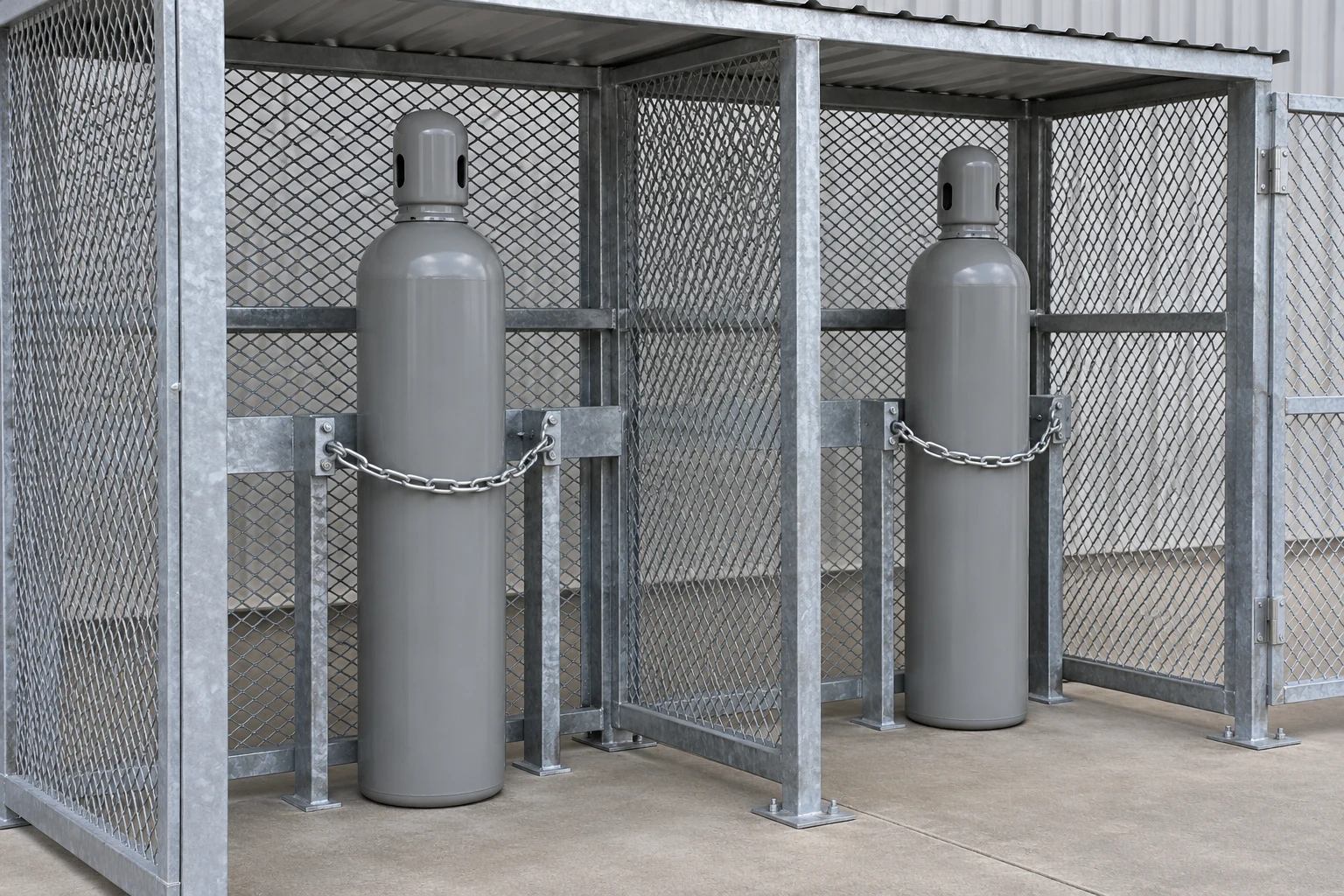
- Protective cap: distinguish the design and visible damage.
- Chain: follow which cylinder it retains.
- Attachment: identify the hook and bay involved.
- Rack floor connection: record where visible changes appear.
Distinguish a cylinder leaning on a rack from an engaged restraint
An upright cylinder does not tell you whether its chain is engaged. Follow the visible restraint and attachment point with your eyes and see whether they retain that cylinder. If a chain from the next bay passes close by, distinguish the bay and hook. Report anything unclear to storage staff without pulling the chain or shaking the cylinder.
Distinguish a chain hanging free at one end from a visibly bent attachment point whose engagement is unclear. Keep others away from the affected position and do not catch a leaning cylinder by yourself. Tell storage staff which unit and connection are involved so they can arrange a safe response.
Record debris under the rack or visible changes at its floor connections separately from cylinder condition. Moving the cylinder does not address a defective rack that is later reused. Identify the affected post and have facilities or equipment staff assess continued use of the rack.
Undoing another cylinder's restraint to free a bay affects units already stored. If the assigned bay is occupied, the returning and storage teams should first agree where the cylinder can be accepted safely. Communicate any reassignment and check the actual storage condition before marking the original bay clear.
Report visible valve-area conditions without manipulating the valve
For a cylinder designed for a protective cap, distinguish whether the cap is visible from any visible damage. Some designs use another form of valve protection. Describe the configuration and location during the round and let storage staff verify the protection required for the cylinder design and status.
If a cap looks crooked or the top shows an impact mark, leave it in place. Report the view from which it was observed and, from a safe point, whether the cylinder is touching another. Leave assessment of damage and safe movement to storage and equipment staff. Do not connect an unresolved cylinder to try it out.
If an unusual sound or possible leak is noticed, stop approaching and do not go closer to read labels or inspect restraints. Report it promptly from a safe location under the site emergency procedure. Set aside the routine return record and follow site directions for keeping people clear.
If the mesh or another cylinder obscures the top, leave that item unverified. Note the exact observation, such as a visible restraint attachment and an obscured cap. Ask storage staff to recheck when safe access is available and keep the cylinder's pending status in place meanwhile.
Handover sequence
| Stage | Owner | Decision or check | Record |
|---|---|---|---|
| Notify return | Returning crew | Match the cylinder and destination with storage | Marking and assigned bay |
| Match status | Storage | Compare label with handover before deciding on hold | Verifier and open questions |
| Observe restraint | Storage and round checker | Identify cylinder retained by visible chain and hook | Bay and attachment |
| Observe top | Storage and round checker | Distinguish visible protection, damage and obscured areas | Scope and location |
| Address concern | Storage and facilities | Stop approach and assign safe corrective action | Restrictions and action scope |
| Recheck and hand over | Storage | Communicate restraint verification and issue release separately | Current location and unresolved items |
Verify corrective work and issue status separately
Record the cylinder marking, bay, person who confirmed use status, and visible restraint or top-end concern separately. A report that the chain was reattached does not settle an unresolved use status. Confirming the label likewise leaves an unstable restraint to be addressed.
After action, return to the reported bay and check which cylinder is where. If the unit moved, link the new location to the original entry. Communicate restraint verification and release of the issue hold separately so the next shift knows exactly what was resolved.
Article 234 of the occupational safety rules applies to handling gas cylinders used for metal welding, cutting, or heating. It provides for precautions against falling and separation of cylinders before or during use from other cylinders. Storage suitability for a particular cylinder depends on its gas, design, and requirements applicable to the facility.
A return request does not establish that a cylinder has reached storage. The crew that sent it and the staff receiving it may have different information, so record the last confirmed location. Confirm arrival and bay assignment so the next crew can match the list to the storage area.
Trace the last confirmed location when handovers disagree
The returning crew may say the cylinder was delivered while storage staff have no receipt. First establish which location each team means. Temporary staging outside a bay differs from placement and confirmed restraint in the assigned bay. If the locations do not match, verify the last confirmed point with the returning crew before disturbing other cylinders.
If a tag is wet or obscured, do not fill in the gas name from a fragment. Tell storage staff which bay and marking are unreadable and keep the cylinder out of issue until verified. If segregation is needed, establish who can assess safe movement and tell crews to leave the current position until action is arranged.
The person writing the record may not be the person who saw the restraint. Distinguish a verbal report from direct observation of the attachment. Link the last observer and record the view and position of any photo so the next shift knows whether verification is still needed.
After a restraint defect leads to a rack repair, verify more than the presence of a new part. From a safe position, check the assigned cylinder, the visible attachment at the replaced point, and any change at the next bay. Identify any cylinder still held from issue so the repair is not mistaken for clearance.
Several crews can return cylinders at once. Distinguish the receiving point from the waiting area and keep observers out of the space between bays while handling is underway. If the sequence changes, record the cylinders and locations actually verified instead of relying on arrival order.
During shift handover, go through the available bays, cylinders still awaiting verification, and defects facilities will revisit. If the log and storage area differ, pause issue and let storage staff trace the last change.
Keep available bays distinct from bays temporarily vacated
An empty bay may be reserved for a cylinder still in use or kept clear for a restraint inspection. Confirm which bay can receive the return. Tell the returning crew if a bay is unavailable so it is not filled by mistake.
If a bay sign is missing, filling the space first can make later identification difficult. Agree where the return should go while storage staff verify the bay. Once the sign is restored, check both earlier and later arrivals against the assigned bays.
Moving between bays to see the top can put an observer in the handling route. Record what is visible from outside and agree who can safely inspect the obscured area and when. Do not lean on the rack or shift another cylinder to get a photo.
When returns and issues move at the same time, the crews have different checks. The receiving crew verifies the unit to be issued and the returning crew identifies what it handed over. If movements meet in the aisle, storage staff should coordinate them before checking the log against the actual positions again.
If an attachment appears to lead toward a different bay, report the connection point. Treating a nearby hook as equivalent can confuse later removal. Storage staff should verify the intended attachment and then recheck adjacent cylinders.
New work around the storage area can change the return route. The handling crew reports the overlap and the storage team checks readiness to receive the cylinder. A cylinder staged in the aisle can impede people or equipment. Coordinate movement after an agreed receiving location is ready.
An incoming shift may not know which unit was just returned by looking at it. Link return and issue status to the storage markings and specify what verification changes a temporary status. If two markings conflict, reconcile them with the team that last checked the unit.