Checking door and panel restoration after acoustic enclosure maintenance
Identify the doors and panels opened for maintenance. Enclosure restoration, restart and noise assessment require different checks.
Identify what maintenance opened
After maintenance inside an acoustic enclosure, ask which doors were opened and which panels were removed. Restarting when the front door looks closed can miss a rear access point. Match the openings used during work to those restored afterward. Record any extra openings or moved parts separately and tell operations what still needs checking.
The enclosure may be opened differently for different tasks. A routine check can use a small door, while component removal may require a side panel to come off. During handover identify who last restored each side. Separate visible observations from the work completion message so unresolved locations can be found.
Adjacent equipment can prevent access around the enclosure. Mark obscured sides as unverified and let maintenance check them under safe conditions. Report the obstacle and opening location without moving equipment or entering behind it during operation. Limit each observation to the side actually checked.
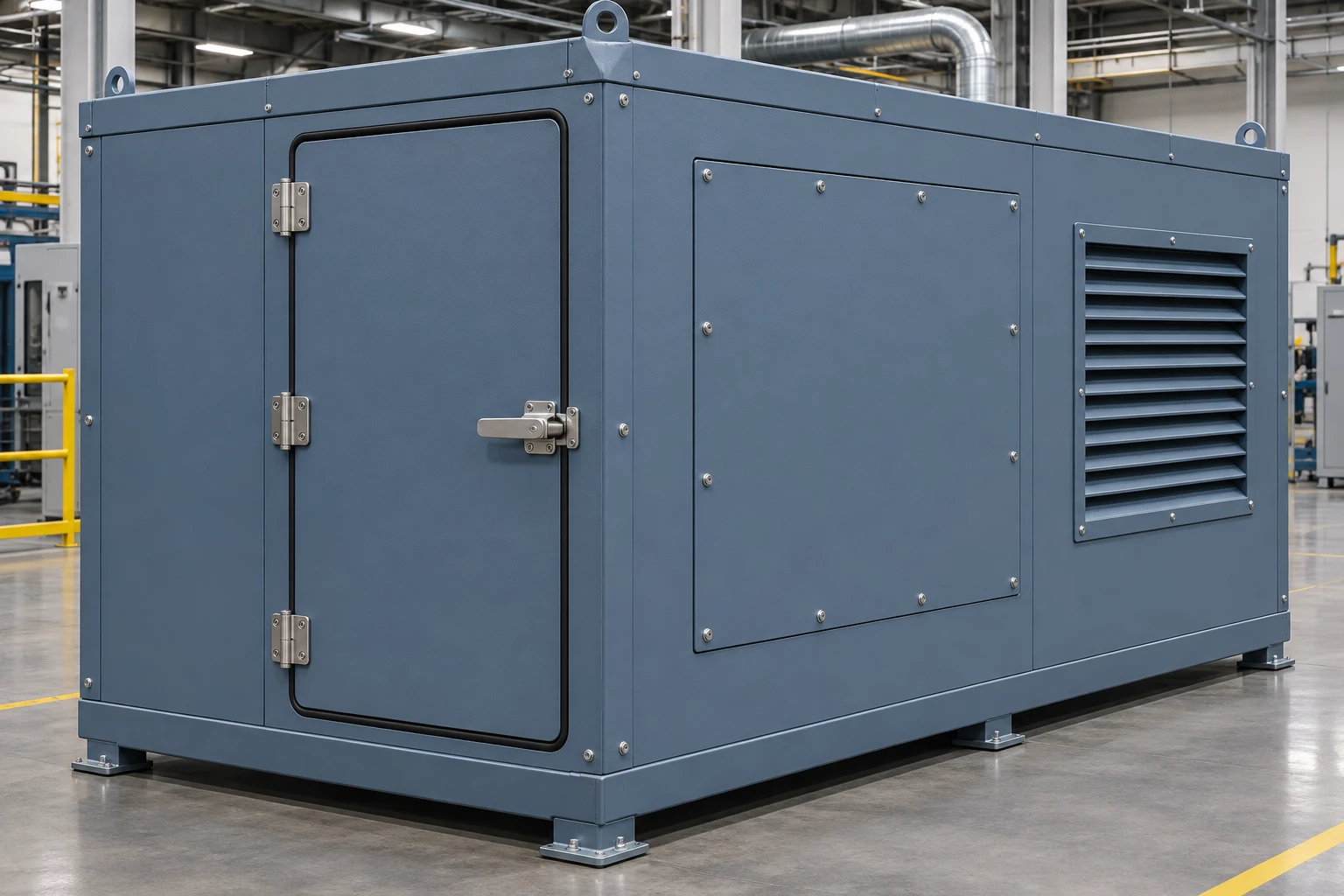
- Latch: distinguish a closed-looking door from latch engagement.
- Door edge: record the visible seal span.
- Removable panel: observe the perimeter and visible fasteners.
- Grille: distinguish an intended opening from an obstruction.
Distinguish a closed door from an engaged latch
A door that looks flush does not establish that its latch is engaged. Identify any latch that appears out of position, including where it is on the door. Do not open or operate the latch while the equipment is running. Checks requiring manipulation belong under the maintenance procedure with the equipment safely stopped.
When the perimeter gap looks different, distinguish the latch side from the hinge side. Report the observation direction if one corner appears raised. Leaning on or forcing the door can change the observed condition and bring the body closer to equipment. Record the initial appearance and have maintenance examine the door and frame.
If a door is reported to bind, ask which door and at what point in closure. The report alone is no reason to open it immediately. Operations and maintenance should establish a safe equipment state before checking it. Keep the reported door identified even if another door closes correctly.
Record what was visible at panels and edges
After replacing a removable panel, record the perimeter and visible fasteners separately. Identify the panel and exact point if a corner projects or a fastening point appears empty. Use a neighboring door or grille to identify similar panels. Verify the equipment design before assuming which fastener belongs there.
Report the visible span where a seal appears crushed or displaced. Part may be obscured by the door. Do not put fingers or tools in the gap. Separate what was visible from what was hidden and leave seal material and compression checks to maintenance using the applicable equipment information.
A cable may follow a different route after work. If it projects into a door edge, do not push it in or force the door closed. Tell the team managing the cable where it crosses the door or panel. Distinguish cable position from any visible damage to the covering.
Handover sequence
| Stage | Owner | Decision or check | Record |
|---|---|---|---|
| Identify openings | Maintenance | Match doors and panels used in the job | Opening and panel locations |
| Check door | Maintenance and round checker | Separate edge and latch findings | Latch and seal points |
| Check panels | Maintenance | Separate edge and fastener checks | Panel and obscured areas |
| Check grille | Equipment team | Distinguish intended opening and obstruction | Grille location and obstacle |
| Review restart | Operations | Review maintenance outcome under restart procedure | Conditions and restrictions |
| Report change | Operations and occupational health | Communicate work location and operating condition | Observation point and follow-up |
Distinguish ventilation from an unintended opening
An opening at a grille or duct may be intentional. Confirm its original configuration and purpose with equipment staff. Covering ventilation with paper or cloth to reduce sound can affect cooling or airflow. Record what obstructs the grille and let maintenance distinguish the intended assembly from foreign material.
If sound changes near a grille, report the direction and equipment state. The point where sound is noticed may differ from its source, so leave the source unconfirmed. Note whether neighboring equipment was running. Report what changed from the normal work position without moving closer or putting an ear against the enclosure.
Temporary materials can hide an access point or grille. Identify the obstruction and face for the work crew, then recheck from the normal observation point after safe clearance. Record clearance and actual closure separately so the next shift knows what was resolved.
Keep restart decisions and noise assessment separate
Operations receives the restored openings and remaining restrictions from maintenance, then follows the site's restart process. Checks for personnel inside and restoration of other safeguards belong to their respective procedures. A visual enclosure check does not authorize startup. Communicate any unresolved latch or seal items before the decision.
If a sound change persists in normal work, record the operating condition and listening position together. A quieter impression does not establish lower exposure. Occupational health staff determine any assessment needed from work locations and operating conditions. Follow existing access and protection requirements pending that determination.
Different operating stages can change the sound from the same machine. Do not attribute a difference across stages to enclosure work alone. Ask operations about changes in process conditions and agree what can be compared with occupational health. Note neighboring equipment operation to help identify where assessment is needed.
Make the enclosure easy to find on the next shift
Similar enclosures can be hard to distinguish by area name alone. Record the face, a fixed landmark, and door or panel location. Take photos from a point that does not interfere with access or operation. Pair close views with an overview so the next shift can find the exact face.
A door repair may leave materials blocking a rear grille for another crew to remove. Record completed actions and unresolved points separately, and confirm the restrictions operations received. Link any later result to the original observation point.
Article 513 of the occupational safety rules requires measures to reduce noise at workplaces with intense or impact noise and lists enclosure, absorption and isolation among the measures. Restoring doors and panels helps maintain the control in practice. Visible conditions alone do not establish applicability or exposure. Assessment should reflect actual work and equipment conditions.
Separate replaced components from items awaiting a check
Some latches may have been reused and others replaced. A message about a new part can be mistaken for work on every door. Ask which door and latch were changed, and link any unresolved edge or hinge checks to the same location. Give operations separate confirmed and pending items.
Temporary markings can make the next shift think an opening is still in use. Confirm restoration before removing them. Reconcile the work record and field state so missing signs are not treated as proof of restoration. Tell the next shift where markings remain for open checks.
A ladder or tools can obscure an access door. Record the obstacle and unverified point instead of closing the check. Have the crew that owns the items clear them safely and report completion. Once clear, revisit the door and perimeter from the same approach.
Report changes during operation from the work position
If a door appears to vibrate during operation, do not move closer to press on it. Report the direction and operating action to operations. Note whether it appears only during one step and whether neighboring equipment was moving. Let operations and maintenance determine action and safe verification conditions.
A louder impression at a workstation does not establish that an enclosure gap is the cause. Check what task was under way and whether another machine ran at the same time. Location and operating state help maintenance find a review point and occupational health distinguish assessment conditions.
When an operator reports a new sound, distinguish the usual work position from a location visited in passing. Record a sound noticed only elsewhere at that location. Do not linger just to hear it again. If an assessment is needed, help identify the actual work locations and conditions.
Before closing the shift record, match the enclosure to the teams with open checks. A verified latch can still leave a blocked grille or sound change unresolved. Show the incoming shift where to look and which parts require a controlled procedure. When follow-up arrives, compare the observation point and operating condition.