Check source position and interference at local exhaust hoods
Match the actual source to the hood’s intended zone, check obstructions and airflow changes, and hand over unresolved performance and layout conditions.
Match the source location to the task
An extraction hood can remain installed while the actual work point changes. Check where cleaned parts are placed, how containers are opened and how much space the workpiece occupies. Distinguish the presence of extraction equipment from confirmation that today’s emission source lies within its intended capture zone.
Identify the substance and task, then connect each emission-producing step to the site owner. Moving a closed container differs from handling its contents with the lid open. When a bench supports several operations, describe the opening, charging or cleaning stages that change the source location.
The equipment owner identifies the corresponding hood; the worker compares prepared materials with the approved arrangement. A whole bench need not have uniform capture conditions. Recording workpiece position and handling direction helps the next person avoid starting the same named task at a different point. Tie the position to a fixed bench feature so the original arrangement remains traceable after materials move. The recipient compares the recorded point with the actual work location and resolves differences.
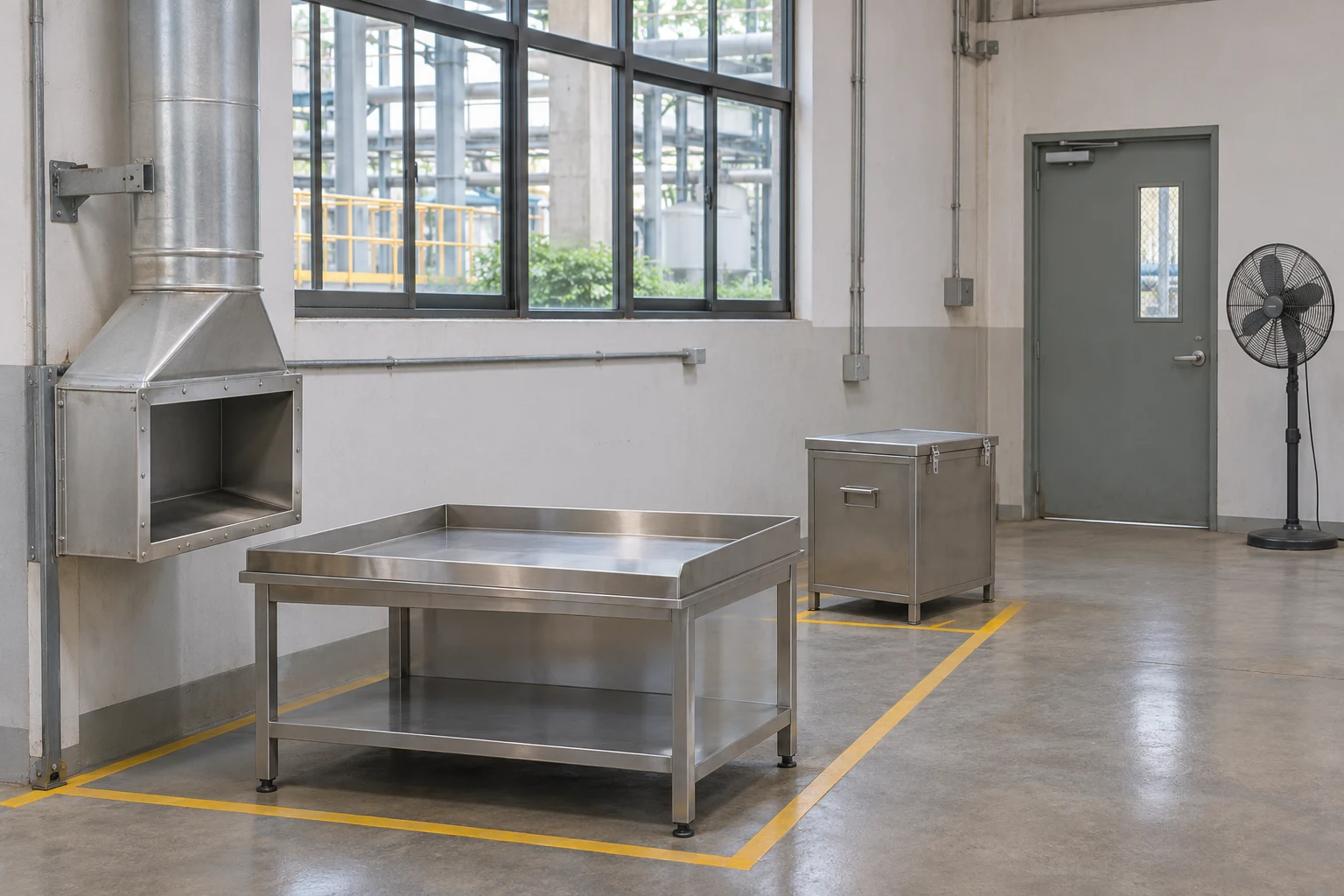
- Hood opening: compare its position with the actual emission source.
- Work point: verify it lies within the intended capture zone.
- Space between the hood and work point: keep objects from obstructing extraction, and notify the responsible person when the layout changes.
- Nearby fan: report position or direction changes for airflow review.
Connect installation requirements to current work
Article 72 of Korea’s Occupational Safety and Health Standards Rules requires hoods at emission sources and structures suited to emission form, specific gravity and working method. External and receiving hoods are to be close to the source. Compare the actual source with the equipment’s intended structure and operating area.
Read Article 422 against the substance and work conditions to which it applies, including its stated proviso. It addresses enclosure or local extraction at sources in indoor workplaces handling controlled hazardous substances. Resolve unclear substance or location information with the equipment owner before preparing the required controls.
Article 429 connects local extraction performance to the control velocities in its annex. Match inspection results and use conditions to the current task and report changes requiring performance review. Use equipment-specific records and responsible verification rather than choosing a velocity or treating a hand-felt breeze as acceptance.
Identify obstructions along the capture path
KOSHA Technical Support Regulation E-G-21-2026 addresses keeping objects out of the path between the source and hood opening. Before work, check boxes, supports and waiting containers. A visible hood face alone does not establish an open path from the actual emission point.
Larger or reoriented workpieces can create new obstructions. Report their positions and identify differences from the approved arrangement. Before moving items, consider release and other handling hazards, separating preparation-stage housekeeping from equipment changes requiring technical review.
Changing hood direction or its opening requires equipment information and responsible review. Movable materials and a fixed hood have different change responsibilities. Record the task stage and location alongside the obstructing item so recurring interference can be traced after the layout is corrected. Recheck the path after staging the materials needed for the next task. Distinguishing an empty-bench check from the fully prepared arrangement helps identify obstructions introduced immediately before starting.
Handover sequence
| Stage | Owner | Decision or check | Record |
|---|---|---|---|
| Identify | Worker and site owner | Substance, stage, source position | Task and equipment |
| Match zone | Worker and equipment owner | Hood and intended work point | Position, records, differences |
| Check obstruction | Worker | Material and workpiece interference | Item, stage, change |
| Review airflow | Equipment owner | Fan, door and supply changes | Change location and decision |
| Resolve unknowns | Authorised owner | Performance review and restart conditions | Hold, owner, result |
| Hand over | Worker and recipient | Current layout and next-task changes | Complete, open, next check |
Notice when the work point leaves the intended zone
The regulation identifies distant work points at external hoods and work outside enclosing hoods as causes of inadequate performance. Check movement during turning and removing parts, not just the starting posture. Work that begins close to a hood can move outside the conditions previously verified.
When a crowded bench causes parts to be placed temporarily to one side, establish whether further handling occurs there. Distinguish waiting positions from emission-producing work points. If the source moves, review its relationship to the hood before preparing work at the revised position.
Record which part moved during which stage and identify unverified locations. The equipment owner compares them with the intended operating area. Hold preparation at unresolved positions until conditions are established, preventing a temporary arrangement from becoming the next shift’s assumed standard.
Report changes involving doors and fans
An unobstructed path can still be affected by surrounding airflow. The regulation addresses interference and the direction of replacement air. Note open doors, fans behind workers and nearby supply-air changes as conditions for the equipment owner to review.
Cooling a worker and capturing contaminants are distinct outcomes. The regulation’s inspection guidance notes that excessive airflow from a fan behind the worker can interfere with suction. Record changed fan position or direction and connect the change to a review of the extraction conditions.
Communicate current and previous arrangements before changing doors or supply systems, since other ventilation and access conditions may be involved. Once the authorised owner establishes the required arrangement, receive those conditions and verify they remain in place when work starts.
Separate operating indications from performance findings
A running-fan indication is one part of equipment status. Establishing performance at the source requires relevant inspection results and operating conditions. Record observations about odour or sound as information for the owner, separately from performance verification.
First match the equipment identity in the records to the hood in use. Several nearby hoods can make records easy to confuse. If workpiece layout or process use has changed since verification, provide those changes so the applicability of the earlier findings can be reviewed.
The KOSHA Practical Guide’s cleaning-work material supports checking enclosure, extraction and operation. Connect the actual hood type and working method to equipment documentation. Separate externally observed conditions from items needing technical verification so a performance concern does not end with a simple running check.
Connect unresolved conditions to preparation holds
Report work outside the intended zone or unresolved obstructions. Combining unchecked conditions with completed items can hide outstanding review. Identify the affected stage and location, and have the responsible owner establish what must be reviewed before preparation continues.
Separate observations from inferred causes: a box in front of an opening, a larger workpiece, and performance still unverified are different facts. This distinction helps the owner decide whether layout correction or equipment review needs attention first.
Suspected acute exposure or release calls for the site emergency procedure, withdrawal from danger and appropriate control. Routine layout checks and emergency response have different responsibilities. Resume preparation only against conditions communicated by the responsible restart authority.
Hand over the arrangement and outstanding conditions
At completion, communicate the current hood-area layout and conditions that will change for the next task. Distinguish verified work points, removed obstructions and airflow changes still under review. Describe usable locations and unresolved ones rather than recording only that extraction ran.
The recipient matches the recorded equipment and task to the next operation. Changes in substance, part or handling direction need review before carrying over the arrangement. Use site records to distinguish who checked the condition from who owns outstanding review. Resolve unlocatable points or unclear wording with the sender. Recording when the check occurred distinguishes later changes from previously reviewed conditions and clarifies the next verification scope.
Leave a clear separation between established use conditions and conditions awaiting confirmation. Maintain the approved arrangement and report new changes from the affected point. Consistently linking the hood to the emission source helps preserve the required capture conditions as work changes.