Before selecting respiratory protection
HSE addresses the contaminant, task and wearer when selecting RPE. Filtering respirators do not supply oxygen.
Understand the situation
Respiratory protection selection starts with exposure information. Concentration, duration, workload and wearer conditions matter as well as the substance name.
Appearance or smell cannot select a cartridge.
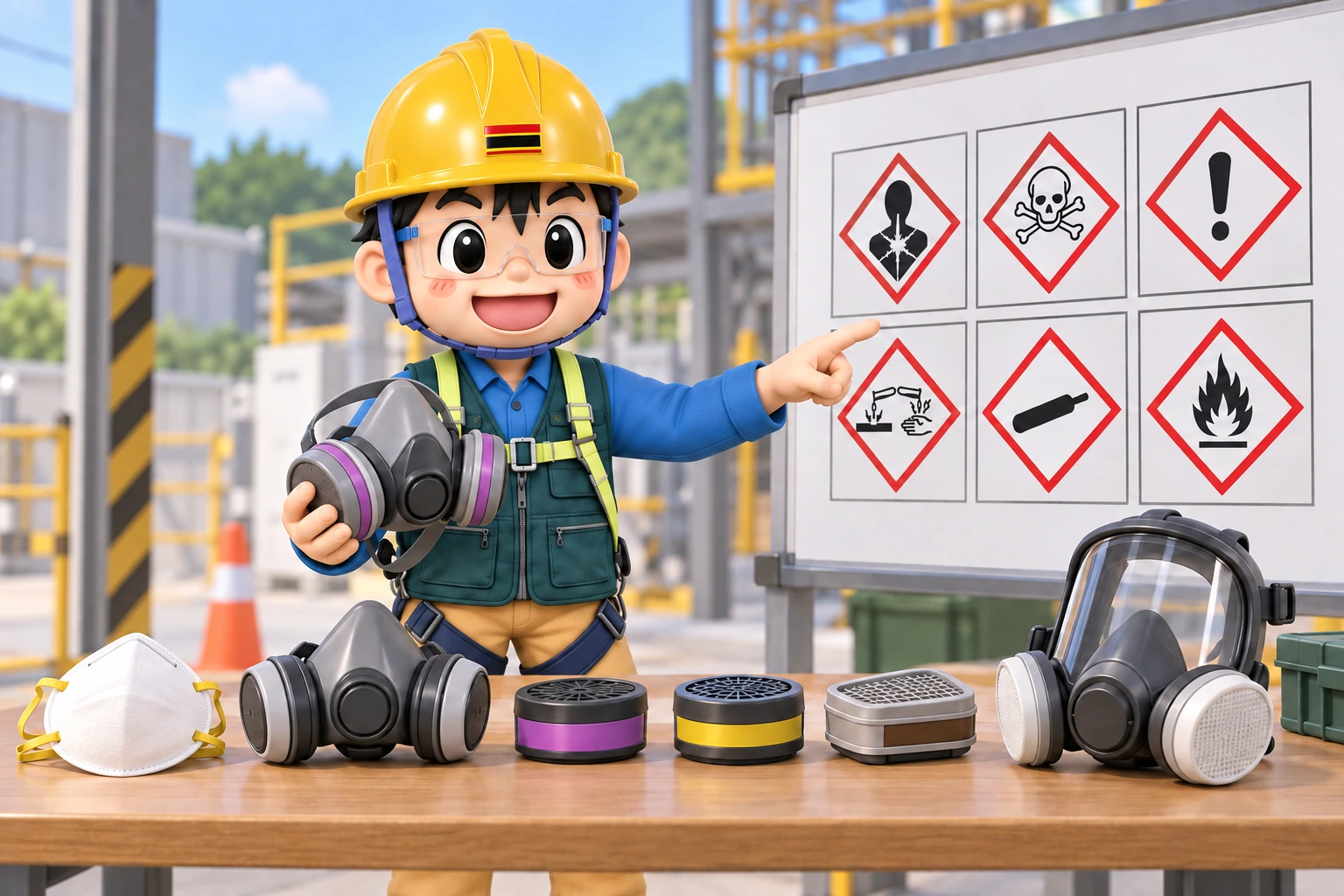
Review the task
Consider engineering and work-method controls first, then select protection for residual exposure. Tight-fitting equipment requires wearer suitability, fit testing where applicable, and training.
A user seal check is distinct from a formal fit test.
Check your workplace
- Are substance, concentration and oxygen conditions known?
- What are duration, workload and other PPE?
- Are fit testing and training arranged?
Apply the lesson
Give the selector the task, contaminant, assessment, wear duration and other-PPE constraints. Do not issue stock equipment first and assume the task fits it.
Avoid a common mistake
Filtering equipment does not resolve oxygen deficiency or an unknown atmosphere. The linked cartridge example has defined limitations and is not a substitute for selecting rescue breathing equipment.
Putting it into practice
Provide exposure information and required protection before purchasing. Do not select cartridges by odour or appearance.
Technical insight
Manage filtration and face fit separately
A suitable filter cannot compensate for leakage around a tight-fitting facepiece. Selection needs to address both the hazard and the wearer.
Keep contaminant assessment, approved combination, fit testing and user seal checks as distinct items. A higher filter rating does not correct a poor face seal.
Check the actual respirator approval and the facepiece–filter combination together.
Korean safety resources
- KOSHA GUIDE A-G-12-2026 · Use and maintenance of personal protective equipment
Korean-language technical recommendations on PPE selection, training and maintenance; use alongside the product manual.