Respiratory protection · Korean-market model
3M 6006K cartridge
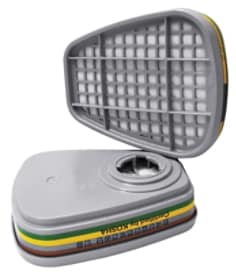
- Cartridge housing: inspect for damage and contamination before use. The image shows product appearance only.
- Product marking: match the model to its instructions. Gas suitability and replacement timing also depend on use conditions.
6006K is a cartridge, not a facepiece
6006K is a gas and vapour cartridge for compatible facepieces. The Korean 3M product title lists organic vapours, halogens, hydrogen sulphide, sulphur dioxide, ammonia and formaldehyde. That list is not permission to use it for every gas or concentration.
Check the cartridge, facepiece, contaminant, concentration and oxygen conditions together. Mechanical connection alone does not demonstrate an approved combination. Start with the actual Korean product marking and instructions.
Available sorbent capacity decreases during use
A cartridge reduces specified gases or vapours as air passes through its media. Capacity is finite. Contaminant breakthrough through the cartridge and inward leakage around a facepiece are different routes of exposure.
A new cartridge cannot correct poor facepiece fit. Passing a seal check does not increase remaining cartridge life. Manage cartridge replacement and wearer fit as separate controls.
Article 13 of the Korean certification notice defines breakthrough in relation to loss of sorbent capacity and distinguishes the test time under specified concentration and flow. A test duration is not a universal field replacement time for all substances and conditions.
The cartridge media and facepiece valves serve different functions. Damage or incorrect assembly can create an exposure path bypassing the cartridge. Cartridge identification cannot replace valve and seal inspection.
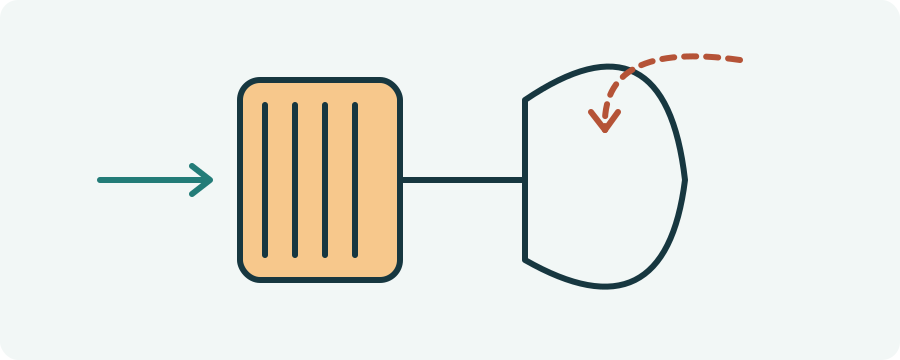
Read the contaminant list and approved combination
Korean 3M information identifies the bayonet connection and compatible facepiece series. Verify the exact model against its instructions and approved combination. A similarly numbered overseas cartridge document is not a Korean 6006K certificate.
A gas cartridge alone does not establish particle protection. Where dust or mist is also present, assess the required particle filter and approved combination. Match substance, physical form and use conditions before relying on colour or appearance.
Exclude unsuitable atmospheres first
The manufacturer restricts use in IDLH conditions. The cartridge also supplies no oxygen. Entering an unknown release wearing it to discover the atmosphere is not a selection method. Assess the hazard from a safe position and establish suitable monitoring, protection and escape arrangements.
Replacement planning must consider humidity, temperature, breathing rate, mixtures and intermittent use as well as concentration. Do not carry an old schedule into a changed substance or workload without reassessment. Calculation assumptions must represent the actual task.
A listed substance does not establish protection against every component of a mixture. Assess composition, physical form and any accompanying mist or gas. Record applicable substances and exclusions rather than only the cartridge number 6006K.
When applying service-life estimates, verify that the inputs represent the task. Do not choose an arbitrarily low value for an unknown concentration to extend use. Resolve the need for exposure or process assessment before finalising the schedule.
| Item | Information | Reassessment |
|---|---|---|
| Substance and concentration | Coverage and assessment | Unknown or IDLH |
| Facepiece | Exact approved combination | Poor seal or damage |
| Schedule | Use and exposure conditions | Changed conditions |
Check opening, assembly and seal
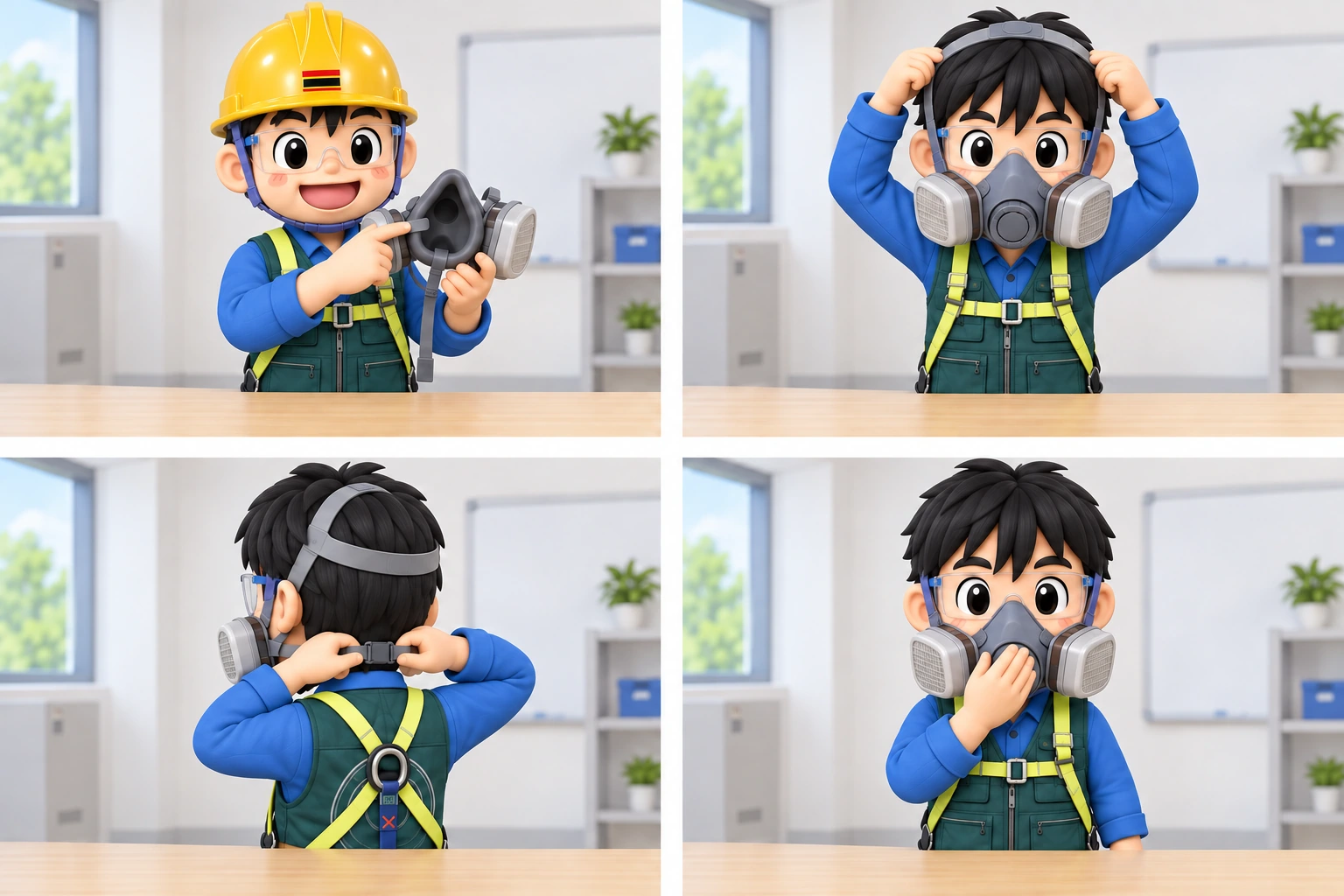
Check packaging and expiry before opening, then inspect the connection for damage or contamination. Assemble on the correct facepiece and perform the specified seal check. The feel of engagement does not verify assembly, facial seal and remaining service life together.
Leave for a safe area if odour, taste, irritation or another abnormal condition is detected. Absence of odour is not a reason to extend service. Distinguish an abnormal-condition response from the objective basis for the replacement schedule.
The 3M facepiece instructions address distorted or torn exhalation valves and debris on the valve seat. Cartridge replacement does not resolve these faults. Follow the facepiece assembly check and complete the donning seal check before use.
Leave the contaminated area before removing the cartridge or facepiece. Removing protection there can increase exposure. In safety, investigate service life, combination, leakage and changed atmospheric conditions before deciding on re-entry.
A replacement schedule needs its assumptions
Document the schedule with objective assumptions such as substance, concentration and duration. Link opening and use history, the manufacturer information or calculation applied, and triggers for reassessment. A calendar date alone does not identify the work it covers.
Separate facepiece cleaning from cartridge storage. Do not wash or improvise regeneration of cartridges. Follow the specified storage and post-opening instructions, keeping contaminated equipment apart from clean equipment.
Distinguish wear time from storage time. Intermittent use does not restore a cartridge to new condition. Check whether storage between uses is represented in the basis used to establish the schedule.
The 6000-series facepiece instructions require cartridge and filter removal before cleaning. Do not immerse them with the facepiece. Follow the restrictions on solvents and dry and store in an uncontaminated area. These are facepiece-care instructions, not a Korean 6006K certificate.
When revising a schedule, retain who established it and the supporting conditions and evidence. Identify whether substance, concentration, workload or storage changed. Moving a date on a calendar does not update the technical basis.
Distinguish overseas approvals from Korean certification
Verify the Korean certificate number against the actual product marking and certificate. A model name or overseas NIOSH approval alone does not establish the Korean certification of a particular combination. Check the product, facepiece, contaminants and limitations together.
Check grade, manufacturing information and certificate number as well as model. Reconcile intended use, instructions, restrictions, inspection, disposal and storage with the issued equipment. Obtain the actual documentation rather than filling gaps with a similarly numbered overseas product.
Field practitioner note
Sources
- 3M Korea (한국3M) 6006K product information (Korean)
- 3M 6000 half-facepiece user instructions
- OSHA, Respirator change schedules
- 3M, Cartridge and filter replacement
- CDPH, Worker Fatality Alert (January 2012, revised February 9)
- Rules on Occupational Safety and Health Standards (산업안전보건기준에 관한 규칙)
- Protective Equipment Safety Certification Notice (보호구 안전인증 고시)