Holding and reopening a pallet rack bay after a suspected impact
Pause handling after suspected rack contact and identify the bay. Report the guard and rack observations separately.
Pause handling and identify the location from outside
Paint fragments or fresh scrapes on a guard may be visible after a move. If a fork or load may have struck the rack, first identify the aisle and bay. Hold new loading even if stored goods remain in place and the rack is upright. Tell nearby people and the handling crew where to stop and observe from outside the aisle without going beneath the rack.
Back-to-back racks can make similar marks easy to confuse. Record the approach aisle and the face observed along with the bay. If an upper load looks displaced, do not stand below it to look up. Report the level and direction from a safe position, or say that the area could not be observed safely.
The vehicle may have stopped somewhere other than the point of contact. Record its reported direction of travel so facilities can trace the approach. A floor mark alone does not establish where contact began or how the force acted. Keep reported details separate from what you saw. Hold the use decision if a load appears displaced or an upright looks different, even while contact is unconfirmed.
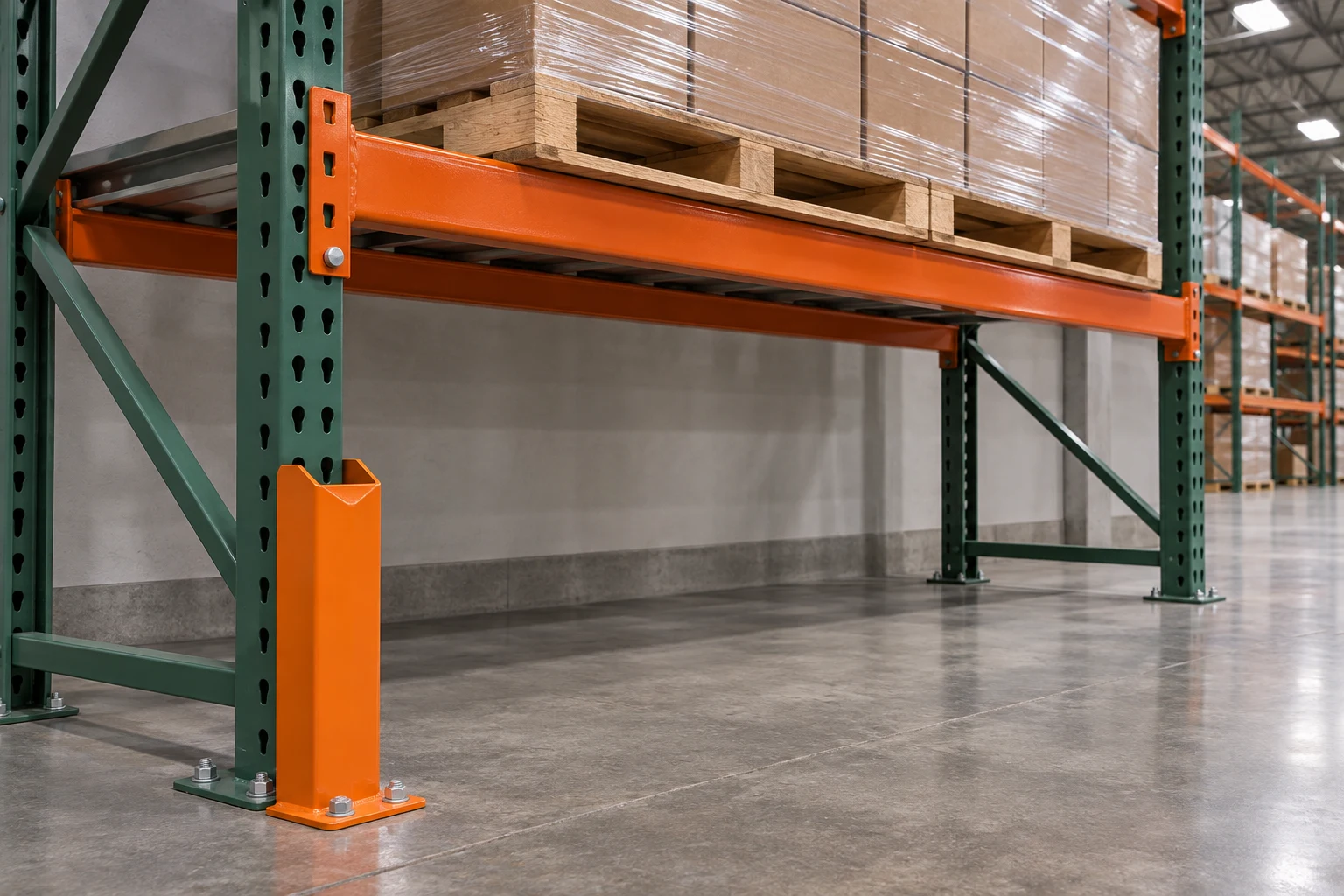
- Guard: look for displacement and visible contact marks.
- Upright: identify the face with a visible change.
- Base connection: distinguish apparent plate lift from nearby floor damage.
- Beam connector: identify the end that meets the upright.
Record the guard and upright separately
Record a scrape on the guard separately from a dent in the upright. Where the guard is separate, look from outside to see if it has shifted into contact. Leave the guard in place during the round. Separate the observations at its foot and the front of the upright so the inspector can assess both components.
If the bottom of an upright looks dented, identify the face and approximate level. One straight-looking face tells little about the other faces. Observe from the safe side without leaning into the vehicle aisle. If you include a comparison photo from a nearby bay, note differences in viewing angle.
A replacement guard may look sound because of fresh paint. Record the guard replacement separately from inspection of the rack upright. If facilities reports work on the guard alone, check whether the rack still requires inspection. Before reopening, agree with the handling crew on what each team has verified.
Look separately at the base and beam connection
If a base plate appears raised or the nearby floor is cracked, locate the observation separately from upright damage. A plate that looks flush does not establish the anchorage condition. Report the corner and any apparent floor damage without tightening a nut or pressing the plate. Leave inaccessible sides to facilities.
If a gap looks unusual at a beam end, identify the upright it meets. Do not climb the rack or enter beneath the load to inspect a high connection. Nearby bays may differ in design. Report the observation point and any obstructed view so the equipment team can compare the connection with the rack design.
If a pallet corner also looks displaced near a beam connection, separate the load and structure findings. A view from the floor cannot establish that unloading is safe. Leave the unloading sequence and access boundary to the people managing the work. Tell the handling crew both that a load remains and where access is restricted.
Handover sequence
| Stage | Owner | Decision or check | Record |
|---|---|---|---|
| Pause handling | Handling crew | Stop approach and new loading at affected bay | Aisle and bay |
| Match location | Storage | Reconcile approaches and observed face | Viewing direction |
| Observe | Round checker | Separate guard, upright, beam and base | Part and visible condition |
| Confirm restrictions | Facilities and storage | Review adjacent bays and rear access | Boundary and detour |
| Determine use | Facilities | Review loading and inspection findings | Released and held bays |
| Communicate reopening | Storage and handling | Reconcile signs and dispatch list | Release scope and open checks |
Confirm restrictions on both sides of the rack
A barrier on the front aisle alone can leave access from the rear. Check with storage staff whether the bay can be reached from the other side. Give facilities the connected rack span and load location so they can confirm restrictions on adjacent bays. When the boundary changes, communicate the same information at both approaches.
A restriction in a handling aisle can send traffic through another work area. The handling crew should identify the new junction and coordinate movement with other crews. A load left on the detour can block the view of the restricted area. Manage the rack exclusion and the clear detour as separate tasks.
Even when dispatch is delayed, do not reach in for an item near the edge. Moving some goods may affect the situation, so storage staff first confirm the permitted scope with facilities. Match remaining goods to their locations, then verify the authorized bay and load in the field before handling.
Link photos to the scope of action
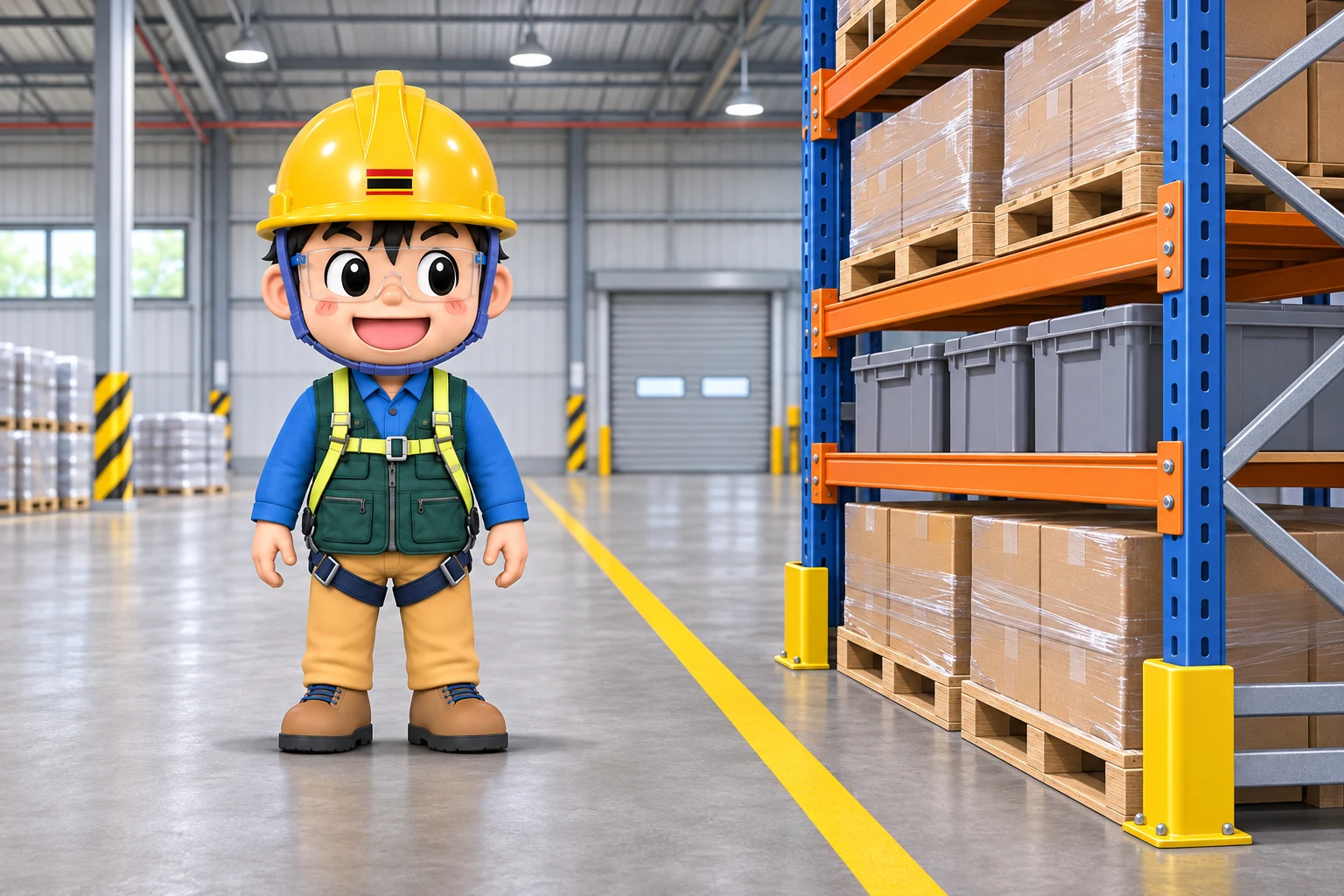
Where photography is possible, pair a location view with a detail view of the component. A close-up alone can be hard to place among similar bays. Do not enter the restricted area for a photo. Record the bay and direction for a safe overview, and attach a detail only if it was safely obtained.
Barriers or repair equipment can change the view after the initial photo. At handover distinguish the original observation face from the most recent check point. Confirm what was revisited and what stayed inaccessible. Record why an item remains open so the next shift does not repeat an unsafe approach.
Cleaning up an impact mark does not settle rack use. Grouping paint touch-up with structural inspection can obscure what was actually checked. Ask facilities what was replaced and inspected, and tell handling exactly which restrictions were lifted. Do not remove other barriers on the assumption that nearby bays were also cleared.
Identify which bays may reopen
Once facilities makes the use decision, mark released bays and bays that must stay clear separately. A loading hold and an aisle closure may have different boundaries. Agree who removes each sign. Before the first resumed move, have the crew match the bay on the list to the rack and check for remaining restrictions.
If an unfamiliar sound or movement is noticed in a reopened bay, stop before adding the next load. Report when it changed and where handling was taking place from a safe location. Link the new observation as a separate entry even if an earlier repair is on record.
Article 393 of the occupational safety rules sets basic conditions for stacking cargo, including stable support and avoiding uneven load distribution. Reopening a rack requires assessment of the design, impact extent, components, and loading conditions. The round provides photos and locations so equipment staff can review the load and applicable information before deciding.
When contact is suspected without a visible mark
A handling operator may report movement even if the guard shows no mark. Distinguish the absence of a visible mark from unconfirmed contact. Ask where the load was moving and where it could have touched. Record both the span described and any part that could not be checked.
An obstruction can limit the camera to one side. Agree with facilities whether another view is needed, and record the face first photographed. Leave the unseen rear face unverified. If both sides were observed, match the records by bay to ensure they describe the same upright.
If maintenance starts with an empty bay, separately report loaded bays connected to it. That matters when setting access and inspection limits. If told unloading is complete, confirm whether that covers only the reported bay or neighboring bays as well. Record the scope actually confirmed empty.
Reconcile field restrictions with dispatch records
A barrier can be visible while dispatch still assigns work to the bay. Storage staff should match the field sign to the list. If work had already been assigned, notify the handling crew in motion first. Distinguish when the list changed from when the crew acknowledged the change.
Before moving goods to another bay in the aisle, verify that the substitute location is available. A nearby empty bay may fall inside the same restriction. Match the substitute in the list and field signage. Keep a separate record of goods already moved there when the original bay reopens.
Facilities and storage may call the same rack by different names. Add the aisle and a fixed landmark when communicating the restricted span. If one crew interprets a limited check as covering the whole aisle, people may move unnecessarily or approach the wrong point. Reconcile the boundary before changing field signs.
The incoming shift first needs to know what can be done in each bay. Identify released bays, held bays and restricted routes in turn. If inspection continues, distinguish points still blocked from completed areas. Repeat the location briefly to verify that both shifts understood the same boundary.