Checks from the fixed landing before access onto an external floating roof
At the fixed landing, match roof level to operation. Before descent, check the access route, drainage, atmosphere and return arrangements separately.
Confirm roof entry separately from arrival at the top landing
An external floating roof moves with the stored liquid. Reaching a fixed landing by the external stairs does not authorize descent onto the roof. Operations identifies the tank and job, then determines whether roof access is necessary. Separate checks possible from the fixed landing from those requiring descent to avoid unnecessary entry when conditions are uncertain.
Where similar tanks stand together, match the stair used to the tank and roof work point. A report that work started on a neighboring tank does not permit entry on this one. Verify the equipment at the fixed landing and tell operations separately when the landing is reached and when roof descent is authorized.
A request for a top inspection can leave the boundary unclear. Agree whether the crew will inspect a roof drain or view the access route from a fixed landing. Identify the designated observation point and review any need to move it with operations. Reassess the access conditions if the scope changes.
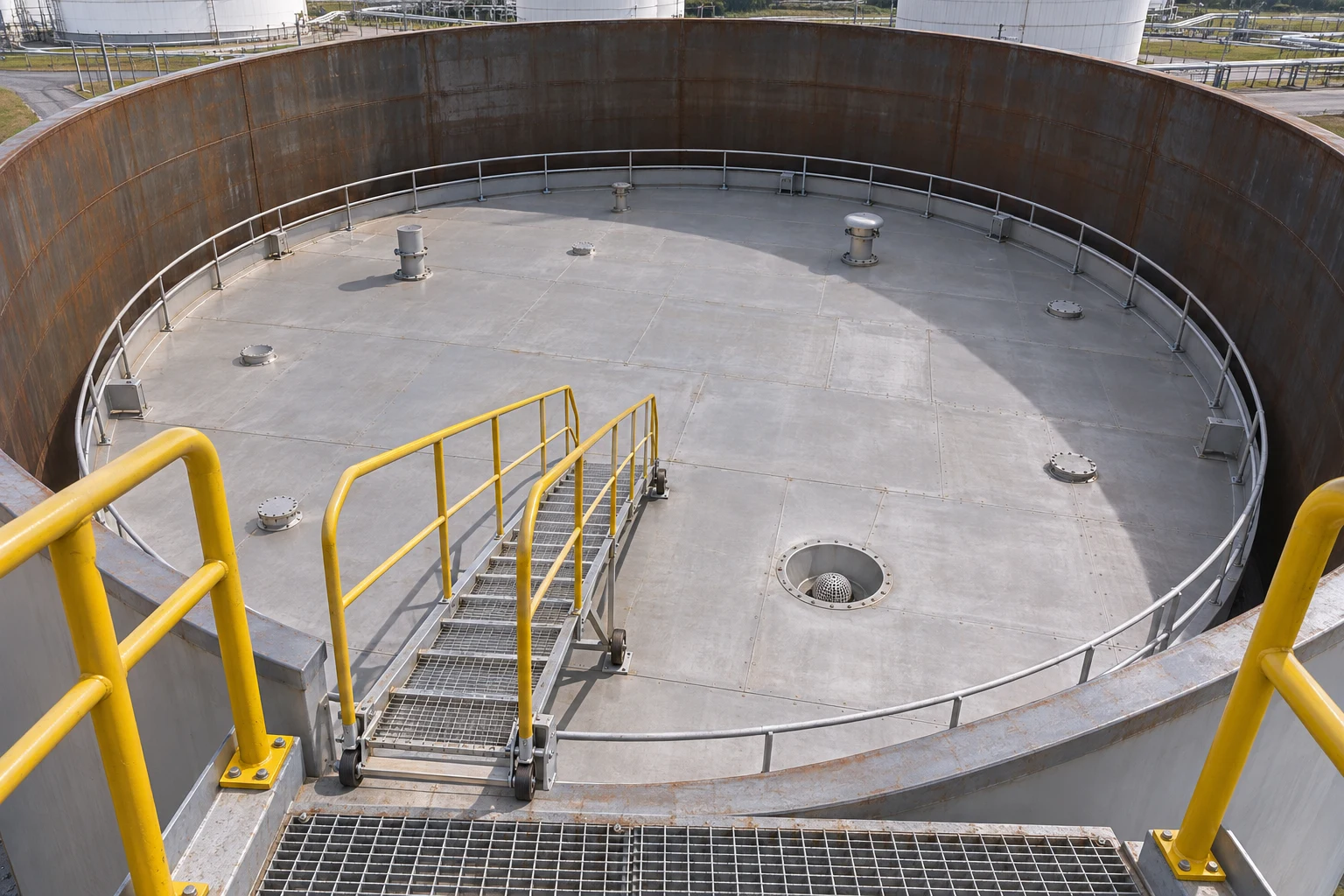
- Fixed landing: identify the designated observation point before roof entry.
- Movable access stair: check both ends and the return path.
- Roof sump: distinguish visible condition from verified drainage.
- Roof-edge rail: locate the visible edge when observing the roof position.
Match roof position with tank operations
Check apparent roof height together with the tank's operating state. Scheduled or ongoing transfers can change the position of the roof and movable access equipment. Do not infer future movement from the height seen outside. Operations defines the conditions that apply during the job and how changes will be communicated.
A floating roof and a roof resting on its designed supports need different assessment. Do not decide which state applies from the height on one side. If operations data and the field view disagree, hold entry and identify what equipment staff must verify. Do not descend merely to investigate height or support.
If the roof seems to stop at an unusual level or the rim appears uneven, record the direction from a safe location. Perspective and light can change appearances, so report only what was seen. Tell operations which span looked different and which was unverified, and hold access pending assessment.
Observe rainwater and drainage from a safe position
After rain, record where water is visible on the roof from the fixed landing. Distinguish a visible drain from evidence of drainage. Do not descend to clear standing water or unblock the drain. If a problem is suspected, operations and equipment staff assess roof condition and access separately.
Do not estimate depth or remaining buoyancy by eye when water collects on one side. A photo can locate visible pooling but cannot establish roof integrity. Separate the observed water from obscured sections in the record. If wind or rain reduces visibility, stop and report what could not be seen.
A roof drain line checked outside the tank and a sump seen on the roof are different points. One ordinary-looking point does not establish the condition of the other. Operations checks that the observations refer to the same path. If pooling or unusual discharge is reported, identify the system before any intervention.
Handover sequence
| Stage | Owner | Decision or check | Record |
|---|---|---|---|
| Identify task | Operations and crew | Match tank and need for roof access | Tank and scope |
| Match operation | Operations | Check roof position and transfer changes | Operating state and contact |
| Observe | Crew and equipment staff | Separate pooling and access findings from the landing | Face and obscured sections |
| Verify entry conditions | Operations and safety | Review atmosphere, communication, return and response | Check points and open items |
| Stop on change | Crew and operations | Hold access if weather or operation changes | Change and return status |
| Close and hand over | Crew and operations | Account for personnel and tools and communicate restrictions | Return and boundary status |
Check both ends of the access route and the return path
A guarded fixed landing does not establish the condition of the stair to the roof. Check return as well as descent, since roof level and stair angle can affect the way back. Operations and the crew review both directions and leave an open check if the lower connection is obscured.
If there is visible distortion or an obstruction around movable access equipment, do not test it by walking on it. Report the affected part and roof position from safety. Do not load it with body weight or push a stuck part. Even after maintenance defines a safe check, confirm other roof-entry conditions separately.
A route clear during descent can later be obstructed by another crew's materials or hoses. Assign control of the landing and distinguish waiting and staging areas. Coordinate personnel and material movements where crews share stairs. Tell the people above when access restrictions change.

Agree atmospheric checks and communication before entry
When an external floating roof sits low, vapours can linger in the space above the roof inside the tank shell. An open top does not establish a safe atmosphere. Before entry, measure the atmosphere at points representative of the work area and verify that the recorded locations, times and results support entry under the site criteria. Each entrant carries a function-checked personal gas detector suitable for the gases of concern. Hold entry if the measurements cannot be verified or a suitable detector is unavailable.
An atmosphere check does not automatically authorize entry. Verify the access equipment, roof, changes in operation, communication and emergency arrangements separately. Check where radio contact works and how to stop if it is lost. Reassess the check if work location or tank operation changes.
If someone cannot leave the roof, other workers should not descend on impulse. Verify rescue arrangements and communication before work. In an emergency activate the site response procedure and provide the last known position and contact status to support the response team's access decisions.
Stop work and access when conditions change
If rain starts or tank operating conditions change, the crew should not decide alone to continue. Inform operations promptly and follow the agreed exit and communication arrangements. Confirm the location and return status of anyone already on the roof. Tell incoming personnel that the previous authorization has been suspended.
Record differences between expected and actual conditions. Separate a schedule delay from changes in roof level, weather, access equipment or atmosphere checks. Agree with operations which checks must be repeated before resuming.
Korean fall-protection provisions provide a general basis where applicable. The UK HSE bulletin explains the importance of buoyancy, drainage and access equipment checks for external floating roofs. Verify applicable local procedures, risk assessment and tank design at the site. External observations inform that decision.
Record what remains open when access is held
If access is deferred pending roof checks, identify exactly what remains closed. Closing the outer stairs and permitting travel only to the fixed landing are different boundaries. Check where signs can be seen and whether other crews need the same tank. Match the work list and field notices when the boundary changes.
While awaiting equipment review, identify whether the report concerned pooling, apparent tilt, a drain connection or access equipment. Distinguish a request for action from completion and identify the tank and face. Even after the roof is assessed, match the job scope to current operation again.
At completion, the crew accounts for personnel and tools and confirms return to the fixed landing with operations. Record changes seen during cleanup instead of immediately descending again. Note the location and last observation conditions, and identify what must be rechecked if another entry is required.
Decide when weather requires reassessment
Forecasts and field observations are made at different times. Water and wet access surfaces can remain after rain stops. Report forecasts and observations separately. If conditions trigger the site's weather restrictions, hold work and access and inform operations.
If weather obscures the roof, do not step onto the access stair for a better view. Record the limits of the designated observation point and agree when visibility can be rechecked. If lighting is needed, verify equipment and working conditions appropriate to the area. Do not mark unseen sections as checked.
Set waiting positions and the order of checks
Several people gathering on a small landing can obstruct stair access or emergency return. Limit the observation point to those assigned and have others wait clear of travel. Choose equipment staging with both ascent and return in mind. Coordinate when each person goes up.
Where checks are divided, review what the final decision actually covers. Equipment staff can assess the roof and access, while operations checks the tank and planned operating conditions. If checks occurred at different times, ask what changed between them. A crew already at the landing does not justify proceeding with an open item.
Remote operating information and field observations may differ. First reconcile the time and observation point. Do not revise instrument indications from appearance or infer operating state from appearance alone. Hold access until the teams compare the same tank and relevant conditions.
Confirm return arrangements aloud
When reviewing access, identify the point where personnel will return to the landing and make contact. A move to the far side of the roof can change communication and return arrangements. Tell operations before extending work beyond the agreed area and check that the arrangements still apply.
If operations detects a departure from planned transfers or equipment conditions, determine whether the crew has already descended. Hold descent if it has not started. If people are on the roof, use the agreed contact and return procedure. Repeat the tank and job so both sides refer to the same activity.
Related reading
Original sources
- UK HSE bulletin on external floating roofs and retaining buoyancy
- Korean occupational safety rules on fall prevention
- Korean occupational safety rules, Article 619-2 on measurement and records where confined-space rules apply
- International reference: TIC Council guidance on access to external floating roofs