Handing over leak verification after flange bolt tightening
Link leak verification scope and results to the correct assembled joint. Hand over access restrictions and restart conditions separately.
Keep assembly completion and leak verification separate
When maintenance reports completed tightening, operations first identifies the joint. Keep assembly completion distinct from leak verification under specified conditions. One combined status can make the next shift assume that a tightening report also confirms leak verification. State what each result covers.
Maintenance verifies the method and assembly record for the work. A round checker does not infer tightening values or joint performance from even-looking bolt ends or marks. Separate visible findings from results verified by maintenance. Record missing checks as open.
When several flanges are serviced, the last one worked on can dominate memory. Match the list to field locations using branches or changes in elevation. For hidden joints, distinguish reported location from the scope actually seen. Keep completed joints separate from those awaiting further action.
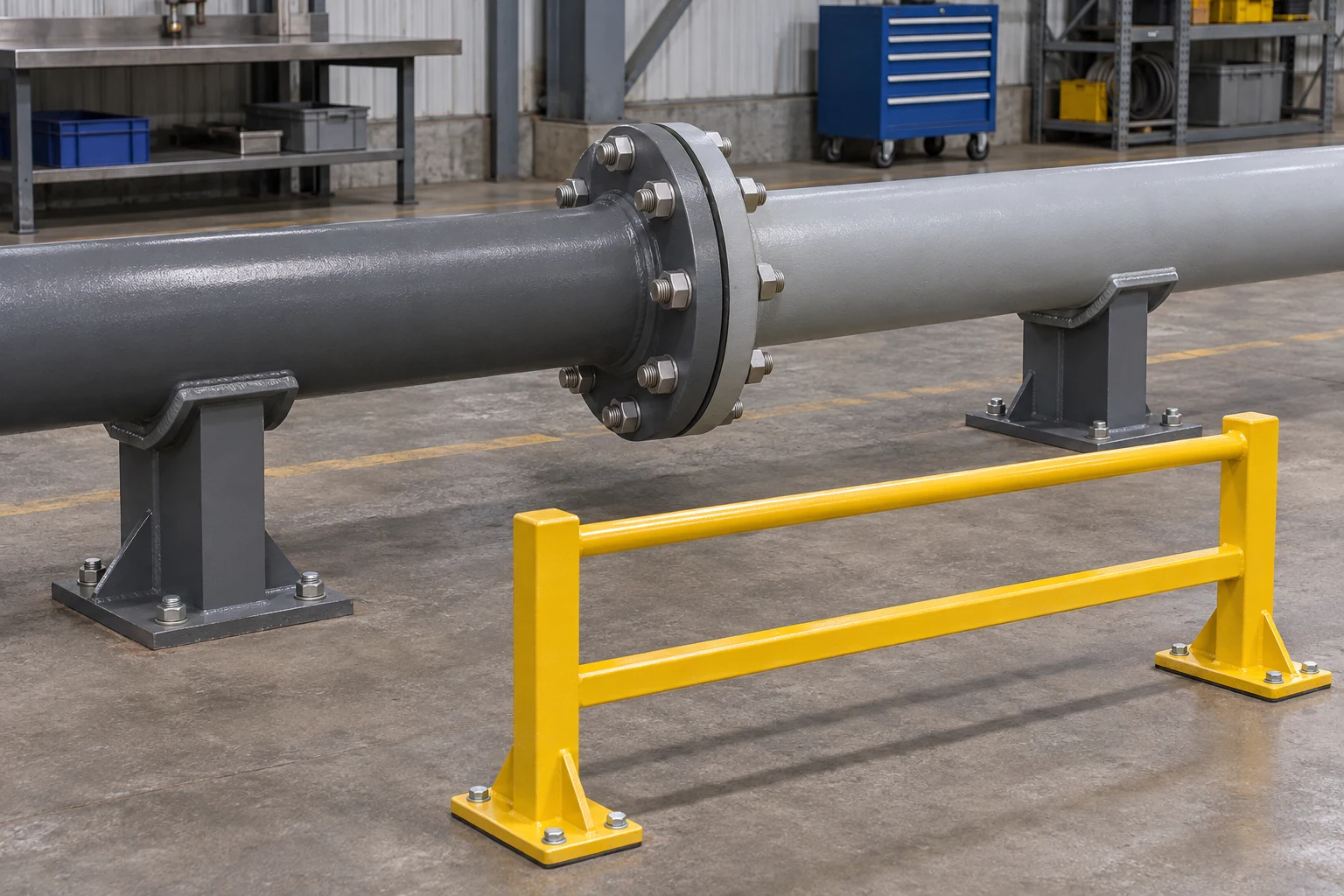
- Flange joint: identify the exact line and joint.
- Bolt and nut: distinguish appearance from the assembly record.
- Pipe support: use it as a landmark for the observation point.
- Barrier: verify the permitted access boundary.
Match each joint to its verification scope
Two serviced joints on one line may fall in different verification sections. A joint outside an isolation boundary can be assigned the wrong result. Operations and maintenance identify the target joints, the extent and any exclusions. Resolve the scope before work rather than inferring it afterward.
If an assembled joint is opened again, review whether the earlier record still applies. Maintenance reports what was reopened and how the joint was restored. Distinguish verification needed for the changed joint from the scope still covered by the prior result.
Before restoring insulation or covers, check whether the required observation point will be hidden. Agree who checks it and under what conditions before changing the order. Separate cover restoration from joint verification. If the joint is already hidden, arrange a safe method with maintenance rather than removing the cover on impulse.
Separate the purpose and conditions of verification
Assembly record review, an authorized leak test, and observation during restart are different activities. State which one was performed. Do not call a visual observation a completed test. Maintenance and operations determine the necessary verification under the applicable procedure.
A test involving pressure uses a defined boundary, medium, equipment and access controls. Do not apply pressure or change medium to speed up a check. Operations communicates which sections are under test and which remain in service. Identify who verifies results and what is needed before the next step.
Link each result to the conditions under which it was obtained. The responsible team assesses deviations from planned conditions. Connected test equipment does not establish that the test is complete. Verify outstanding steps before removing test equipment or returning to service.
Handover sequence
| Stage | Owner | Decision or check | Record |
|---|---|---|---|
| Match joints | Maintenance and operations | Match work list and field locations | Joint and assembly scope |
| Verify assembly | Maintenance | Separate completed and open work | Assembly record and actions |
| Verify conditions | Maintenance and operations | Match method, scope and access boundary | Scope and conditions |
| Report concern | Work crew | Report observations from safety | Location and equipment state |
| Reconcile results | Verification team and operations | Link each result to the actual joint and state | Result and time |
| Hand over | Operations | Separate release of access and restart conditions | Open checks and restrictions |
Stop approach and report abnormal indications
If wetness or apparent discharge is visible near a joint, do not approach to touch it. From safety report what was visible, from which side, and the known line condition. Distinguish the wet area from the suspected source, since material may have run down from above.
Do not trace a noise or odour by moving toward it. Report under the site procedure and identify the direction from a safe point. Record that the source remains unconfirmed. If controls are already in place, tell the boundary crew about the change.
Do not improvise further tightening on a suspected leak while the joint is under pressure. Stop and follow the site procedure. Establish safe equipment conditions and the applicable procedure before intervention. Record the new verification rather than copying the earlier result after corrective work.
Review side access and neighboring work
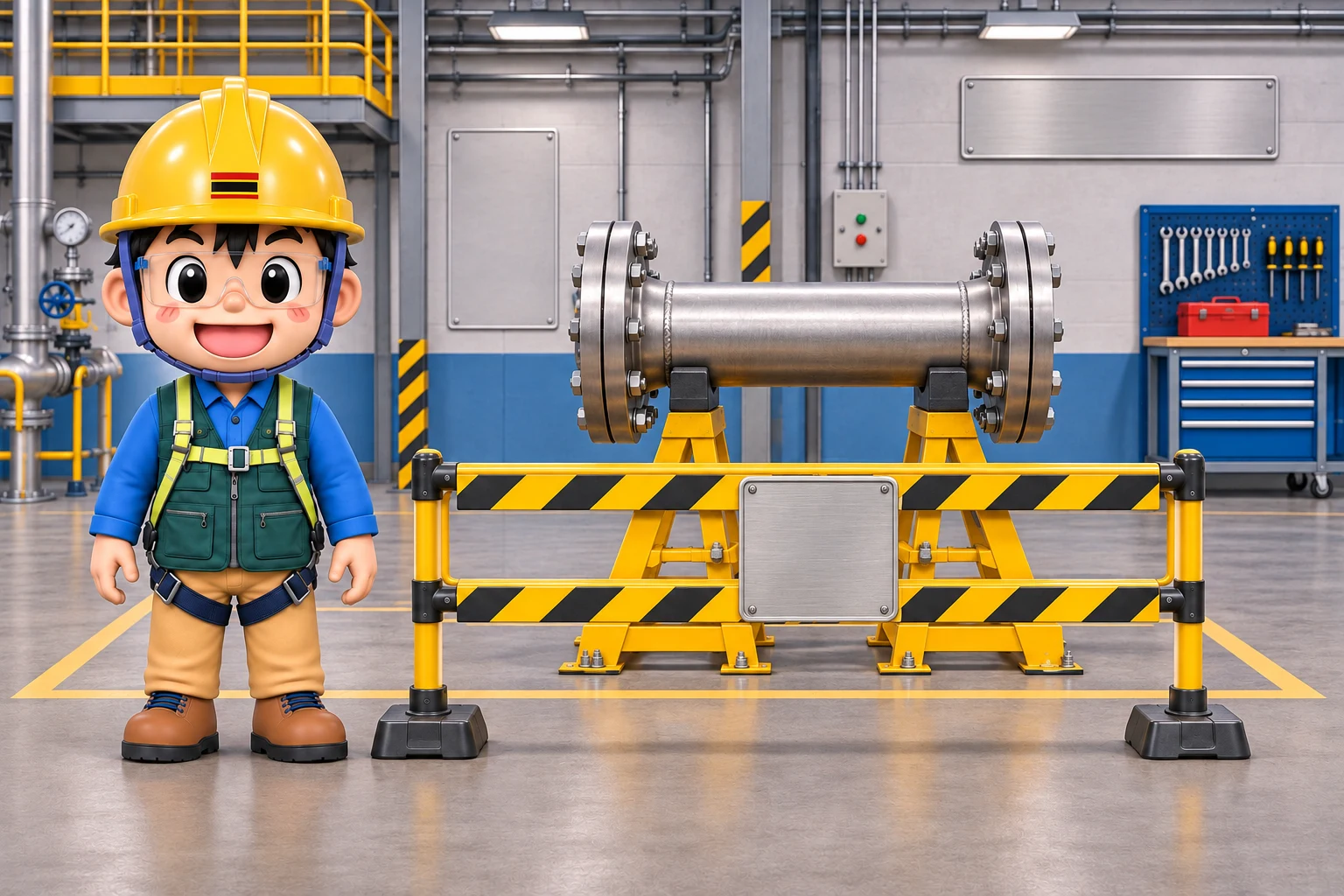
Do not leave the verification crew as the only people aware of the boundary. Consider approaches used by nearby crews and round checkers. Make restrictions visible from obscured entrances. Set the extent for the test and equipment conditions rather than reducing it by eye.
A test that appears stopped does not establish depressurization or access release. Do not reopen passage because the test crew has stepped away. Verify the authorized release scope and update other approach signs consistently.
A delay can lead other crews to start work on the original schedule. Check for overlap with the test boundary. Coordinate using the confirmed field status. At handover distinguish active testing, a pause and release of access restrictions.
Read back the results and keep open items visible
The outgoing crew states the joint, assembly scope, leak verification method and result, and remaining restrictions. The receiving crew reads back which joints were verified. If a result is only one line, ask which state and time it refers to. Do not fill open items with results from an adjacent section.
Conditions covered by verification can differ from those immediately before restart. If temporary equipment was removed or piping was disturbed again, agree what must be rechecked. Confirm that no joint remains under work before announcing restart. Keep verification completion and restart authorization as separate decisions.
Article 257 of the Korean occupational safety rules addresses measures to prevent leaks at specified joints in chemical equipment and piping. UK HSE guidance covers stored energy and segregation during pressure tests. Determine the test and its conditions under applicable site procedures. The focus here is linking results to the correct joint and communicating remaining restrictions.
Reconcile joints after the scope changes
The prepared test boundary can differ from the plan. If a connection is removed or moved during setup, identify the affected joints in the field. Communicate exclusions as well as inclusions so new results are not assigned to outdated list entries.
Parallel lines can make a joint hard to identify by area name alone. Include the equipment and connection direction when describing the scope. Match landmarks from a safe point without entering in front of the joint. Reconcile any discrepancy before assigning the result.
Even without reworking a joint, system boundaries can change between verification and startup. A connection isolated during a check can be in a different state later. Read back the state covered by each result and identify any joints requiring another check.
Distinguish maintenance checks from operations checks
Maintenance reports the joints worked on and assembly scope. Operations verifies system state, restrictions and next-stage conditions. Where test results are separate, identify the joints and conditions they cover. Preserve ownership of each check when combining records.
A completion message can arrive before the receiving crew is available. Agree which restrictions stay in place until handover. Make remaining checks easy for the incoming crew to find and leave unverified results open.
Before follow-up, ask what changed. Gasket replacement, reassembly and nearby cleanup have different scopes. Verification depends on the work actually performed. Keeping corrective work separate from the verification result helps determine what to check next.
Keep test equipment removal separate from return to service
Verify conditions for removing test equipment after testing. A recorded joint result does not authorize disconnecting it. Identify who confirms the system and access state, and record what remains connected and what was removed. Communicate conditions for anything retained for later work.
Match any restoration parts to their positions after removal. Test fittings may differ from permanent service parts. Confirm restoration separately from access restrictions and startup conditions. Keep the individual results visible in the record.
Apply handover results to the actual work boundary
A nearby crew needs the actual access status. General completion language leaves the boundary unclear. Communicate reopened areas and outstanding checks from a safe location. Verify that field signs convey the same status across shifts.
Limit visual findings to the observed state if no pressure test was planned. Separate observations made during shutdown from checks needed during operation. Follow the applicable procedure for who checks and under what conditions. Reconcile location and scope if the target changes.
A verbal result can be mistaken for another joint during handover. Record the location, scope, restrictions and follow-up owner. Tell operations promptly if the field and record disagree. Reconcile earlier location names and field signs from a safe point if they differ. Hold the affected decision until required checks are complete.