Checking discharge direction, protective equipment and valve restoration at a process sampling point
Check the receiver, discharge route and protective equipment at a fixed sampling point. Verify valve restoration separately after collecting the sample.
Match the sampling point and receiving arrangement
A panel with similar handles can make the most obvious handle seem like the correct one. Operations verifies the process system and sampling point first. Distinguish visible connections from the verified process connection. Where different materials are sampled nearby, match each point to its receiver before work.
Verify the receiver identity separately from its connection arrangement. Similar containers do not establish suitability for the material and service. If different crews prepare and use the receiver, confirm they mean the same arrangement. Do not try an unidentified receiver or substitute a fitting from another point.
If equipment conditions differ from the plan, verify them before starting even after receiving a sampling request. A work list can identify the point without settling when or under what conditions to sample. Communicate outstanding conditions instead of inferring them to meet a schedule.
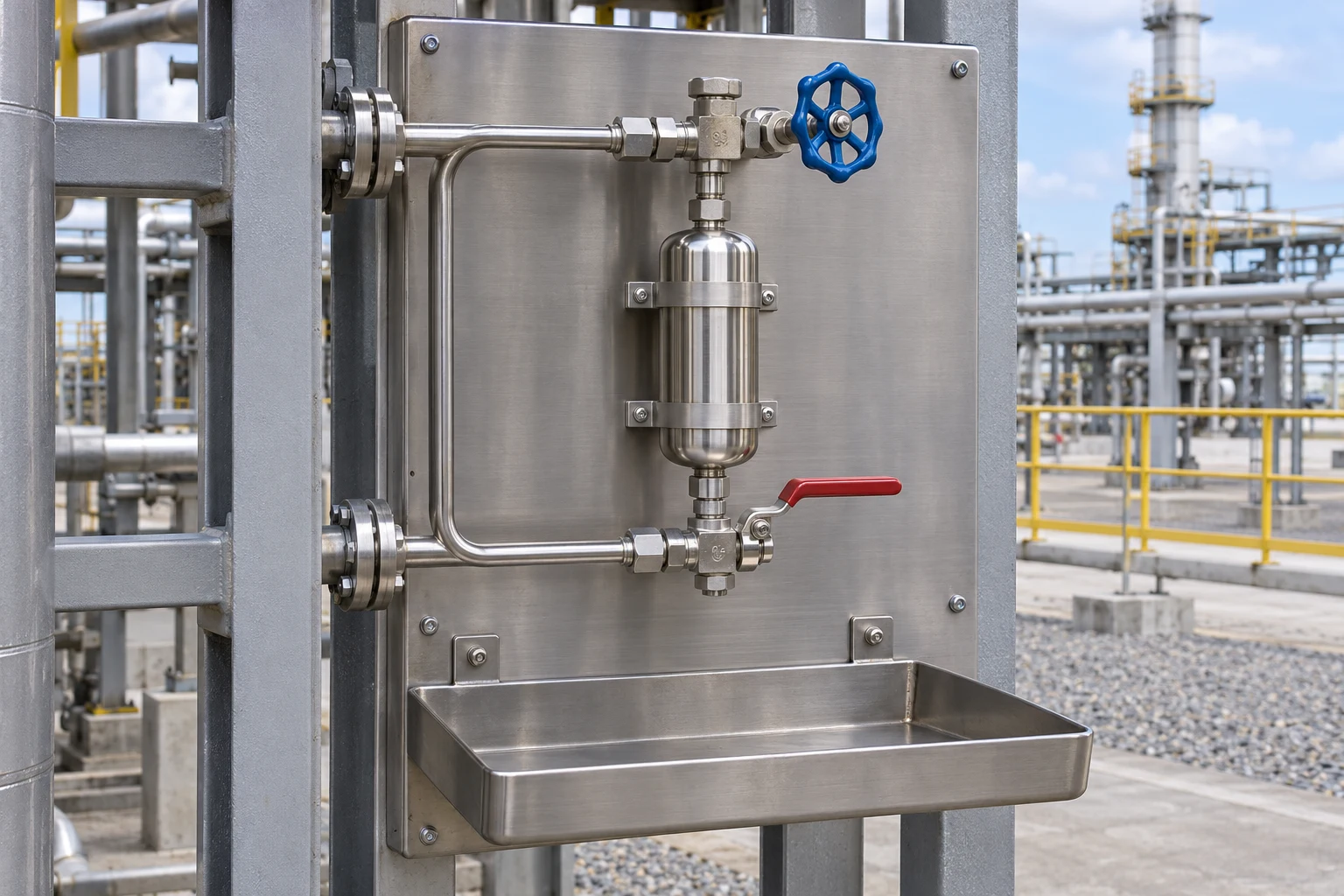
- Upper valve handle: verify its function and required position under the procedure.
- Sample receiver: match it to the material and connections.
- Lower valve handle: verify function and restoration separately.
- Drip tray: verify the actual discharge route separately.
Check the discharge path and people’s routes
Distinguish the path to the sample receiver from the handling of fluid before and after sampling. Parallel pipes inside a panel can lead to different destinations. Confirm closed return connections and potentially exposed points with operations. Do not infer the destination of an obscured line.
Choose positions with more than handle reach in mind. Consider where fluid could escape or splash and how other people approach. In a tight area, identify both the sampler's and receiver's positions. Agree when to restrict an open route opposite the station.
A drip tray does not establish that every release will be contained. Identify covered and exposed points. Use the specified method for handling collected material. Do not redirect discharge into a walkway or drain on impulse.
Verify protective equipment for the material and task
Consider splashes, skin contact, hot surfaces and vapour exposure as well as the sample identity. Check the safety data sheet and site requirements and agree what is needed for each step. The equipment worn on a routine round may differ from what sampling requires.
Check gloves and eye or face protection for damage, contamination, visibility and compatibility. Review where hands reach and how the worker needs to look. If the controls cannot be used with the required gloves, resolve the method before starting. Do not improvise protection that does not fit the task.
Respiratory protection depends on the substance, expected exposure and assessment. Lack of odour or a personal monitor alarm does not settle vapour exposure. Hold the work if protective conditions are unresolved. Verify PPE and routing as separate checks.
Handover sequence
| Stage | Owner | Decision or check | Record |
|---|---|---|---|
| Identify point | Operations and crew | Match sampling point, receiver and connection | Point and receiver |
| Verify routing | Operations | Check discharge destination and approaches | Destination and restrictions |
| Prepare PPE | Crew | Verify protection for material and task | PPE and open conditions |
| Sample and respond | Crew | Follow station procedure and stop on abnormal conditions | Stage and location |
| Verify restoration | Operations | Separate valve positions and temporary connections | Positions and open items |
| Hand over | Operations and crew | Separate receiver handover and panel restoration | Scope and restrictions |
Follow the procedure for the specific sampling point
Similar handles can have different functions and sequences on different panels. Operations identifies the sampling path and any return or other functions. Handle colour alone does not identify the fluid or function. Use the procedure for that station rather than importing a sequence from elsewhere.
If unexpected wetness or discharge appears while connecting or removing a receiver, stop. Do not bring your face close to investigate. Report the location and work stage from a safe position. Follow the applicable procedure for stopping the system or restricting access.
If another job brings people into the adjacent aisle, review the interaction before sharing the area. Merely pausing hand movements during passage is insufficient. Reconcile connection status, discharge path and access. Confirm restart conditions if the arrangement changes.

Verify valve restoration after collecting the sample
A filled receiver does not establish that the panel has returned to its normal state. Operations reconciles each valve used with the required position and checks for other branches or temporary connections left in service. Do not close restoration just because the receiver has been set down.
A handle pointing as expected does not show internal isolation. Distinguish the observed direction from the state verified by operations. Do not feel for hidden connections. Arrange safe verification of open items.
Where one crew takes the sample and another restores the panel, communicate the scope completed by each. Receiver handover can leave return connections or valve positions unchecked. Read back the state the next shift will receive, including who checks any open item and where.
Identify changed conditions and remaining restrictions before handover
If the receiver changes or work is rescheduled, account for which preparations were reversed. Distinguish temporary connections left in place from restored normal connections. Operations verifies what remains before another crew uses the point. Paused preparation and completed restoration are separate states.
Link the sampling point, parts operated, verified discharge route, protective conditions and restrictions. Blank fields can be read as completed work. Identify locations to avoid and the conditions for another check. Before resuming, reconcile the previously verified point with the current state.
Review Korean provisions on task-specific PPE and valve direction markings within their applicable scope. Verify the station configuration and sequence under site procedures. The next crew needs a verified discharge route, protective conditions and restored positions. Keep unresolved items open and agree how to check them safely.
Set staging locations around the sampling point
Even with the receiver and PPE ready, limited space can push materials under the panel. Stage them clear of valve access and passage. Change the arrangement if reaching for tools or receivers would cross the expected discharge path. Agree who moves each item and where it goes before starting.
A receiver waiting beside the panel can alter the planned work space. Keep the waiting position clear of hand movement and discharge exposure. If space is too tight for two people, adjust when the receiver is handed over. Agree when access is allowed after sampling.
Report any wetness below the tray before setup. Do not assign it to this job if its origin is unknown. Do not wipe or smell an unidentified material to investigate. Tell operations both the observed location and the access implications.
Check deviations from the planned connection
Identify which job uses any temporary hose or fitting visible at the panel. Do not remove a connection used by another crew to make room for sampling. Record paths needed for sampling and those that must remain. Hold the job if a changed return path is unverified.
Where markings may not reflect a change, do not infer valve function from labels alone. Operations reconciles the verified arrangement with the work list. Resolve any difference and communicate the correct point. Verification of one handle does not establish the function of another.
The front and side can show different connections. Note the viewing direction in photos. Do not remove a guard to trace a concealed line. Separate verified routing reported by equipment staff from the crew's visible observations.
Set restart conditions after an interruption
After a longer interruption, do not assume the original PPE and access arrangements still apply. Check for new neighboring work or moved receivers and connections. If equipment trouble caused the pause, ask operations which procedural checks remain. Reconcile readiness before resuming.
If conditions change after connection, distinguish personnel leaving from the equipment state left behind. Keep or restore the connection as directed under the procedure. Hand over the point, access conditions and operating state. The next crew reconciles the handover with the field before proceeding.
When unexpected discharge is reported, address remaining exposure before rescheduling. Report the location and stage from safety. When the response team sets restrictions, tell nearby crews which routes are available and blocked. Do not return for materials before release.
Identify who verified restoration
One photo may not explain every restored handle and connection. Note the viewpoint for visible items and how operations verified concealed ones. Linking branch and work stage helps follow-up even without a photo. Record receiver removal separately from connection restoration when their timing differs.
A later sampler should reconcile previous restoration with the current job rather than assuming preparations carry over. Check for changed fittings or temporary routing. If the field differs from the handover, identify what changed with operations before manipulating anything.