Prepare splash goggles and hand over returned condition
Match goggles to the task and instructions, check fit, vision and damage outside exposure, and communicate the condition of returned items.
Identify the task and possible eye exposure
Before handling chemicals, identify actions that could splash material into the eyes. Review actual opening, sampling or connection tasks and agree on required protection with the owner. A previously issued product needs reassessment when substances or methods change, even in the same area.
Article 451(2) of the Occupational Safety and Health Standards Rules addresses provision and use of goggles for work involving splashing controlled hazardous substances. Article 32 addresses goggles suitable for work involving flying objects. Establish the applicable substance and task conditions and connect the selected product to them.
Review eye exposure and protection information in safety data and work procedures and refer uncertainties to the safety owner. Tell the selector about handling methods and other PPE to be worn together, not just the substance name. Distinguish possession of goggles from verified protection for the task.
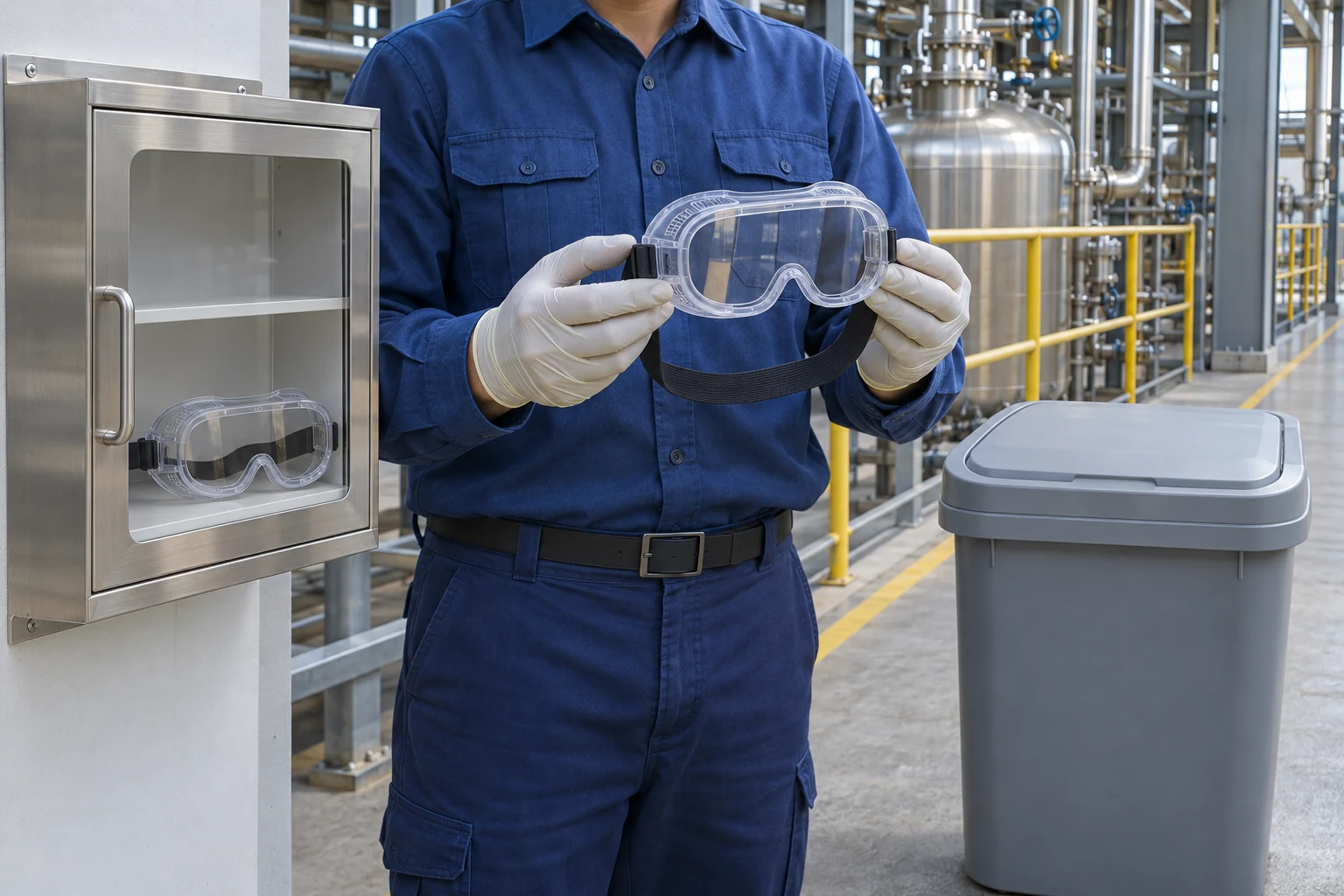
- Lens: check contamination or damage affecting vision and report the affected part.
- Head strap: check adjustment and damage and refer issues without improvised repair.
- Clean storage: verify product purpose and condition and prevent mixing with contaminated items.
- Return container: communicate use and contamination status and verify readiness before reissue.
Match the product to its instructions
Match the goggles in hand to the supplied instructions. A document stored nearby may concern another type, so compare identifiable product information and issue records. If suitability for chemical splash work or limitations are unresolved, refer to the selector and do not enter the exposure task.
KOSHA Technical Support Regulation (KOSHA GUIDE) A-G-12-2026 addresses PPE suited to the hazard, exposure location and task. Similar appearance or lens colour does not establish equal performance. Link manufacturer information on purpose and limitations to the actual item and refer mismatches for replacement or review.
Include prescription eyewear and other worn items in the selection discussion. Check instructed fitting methods and adjustment limits. Set aside an unidentifiable item or mismatched documentation pending verification, and record the requested clarification and recipient so issue and preparation remain connected.
Fit the actual combination before exposure
Check fit in a safe place away from chemical exposure. Wear and adjust the goggles according to manufacturer instructions. Refer slipping or unsuitable fit for an appropriate product or adjustment method rather than tying straps or adding improvised parts.
A-G-12-2026 addresses adjustment to the body and compatibility of multiple items. Check whether helmets, chinstraps or prescription eyewear interfere with position or retention. For tasks also requiring respiratory protection, use the respective instructions and responsible verification to maintain each item’s required function.
Check movement and viewing positions for displacement or interference. Resolve discomfort before it leads to removal during work. Report the tested combination and open problems and verify their resolution. Recheck whether an adjustment to one item changes another item’s retention or condition.
Handover sequence
| Stage | Owner | Decision or check | Record |
|---|---|---|---|
| Task and purpose | Work owner and selector | Substance, splash conditions, instructions | Task, product, limitations |
| Fit and combination | Wearer and issue owner | Adjustment and compatibility | Combination and replacement |
| Condition and vision | Wearer and management | Lens, frame, retention, vision | Affected parts and unknowns |
| Hold and replace | Work and issue owners | Hold exposure and prepare suitable item | Hold scope and results |
| Return after use | User and handling owner | Contamination, damage, instructions | Product, task, condition |
| Reissue and handover | Manager and recipient | Cleanliness, condition, limits | Results and open actions |
Identify visible lens and frame abnormalities
Inspect lens, frame and retaining components separately. Look for contamination or damage affecting vision and missing or deformed parts. Identify the affected part and seek repair or replacement decisions under the product instructions. Do not extend an external observation to unverified performance.
Article 33 addresses regular inspection and repairing or replacing defective issued PPE so it remains usable. Also retain its proviso concerning cleanliness of safety shoes, helmets and goggles maintained by workers. Connect user checks with issue and replacement actions so defective items do not return to normal stock.
Match damaged or loose retaining parts to the actual product and maintenance instructions. Refer to an appropriate owner instead of using improvised adhesive or parts from another product. Verify suitable repair before deciding on use. Separate replacement items from clean issue stock and communicate their condition to the next handler.
Check vision and required working movements
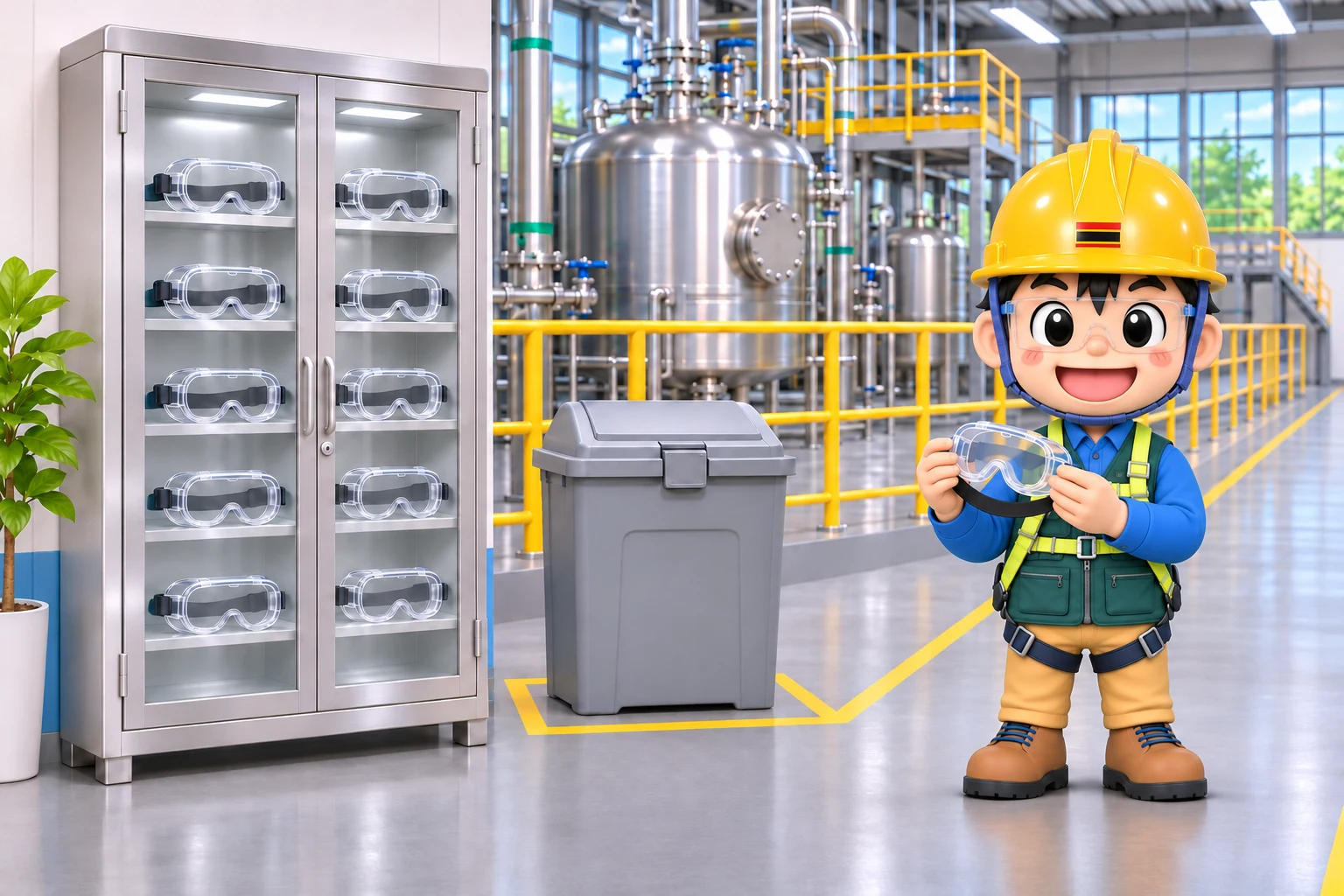
Check recognition of work targets and surrounding information while wearing the goggles. Report obscured vision or shifting position and reassess readiness. Arrange adjustment or replacement before work instead of continuing by lifting or removing goggles in an exposure area.
A-G-12-2026 includes visibility and communication in practical use conditions. Check needed signals and communication with the actual combination of PPE. Where conditions exceed product limitations, the responsible person must review the work conditions as well as whether a change of protection can resolve the issue.
Ask which movement and location produce a reported difficulty. Go beyond a simple worn/not-worn check to assess needed vision and retention. Recheck the same combination after action. Keep unresolved conditions explicit and include them in the pre-exposure readiness decision.
Separate defective or contaminated items
When an abnormality becomes apparent, leave exposure under site procedures and report it. In imminent danger, stop work and evacuate to a safe place before reporting. Identify the product, affected part, task and exposure conditions so the replacement owner can verify the same item.
Keep suspected contaminated items apart from clean stock. Communicate substances and tasks involved and any known contamination or damage. Use site storage and identification procedures to prevent an uninformed person from taking them as ready-to-use items. Determine handling from substance information and product maintenance instructions.
A-G-12-2026 addresses storage preventing contamination and manufacturer maintenance, replacement and cleaning instructions. Establish whether and how the product can be cleaned before choosing a method; do not improvise solvents. Refer complex repairs to competent specialists. Link return to clean stock to verified post-treatment condition.
Carry condition information from return to reissue
At return, distinguish used items from those requiring replacement and communicate what the recipient must check. Link product identity, work, abnormalities and contamination information. Use this as a site handover method and choose fields suited to actual management procedures.
KOSHA’s Practical Guide 69 for Other Chemical Product Manufacturing addresses provision and use of protection suited to substances. Apply this to checking that issued goggles suit the actual task and remain serviceable. Check that reported fit or damage issues affect subsequent issue decisions rather than recording quantity alone.
For recurring problems, review selected purpose, combinations and storage as well as the item. Identify affected tasks and products and obtain supplier or manufacturer clarification where necessary. Keep unverified causes open, assign actions and prevent the next worker entering with the same unresolved condition.
Close readiness for both product and wearer
Before starting, connect the actual substance and task, product purpose, individual fit and PPE combination. Check lens, frame, vision and retention for unresolved issues. Hold exposure where verification remains open and connect the readiness decision to responsible confirmation.
Do not transfer another person’s fitting result unchanged when wearers or combinations change. Have the new wearer check in a safe place and report issues to the issue owner. Separate ready products, restrictions and abnormal returns in shift handover and identify who reviews changed conditions.
Store prepared products against contamination and damage while keeping them available when required. Check understanding of purpose, limitations and reporting and replacement procedures. Connect wearing goggles with maintaining required protection through work, and keep unresolved items out of ready-to-use stock.