Before chemical use: match the container, SDS and work process
Bring three sources for the same product together
The container has a product name, and an SDS file is held in the office. Can the worker immediately find information for the material actually being used? Match the container name with the product information in the document first. A document for a similarly named product can lead the worker to the wrong hazards, precautions and protective equipment.
A pre-use check connects the container warning label, safety data sheet (SDS, or MSDS) and process-specific handling instructions to one material. The label presents essential information on the container, the SDS provides more detail, and the process instructions bring together what matters for the work. Check that all three refer to the same material and task.
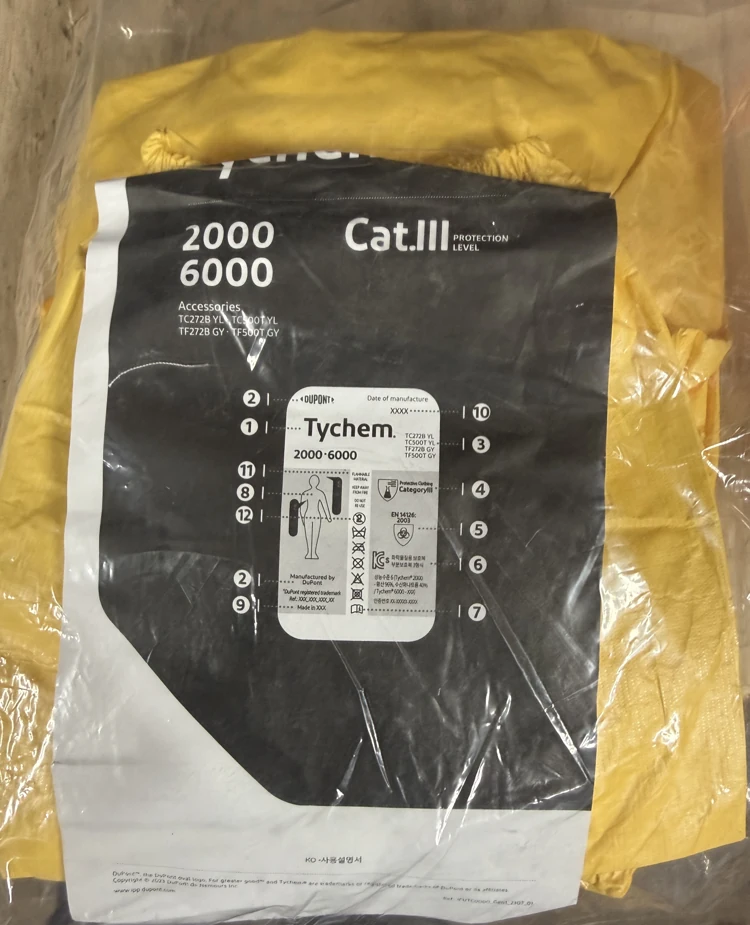
Before unpacking the garment, compare its product information with the information for the substance to be handled. Check the garment for damage and inspect its closures before wearing it.
For materials subject to the SDS requirements, the statutory scope is the starting point. Start with the scope and exclusions in Article 110 of the Occupational Safety and Health Act (산업안전보건법). Review the product classification and supply information rather than assuming identical SDS duties for every product.
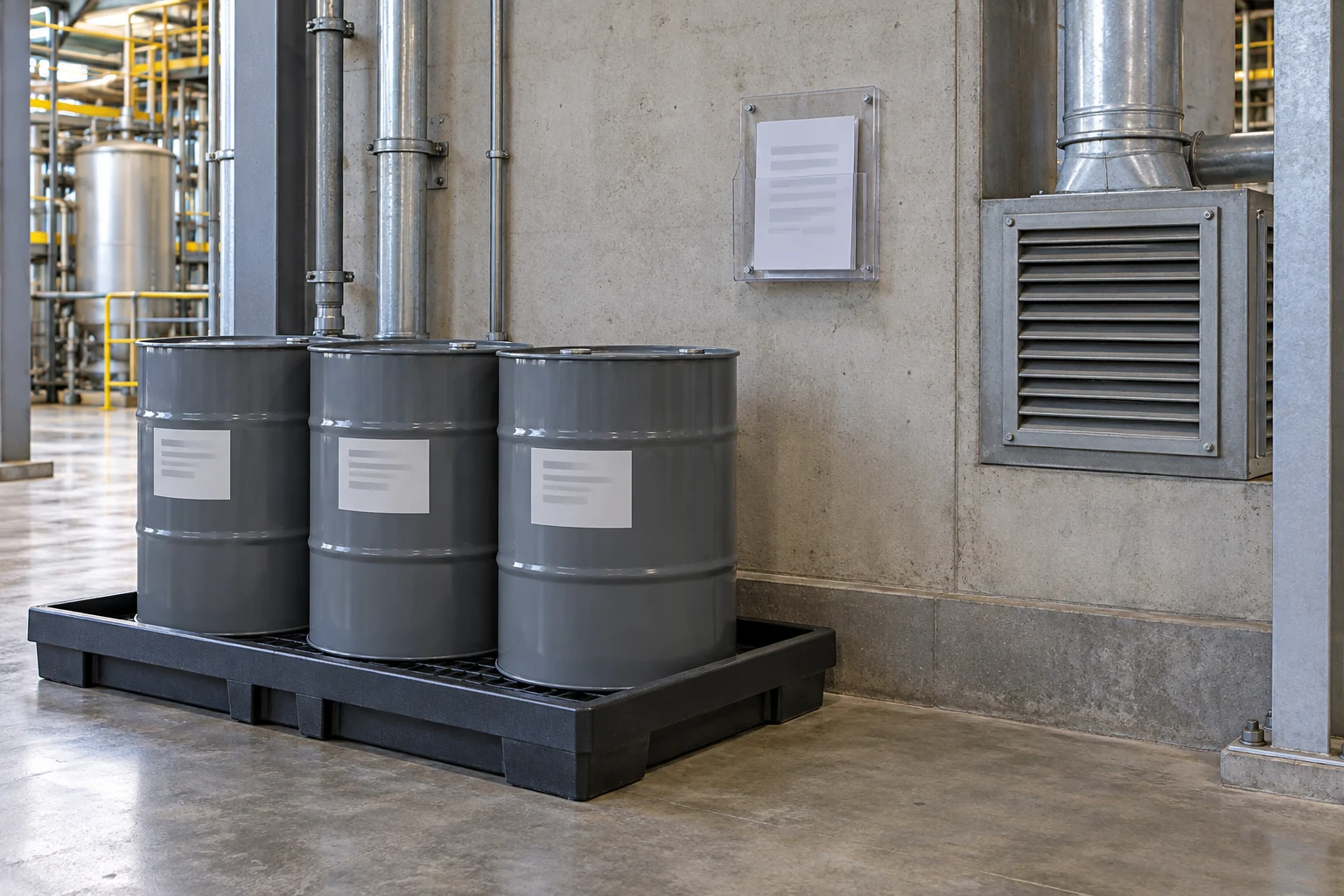
- Container label: Before use, compare the contents with the product identification on the label.
- SDS holder: Before handling, find the document for that product and read its hazards and handling precautions.
- Spill tray: Before placing containers, check for damage and pooled liquid, and confirm how a leak will be handled.
- Extraction grille: Before handling begins, check for blockage and operation, and establish the ventilation conditions needed.
What to find on the warning label
Article 115 and Enforcement Rule Article 170 set requirements for warning labels on containers and packaging. Article 170(2) lists the name, pictograms, signal word, hazard statements, precautionary statements and supplier information. The signal word expresses the level of hazard as “Danger” or “Warning.” If a container carries only a product name, check where the remaining information is available.
When transferring material into a smaller container, read the scope of the exception carefully. Article 170(4) addresses containers already labelled when supplied and temporary use of a container to transfer material from a labelled container. Small size alone does not make ongoing storage or use equivalent to temporary transfer.
The separate MSDS notice article covers foreign-language labels and the relationship between statements and codes. Here the focus is whether the container in the worker’s hand matches the information. The blank card in the educational illustration explains information placement; it is not a warning-label template for an actual container.
- Container warning label: Product, hazards, precautions and other required items.
- Available SDS: Access the relevant product document during work.
- Process instructions: Process precautions, protective equipment and response.
- Match product information: Do the three sources identify the same product?.
- Training and changes: Train on assignment, introduction of material or changed hazard information.
An accessible SDS and updated information
Article 114 requires an SDS to be posted or kept readily visible to workers at the handling workplace, process-specific instructions to be posted and workers to be trained. Enforcement Rule Article 167 identifies the process location, the place most readily visible to workers, or computer equipment easily accessible during work. Use of computer equipment also requires the measures specified by the Minister under that provision.
Having a file and being able to open it during work can be different. As a practical check, ask whether the worker can locate the required product information. Explaining the file location and access method helps turn awareness of the document into actual access.
Article 167 also permits process instructions to substitute for posting or keeping the SDS in specified construction, temporary-work and short-duration-work circumstances. A worker’s request for the SDS to be posted must nevertheless be followed. Consider the work conditions and the worker’s request when applying that provision.
Article 111 covers provision of SDSs and transmission of changed information. When a new document arrives, check both the product identity and changes to hazard information relevant to the work. Distinguishing document versions internally helps connect the supply chain’s information to field use.
Do the handling instructions match the process?
Process-specific instructions under Enforcement Rule Article 168 include the product name, health, environmental and physical hazards, handling precautions, suitable protective equipment, first aid and accident response. They bring together process-relevant information based on the SDS. Instructions may be grouped for materials with similar hazards, but workers still need a clear connection between the product in use and the required measures.
Can the work team explain where and how the product is handled? Match the product name and work activity first, then review how precautions, protective equipment and emergency measures apply to the process. Choosing a specific type of protective equipment or replacement interval requires the relevant product information and exposure conditions.
Consider receipt of a new SDS with changed hazard information. Connect the container label, available document, process instructions and training to identify what has changed, rather than treating each as an isolated update.

Training triggers and questions workers can answer
Enforcement Rule Article 169 requires training when a worker is assigned to manufacture, use, transport or store a covered material, when a new covered material is introduced, or when hazard information changes. Materials with similar hazards may be grouped for training, and the training time, content and related information must be recorded and retained.
Annex 5, item 6 covers the material name, hazards, handling precautions, suitable protective equipment, first aid and accident response, and understanding the SDS and warning label. Alongside the training record, ask whether workers can find information by the container’s product name and explain the precautions they need.
Does this container match the available document? Where can the information be opened during work? Which instructions and training topics need checking when the information changes? These suggested questions connect training to field conditions. Distinguish the required training record from the practical field-check record.
Working conditions to check after the product information
After matching the product information, consider actual exposure and working conditions. Ventilation, quantity and handling method, the workspace and use alongside other materials affect the review. Continue to the related practical articles and product information for measurement, ventilation and protective-equipment decisions.
After connecting container, document and process, resolve the detailed label content and suitable protective equipment for the individual conditions. The separate notice article and primary text address the amended labelling language.