Fall-arrest harness systems: anchorage, connectors and clearance
Follow the connection from harness to structure
A full-body harness supports the body. Arresting a fall also requires compatible connectors and anchorage. Correct fit alone cannot compensate for an unsuitable anchor or insufficient clearance below.
Establish the possible fall path, the energy-absorbing component and how a suspended worker will be rescued. Issuing a harness does not complete the connection and rescue plans.
The system may extend during arrest
An energy absorber dissipates energy while arresting a fall and can deploy during that process. Required clearance cannot be calculated from the laid-out lanyard length alone. Use the product’s deployment conditions and anchorage geometry.
Harness, lanyard, connector and anchor form a load path. Check both gate closure and compatible geometry. Apparent engagement may still leave gate loading or interference outside the approved connection conditions.
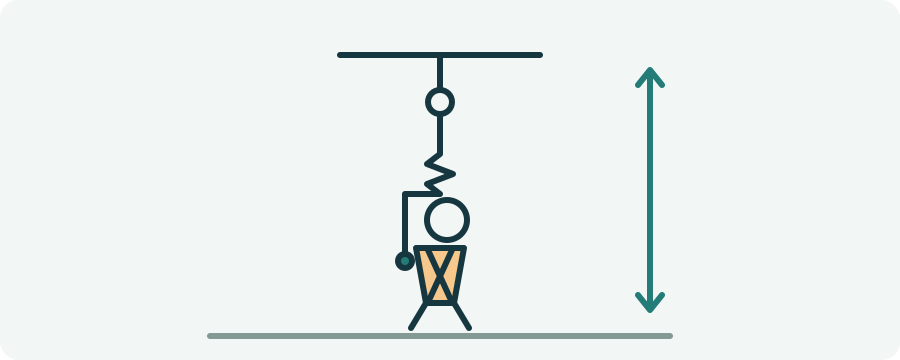
Use a clearance formula within its stated conditions
Figure 2 of 3M PRO Pack instructions 5903919 illustrates RD=LL+DD+HH+C. Its example adds a 1.8m lanyard, 1.2m deployment, 1.8m user height and 0.5m allowance to obtain 5.3m. This is not a universal clearance requirement for every harness system.
Use the instructions for the actual retractable device, lanyard and anchorage arrangement. A fixed-anchor example cannot simply replace a horizontal-lifeline calculation involving deflection. Compare available space using the manufacturer’s stated reference points.
In the manufacturer’s example, HH is user height and C is the additional allowance. Adding only lanyard and deployment lengths omits both. Match the reference points in the drawing to the measured clearance before applying the terms; mixing reference points can create an apparent margin that is not available.
User-mass conditions include clothing and carried tools, not just body weight. A task requiring more equipment changes the mass to compare with the permitted range. The PRO Pack edition examined here must be matched to the issued model and instructions before applying its conditions.
Hazards beyond the vertical clearance
An offset anchor can produce a swing fall and collision with structures. Sufficient apparent vertical clearance may still leave a path into a column, pipe or edge. Plan the permitted movement area together with the anchor location.
Check edge contact against the product’s permitted use. Do not assume an ordinary lanyard is edge-rated. Assess heat, chemicals and abrasive surfaces against material and instruction limits.
A shared anchorage cannot be assessed solely for one user. The examined instructions require the anchorage strength to account for multiple attached systems. Verify both the anchorage and supporting structure; sequential attachment does not establish suitability for simultaneous use.
Check hook-to-hook attachment, gate loading and forced connection to an oversized member against the prohibited configurations. Individual certification does not resolve compatibility of the assembled geometry. Recheck gate action and the load path when the connection point changes.
Movement along a horizontal lifeline changes the anchorage geometry. Its design and instructions must include line deflection. Naming a pipe anchor does not establish support capacity or clearance. Hardware, supporting structure and movement limits must form one compatible plan.
| Condition | Selection | Further check |
|---|---|---|
| Fixed anchor | Approved structure and connection | Position and obstructions |
| Horizontal lifeline | System design and instructions | Deflection and users |
| Edge | Permitted product conditions | Cutting, abrasion and swing |
Inspect the attachment system after checking fit
Inspect webbing, stitching, metal deformation or corrosion, markings and locking action. A fall-loaded component or deployment indicator cannot be cleared by appearance alone. Apply the manufacturer’s withdrawal, inspection or disposal procedure.
Inspection extends beyond the harness to anchor identity, installation, rope slack and interference along the work path. Convenience does not turn a guardrail or an unidentified pipe into an approved anchorage.
Deployment or damaged stitching requires the specified withdrawal decision. Folding a deployed absorber back into its cover or trimming loose threads does not restore it. Isolate fall-loaded equipment and follow the product’s disposal or return procedure.
Check gate and lock operation as well as apparent closure. Deformation, cracking, corrosion or fouling cannot be cleared by forced movement. Work outside the permitted maintenance scope belongs with the manufacturer or authorised service procedure.
Korean duties include attachment facilities and pre-work inspection
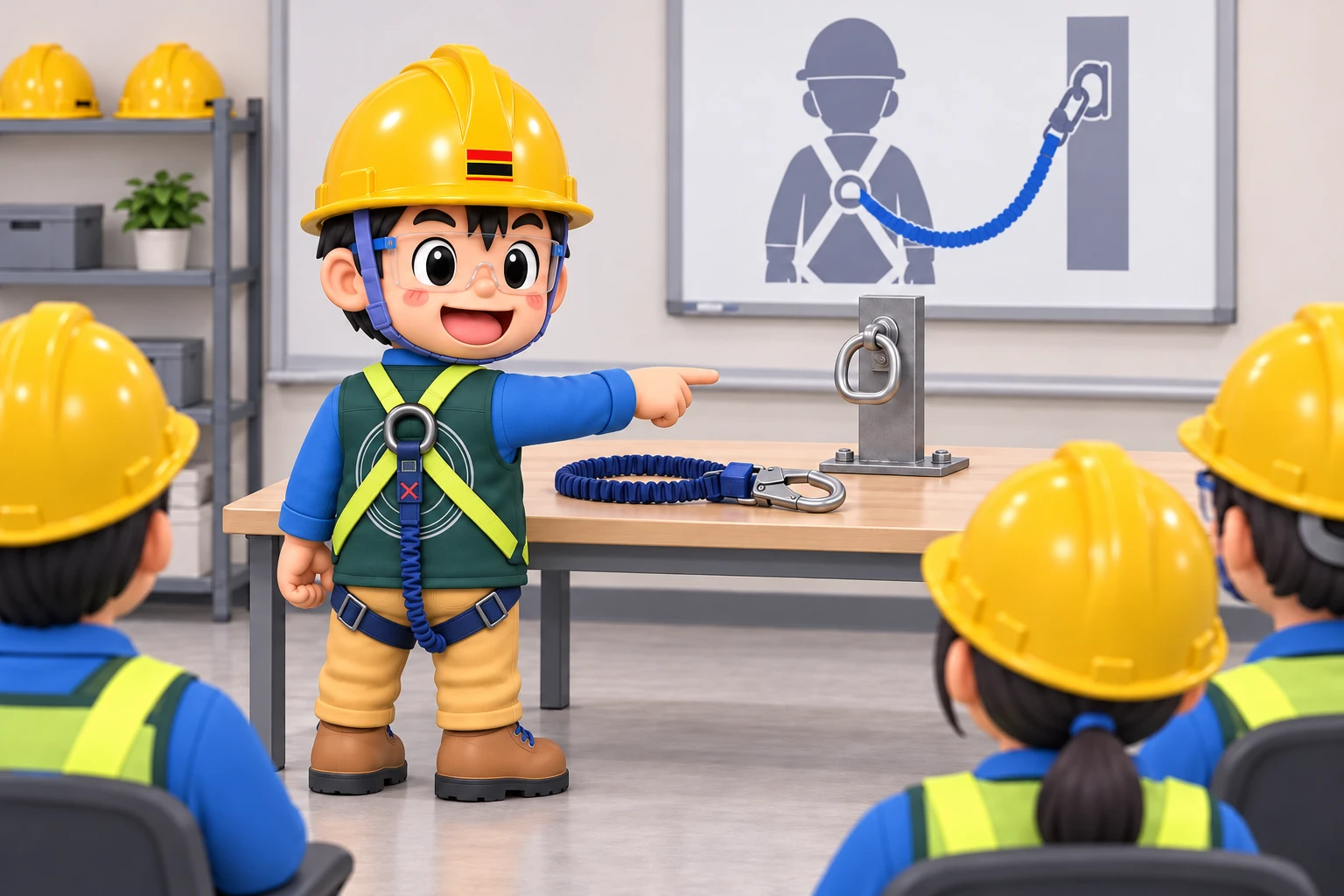
Article 32 addresses provision and use of suitable protection for specified fall-risk work. Article 44 addresses safe attachment facilities for harness use at fall-risk locations at least 2m high, prevention of support-rope slack or loosening, and pre-work inspection of the harness and attachments. Product certification and site anchorage suitability both matter.
The Korean PPE certification notice specifies harness performance, testing, marking and instruction requirements. Match the actual model, grade, certificate number and instructions; certification does not authorise connection to any available structure.
Keep impact history and return-to-service evidence
Follow manufacturer storage, cleaning and replacement instructions. Do not improvise repairs to damaged webbing or connectors. Link identity, defect location, withdrawal and disposition so quarantined equipment cannot inadvertently return to service.
Arrest must be followed by rescue. Before work, verify that access and rescue equipment suit the anchorage, height and route. Prepare a trained response that avoids a second fall through improvised entry or disconnection.
The instructions prohibit forced-heat drying and address storage away from chemical vapours and direct sunlight. Rapid drying next to a heat source does not meet those conditions. After cleaning and drying, markings and the link between equipment identity and inspection history must remain usable.
Rescue readiness requires more than a telephone contact. Provide a means of reaching the arrested position and a suitable rescue system. Normal access and access to a suspended worker can differ; rescuers must not be left exposed at an edge.