A worker found inside a drum: the Shaheen incident and confined-space response
A worker was reported found dead inside a drum at the Shaheen project on 25 May 2026. The company-disclosure account said the cause was under investigation; it did not establish asphyxiation.
30-second summary
A report described one worker found dead inside drum D-230202 at the Shaheen site.
The reported incident date was May 25, 2026; the report citing the company disclosure was published on May 26.
The article citing the disclosure stated that the cause was under investigation.
Review the need for entry, atmosphere, external attendance and rescue readiness together.
Work background, incident and investigation
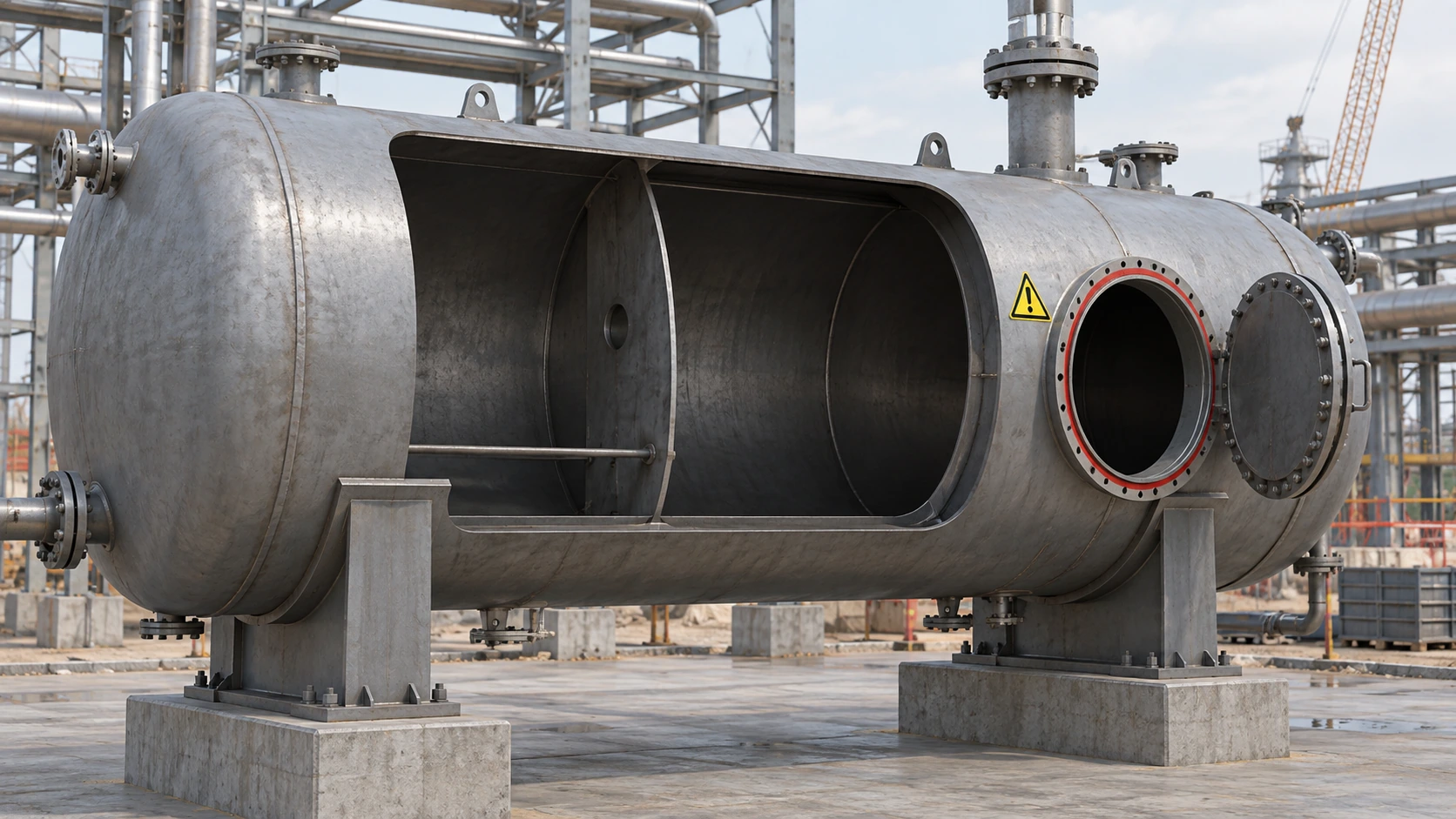
Hankyung cited a May 26, 2026 DL E&C disclosure describing a fatal incident at the Shaheen Project on the previous day. The reported location was the bottom of drum D-230202.
The worker was reportedly found dead in a seated position. The article stated that the cause was under investigation. The position in which someone was found does not establish why they entered or the cause of death.
The report gives no entry time, work instruction or oxygen and hazardous-gas readings. It also provides no investigation findings on substances present inside this drum.
Newspim also reported the May 25 death and discovery at the drum bottom, citing the company disclosure on May 26. It said police and the labour ministry were checking the site. The discovery position is part of the reported sequence, but does not establish oxygen deficiency or a particular toxic gas as the cause of death.
Equipment and work principles — site checks
Confined-space prevention starts with access, ventilation and work-related hazards rather than the word drum. HSE describes avoiding entry where possible and arranging a safe system and emergency plan where entry is necessary. Assess external cameras or inspection tools when defining the task.
A clean visible surface does not establish the condition of connected piping or residues. Compare drawing connections with actual valves and blinds, and consider whether outside work can affect the internal atmosphere. This is entry preparation for comparable vessels, not an account of this drum’s actual connections.
A measurement record needs location, time and sensor suitability as well as a value. Plan whether entrance readings represent the work position and when ventilation or task changes require reassessment. A detector being switched on is a separate question from its ability to measure the relevant substances.
An accessible opening does not complete a confined-space assessment. Review opening size, internal geometry, residues, possible entry through connected pipework, ventilation and rescue together. New equipment also needs its entry purpose and conditions assessed; not having operated it does not justify skipping testing and entry procedures.
Do not end atmosphere checks with a reading at a single entrance point. Choose locations and methods for the occupied area and changing work conditions, and perform the instrument’s pre-use checks. Oxygen, flammability and toxic hazards are separate checks; one acceptable reading does not replace the others.
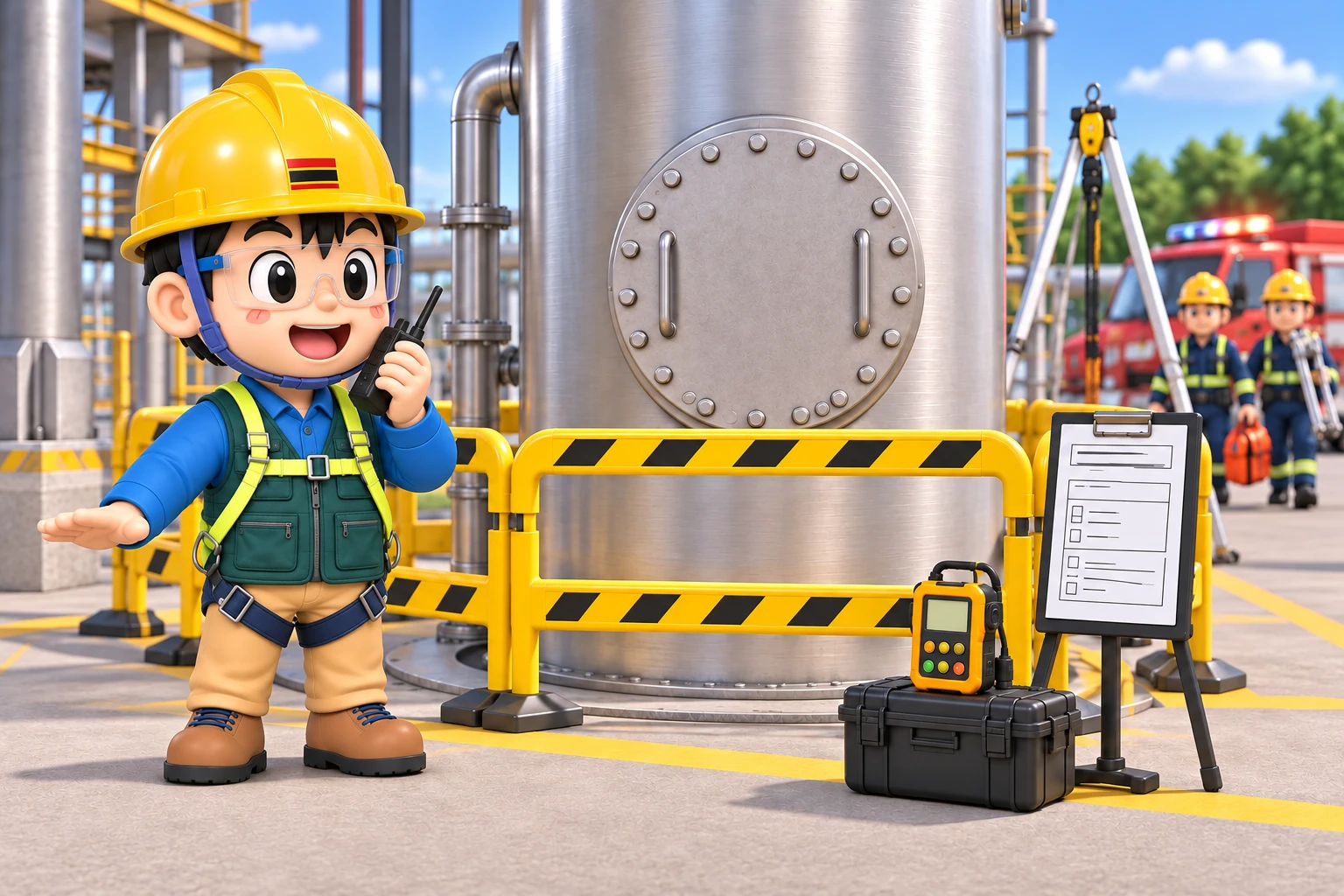
The outside attendant is not someone who occasionally checks the entrance between other duties. The role needs knowledge of entrants, location and communication, with the ability to stop work and call for rescue. Check communication inside the equipment and share a rescue procedure that prevents unprotected follow-in entry after loss of response.
Published chronology and investigation status
| When | Established account | Source |
|---|---|---|
| 2026-05-25 | Worker found dead inside drum D-230202 | Hankyung, 2026-05-26, citing disclosure |
| Location reported | Found seated at the bottom inside | Same report |
| Report dated 2026-05-26 | Cause under investigation | Same report |
| Follow-up 2026-05-26 | Company disclosure account; police and labour-ministry site checks | Newspim, 2026-05-26 |
Consequences and emergency arrangements
If there is no response from inside, call for emergency rescue from outside and control access. Unplanned entry can expose another person to the same danger, so identify rescue entrants, equipment and retrieval routes in advance. A particulate respirator does not supply oxygen.
Information for responders includes the space location, entrance, occupants and last contact, connected plant and substances. Distinguishing known facts from unknown conditions helps plan the approach. The report contains no rescue chronology or medical cause of death for this incident.
Manhole location affects whether a stretcher or retrieval arrangement can pass. Check equipment space and retrieval direction before entry; if internal obstacles prevent a suitable vertical lift, prepare another rescue method. Plan for moving an unconscious person, not just normal access.
Questions for your site
| Question | How to check |
|---|---|
| Does achieving the task require a person to enter? | Record external inspection alternatives and the reason for entry. |
| Have drawing and actual isolation points been compared? | Verify connected piping, valves and blind identification in the field. |
| Can the atmosphere at the work position be tested? | Match testing location, time and sensors to the work plan. |
| Will ventilation continue throughout internal work? | Check supply and exhaust positions, power and duct condition. |
| Will the external attendant track people and communication? | Check attendance, communication and emergency calls before entry. |
| Will loss of response trigger a rescue call without unplanned entry? | Verify equipment access, retrieval routes and trained rescue arrangements. |
Application at Korean sites
For comparable work in Korea today, the reference is the Rules on Occupational Safety and Health Standards, Ministry of Employment and Labor Ordinance No. 450, effective 2026-03-02. These provisions guide current work; they are not findings of a breach at the time of the incident.
Article 619 requires a programme covering spaces, hazards, checks and training. Before work, review personnel, test results, possible gas entry and follow-up measures, PPE and emergency contacts together.
Article 619-2 addresses pre-work testing and evaluation, tester competence and training, measures for unsuitable atmospheres and records. Link the result to who tested and evaluated it, when and where.
Article 620 sets the principle of ventilation before and during work and conditions for exceptions. If ventilation is impracticable, assess the exception and work plan rather than simply substituting PPE.
Article 623 requires external attendance, reporting abnormal conditions to the fire service and subsequent action, and continuous communication. Check the method for raising an alarm after loss of contact at the entrance.
Article 625 requires equipment for escape and rescue, including breathing apparatus or supplied-air respirators, ladders and ropes. Prepare equipment and training suited to the opening and retrieval route.