What changes when the formwork is removed? The Shaheen burial incident
A worker died after soil and concrete collapsed at the Shaheen project in Ulsan on 26 June 2026. Excavation and removal tasks need to consider support beyond the immediate work point.
30-second summary
A burial incident occurred during excavation for formwork removal at the Shaheen Project.
The June 26, 2026 report recorded one death after burial by soil and concrete.
Possible settlement of an overhead structure was reported as an initial investigative account.
Assess the member being removed together with the ground supporting its surroundings.
Work background, incident and investigation
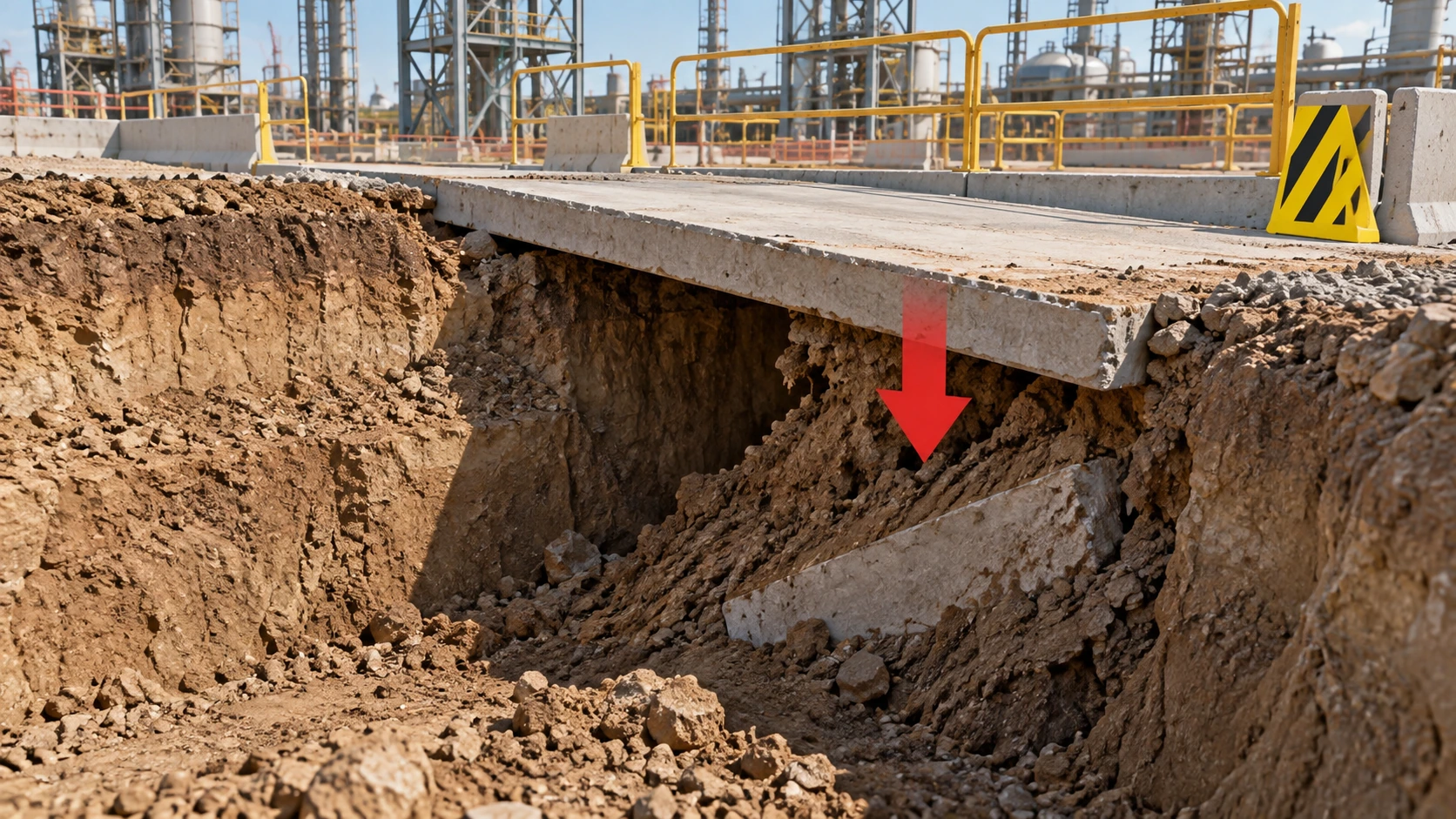
Hankyung reported that soil collapsed at about 10:01 on June 26, 2026 at the Shaheen site in Onsan-eup, Ulju-gun, Ulsan. The worker was excavating for removal of formwork.
The worker was buried by soil and concrete, rescued and taken to hospital, but died. The article described a possibility that surrounding soil collapsed during work beneath a temporary bridge and overhead concrete settled. This was an initial account.
The article gives no excavation depth, support configuration or connection details between formwork and concrete. It also provides no final finding identifying which part first lost support.
A September 10 Newspim follow-up described formwork removal for a protective structure over buried electrical cables. Read alongside the initial account of work beneath a temporary bridge, this identifies the removal task and surrounding ground as matters to examine. It reported an ongoing police and labour-ministry investigation, without a final sequence of structural failure.
Equipment and work principles — site checks
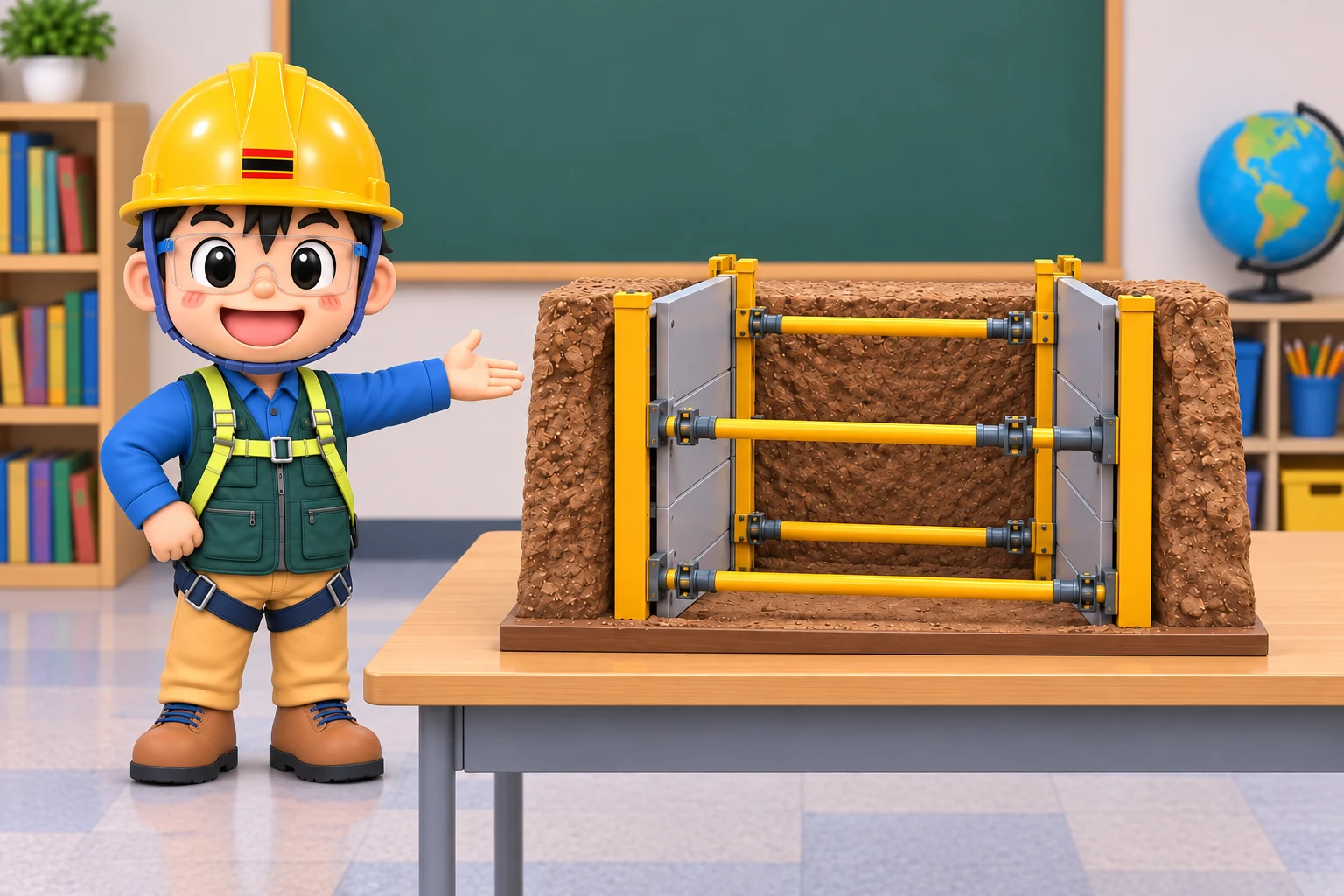
Excavation removes ground while changing support conditions. HSE guidance addresses undermining adjacent foundations and plant loading near edges. Review adjacent support points and plant positions on the same drawing as the excavation boundary.
Separate retained members, removed members and the elements intended to carry load afterwards. A sequence showing only the beginning and end does not explain intermediate conditions. Mark people and plant during each removal stage to identify intermediate states needing assessment.
Stop removal and reassess from outside the danger area when soil movement, water ingress or support deformation appears. HSE describes reinspection after events affecting stability. Entering unstable ground to install extra support also needs a planned method rather than an improvised repair.
Distinguish the completed load-bearing arrangement from intermediate conditions with formwork and surrounding soil still present. Before excavating beside formwork, compare drawings and the actual structure to establish whether that ground affects support. Removing it for convenience without structural assessment can create an unplanned intermediate condition.
A work plan around a buried-cable protection structure needs both structural and service protection. Marking a cable position alone does not secure the excavation. Define plant access, areas requiring manual work, the support installation sequence and who can stop work when the actual structure differs from the design.
A removal sequence should show access limits for each stage, not just the parts to remove. Assess potential soil and concrete movement beneath the structure and restrict access where the plant operator cannot see workers. Revise drawings and instructions together when excavation boundaries or support positions change.
Published chronology and investigation status
| When | Established account | Source |
|---|---|---|
| 2026-06-26 about 10:01 | Soil collapse during excavation for formwork removal | Hankyung, 2026-06-26 |
| Rescue and transfer | One worker died after burial by soil and concrete | Same report |
| Initial account that day | Work beneath a temporary bridge; possible settlement overhead | Same report |
| Follow-up 2026-09-10 | Reported formwork removal for a buried-cable protection structure; investigation ongoing | Newspim, 2026-09-10 |
Consequences and emergency arrangements
Burial rescue takes place among remaining soil and concrete. Rescue specialists and technical personnel need to assess how further excavation or lifting debris will affect the remaining structure. Keep others away from the burial point and maintain equipment access.
A normal excavation plan should distinguish pedestrian access from plant swing areas. Change the signalling position or method if visibility requires a person to enter the excavation. The article gives no account of plant operation at this incident; this is a layout check for comparable work.
Questions for your site
| Question | How to check |
|---|---|
| What carries the remaining load after removal? | Confirm retained members and support positions with the structural assessor for each stage. |
| Has the relationship between excavation and adjacent foundations been checked? | Compare foundation details, excavation sections and buried services. |
| Does temporary support at each stage match the drawing? | Check actual supports and the authorised time for their removal. |
| Have plant and materials near edges been assessed? | Mark plant swing and storage positions on the excavation drawing. |
| Have rain, drainage or soil movement changed conditions? | Record reassessment after changes and obtain authorisation to resume. |
| Who controls access after a burial is reported? | Set emergency access and the external control boundary in advance. |
Application at Korean sites
For comparable work in Korea today, the reference is the Rules on Occupational Safety and Health Standards, Ministry of Employment and Labor Ordinance No. 450, effective 2026-03-02. These provisions guide current work; they are not findings of a breach at the time of the incident.
Article 338 requires checks for loose rock, cracks, water and freezing conditions and changes. Record ground conditions before work so later water ingress or soil movement can be compared.
Article 339 distinguishes slope requirements, provisions for design documents or support measures, and precautions against rainwater infiltration. Confirm the applicable design and support conditions rather than assigning an arbitrary safe slope.