Chemical protective clothing: fabric performance and garment openings
The same colour does not mean the same protection
A fabric name alone is insufficient for selecting chemical protective clothing. The chemical, concentration and whether exposure involves splashes, spray, vapour or gas affect the required construction. Extensive body coverage still leaves possible entry routes at the face, wrists, ankles and closures.
Tychem 2000 QC127T YL is a specific model with a hood, elastic wrists and ankles, a covered zipper and taped seams. Its appearance does not make it a gas-tight suit, nor establish equivalent performance for another garment of the same colour. Respiratory protection, gloves and boots require separate selection.
Material permeation and entry through openings
Fabric tests are important evidence, but do not represent every interface of a finished garment. DuPont's non-encapsulated garment manual distinguishes testing of new fabric from performance of seams, closures and other components, which may permit earlier breakthrough.
Concentration, temperature, contact duration and quantity also affect exposure. Results for a single chemical cannot simply be transferred to a mixture or a similarly named substance. Matching chemical identity and test conditions comes before selecting garment size.
A laboratory breakthrough time is not a safe working-duration limit. Movement and abrasion affect the garment, while heat strain and respiratory-protection limitations also matter. Work duration and relief arrangements need to account for exposure, workload, environment and the complete protective ensemble.
- 1 Chemical andCheck test information for the actual substance, concentration and temperature.
- 2 FabricReview test conditions and permeation data separately from the permitted on-site working time.
- 3 Seams and closureCheck the finished garment’s seams and zipper structure separately from fabric performance.
- 4 Wrists and anklesCheck liquid- and gas-tight interface conditions at gloves and boots separately from the presence of tape.
- 5 Hood and respiratorPrepare respiratory protection separately from the hood and check interference with the face seal.
- 6 Doffing and disposalCheck outer-surface contact and contamination history, distinguishing decontamination from reuse authorisation.
Record the chemical and the exact garment model
Start with substance identity and composition from the SDS, actual concentration, temperature and possible contact. Verify chemical-specific fabric testing in the manufacturer's resistance data, then check the model's seam construction, hood, foot covering and glove interfaces. An untested mixture must not be treated as verified.
Do not combine the conditions for ordinary Tychem 2000 with those of a product carrying an SFR designation. The verified manual separately limits exposure to flames, firefighting, welding, hot liquids and steam. Chemical-barrier performance does not establish protection from heat or flame.
For use in Korea, foreign test markings and Korean certification and use requirements need separate verification. Matching a manufacturer photograph to a model is not evidence of Korean certification. On receipt, compare the delivered product's identification and documents with the selected specification.
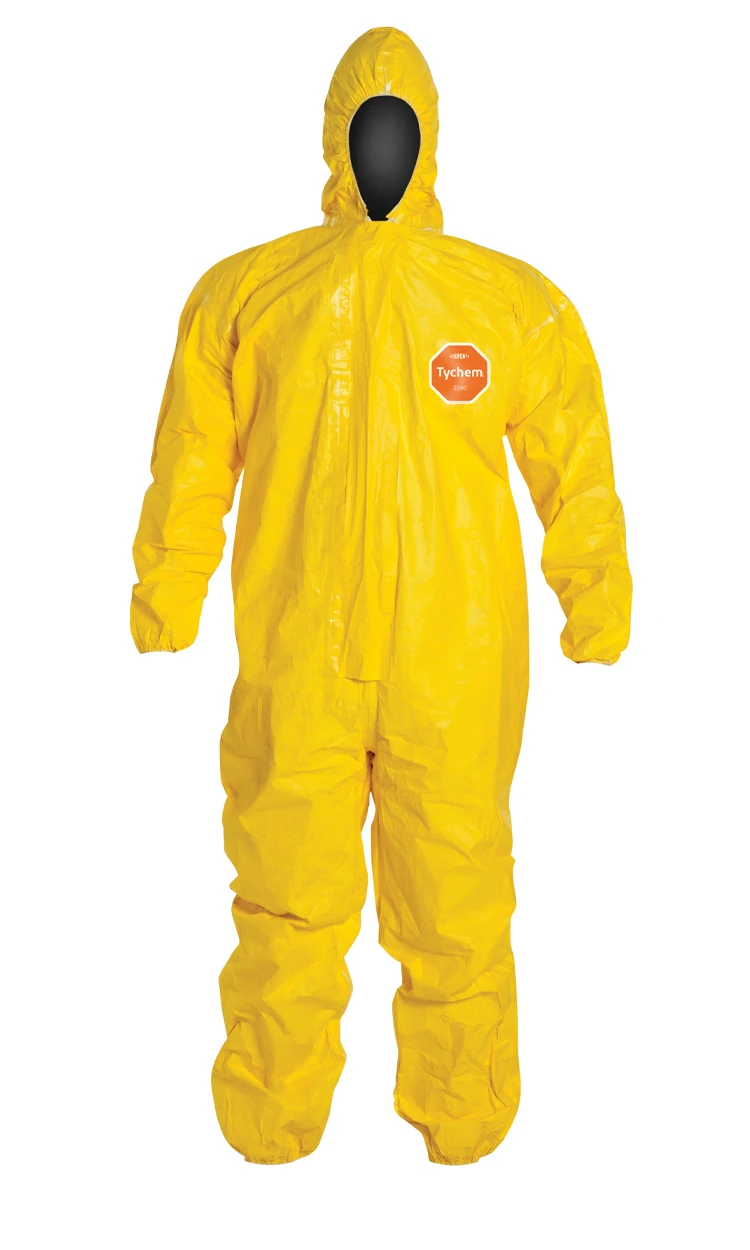
- Hood: check for interference with the respirator seal in the complete ensemble.
- Front closure: check the zipper and flap closure for the exact model.
- Wrists and ankles: elastic alone does not establish a liquid-tight interface; check the gloves and boots.
Why wrists, ankles and the face remain important
After donning, check whether reaching or bending opens interfaces. An undersized garment restricts movement and stresses seams, while changing overlap with other PPE. DuPont calls for checking fit and mobility with the complete protective ensemble.
Taping around a glove or boot does not establish a liquid-tight or gas-tight seal. The manual treats tape as a way to hold components in position, not as a chemical barrier. Conditions requiring a liquid-tight interface need a construction designed for that purpose.
The hood must not interfere with the respirator's face seal. Covering the head does not replace respiratory protection. Gloves and boots also have their own chemical resistance, which must match the same substance and conditions independently of the garment fabric.
Inspect both sides before donning
Even a newly opened garment needs inspection for tears, holes, discolouration and damage to seams and closures. The manual describes examining both the inside and outside of the garment using light. The absence of an obvious hole does not make a contaminated or altered garment acceptable.
Remove sharp jewellery or carried items before donning and do not force an ill-fitting garment into place. Close the zipper and adhesive flap in the model's specified order. A garment that fails inspection should not be patched informally and put into service.
The Belle release outside the task's assumed exposure
A worker died after exposure to a phosgene release at DuPont's Belle site in 2010. According to CSB, the company differentiated PPE requirements by task: opening cylinder connections required a chemical suit and supplied breathing air, while activities such as checking the weight of a connected cylinder did not.
CSB found that the worker wore the standard PPE required by the company for the weight-checking task he was likely performing. The case shows how task categories can overlook a release while equipment remains connected.
The incident is not a performance test or application example for QC127T. Rather than concluding that one particular suit would have changed the outcome, consider equipment safeguards together with respiratory and skin protection for potential releases. Adding clothing does not replace preventing the release.
Contact during removal and decisions about reuse
A contaminated outer surface can contact skin and other equipment during removal. Field decontamination supports safer doffing; it does not restore the garment to a new condition. DuPont directs disposal of limited-use garments with known or suspected contamination.
Do not assume laundering has removed contamination. The common manual prohibits machine washing and dry cleaning. Store garments away from sunlight, heat, ozone and sharp objects, avoiding compression and damage. A clean-looking stored garment still needs inspection before use.
Protective clothing also restricts heat dissipation. Work and rest periods in hot conditions must account for workload, environment, the wearer and the complete ensemble, rather than fabric test times. Preparing decontamination and doffing routes is part of preparing the job.
Korean provisions on skin-contact hazards
Article 451 of Korea's Rules on Occupational Safety and Health Standards requires impermeable clothing, gloves, boots and other specified protection when handling skin-irritating or corrosive controlled hazardous substances. It also requires facilities for immediate washing where direct skin or eye contact is possible. Providing clothing does not complete preparation for washing after exposure.
The requirement for impermeability is not a blanket approval for any protective garment. Selection needs product evidence for the actual chemical and contact conditions, suitable interfaces and an assessment of possible exposure. A product photograph cannot establish certification or suitability of the whole ensemble.