Hazardous-location lights and reduced-sparking tools: read the conditions
Reduced sparks and electrical explosion protection are different
Lights and tools brought into an atmosphere containing flammable gas or dust can introduce ignition sources. A flashlight is electrical equipment comprising batteries, circuitry, a switch and an enclosure. Reduced-sparking hand tools use selected materials to reduce sparks from impact and friction. Their safety descriptions are not interchangeable.
For a light, check protection suitable for the location and the conditions of approval before brightness. For hand tools, examine fit, contamination and wear as well as material. A light turning on or a wrench turning a nut does not establish ignition suitability.
The identification example is the Streamlight 2AA ProPolymer HAZ-LO. Do not mix its battery configuration or markings with the 2AAA model in the same family. The official photo illustrates appearance; the actual item’s label and approval documents require a separate check.
Distinguish the paths that can introduce ignition
Electrical protection considers energy and temperature under specified operating and fault conditions. An intrinsic-safety marking concerns the conditions under which the circuit was designed and assessed against ignition. A thick enclosure or a waterproof claim alone does not establish that performance.
Hand tools create impact and friction where they strike or slip. CCOHS explains that reduced-sparking tools do not remove every possibility of sparks. Tool selection and preventing a flammable atmosphere through isolation and ventilation address separate needs. A tool cannot take over control of a process release.
- 1 LocationIdentify gas, vapour or dustselect protection for the substances and classified area.
- 2 Exact modelmatch the item even when family names are similar.
- 3 BatteriesVerify permitted type and modelcheck the permitted list; equal size does not mean equal approval.
- 4 Enclosure and sealWithdraw damaged or worn unitsillumination does not establish protection after damage.
- 5 Hand toolsCheck material, fit and contaminationcheck fit and contamination to reduce slipping and contact sparks.
- 6 Replacement areaChange batteries in a nonhazardous areaestablish a place to avoid opening the cap in a hazardous area.
Read the model, rating and batteries together
The 2AA ProPolymer HAZ-LO product page lists Class I and II, Division 1, Groups A–G, Class III and temperature class T4. Those markings describe the approval system stated there. They do not automatically replace Korean hazardous-area classification or product safety certification.
The same page specifies Energizer E91, Duracell MN1500 and Rayovac No.815 for the approval. Batteries of the same AA size do not necessarily meet the same conditions. The purchasing list, storage stock and replacement record should match the batteries allowed by the actual label and instructions.
The manufacturer’s water-ingress rating concerns water protection. It is a different item from approval for an explosive atmosphere. Drop resistance, waterproofing and explosion-protection markings should not be collapsed into one overall safety grade.
| Item | What to read | What the photo cannot establish |
|---|---|---|
| Location | Gas, vapour, dust and area classification | Classification at the actual work position |
| Light | Exact model, approval marking and allowed batteries | Korean certification and matching item label |
| Hand tool | Material, correct size and intended work | Compatibility with the contacting substance |
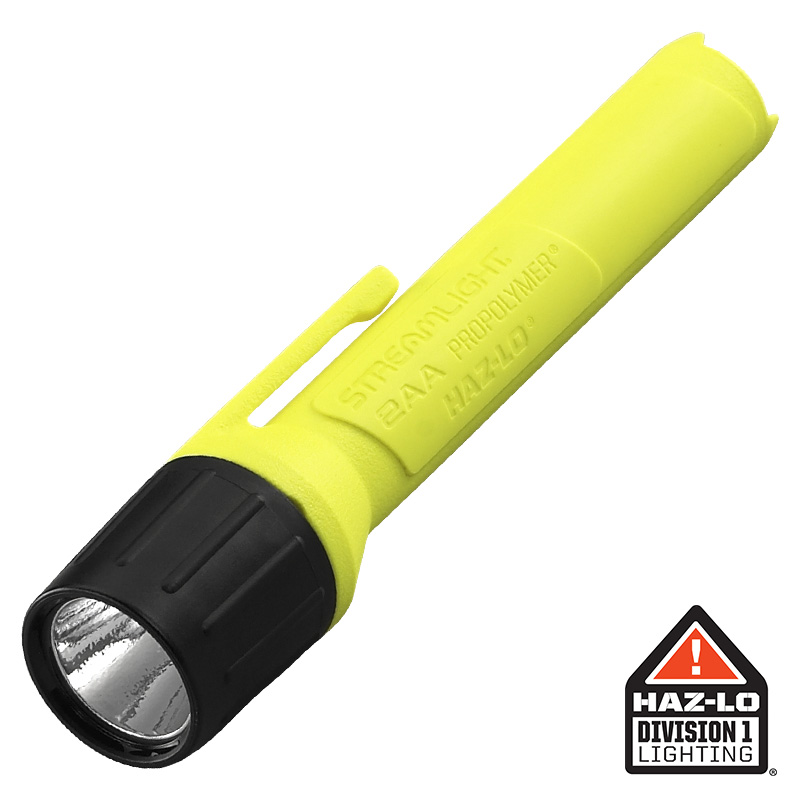
- Lens: inspect for breakage and damage before use.
- Front cap: verify correct closure after battery replacement.
- Enclosure: remove from service if cracked or incomplete.
- Model marking: compare the 2AA identification with the item and instructions.
Ask different selection questions for lights and wrenches
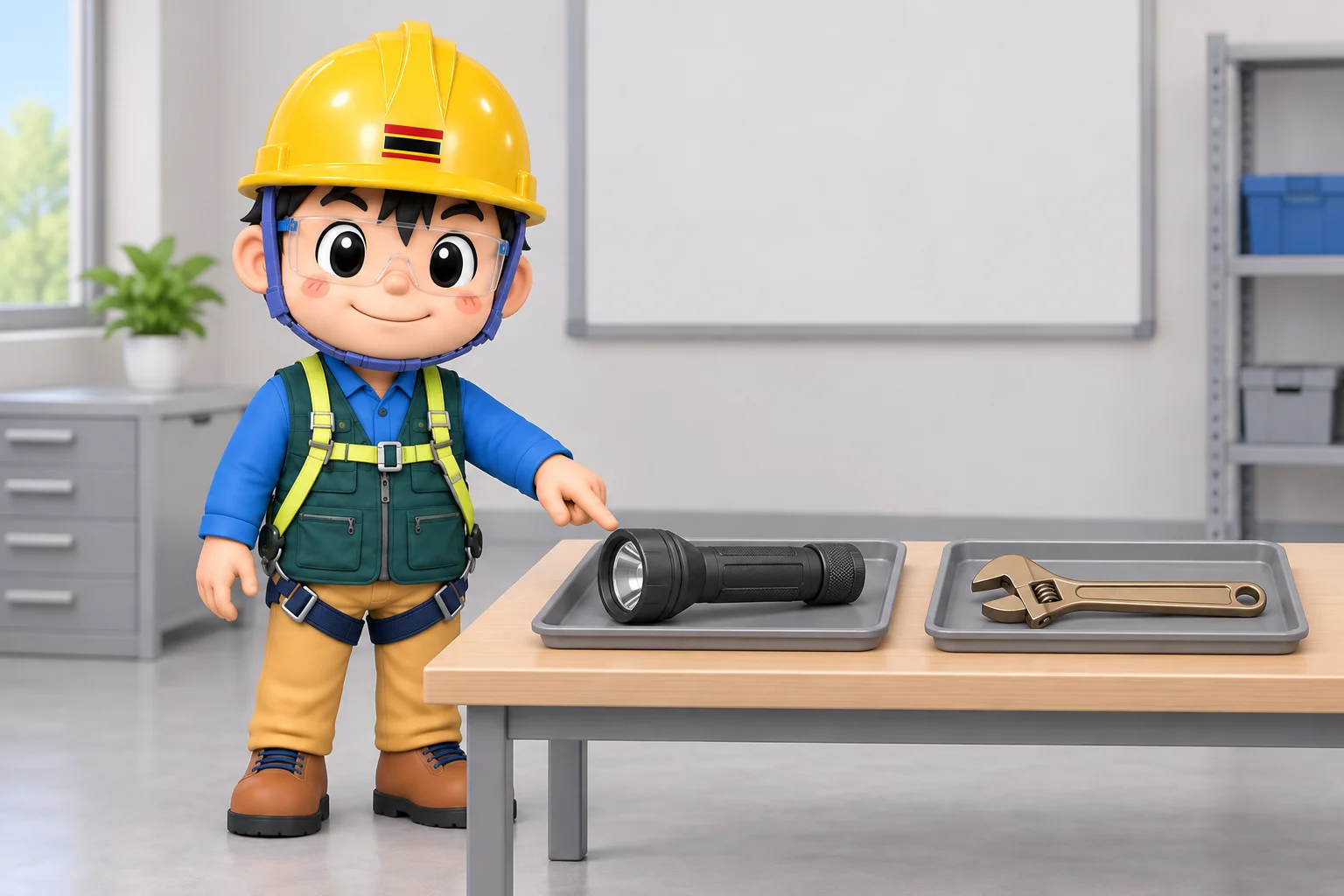
Select a light against the substances and area classification at the point of use. If ordinary lights and safety-rated models are issued from one store without identification, appearance alone may not reveal a wrong selection. Entry controls should compare the exact model with the intended area.
Choose a wrench with the correct size and material for the nut. A reduced-sparking alloy does not justify a damaged opening or a poor fit. A slipping tool can strike the workpiece. Confirm material compatibility using the manufacturer’s information; similar colour does not establish an identical alloy.
Inspect the enclosure and closure before testing the light
The ProPolymer instructions require removal from service if part of the enclosure is missing or broken. The lens, enclosure and seal also need inspection for damage and excessive wear. A cracked light must not be returned to normal issue simply because it illuminates.
After a battery change, check the model’s prescribed sequence, polarity and closure. Installing whatever battery or part is available and checking illumination alone may not preserve the approved configuration. Inspect hand tools for ferrous contamination, chipped edges and damaged openings before use, then inspect those contact areas again after the task.
Do not change batteries in a hazardous location
The ProPolymer instructions place battery replacement in an area known to be nonhazardous. Do not open the cap at the work position simply because the light has gone out. Arrange spare lighting and a replacement location so that loss of light does not lead to improvised disassembly.
Avoid storing reduced-sparking tools together with tools contaminated with iron particles, or continuing to use worn contact surfaces. Substituting flashlight parts and contaminating hand tools are different faults, but both can be overlooked when visible operation is mistaken for retained protective performance.
Record replacement parts as well as repair and storage
Use the cleaning materials and parts permitted by the light’s instructions. ProPolymer warns against solvents and directs removal of batteries for extended storage. Include cleaning methods in the storage procedure so that cleaning does not damage a lens or seal.
Follow material-specific conditions when dressing or reshaping a hand tool. Grinding an alloy containing beryllium also requires consideration of dust exposure. Do not reissue an improvised repair as though original dimensions and performance were unchanged. Record the reason for withdrawal and the checks following repair.
A drop light broke inside a tank
OSHA accident summary 170358832 records that on August 22, 1994, a worker cleaning a tanker truck lowered a drop light into the tank. The bulb broke and a flash fire followed. The worker was hospitalized with burns. OSHA described the light as unapproved for the tank atmosphere and the bulb as unguarded.
The relevant checks concern environmental suitability and protection against breakage, rather than brightness. The historical drop light and a modern LED flashlight are not the same design. Before taking a device inside a vessel, reassess whether lighting used in an outside passage is suitable there. The record does not establish that a particular modern product would have prevented this accident.
Korean requirements address location and maintenance
Article 311 of Korea’s Rules on Occupational Safety and Health Standards applies to electrical equipment in gas- or dust-explosion hazardous areas under Article 230(1). It requires protection suitable for the vapour, gas or dust according to Korean Industrial Standards, and maintenance that preserves normal protective performance.
Compare foreign Class/Division markings separately with the Korean location and applicable certification. Material data for reduced-sparking hand tools and Korean certification for electrical equipment establish different properties for different equipment. Identifying the work substance, location and actual model determines which documents require verification.
Three answers to establish before issue
What is the exact light model and allowed battery, and does the issued battery match? Who withdraws a light with damage to its enclosure, lens or seal and supplies a replacement? Where are contamination and wear on hand-tool contact surfaces checked and corrected?
Separate enclosure checks for lighting from material and dimensional checks for hand tools to keep their different protective conditions visible. Record verifiable details such as model, battery and defect location rather than only a general normal-status mark.
Primary sources
- Streamlight 2AA ProPolymer HAZ-LO — product and ratings
- Streamlight ProPolymer Series instructions, 997511 Rev. J 2/26, PDF p2
- CCOHS Hand Tools — Non-sparking tools, revised 2024-01-02
- OSHA Accident Summary 170358832, 1994-08-22
- Rules on Occupational Safety and Health Standards (산업안전보건기준에 관한 규칙), Articles 230 and 311