English names and summaries of Korean laws are unofficial translations. The Korean text on the Korean Law Information Center (law.go.kr) prevails.
Does hygiene inspection also cover worker safety?: A restaurant’s voluntary safety management
Key terms in Korean and English
- serious accident (중대재해, OSH Act)
- fire (화재)
- slip-resistant work shoes (미끄럼 방지 작업화)
- automatic fire suppression unit (자동확산소화장치)
At a glance
A delivery-focused restaurant owner in Seoul inspected the premises with an expert and improved the working environment and daily checks.
This is an account of finding and addressing everyday hazards, rather than an accident chronology.
Inspecting and improving the workplace
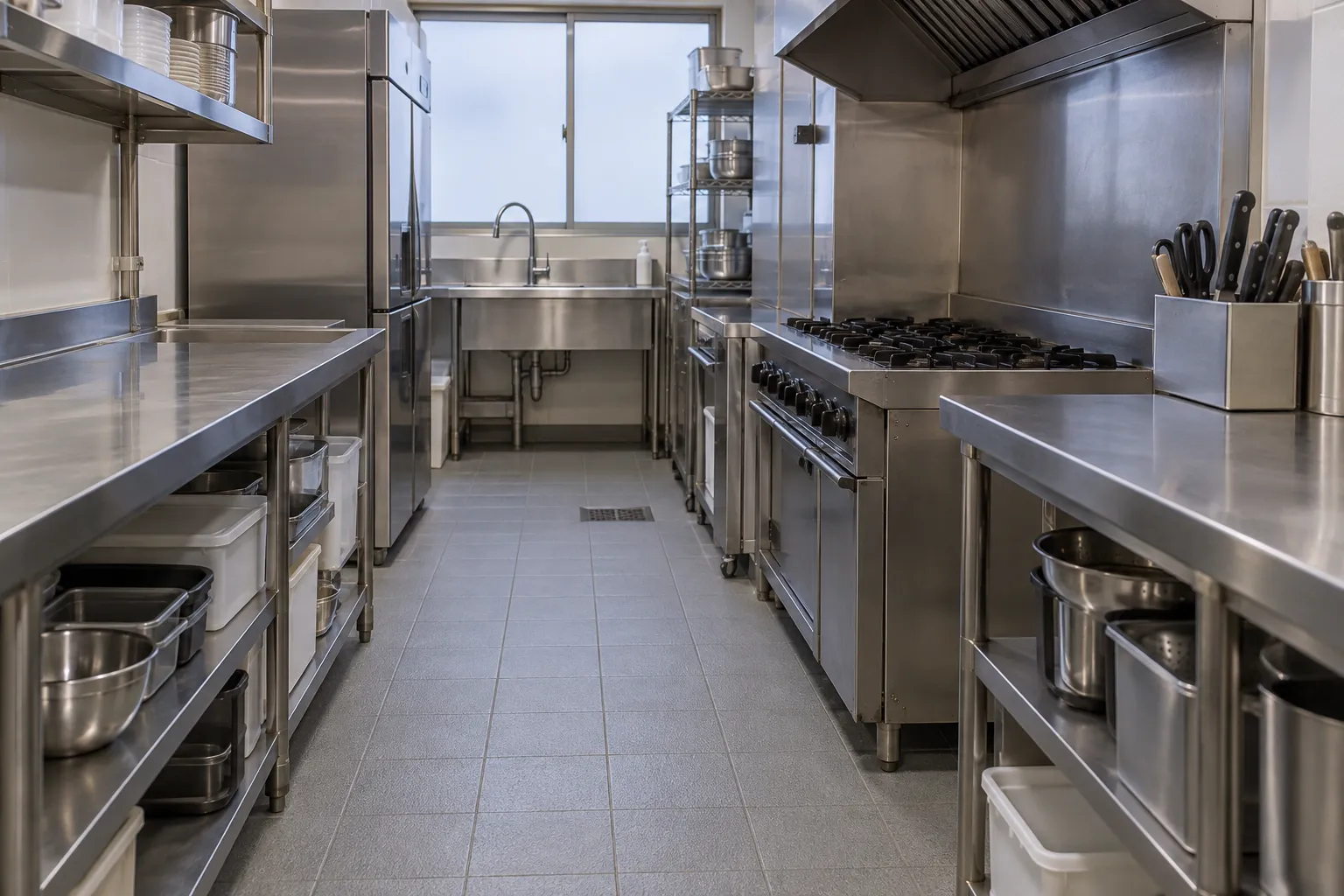
A delivery-restaurant owner inspected the kitchen with an expert after closing. The kitchen was larger than the small front area, with cooks moving through a confined workspace. Floors and cooking equipment were clean and tools had designated places. The inspection considered how these hygiene practices also reduced slipping, burns and cuts.
The owner used floor tiles chosen for grip when wet and drying after cleaning. Floors were detergent-washed after closing, grease removed from cooking equipment, and knives and scissors stored in a tool box. The same floor and tools were examined for both contamination and injury hazards.
A checklist was posted on the kitchen refrigerator where staff could readily consult it. Tasks from opening to closing were divided to reflect morning, afternoon and night work. Opening staff checked gas and electrical conditions; closing staff checked tools, gas, electricity and the floor.
The kitchen had a Class K extinguisher and an automatic fire suppression unit, and slip-resistant work shoes were supplied. The owner used the checklist repeatedly and incorporated staff feedback. This example concerns adding hazard identification and improvement to existing cleaning and tool management, rather than sanctions after an accident.
Beyond a clean kitchen: work movements and hazard locations
The following points concern common restaurant hazards identified in the whitepaper.
Kitchen-floor conditions change during a working day. Wash water, cooking grease and deliveries can reduce secure footing and clear space. End-of-day cleaning does not establish conditions during service. Locate overlaps between wet tasks and walking routes, remove contamination there and examine why it returns.
Drain covers and hoses left in a route can create trip hazards even after cleaning. Review floor finish, drainage, cleaning methods and obstructions together. Footwear supplements these controls; relying on shoes while leaving water and grease in place repeats the hazard throughout kitchen movement.
Where a knife rests after use matters as much as its sharpness. A handle projecting into a route or a blade hidden by other items can expose another person. Align accessible designated storage with the way tools are used and returned to reduce improvised resting places during busy periods.
Grease around heating equipment affects both hygiene and the conditions in which fire can spread. Cleaning, combustible-material control, checking gas connections and providing extinguishing equipment address different stages. An extinguisher does not replace grease removal, and a clean burner does not replace inspection of suppression equipment.
Cooking-oil appliances need suitable extinguishing arrangements. This restaurant had a Class K extinguisher and an automatic fire suppression unit. Other restaurants should check requirements for their equipment and kitchen, then teach staff the location, use and inspection status of installed systems. The example does not establish one equipment quantity for every kitchen.
Ventilation concerns more than odour. Heated cooking can release oil vapour and fine particles into occupied areas. Adding or moving an appliance should include checking whether equipment that removes cooking fumes at their source still serves that location. An open door is not equivalent to capturing contamination at the cooking source.
A person carrying a hot container may share a route with someone washing up, without a clear view of the other's next movement. A simple plan of cooking, washing and storage positions can reveal overlaps. Distinguish previous collision points from obstructed-view locations without an incident to prioritise changes to benches and storage.
A small restaurant's checklist need not be filled with operations it does not perform. Select actual fryers, knives, refrigerators and handling equipment, and identify which items must be withdrawn when defective. A tick alone is insufficient: decide what remains stopped pending repair or replacement.
Ingredient storage is not improved simply by stacking more near the bench. Standing on a chair or piled boxes introduces an access-at-height task into kitchen work. Keep frequently used items within reach and allow space for a stable platform when higher access is necessary. Trolley use also requires attention to uneven loading and surrounding clearance.
For restaurants using cold rooms, escape from inside and a way to raise an alarm matter. Consider work that continues inside after the door closes. Where such equipment is present, checks can address whether stored goods obstruct release or alarm devices and whether those devices function.
Where wet cleaning occurs near electrical equipment, cleaning methods must match the layout. Examine water paths towards sockets, cables crossing routes and damaged plugs with exposed parts. Avoiding operation with wet hands or gloves needs to accompany suitable equipment for the location. Verbal caution does not change a layout that channels cleaning water into electrical fittings.
Hygiene instruction does not automatically cover safe work. Address actual tasks such as knife storage, stopping use when a gas fault is noticed and handing over a hot container. Where verbal explanation is difficult, a demonstration at the equipment followed by checking the same movement can help assess understanding.
What the comparison shows
In another restaurant incident described for 2021, a worker died after being stabbed by a sashimi knife left on a shelf along a route. The tool box in this improvement example addresses the possibility of a blade entering people's movement space. The comparison concerns resting places for unused knives, beyond careful cutting technique.
The whitepaper also describes a fatal oven-ignition explosion in 2019 and a fatal entrapment in a food lift in 2023. Those appliances are not asserted to have been present at this restaurant. Where they are used elsewhere, examine ignition, restart and jam-clearing hazards as well as familiar normal operation.
Hazards and improvements
| Layer | Working conditions | Workplace action |
|---|---|---|
| Floors and routes | Water, grease, hoses or goods overlap walking space | Remove contamination and check drainage, clearance and floor condition |
| Tool storage | Sharp tools left temporarily after use | Designated storage and return checks |
| Cooking area | Grease and combustibles near heat | Cleaning, clearance and suitable fire-control arrangements |
| Shift change and closing | Unclear checks at different times | Schedule checks around actual tasks |
| Staff feedback | Repeated difficulties without visible resolution | Connect reports to improvements and completion checks |
How the changes were maintained
The restaurant used the checklist for recurring checks and incorporated employee feedback. The white paper does not provide a quantified effect such as a reduction in accidents.
Conditions requiring attention
A restaurant's preparation area and customer-facing area present different hazards. In the kitchen, examine heat, blades, moisture and machinery; at entrances or dining areas, examine overlaps between people and hot-food handling. Delivery-focused premises should also check whether handover and incoming-goods routes interfere with kitchen work.
A longstanding checklist needs review when menus or equipment change. Introducing frying or more packaging can alter heat sources, handling frequency and stored items. Review new movements with staff and add omitted hazards in the order work is actually performed.
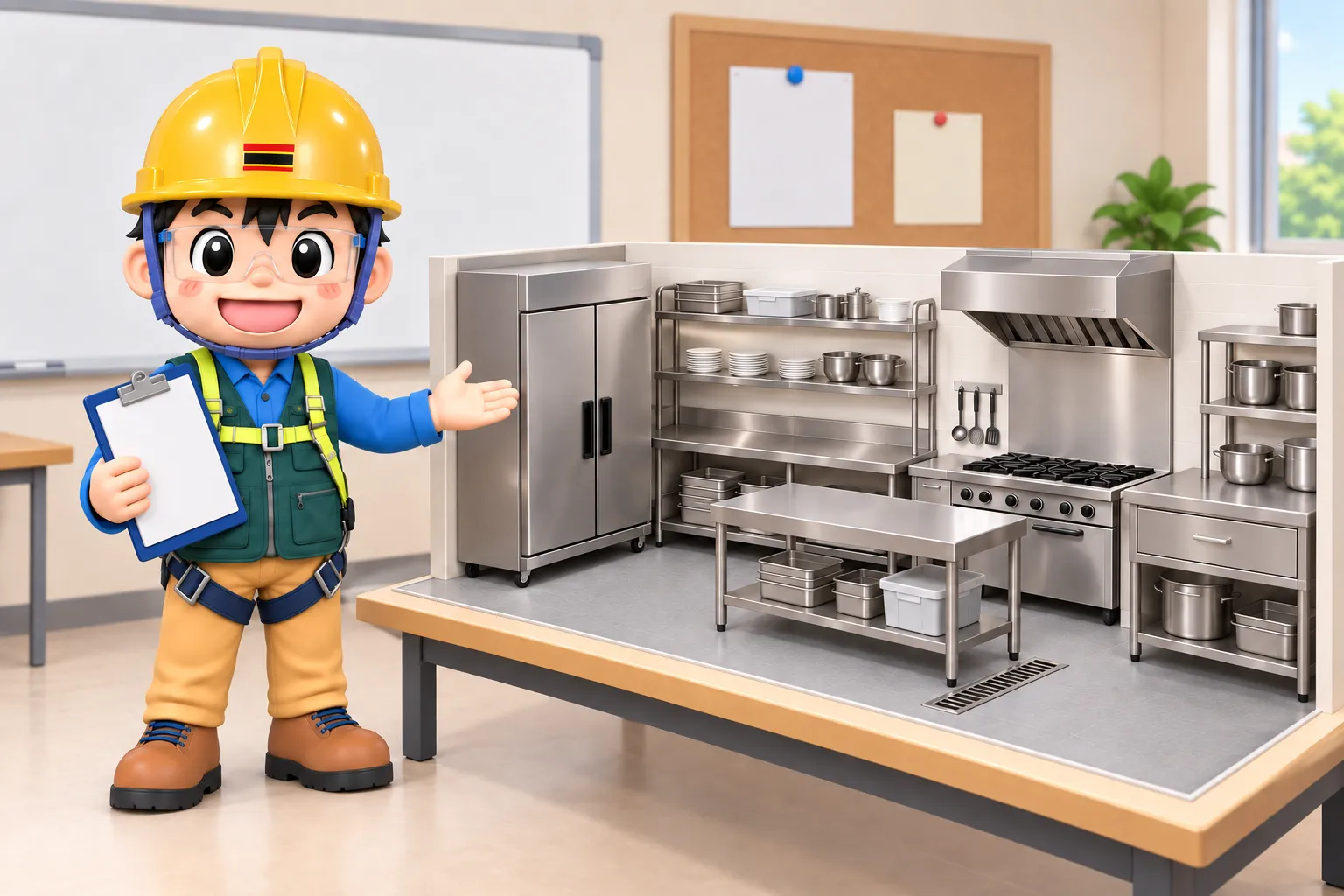
Questions at the work position
| Question | What to examine |
|---|---|
| Where do water and grease collect during service? | Check the recurring source and drainage, not only cleaning times. |
| Do others know where a knife will be put down? | Check whether busy periods create unofficial resting places. |
| Who checks what when the work period changes? | Assign actual opening, handover and closing checks. |
| When does a defect require continued withdrawal? | Define marking and checks before returning equipment to use. |
| Are ventilation and routes reviewed when appliances move? | Check source-extraction equipment positions and hot-container movement changes. |
Korean legal references
Risk assessment under OSH Act Article 36 identifies and evaluates workplace hazards and leads to necessary measures. Restaurants can organise it around their actual appliances and tasks. Rules Article 3 requires floors and other workplace surfaces to be kept safe and clean against tripping and slipping hazards.
From 2024-01-27, the Serious Accidents Punishment Act also applied to businesses with at least 5 but fewer than 50 regular workers. For covered businesses, Decree Article 4(3) concerns hazard-identification and improvement procedures, and Article 4(7) concerns hearing workers' views. Posting a checklist needs to be followed by checking whether improvements occurred.
Occupational Safety and Health Act (Korean) · Rules on Occupational Safety and Health Standards (Korean) · SAPA Enforcement Decree (Korean)
Sources
MOEL and KOSHA, 2024 Serious Accident White Paper, 222–245 pages. Official publication (Korean)