English names and summaries of Korean laws are unofficial translations. The Korean text on the Korean Law Information Center (law.go.kr) prevails.
Were composition and exposure checked when the cleaner changed?: a cluster of toxic hepatitis
Key terms in Korean and English
- Occupational Safety and Health Act (산업안전보건법)
- Rules on Occupational Safety and Health Standards (산업안전보건기준에 관한 규칙)
- Serious Accidents Punishment Act (중대재해 처벌 등에 관한 법률)
- serious accident (중대재해, OSH Act)
- occupational disease (직업성 질병)
- employer (사업주)
- chemical release or contact (화학물질 누출·접촉)
- local exhaust ventilation (LEV) (국소배기장치)
At a glance
Workers cleaning parts developed liver damage, and 16 cases of occupational disease were identified.
A specialist reported suspected work-related disease on 2022-02-10, leading to further investigation.
This was a disease cluster without a single accident time, involving gaps in chemical information and exposure control.
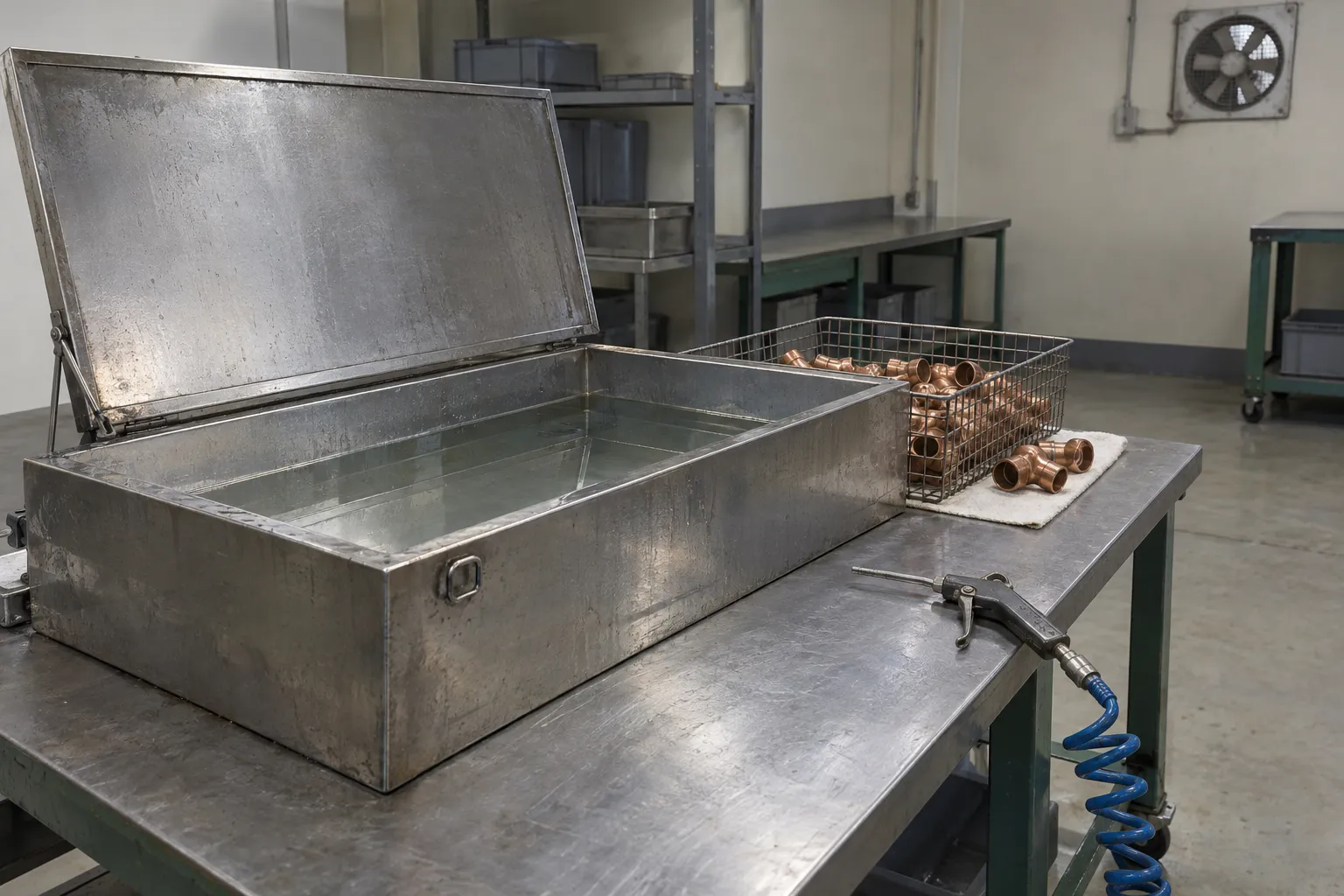
From preparation to the aftermath
At a workplace cleaning air-conditioner pipe components, 16 workers developed toxic hepatitis. Parts were machined, immersed in cleaning liquid and dried with an air gun. The cleaner contained trichloromethane, but the supplied safety data sheet had incorrect composition information.
From autumn 2021, workers experienced fatigue, jaundice and abnormal liver tests. One worker's results improved during time away and worsened after returning. An occupational physician asked about the job and colleagues' symptoms, then examined cleaner information and health-surveillance records.
In late January 2022, the physician warned the company of a possible link between cleaning work and toxic hepatitis and requested action. Suspected occupational illness was reported on 2022-02-10, followed the next day by exposure measurement and emergency health-examination measures. Examinations identified 16 workers with findings of occupational disease.
The company changed cleaners in September 2021 and again in November after odour complaints. Workers said they had been told the new product was environmentally friendly; the manufacturer and distributor denied giving that description. Investigation identified both inaccurate supplied information and failures in ventilation, training and other workplace controls.
The cleaning area had general ventilation fans but no local exhaust capturing vapour at its source. Suitable individual respiratory and body protection was also not properly supplied. Checks at another workplace using the same product found a separate cluster of acute hepatitis.
A cleaner change requires a new exposure review
Cleaning removes oil and contamination from metal. Cleaning performance is separate from harm through inhalation or skin contact. Price or an environmental description does not establish exposure safety. Composition, temperature, exposed liquid surface and drying method determine the conditions around the worker.
Trichloromethane, also called chloroform, is a volatile liquid. Liquid in an open bath can evaporate into the air. Residual cleaner can also disperse during air-gun drying, so exposure assessment should not be limited to immersion. Review the bath and drying position as connected parts of the exposure route.
General ventilation exchanges room air; local exhaust captures contamination near the source. A running fan may not adequately reduce exposure if vapour crosses the breathing zone before leaving. Review the hood's relation to the bath and drying position, including obstruction by the worker or materials.
An incorrect chemical identity can misdirect both exposure measurement and health surveillance. Here, the supplied document initially obscured the link with hepatitis, while work histories and multiple abnormal results prompted further investigation. Supplier verification does not replace workplace ventilation and protection, nor do workplace controls remove the need for accurate information.
A cleaner change requires comparison of the new product with the working conditions, rather than automatic reuse of previous controls. Products serving the same purpose can require different ventilation, protection and monitoring. Obtain information during purchasing and receipt, teach the changed hazards before use and verify controls at the point of work.
Signs instructed workers to wear respirators, but the company had not provided individual respirators. Protection against organic-solvent vapour must suit the substance and concentration; it cannot replace local exhaust ventilation.
What the comparison shows
Another workplace using product from the same manufacturer had 13 acute-hepatitis cases. The whitepaper links its non-indictment under SAPA to measures including a prevention budget and repair of degraded local exhaust after workers raised the issue. Similar harm did not automatically produce identical findings about management arrangements.
Case 2023-10 involved toxic gas generated by a reaction between sediment in a tank and incoming sulfuric acid, not a change of cleaning agent. Both cases show why reviewing a product name alone is insufficient: consider the substances and reactions with other materials encountered during work.
Causes and protective layers
| Layer | At the time | Workplace action |
|---|---|---|
| Composition | Incorrect supplied information | Verify documents and resolve inconsistencies |
| Change management | Controls not matched to replacement | Review product, process and monitoring before use |
| Source control | No local exhaust at bath | Design and verify capture at release points |
| Health response | Similar symptoms among colleagues | Refer work history and findings for specialist evaluation |
Investigation and proceedings
The workplace was the subject of an indictment under the Serious Accidents Punishment Act. The specific indictment provisions for the employer and corporation and the judgment were not published in the whitepaper.
Why the consequences were severe
Repeated shared work sustained exposure. Improved test results during leave did not mean that the workplace conditions had improved. Considering colleagues' symptoms and common substances, rather than treating each complaint only as individual fatigue, can help identify a group exposure.
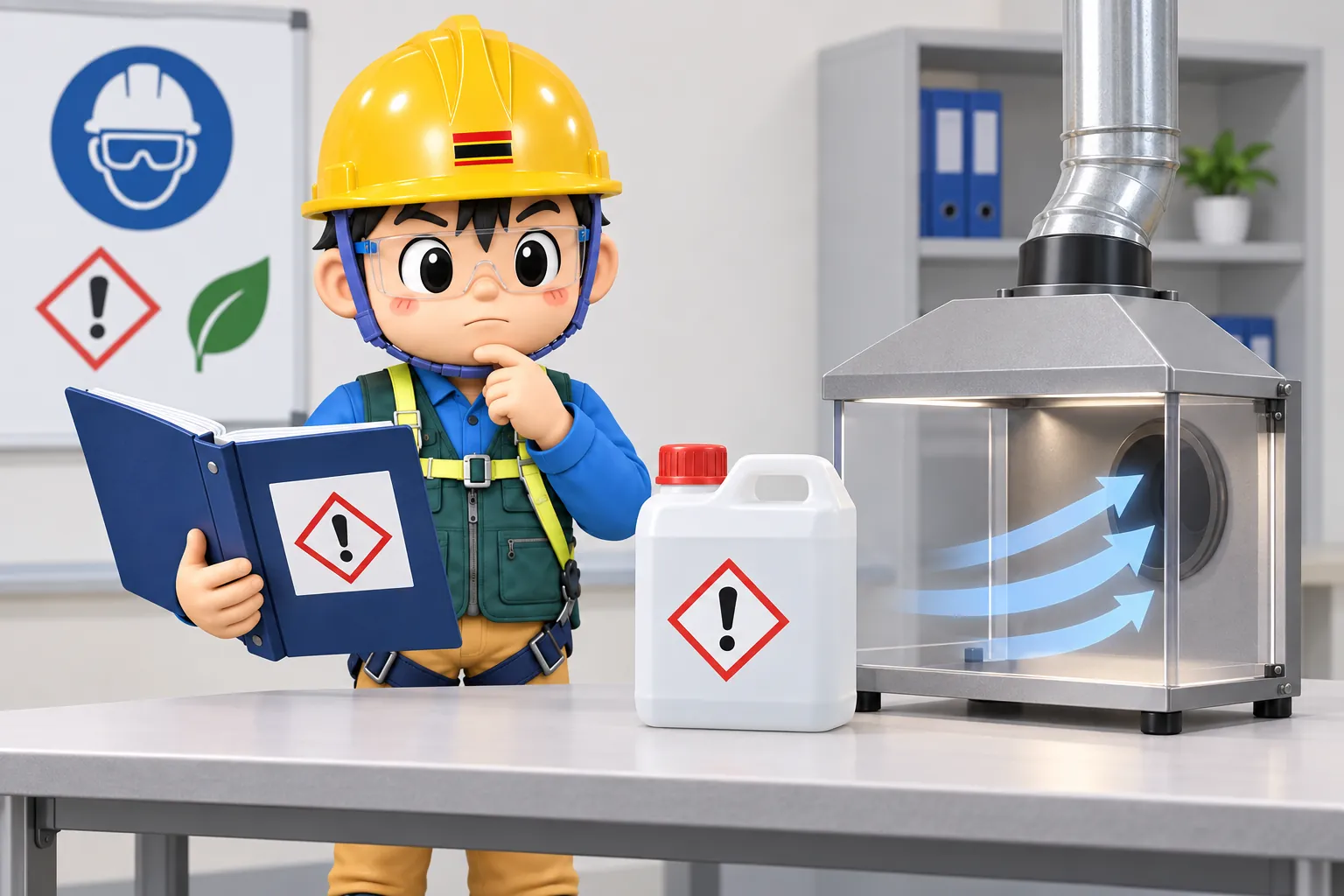
Questions at the work position
| Question | What to examine |
|---|---|
| Does the SDS match the product? | Compare identity, supplier, revision and container. |
| Where can vapour be released? | Review immersion, removal and air drying. |
| Does capture occur before the breathing zone? | Check the bath, hand position and airflow obstruction. |
| Are colleagues reporting similar problems? | Provide work history and product information for medical assessment. |
Korean legal references
OSH Act Article 114 addresses SDS availability and education. Make information for the replacement cleaner accessible and teach precautions for its actual use. Document presence and document accuracy are separate checks.
Rules Article 422 concerns equipment in indoor workplaces handling designated hazardous substances, and Article 429 addresses local-exhaust performance. Check the substance, task and statutory exceptions before determining enclosure or extraction requirements. General fans alone do not demonstrate compliance.
Occupational Safety and Health Act (Korean) · Rules on Occupational Safety and Health Standards (Korean)
Field practitioner note
Sources
MOEL and KOSHA, 2023 Serious Accident White Paper, 156–185 pages. Official publication (Korean)