English names and summaries of Korean laws are unofficial translations. The Korean text on the Korean Law Information Center (law.go.kr) prevails.
Entering to clear a blocked pipe?: asphyxiation in a slurry pit
Key terms in Korean and English
- Rules on Occupational Safety and Health Standards (산업안전보건기준에 관한 규칙)
- serious accident (중대재해, OSH Act)
- slurry pit (분뇨 집수정)
- hydrogen sulphide (황화수소)
At a glance
On 4 September 2023, 1 worker clearing a blocked manure pipe died inside a slurry pit at a pig farm in North Jeolla Province.
The worker was poisoned by hydrogen sulphide.
From preparation to the aftermath
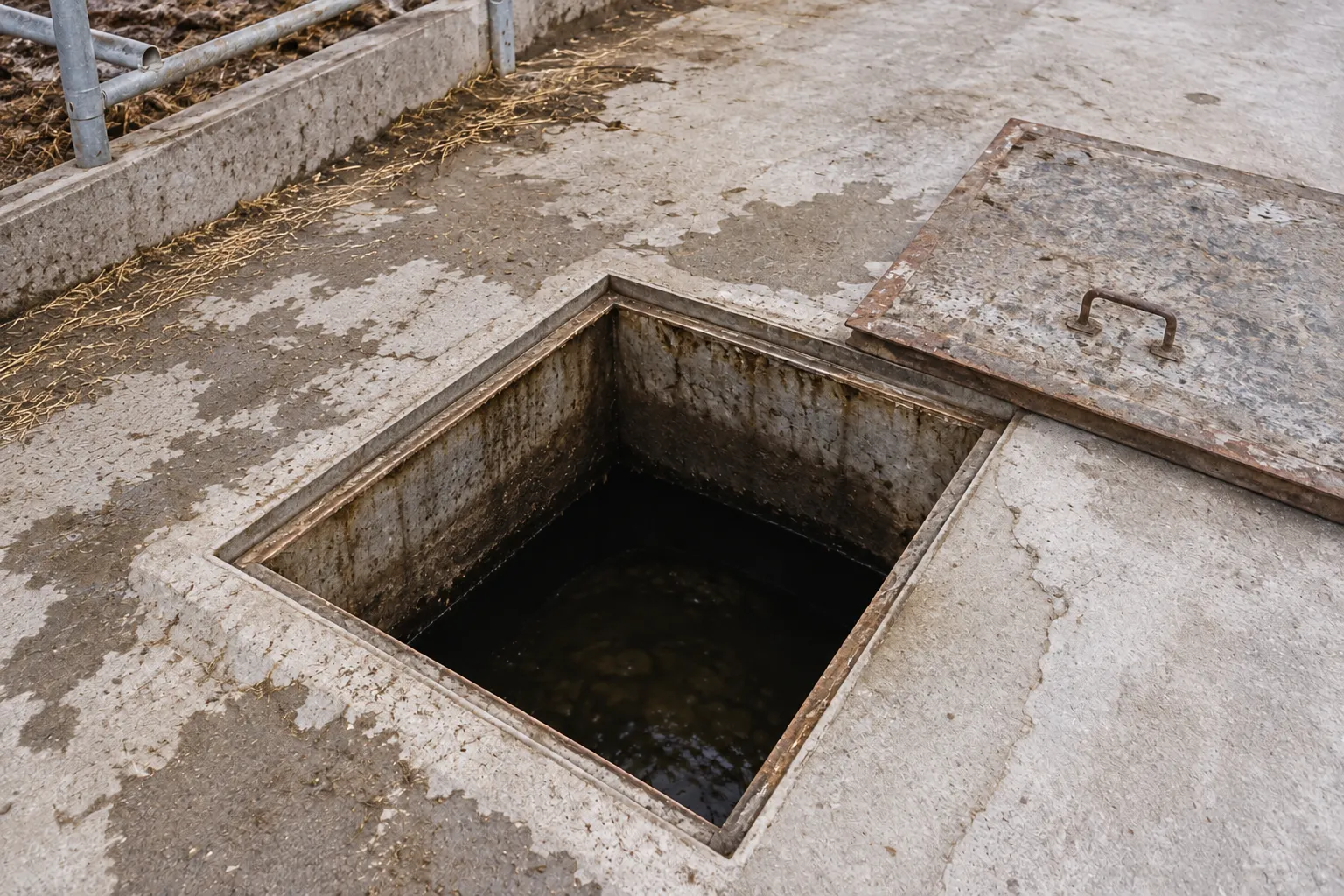
On 2023-09-04, a worker died inside a slurry pit while clearing a manure transfer pipe at a pig farm. Manure passed from the animal buildings through collection pits to storage and treatment equipment. A rope running through the pipe was pulled or shaken to loosen hardened manure.
Video recorded the worker pulling the rope at an opening at about 14:10. The worker moved to another pit after the first attempt failed, then entered when the blockage remained. A task performed from outside had changed into entry work.
At about 17:00, the manager noticed the worker was missing. After asking colleagues and reviewing video, the manager found the worker in the pit. Entry and the accident had occurred without continuous observation from outside.
Death was caused by hydrogen sulphide poisoning. A later test under conditions similar to those on the accident day exceeded the instrument limit of 200ppm. This was not a measurement of the worker’s personal exposure at the moment of the accident.
An open hatch does not establish safe air
Decomposition and stagnant conditions affect the atmosphere where manure accumulates. Disturbing or walking through manure can release hydrogen sulphide held within it. Clearing a blockage changes not only the flow path but also the conditions for gas release.
The hatch normally remained closed and was opened infrequently for blockages. Opening it admits light and outside air, but does not establish adequate exchange throughout the pit. A visible opening does not make the space fit for entry.
Arrange testing from outside rather than sending someone in to investigate. Consider the bottom, pipe connections and other places where gas can accumulate, and monitor changes when manure is disturbed. A single reading does not establish conditions for the remainder of the task.
The openings had no barriers preventing entry, and no detector had been provided because the work was infrequent. Infrequently opened spaces need an established outside-cleaning method, stopping point and means of obtaining assistance before a blockage occurs.
If clearing a blocked pipe turns into entry into the pit, stop the original task and apply a planned entry procedure.
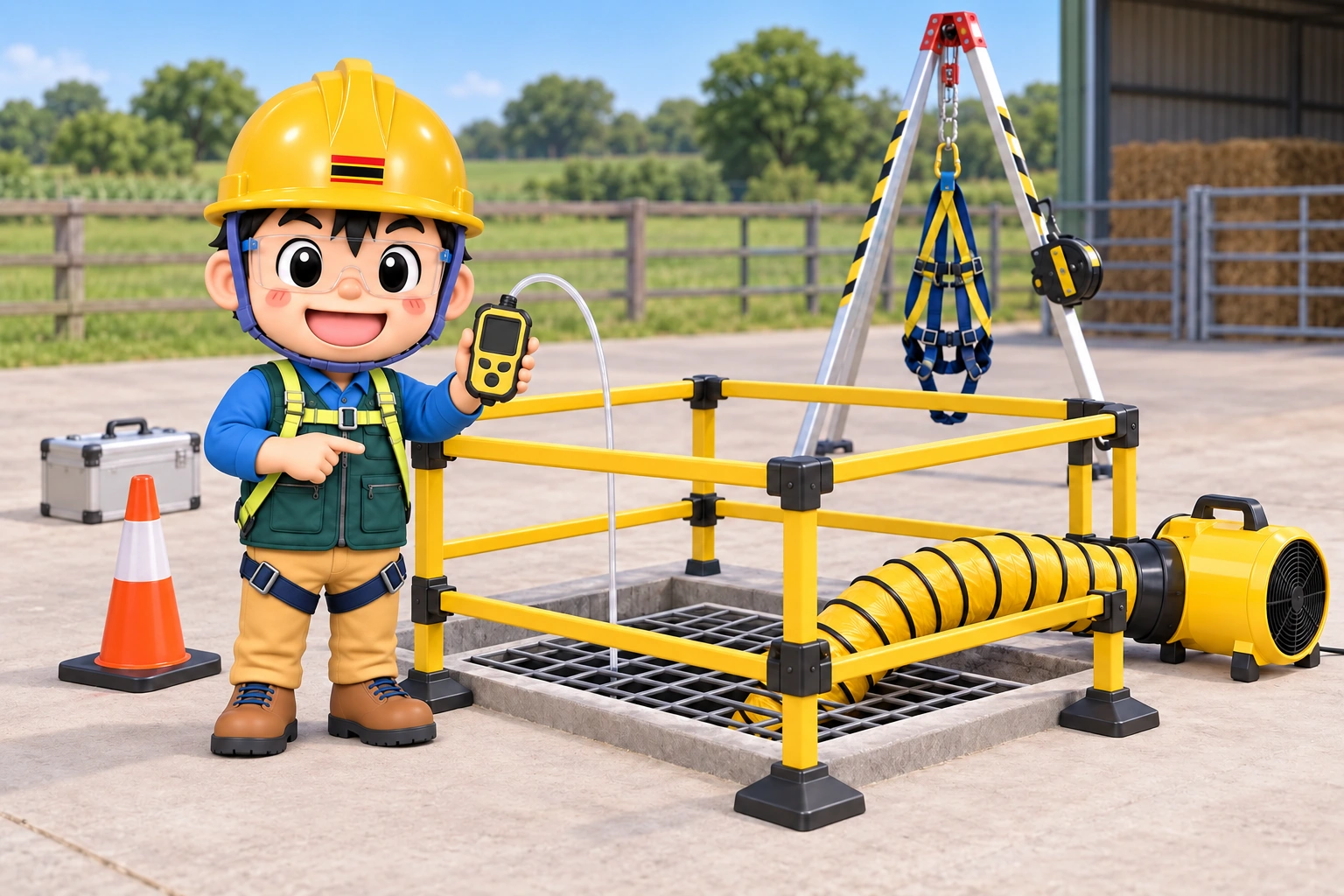
Define retesting and stop points for changes in method, and maintain contact through an outside attendant. Verify that ventilation actually reaches the work position, not merely that a fan is running.
Filtering respirators cannot protect breathing in oxygen-deficient spaces or spaces with high concentrations of hazardous gases. These conditions require an airline respirator or self-contained breathing apparatus. If someone in a pit becomes unresponsive, prevent an impulsive entry through the same opening. Call for rescue, control access and keep the approach clear for trained rescuers. Changing a filter mask is not a substitute for appropriate supplied-air rescue equipment.
Consider a method that avoids entry: external inspection or disconnection of the blocked pipe, or specialist emptying and cleaning. Reachability is not a reason to send a person inside. Review the maintenance method and isolate connected pumps and pipes to prevent unexpected inflow.
What the comparison shows
In the same whitepaper, workers undertaking drainage work in a limestone mine were exposed to carbon monoxide in workings where blasting occurred. A person who later checked the scene found a ventilation fan switched off. The gases had different sources, but both cases concerned failure to establish continuing safe air where people worked.
Disturbing pit contents can release gas; other operations and ventilation equipment affect air in mine workings. A reading at the entrance or a statement that another task has finished is insufficient. Testing and ventilation checks must address the actual work position before and throughout entry.
Causes and protective layers
| Layer | At the time | Workplace action |
|---|---|---|
| Outside clearance | Entry followed unsuccessful rope clearance | Stop and obtain specialist assistance if outside clearance fails |
| Atmosphere | Entry without gas testing | Plan gas selection, test locations, ventilation and continuing monitoring together |
| Entry and rescue | No system continuously watched the work | Provide entry control, an outside attendant and means of requesting rescue |
Investigation and proceedings
The MOEL white paper describes entry into the slurry pit and hydrogen sulphide exposure, without reporting subsequent investigation, enforcement or court outcomes.
Why the consequences were severe
Colleagues noticed the absence only near the end of the working day. Nobody outside could immediately recognise that a person had collapsed inside. An attendant must be able to maintain contact, recognise abnormal conditions and summon rescue, as well as account for entrants.
Unprotected entry to reach a collapsed colleague can create further casualties. Raise the alarm and control access, with rescue undertaken using the necessary breathing protection and equipment. Apparent proximity to the casualty does not remove those requirements.
Questions at the work position
| Question | What to examine |
|---|---|
| Where does unsuccessful rope work stop? | A defined stop and assistance request before changing to entry |
| How does the attendant maintain contact? | A position and means to check responses and call rescue |
| Is testing continued after manure is disturbed? | Atmospheric changes and ventilation as stagnant material is moved |
Korean legal references
Current Rules Articles 619, 620 and 623 address the confined-space programme, ventilation, and outside observation and communication. Assigning clearance work requires identifying the actual space and whether entry is involved, not merely naming the equipment.
Rescue equipment under Article 625 and emergency rescue training under Article 640 also require preparation. These references guide current work planning; they do not state an enforcement outcome for this accident.
Occupational Safety and Health Act (Korean) · Rules on Occupational Safety and Health Standards (Korean)
Field practitioner note
Sources
MOEL and KOSHA, 2024 Serious Accident White Paper, 296–329 pages. Official publication (Korean)