English names and summaries of Korean laws are unofficial translations. The Korean text on the Korean Law Information Center (law.go.kr) prevails.
Vapour can remain in an idle tank: waste-oil storage tank explosion
At a glance
An explosion during pipe work on an idle waste-oil tank killed 2 workers.
Residual waste oil remained inside the tank after it had been taken out of service.
Check internal substances and flammable vapour before choosing a method for work on idle equipment.
From preparation to the aftermath
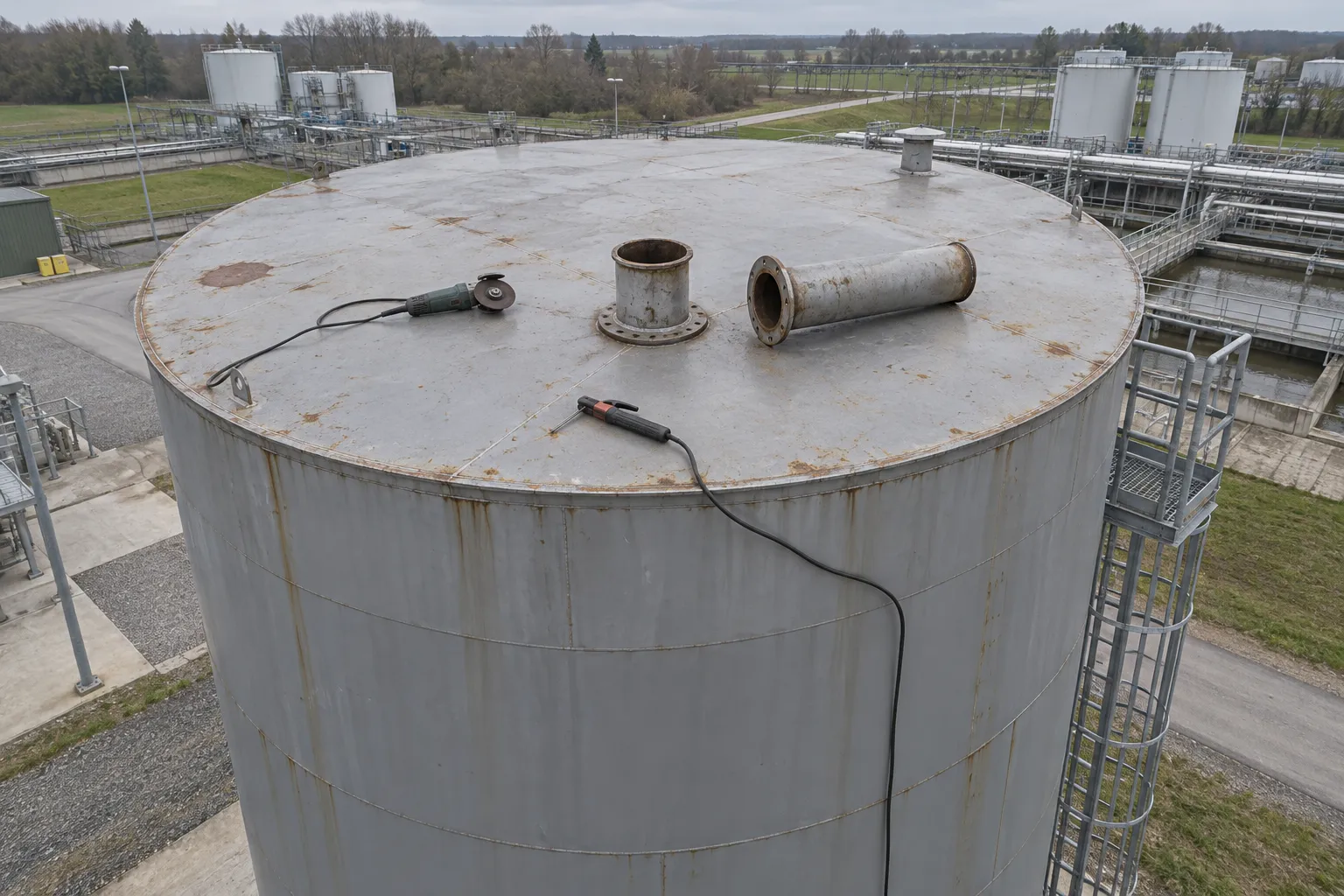
The waste-oil tank had been moved outdoors and remained unused from October 2021. A contractor was engaged to install a transfer pump and return pipe for reuse. Although out of service, the tank retained about 800L of waste oil at its bottom.
Work began on 2022-03-28. With no prior installation drawing or work plan, connection methods were decided on site. Grinding and welding proceeded without adequate information about the residue, and no accident occurred that first day.
At about 08:00 the next day, the team removed the vent pipe on top of the tank, leaving an opening for the new connection. After a break around 09:55, work resumed. At about 10:15, the tank exploded during welding following grinding on its top. 2 workers died.
Labour inspectors reviewed video and considered welding sparks the likely ignition source. Samples collected after the accident had separated into layers; the upper layer had a flash point of 1.5°C. Being out of service did not describe the actual fire hazard of the residue.
Waste oil remaining below the suction connection
The pump suction connection was about 12cm above the tank floor. Liquid below that level could remain after pumping. In a wide tank, even a shallow layer represents a significant residue. Failure to pump further liquid does not establish that the bottom is empty.
The hazard is not confined to the liquid. Vapour released from waste oil can mix with air and burn rapidly when ignited. Work outside can still affect the interior through openings or heated metal; the hazard boundary cannot be defined solely by whether a worker enters.
Removing the vent left an opening, but a small opening does not prove adequate ventilation. Residue removal, possible inflow from connected pipes, airflow and sampling points each require attention. Enclosed pockets or low points can make a top reading unrepresentative of the whole tank.
A trouble-free weld the previous day does not establish safe conditions for the next operation. Work positions, openings and vapour-air mixing can change. A small reuse project still needs a plan addressing the tank contents.
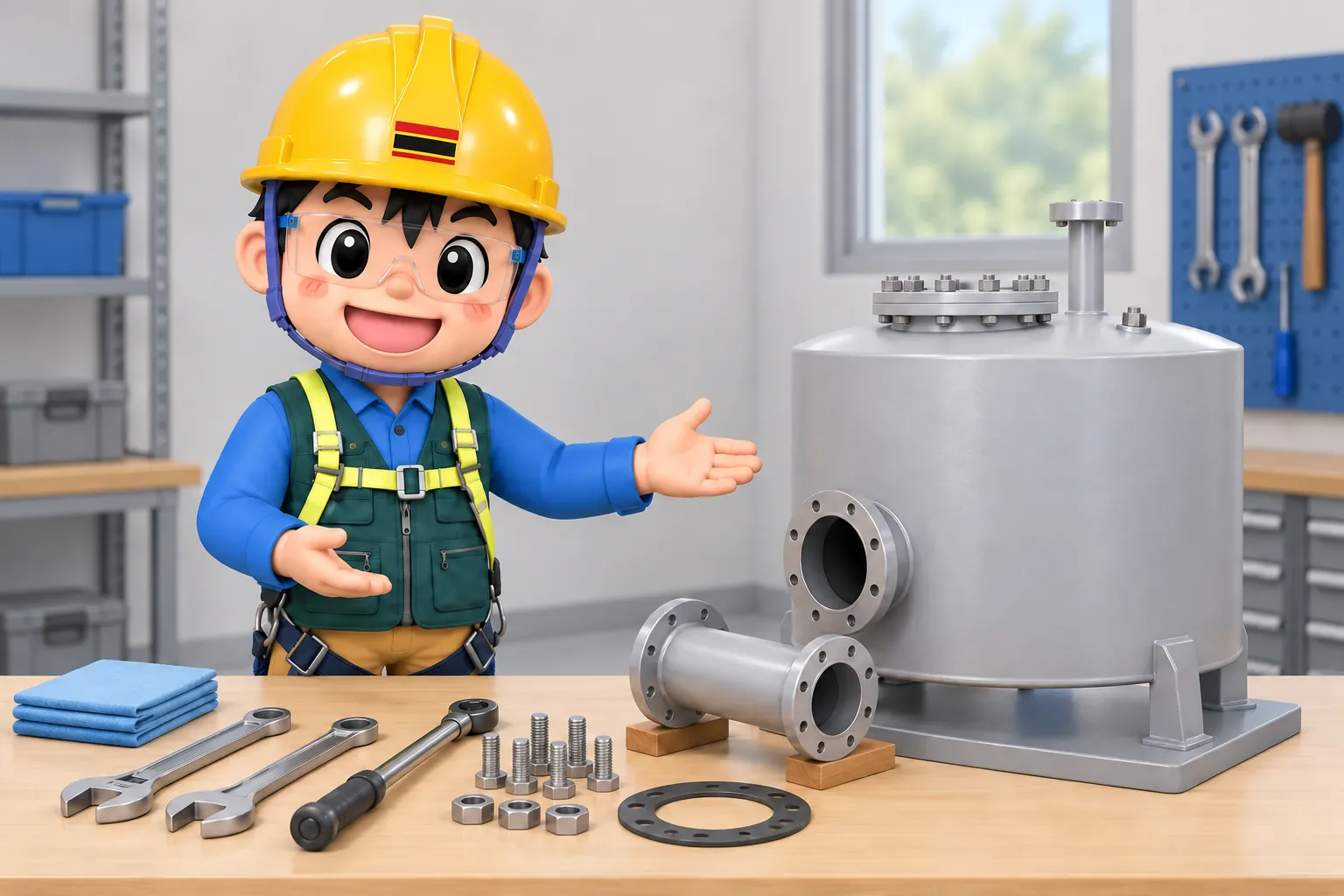
The purpose of connecting a pipe should be considered separately from welding as the method. The whitepaper identifies flanged connection as an alternative to examine. Selection still requires design for pressure, temperature, contents, leakage control and structural conditions, but hot work need not be assumed at the outset.
The same white paper describes a plastics-factory worker cutting the top from a drum for scrap storage. Unaware of its contents, the worker made repeated cutting attempts and later died after exposure to flames. Although much smaller than the tank, the drum shared the hazard of applying heat to a used container without establishing its internal condition. A new intended use does not remove the old contents hazard.
As liquid is removed, air and vapour may coexist in the space above it. A larger empty volume is not evidence of lower explosion risk. Consider residue properties, temperature, air ingress and vapour generation together. Waste oil can contain mixtures, so a single product name may not describe all remaining material.
Opening a vent or connection changes air pathways and can provide a route from the welding position into the vessel. Shielding visible sparks outside does not substitute for eliminating an explosive internal atmosphere. Alongside external fire watching, identify routes for heat and sparks into the tank on the work drawing.
An emptying record should explain how residual areas were dealt with. Recording only that the pump stopped drawing liquid can conceal contents below the suction connection or in low or obstructed pipework. After removal and cleaning, verify conditions through appropriate testing and reassess changes when equipment is opened or work resumes.
What the comparison shows
The slurry-pit case in the same edition involved hydrogen sulphide poisoning rather than an explosion. Contents and injury mechanisms differed, but neither atmosphere could be assessed from ordinary use or the appearance of an opening. The pit involved entry; the tank explosion endangered people working on top.
Simply transferring a response focused on oxygen from a pit would not address this tank’s fire hazard. The flammability of waste oil and solvents, connected equipment and ignition sources require investigation. Compare the hazards present or generated inside, rather than the names of the spaces.
Causes and protective layers
| Layer | At the time | Workplace action |
|---|---|---|
| Residue | Oil remained below the suction connection | Verify emptying at the bottom and low points |
| Method | Welded connections decided on site without a plan | Design non-hot-work alternatives and hazard removal beforehand |
| Information | Contents hazards were not adequately communicated | Reconcile owner equipment information with contractor methods before work |
Investigation and proceedings
MOEL referred the principal contractor corporation and its representative to prosecutors on suspicion of a SAPA violation; subsequent indictment and trial proceedings are not covered in the white paper.
Why the consequences were severe
Workers were on the tank roof. The rapid pressure rise directly destroyed that work position, leaving very little time to escape. Removing nearby combustibles alone would not remove fuel or ignition pathways inside the tank.
A longstanding maintenance relationship did not replace hazard communication. Previous contents, current residue and pipes to be disconnected need reconciliation in drawings and at the equipment. Drawings prepared afterwards cannot support decisions needed before the work.
Questions at the work position
| Question | What to examine |
|---|---|
| What establishes that it is empty? | Distinguish pump run-out from verified residue removal |
| Is hot work essential for the connection? | Compare design suitability and risks of flanged or other alternatives |
| Does testing stop at the tank top? | Test and monitor interior, connections and changing conditions |
Korean legal references
Rules Article 239 addresses ignition-producing equipment at, or above, places containing dangerous substances with fire or explosion risk. Article 240 requires precautions including removal of dangerous substances for welding or cutting on potentially hazardous pipes and tanks. Check the original provisions against the actual contents and equipment.
Occupational Safety and Health Act (Korean) · Rules on Occupational Safety and Health Standards (Korean)
Sources
MOEL and KOSHA, 2024 Serious Accident White Paper, 330–349 pages. Official publication (Korean)