Before using a suspended work seat, have you checked both the rope and lifeline?
 SAFETY KIM
Suspended work seats & fall prevention
Before using a suspended work seat, have you checked both the rope and lifeline?
A short KOSHA video from South Korea covering rope anchorage, length, damage and connection to a separate lifeline.
Key points
- Inspect the rope for wear and damage and secure it to at least two sound anchor points.
- Check adequate rope length to reach the ground, with allowance, and protect sharp-edge contact points.
- Install a separate vertical lifeline, wear the harness and connect the fall arrester to the lifeline before boarding.
Check the work rope and lifeline as separate systems
The work rope supports the worker; the lifeline provides a separate fall-protection function. Before work starts, identify where each line is connected and what it is intended to do.
Counting anchor points alone is not a complete preparation check. Review their condition together with the rope path, edge contact, required length and the connection sequence before boarding.
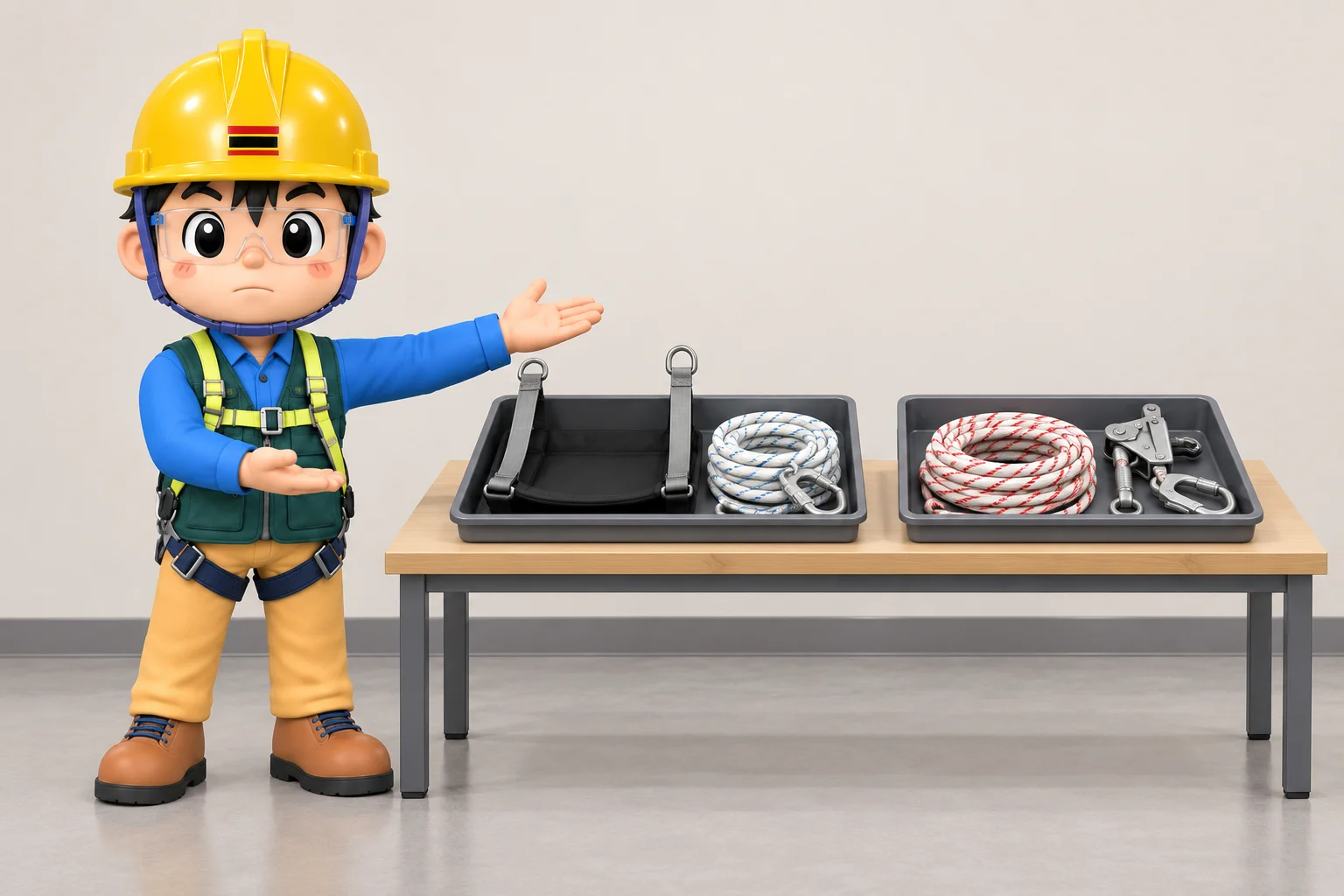
Can the team identify the work rope and separate lifeline? Who checked the anchors, wear, edge contact and length, and is the fall arrester connected before boarding?
Source: KOSHA (South Korea) · Korean-language video · 2026-09-09
Suspended work seat safety rules (달비계 작업 안전수칙 영상) ↗
Commentary: Field Safety Briefing · Original video: KOSHA (South Korea) · KOSHA website
If playback is unavailable, open the original video on YouTube.
Trace the work rope and lifeline separately
Trace the work rope and separate lifeline discussed in the video independently on site. Ropes descending in the same direction do not have the same function. Review anchor positions, edge contact, wear and length for the actual working height separately for each rope.
After viewing, workers should be able to explain which line connects to the harness and fall arrester before boarding. Moving the work position can change contact points, so do not assume the initial check covers the next position unchanged.
- Compare anchors and edge contact for each rope.
- Check which line the fall arrester connects to before boarding.
Different structures share the suspended-scaffold name
Article 63 of the Korean Rules on Occupational Safety and Health Standards (산업안전보건기준에 관한 규칙) distinguishes gondola-type and work-seat suspended scaffolds. Even when examining ropes and a seat, first identify the actual structure. Gondola platform-width or suspension-wire-rope requirements must not simply be transferred to a work-seat fibre-rope arrangement. Identify the relevant paragraph before comparing it with the equipment.
Article 63(2)3 requires the working fibre rope to be secured against loosening to at least two robust anchorage points. Item 4 requires the working rope and lifeline to be attached to different anchorage points. Seeing two ropes is different from establishing separate anchorage for their functions. Where the lines overlap visually, trace them to their upper attachments.
Counting attachment points is not sufficient. Item 5 requires working ropes, lifelines and anchorages strong enough to support the worker's load. A nearby handrail or pipe cannot be selected merely for convenience; its suitability needs evidence. A video cannot establish a particular building's concealed structure or anchorage performance, which require a separate site-specific assessment.
Ends and contact points can be missed
Article 63(2)8 requires protective covers or equivalent measures where building edges or sharp objects could cut or abrade the ropes. Identify all contact points throughout the work area before relying on a record that protection was installed at one point. Consider whether a rope that initially passed over protection could meet another edge as the working position moves sideways.
Item 9 prohibits ropes or fibre belts with broken strands, severe damage or corrosion, joined working ropes or belts, and lines shorter than the working height. Joining a short rope on site conflicts with these prohibitions. Required length must be checked against the actual height and equipment conditions instead of applying an invented universal allowance.
Item 7 requires measures against others untying the ropes at their anchorages, together with a warning that work is in progress. A person entering the roof may mistake a rope for something to be cleared away. Looking only at the worker below does not reveal that hazard. Ask how upper attachments remain controlled after descent begins.
Connections before boarding and changes during work
Article 63(2)10 addresses a lifeline, use of a safety harness and attachment of the safety line to the lifeline. In the preparation area, ask the worker to identify each line's role so that the attachment destination is not sought only after transferring weight to the seat. Demonstrating empty equipment and checking the connections of worn equipment are different steps.
Article 64 requires pre-work checks of the items in Article 58 and immediate repair of defects. A departure photograph does not establish that ropes remain undamaged later. Changes to access at an anchorage, contact points or the work area require reconsideration of the original conditions. Suspected rope damage must not be tested by loading it with a worker.
A useful discussion identifies three locations: the working-rope anchorage, the separate anchorage for fall protection, and possible sharp contact points. If these cannot be explained on the actual equipment, merely answering that there are two ropes does not complete preparation.