Work at height: does everyone understand the same safety instructions?
 SAFETY KIM
Fall prevention & worker communication
Work at height: does everyone understand the same safety instructions?
A South Korean KOSHA video made for foreign workers in Korea, introducing protective measures and safe behaviour around fall hazards.
Key points
- The subject is safe behaviour when working where a fall is possible.
- The description identifies platforms, guardrails, safety nets and personal fall protection as training topics.
- Use it to discuss whether colleagues understand the safety instructions for their actual work.
Viewing does not replace site-specific assessment or required training. The field application below is independently written editorial guidance; apply local requirements.
Technical principles and management judgement: verify understanding through action
Hearing the same word does not establish a shared method. Asking workers to identify actual access boundaries, platforms and connections can reveal misunderstandings across languages.
Instructions do not replace physical controls. Review platforms and guardrails, then assess any required personal fall-protection connections, clearance and rescue arrangements for the task.
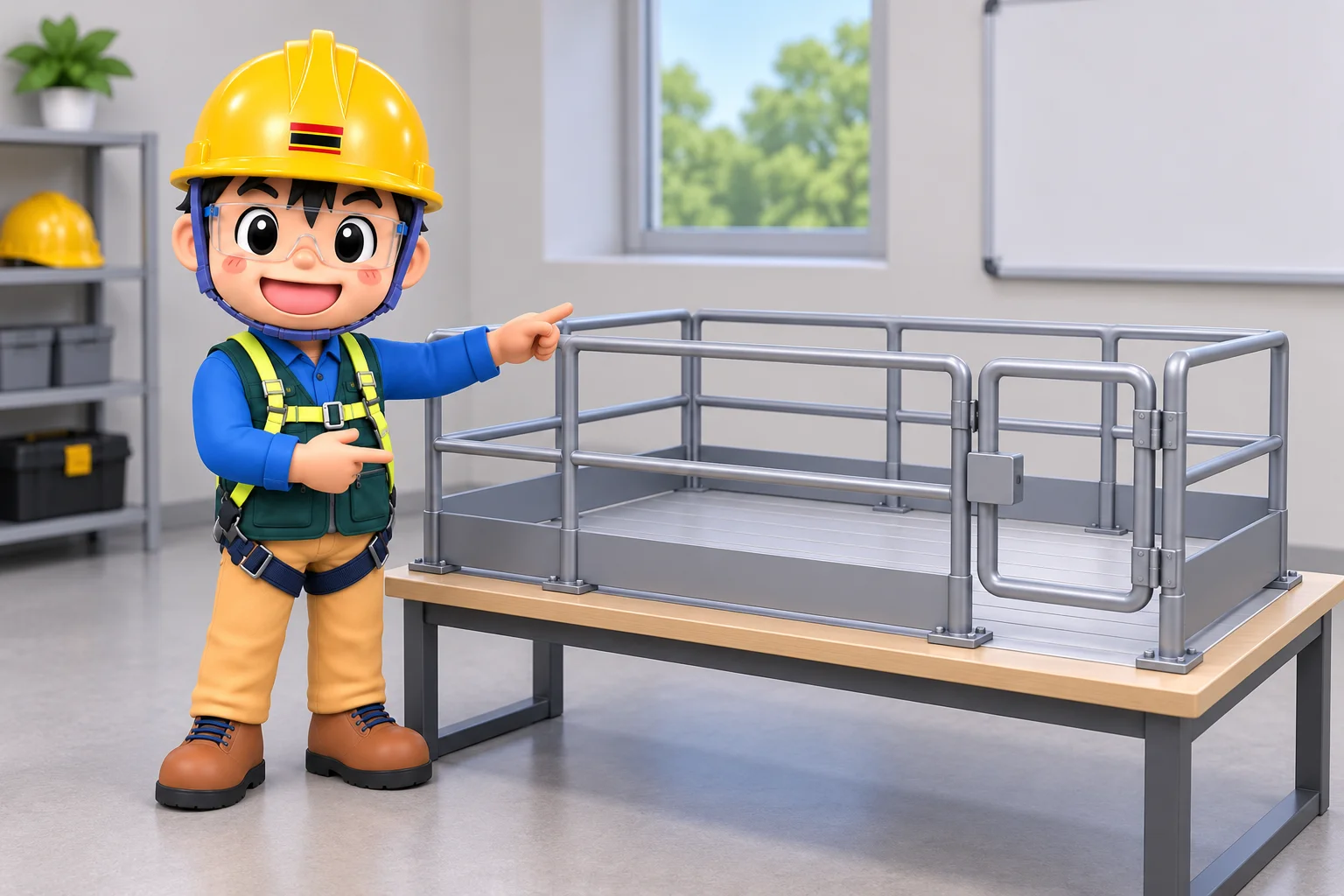
Can each worker explain the hazard area and controls in their own words? Who is told, and how is work stopped, if a platform or guardrail changes?
Source: KOSHA (South Korea) · Korean-language video · 2026-09-14
Fall prevention ([외국인노동자를 위한 핵심 한국어] 추락방지를 위한 안전수칙) ↗
Commentary: Field Safety Briefing · Original video: KOSHA (South Korea) · KOSHA website
If playback is unavailable, open the original video on YouTube.
Compare the fall-prevention lesson with our platform and route
Compare the video’s platform, guardrail and personal fall-protection topics with the worker’s actual standing position. Distinguish protection during the task from protection while approaching it. Knowing equipment names matters less than explaining where and how controls are used.
After viewing, ask workers to describe hazard areas and routes in their own words. Resolve differences in the meaning of instructions by pointing to the actual equipment. At the same location, establish whom they notify and where they stop if a platform or guardrail changes.
- Explain the work position separately from the approach route.
- Use the worker’s explanation to check understanding of instructions.
Three elevated locations need different consideration
Treating a work platform, its edge and an access route as one generic “work at height” situation can leave gaps. Article 42 of the Korean Rules on Occupational Safety and Health Standards (산업안전보건기준에 관한 규칙) addresses work platforms where falling or stumbling may endanger workers. Article 43 separately addresses platform and walkway ends and openings. Training should first distinguish the standing surface from its edges.
Article 42(2) provides for a fall-arrest net where a work platform is impracticable, and necessary measures such as a safety harness where the net is also impracticable. Issuing personal protection without considering a work platform does not settle every fall hazard. Examine the site's constraints and the selected protection together.
Article 43 requires opening covers to have adequate strength, be secured against overturning or falling, and be marked so the opening is recognisable even in darkness. Seeing a board over a hole does not establish that it is secured. The work sequence needs to identify restoration after temporary removal and access by others in the meantime.
Explain the attachment point along with the harness
Article 44 requires suitable attachment facilities where harnesses are used at places at least two metres high with a fall risk. Supporting ropes must be protected against sagging or loosening, and harnesses and associated equipment checked before work. A photograph of a worn harness does not establish suitable anchorages, connectors and travel routes.
Ask where attachment is possible during access to the platform and whether movement creates an unconnected interval. Identify the actual attachment facility rather than accepting “some nearby steelwork”. Clearance from lower structures and rescue feasibility depend on equipment and site conditions; values cannot be derived from a brief connection demonstration.
Workers may understand the words for a harness, lifeline and connecting line differently. Tracing the start and end of the connection on actual equipment distinguishes knowing vocabulary from knowing its use. Repeating the correct word does not demonstrate correct connection.
Check understanding at the actual access boundary
Article 37 of Korea's Occupational Safety and Health Act (산업안전보건법) requires safety signs to be readily recognisable and, for the specified foreign workers, written in their native language as prescribed by the Minister of Employment and Labor. Korean text on a sign does not establish understanding. Signs also do not replace protective measures or work instructions.
Instead of asking only “do you understand?”, ask workers to identify today's entrance, covered opening and prohibited area. Where verbal answers are difficult, use equipment or illustrations and check that translated terms match actual objects. This is a method of checking understanding; it does not alter statutory training duration or completion requirements.
A route previously explained may become unavailable when access changes or another team removes a guardrail. Workers need to know where to stop and whom to contact. An earlier training signature cannot establish understanding of a change that was never communicated. Asking workers to identify the route again helps reveal such omissions.
Also consider whether workers feel able to ask questions instead of guessing. When understanding differs, reconcile the object, location and action being described rather than blaming the worker, and first separate the unusable route. Communication improvements and physical fall protection are both needed.