After changing a grinder wheel: guard, mounting and trial operation
Does fitting a new wheel make a grinder ready to restart? Separate the checks at the end of replacement from those at the start of grinding.
Start with what changed before taking the tool
After replacing a portable grinder wheel, start by checking the conditions of the tool being returned to use. The wheel, guard and intended operation must match even when the grinder body is unchanged. First state whether the task is grinding or cutting and identify the material. Select the tool and wheel for those conditions. Treating similar-looking wheels as interchangeable obscures the checks needed after replacement. Begin with the tool instructions and wheel markings together, matched to the intended operation.
At handover, it is useful to distinguish the component replaced, restoration of the guard and completion of trial operation. This is a practical way of avoiding omissions, not a separate statutory form. Even after receiving confirmation of replacement, the user should compare the tool with the actual material and position of work. Tool condition at the replacement location and the direction of fragments at the workplace are different questions.
Article 122 of Korea's Rules on Occupational Safety and Health Standards addresses guards, trial operation, defects, maximum operating speed and side use separately. Recording these conditions separately is more informative than a single satisfactory tick. A pre-work trial and a post-replacement trial also occur at different points. The following sections connect the legal conditions with checks on the actual tool.
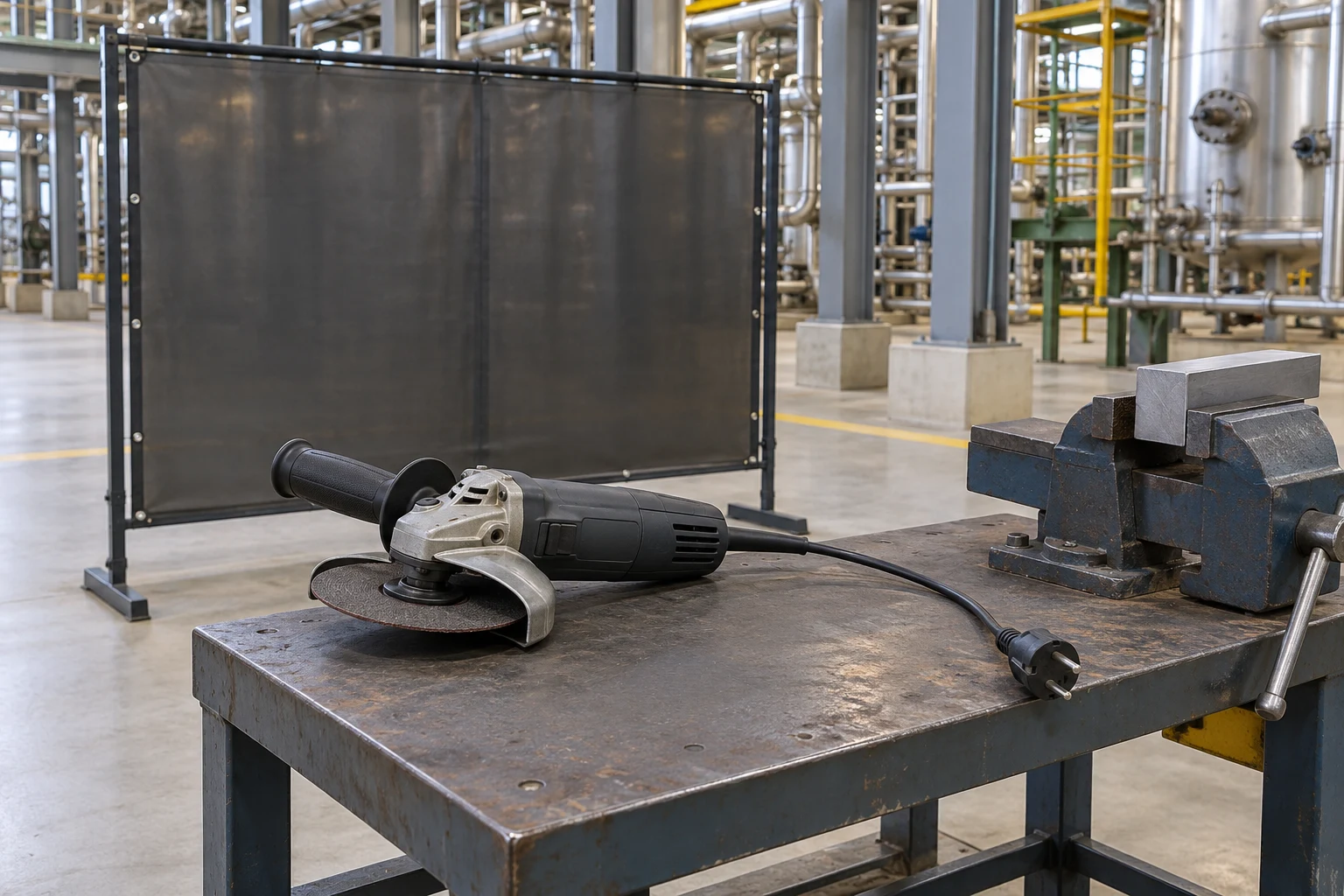
- Guard and handle: check their mounting after wheel replacement and choose a work position with the guard fitted.
- Supply connection: disconnect power before touching the wheel and control reconnection by others.
- Workpiece holding: secure the workpiece for the area being machined and the direction of tool travel.
- Screen: check surrounding pedestrian routes from the work position and adjust the screen location.
Stop rotation and control restarting before touching the wheel
Switch off and wait for the wheel to stop completely before preparing for replacement. Article 92(1) requires machinery to stop where replacement or similar work could endanger workers. Paragraph 2 requires protective measures against operation by others, such as locking with separate key control or a sign. Check who can restart the tool rather than merely reporting that it has been put down, so that hands doing the replacement are separated from starting controls.
KOSHA's guidance on portable electrical equipment calls for switching off and disconnecting power before changing accessories. Follow the manufacturer's disconnection method for the power source. Where connections could change, keep the disconnected condition verifiable by the person changing the wheel. If others share the supply connection, identify the tool being worked on first. When tool and area supply controls are handled by different people, coordinate both confirmations before intervention.
If damage to the body or lead is found during replacement, hand over that defect as well as the new wheel. Distinguish external observations from internal faults requiring maintenance assessment. Separate suspect tools from serviceable equipment and define how permission to return them to use will be communicated. This practical arrangement helps prevent a tool awaiting repair being mistaken for a serviceable one merely because it has a new wheel.
Read wheel and tool markings as a pair
Use the manufacturer's instructions to check the material, operation, dimensions and mounting conditions. Article 122(4) concerns exceeding the wheel's maximum operating speed. Compare the wheel's permitted range with the tool's operating conditions. If markings are worn or the applicable instructions are unclear, obtain confirmation from the person responsible and prepare a suitable wheel. Matching diameter alone can leave speed or intended-use differences unresolved.
Article 122(5) prohibits side use except for wheels manufactured for that purpose. Pressing the side of a cutting wheel to dress a surface changes the operation. Explain the required finish and recheck the wheel and tool combination for that use. A small change in wrist direction may change which face of the wheel carries the work; that calls for revisiting the original selection.
Check for defects before use. KOSHA identifies cracks, fine cracks and flaws as points to examine. Look for impact or damage between unpacking and mounting, and separate suspect wheels for assessment. Materials and structures differ, so follow the manufacturer's inspection method rather than applying one test to every product. Where the inspection method is unclear, give the product information to the responsible person and obtain the specified inspection method and replacement decision before preparation.
Check the tool instructions for environmental conditions alongside wheel selection. Article 303 includes moisture, dust and protective measures in equipment selection. Even with the same wheel, a new location calls for confirmation with the person responsible for installation that the tool can be used there. Keep the wheel and electrical-equipment checks distinct and proceed to post-replacement use when both sets of conditions are addressed.
- Wheel selectionMatch use and markings to tool conditions
- Replacement preparationStop, disconnect and control restart
- Protective componentsCheck guard and handle mounting
- Trial and handoverConnect the trial point with current condition
If the guard obstructs access, revisit the setup and tool
Article 122(1) requires a guard where a rotating abrasive wheel could endanger workers, covering wheels at least 5 centimetres in diameter. KOSHA also advises keeping the guard in place to control fragments during cutting. If the tool cannot reach the work, reassess the workpiece position, approach and tool rather than removing the guard. Find a setup that permits work with the guard fitted before prioritising access into a narrow gap.
Check the guard and handle mounting against the tool instructions. Saying that a component has been tightened does not establish how the operator will hold the tool or stand. Confirm grip and working space, then secure the workpiece. The vise in the illustration identifies an object to check; the actual holding method depends on the workpiece and task. Prepare support so the worker is not left trying to hold an unstable workpiece with one hand while controlling the tool with the other.
The guard also connects with control of flying material around the work. Article 90 requires covers or enclosures where flying workpieces or other material could endanger workers, with a separate PPE exception where the nature of work makes installation extremely difficult. Consider passers-by and possible fragment paths before setting screens and the work position. Prepare tool guarding and surrounding access control together, while explaining whom each measure protects and along which path.
Distinguish the two trial-operation points
Article 122(2) requires trial operation for at least one minute before starting work and at least three minutes after replacing a wheel, together with checking the machine for abnormalities. Combining these into one routine tick makes the test condition unclear. If replacement and use are handled by different people, confirm who conducted the post-replacement trial and what result was handed over. The user's pre-work check must concern the tool actually being used.
Trial operation includes both elapsed time and observation for abnormalities. Prepare according to the tool instructions and check the rotating part and people's positions before starting. Stop if an abnormality is found and refer it to the person responsible for assessment. Where the user cannot judge the condition, request inspection rather than repeatedly running the tool to become accustomed to it. Report sound or vibration that differs from the usual condition and have it assessed against the machine-specific manufacturer's instructions and inspection procedure.
After the trial, check that the result still relates to the tool prepared for use. If the guard has moved or the wheel has been removed again, revisit whether the checked condition is still present. A handover that identifies who handled the tool between replacement, trial and work helps connect the completed check with its current state. This is a management method for maintaining continuity, not a way to shorten or replace the statutory trial periods.
The last boundary before taking it to the work position
Once the grinder is prepared, extend the check to the place where sparks and fragments will travel. A changed workpiece position can require a different grip direction and screen position. The rotating-part contact, flying fragments, dust and noise identified by KOSHA can be assessed more specifically at the point of use than when taking the tool out of storage. Prepare PPE and work-environment measures through the task assessment; a completed wheel-change check is only one part of that preparation.
In refining and chemical workplaces, introducing grinding may itself affect permit conditions. The existing hot-work and permit-change articles address combustible materials and spark paths. The question here is whether the prepared tool is being used for the exact task authorised. Before changing the workpiece or location, revisit whether the surrounding measures remain effective and communicate with the responsible person. Follow the workplace permit process and confirm that the scope understood by the worker matches the authorised scope.
When returning the tool, it is useful to report abnormalities found during use and the replacement status the next person needs. The next user has the present assembly and the information handed over. Connecting segregation of defective equipment, replacement and trial results makes the next starting point clear. Ask at the actual tool: does this wheel suit the task, are protective components in place, and does the checked post-replacement condition still apply?