Register temporary hoses and hand over removal
Register a temporary connection with its purpose and end condition. Reconcile the list and the physical installation before handing over removal or approved retention.
Set the end condition when the temporary connection is installed
Management starts when the hose location is selected. Operations and the work owner first agree on its purpose and the event that requires removal. Completion of cleaning or testing is different from restarting equipment. Record the work end condition separately from the checks required before restart, so the next shift can identify the remaining connection without relying on its installer.
Register the actual temporary connection as a unit. Recording only one hose end makes a changed connection at the other end easy to miss. Identify the supply side, receiving side and intervening components against the same entry. If the purpose changes, review both the recorded purpose and its end condition and retain the current state.
Distinguish conditions that require the connection to remain after work. A common completion label for planned removal and retention under review obscures the next action. The responsible department should identify who decides removal or retention, who verifies the physical state, and who receives outstanding items. Keep unresolved items visibly open until retention conditions are approved.
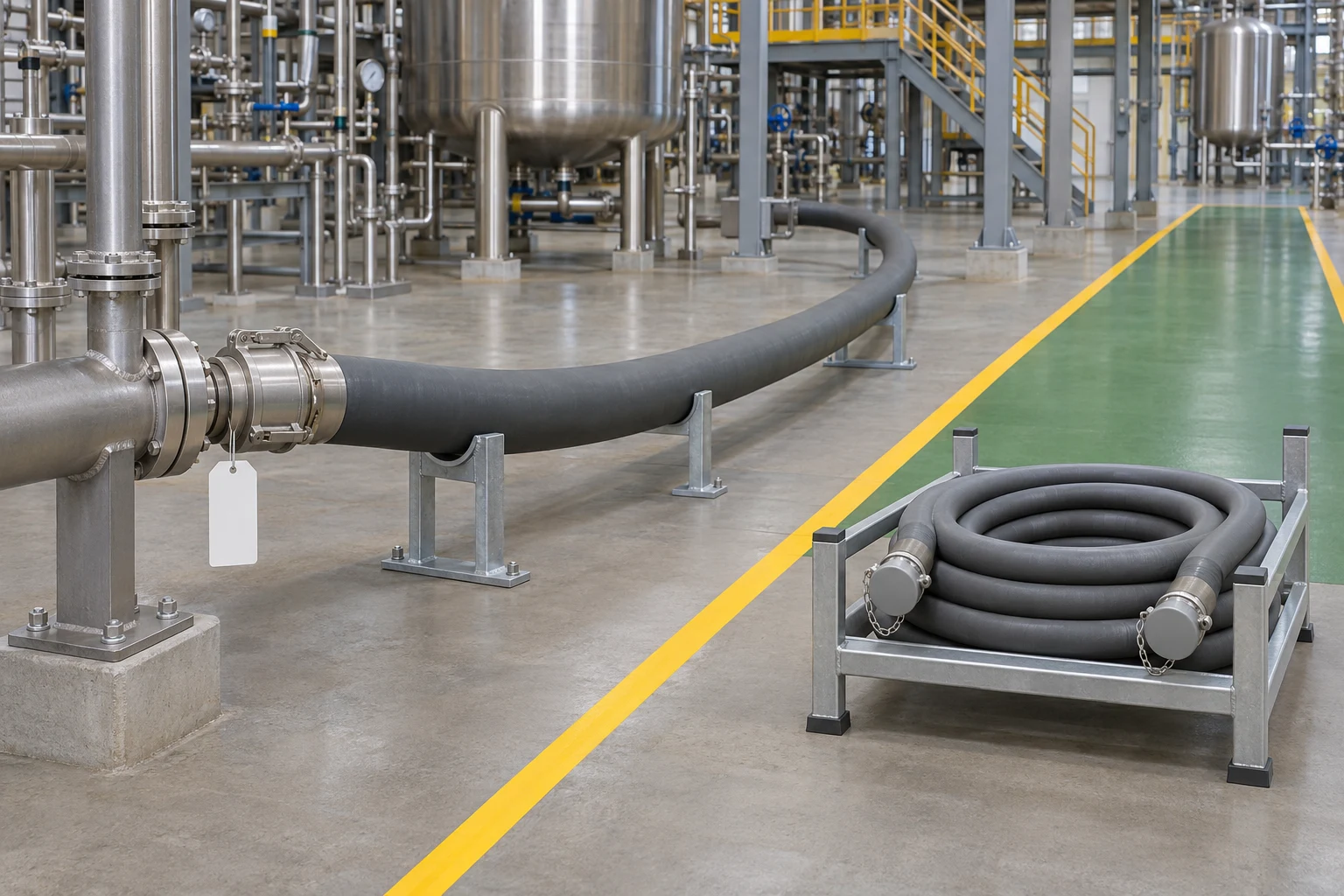
- Connection tag: match the registered location and purpose to the physical endpoint.
- Hose coupling: link the applicable connection and leakage checks to this joint.
- Hose support: check support and passage space after routing changes.
- Recovered-hose rack: confirm item condition, recipient and clearance of passageways.
Connect the register entry to both physical endpoints
A useful entry links a unique identifier, location, purpose, installer, removal or retention condition, and verifier. Describe the location through existing equipment identifiers that lead to the actual connection, rather than only a broad area name. Use the field tag to find the corresponding entry and assign responsibility for replacing a missing or unreadable tag.
Read the entry and follow the connection from supply to receiving point. Match the indicated hose to the register and check intermediate connections and diversions against the record. Drawings and photographs can support location identification. Since photographs capture a past state, also check whether reference material has been left unchanged after the connection was altered.
Where several teams work in one area, designate a single register owner. Execution teams report installation and changes; the owner updates the register. Different names for the same hose can create handover omissions, so align field identification with the record. Keep an ambiguous item unresolved until the verifier has established which physical connection it refers to.
Make service conditions traceable from the entry
Article 227 of the Korean Occupational Safety and Health Standards Rules applies to specified work introducing hazardous substances in liquid form through hoses or pipes into designated chemical equipment and similar containers. Secure coupling and leakage checks precede that work. A temporary service period does not remove those checks. Establish applicability from the material and activity, and use the register to link the checks to the connection.
Review corrosion prevention for chemical equipment and piping under the conditions of Article 256. Prepare the basis for comparing material type, temperature and concentration with contacting materials. Match hose material and operating conditions to product documentation and approved site criteria. A visually similar replacement still requires a supported service-condition assessment and an updated entry.
KOSHA's Practical Guide recommends marking the rated operating pressure of hoses used in transfer equipment handling controlled substances and remaining within that rating. Its discussion of flammable-liquid filling addresses secure joints and leakage checks. Use this sector-specific supporting material to review readable ratings and records, then assess suitability against the actual substance, temperature, pressure and product documentation.
Handover sequence
| Stage | Owner | Decision or check | Record |
|---|---|---|---|
| Register | Operations and work owner | Agree purpose, endpoints and end condition | Identifier, installer, verifier |
| Verify installation | Work owner and verifier | Match service conditions and permit | Results and open actions |
| Shift handover | Outgoing and incoming persons | Confirm remaining connections and next action | State and ownership |
| Prepare removal | Owning department and team | Identify removal and retention items | Conditions and work owner |
| Remove or retain | Execution and approval owners | Apply restoration or retention process | Completed scope and approval |
| Reconcile before restart | Verifier and operations recipient | Compare list, field and open conditions | Final state and responsibility |
Link installation verification to permit records
Connect the physical verification to its register entry. Separating installation completion from conditions for starting use makes the record clearer. The person checking the joint, hose condition, destination and specified service conditions records the result. Assign remaining corrections and the next verification point, so an installation-complete label is not mistaken for permission to use.
KOSHA Technical Support Regulation (KOSHA GUIDE) C-C-49-2026 addresses joint site inspection and identification of required precautions before permit issue. For permit-controlled work, link the temporary connection to its permit and work plan. In addition to the permit reference, compare the connection's current purpose and location with the authorised work in the field.
The record can also cover routing. If the hose intrudes into access space or interferes with another activity, assign responsibility for support, protection and route coordination. Following relocation, check whether the relationship between endpoints has changed. Complete the handover only after the recorded location and actual arrangement have been reconciled.
Review remaining connections together at shift handover
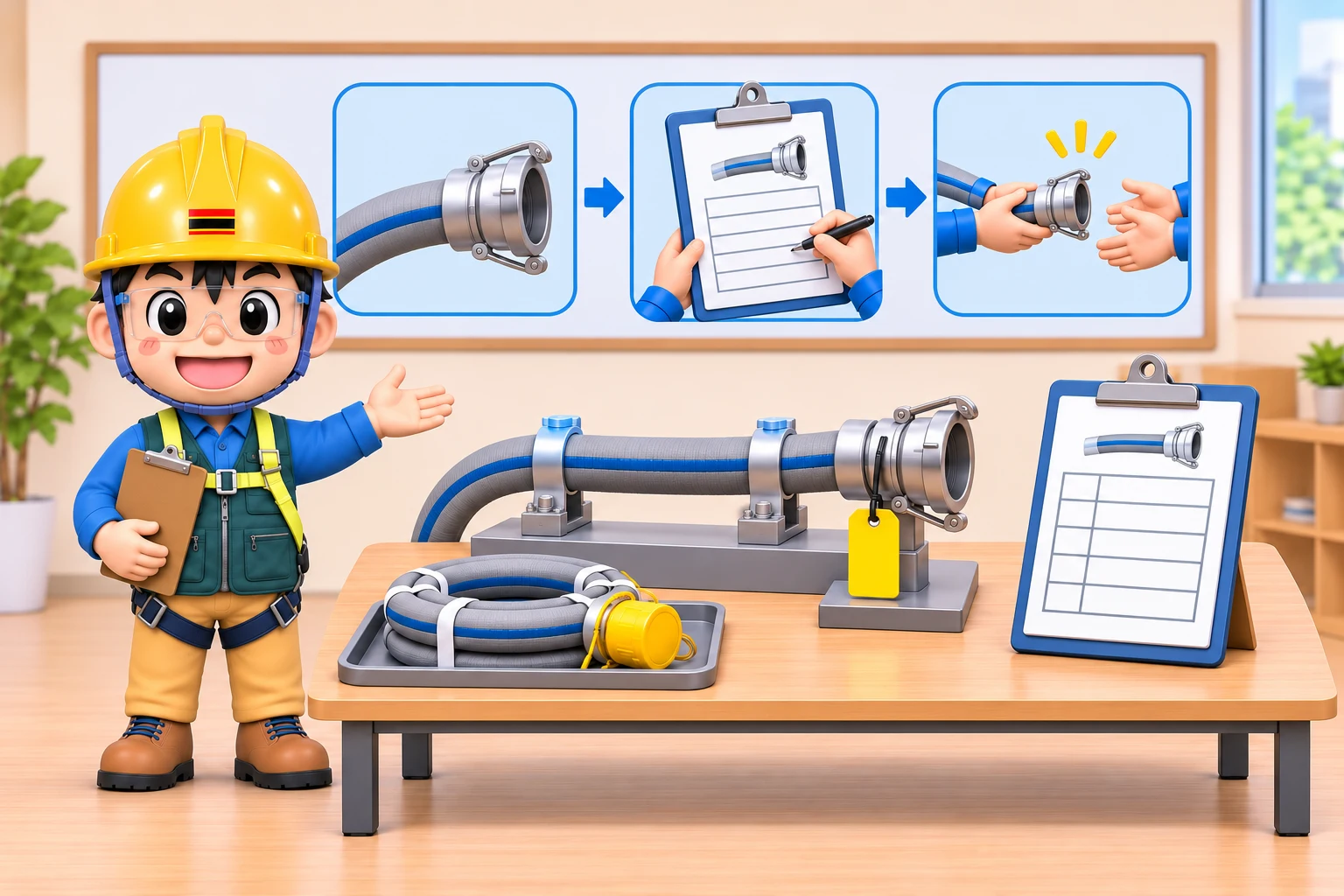
Begin with the list of connections still present. Distinguish states that require different actions, such as in use, stopped, awaiting removal and retention under review, and assign an owner to each. Discuss open items before completed ones so ownership of the remaining connections stays clear. The outgoing person explains the current state; the incoming person confirms the next action and its conditions.
For permit-controlled work extending beyond a shift change, C-C-49-2026 provides for renewed field verification against permit conditions. Separate the fact that a connection remains from the decision that it may continue in service. If work or safety requirements change, review them under the guidance and site permit process and pass the updated conditions to the incoming person.
Record why an item could not be physically checked and who will follow it up. Keep the unresolved location visible rather than deleting the entry or marking it complete. Distinguish restricted access preventing verification from completed removal. When responsibility changes again, transfer the outstanding conditions with it to preserve continuity of ownership.
Identify removal and retention items in the field
During removal preparation, confirm with the responsible person that the recorded removal condition has been met. A scheduled finish alone does not identify a connection for disassembly. Compare current use with connections needed for subsequent work. Match each removal or retention decision to the physical identifier, checking each entry rather than treating nearby connections as one item.
Disconnect and dismantle hoses under the equipment's approved work procedure and precautions. The handover should state who performs the work, what must be checked before starting and who verifies the result. Separate reports of starting disconnection from confirmation of disconnection, recovery and restoration, so intermediate states reach the next person. Record only the scope actually completed.
Check recovered hoses together with restoration of the location they served. Distinguish items ready for storage from those requiring inspection and identify the recipient. Verify the process-side restoration required by the relevant procedure before recording its outcome. Link the entry to the recovered item's location and any remaining field connections, assigning outstanding actions onward.
Transfer continued use into a retention approval process
When a temporary connection must remain, communicate the reason and required duration or end condition to the responsible department. Merely appending retention to a completed work record leaves inspection and removal ownership unclear. Route the decision through site management-of-change, inspection and approval processes. Record the approval basis and management owner once the decision is made.
Gather decision material against the physical connection and current service. Link the original purpose, present destination, material and operating conditions, inspection results and needed protection. Distinguish missing information from completed decisions and assign the required supplementation. Tell the recipient where the decision record can be checked instead of relying on a verbal agreement to continue use.
After retention approval, preserve the link between the entry and field identification. If management transfers to permanent equipment records, link the new record and responsible department before closing the temporary entry. Pass any remaining inspection or later removal conditions onward. Distinguishing closure of the register entry from continued equipment use maintains traceability.
Reconcile register and field in both directions before restart
Before restart, check the physical state of every registered item and also check that each remaining temporary connection appears in the register. A one-way search from the list can miss unregistered connections. Distinguish completed removal and restoration, approved retention, and open items, recording the basis of each decision. Refer unclear items for the follow-up needed for the equipment restart decision.
Reconcile permit completion with temporary-connection disposition. The general hazardous-work permit form in C-C-49-2026 provides fields for completion time, worker, attendee and restoration status. Link those records to the register to establish the state handed over. Where a completed permit coexists with an unresolved entry, the relevant people should review and reconcile the records.
The final handover should briefly state the verified scope, outstanding conditions and the receiving department's next action. The verifier records what was physically checked; the recipient confirms the record location and management responsibility. Retaining closed-item history supports comparison when the location is used again. Complete the sequence by delivering the information required for the responsible person's restart decision.