Prepare before manually moving drums and parts
Verify the load and grip, prepare an aid and receiving position, and agree handling roles and waiting positions before moving.
Identify the object before touching it
Identify the exact drum or replacement part and its starting and receiving positions. Containers of the same size can have different contents and remaining quantities, and attached components affect handling. The requester and workers need to be referring to the same object. Find reliable product information and records instead of estimating weight by briefly lifting it.
Article 663 of the Korean Occupational Safety and Health Standards Rules requires maximum effort to prevent excessive weight from imposing undue musculoskeletal strain during manual lifting. First examine why a manual lift is needed. Changing the destination or storage height, reducing lifts, or selecting suitable handling equipment can reduce reliance on physical strength.
With the object stable, identify parts that could move during handling. Check the drum closure and exterior, loose attachments, projections and grip locations. Hold preparation and contact the responsible person if leakage, damage or another condition needs attention. Obtain handling information rather than touching unknown contents or hot surfaces to identify them.
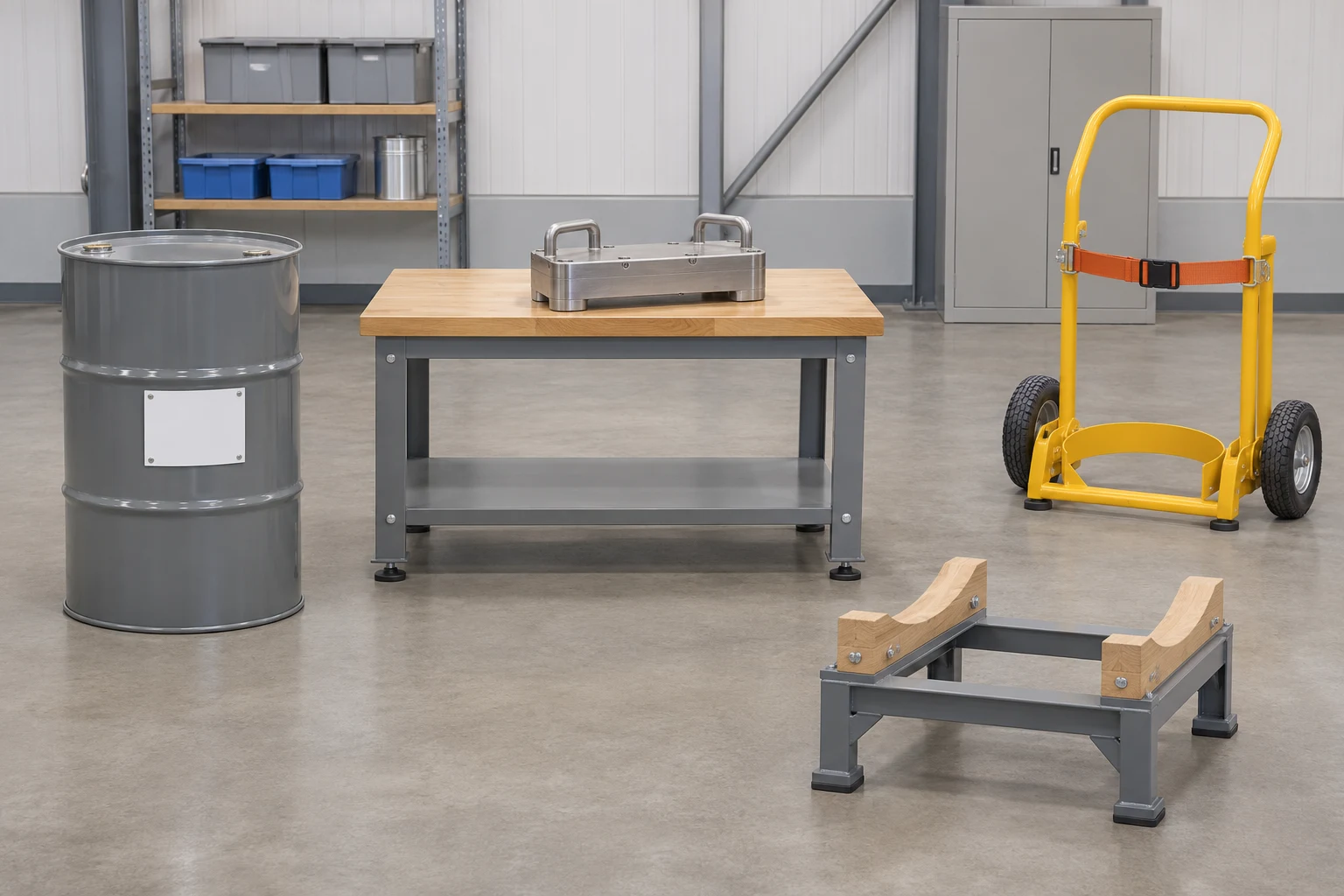
- Drum information plate: match weight information including contents and attachments to this object.
- Part handles: confirm the intended grips, condition and hand clearance.
- Drum handling device: check suitability, wheels and restraints for the intended object.
- Receiving support: check suitable support and space to withdraw hands and feet.
Connect weight and centre of gravity to the same object
Article 665 specifies measures for manual lifting of objects weighing at least 5 kilograms. For regularly handled items, workers must readily find workplace information about weight and centre of gravity; difficult-to-handle items require handles or suitable aids. Read the scope and measures together. The threshold for these measures and the assessment of a manageable load are distinct decisions.
Check whether the weight information describes the present configuration. It may describe only an empty container rather than its contents and attachments. Treat any mismatch as an open check. Use construction information and the actual configuration to assess the centre of gravity rather than assuming it lies at the geometric centre. Communicate potential changes in balance so the handling method can be reviewed.
Workers also need a safe place to read the information. Arrange another way to verify it if viewing the marking would require tilting the object or putting a hand underneath. A brief record linking the source, object and unresolved condition helps the next shift. This is a preparation method; verified weight still needs to be considered alongside grip, posture and surroundings.
Match grip locations and handling aids first
KOSHA Technical Support Regulation (KOSHA GUIDE) A-G-17-2026 assesses the task, load, environment, individual capabilities and aids separately. Check whether an object is heavy, bulky, difficult to grip, unstable, sharp or obstructs the view. Apply this by identifying both the space needed to grip it and the space to withdraw hands when placing it down.
A visible handle does not complete preparation. Check that it is intended for handling, is secure and undamaged, and can be gripped with the required protective equipment. Compare any proposal to use a projecting pipe, closure or improvised strap with the handling information. Where a suitable grip is unavailable, review aids and layout instead of relying on extra hand force.
Match a trolley or drum handling device to the object and its specified conditions. Inspect wheel suitability for the floor, handles and any fitted brakes, and confirm the specified restraint method. Damaged wheels or restricted space can leave substantial pushing and pulling effort. Select and inspect the device and share its use method before moving the load.
Handover sequence
| Stage | Owner | Decision or check | Record |
|---|---|---|---|
| Identify | Requester and handler | Check contents, attachments and condition | Object, state, unknowns |
| Select method | Work planner | Assess weight, grip, strain and aids | Evidence and chosen method |
| Prepare positions | Preparation owner | Check start, route, receiving support and clearance | Actions and completion |
| Share roles | Instructor and participants | Confirm operator, waiting positions and stop conditions | Owners, signals, understanding |
| Decide readiness | Work owner | Check changes and completed actions | Start or hold rationale |
| Stabilise and hand over | Team and recipient | Check support, restraint and open conditions | Position, state, next owner |
Work backwards from a prepared receiving position
Prepare a stable receiving position suited to the object and its placement direction. Verify that a bench or support is suitable for the load, and inspect instability or tilt in the support and floor. Clearing other objects after arrival can leave workers holding the load while waiting. Preparing the destination and access space therefore comes before departure.
KOSHA’s Practical Guide considers load shape, size, handles and weight distribution alongside posture, travel distance, flooring and lighting. At the destination, check where workers stand and whether there is room to turn the object. Arrange withdrawal space first if hands or feet could remain between the load and supports during placement.
Check the route with the actual object and aid dimensions in mind. Clear obstructions, trip hazards and slippery areas. Confirm conditions with the controller of any segment shared with vehicles or maintenance workers. Resolve route changes or an unprepared destination before departure. Even a short route needs separate consideration at thresholds and turns.
Share roles and waiting positions beside the object
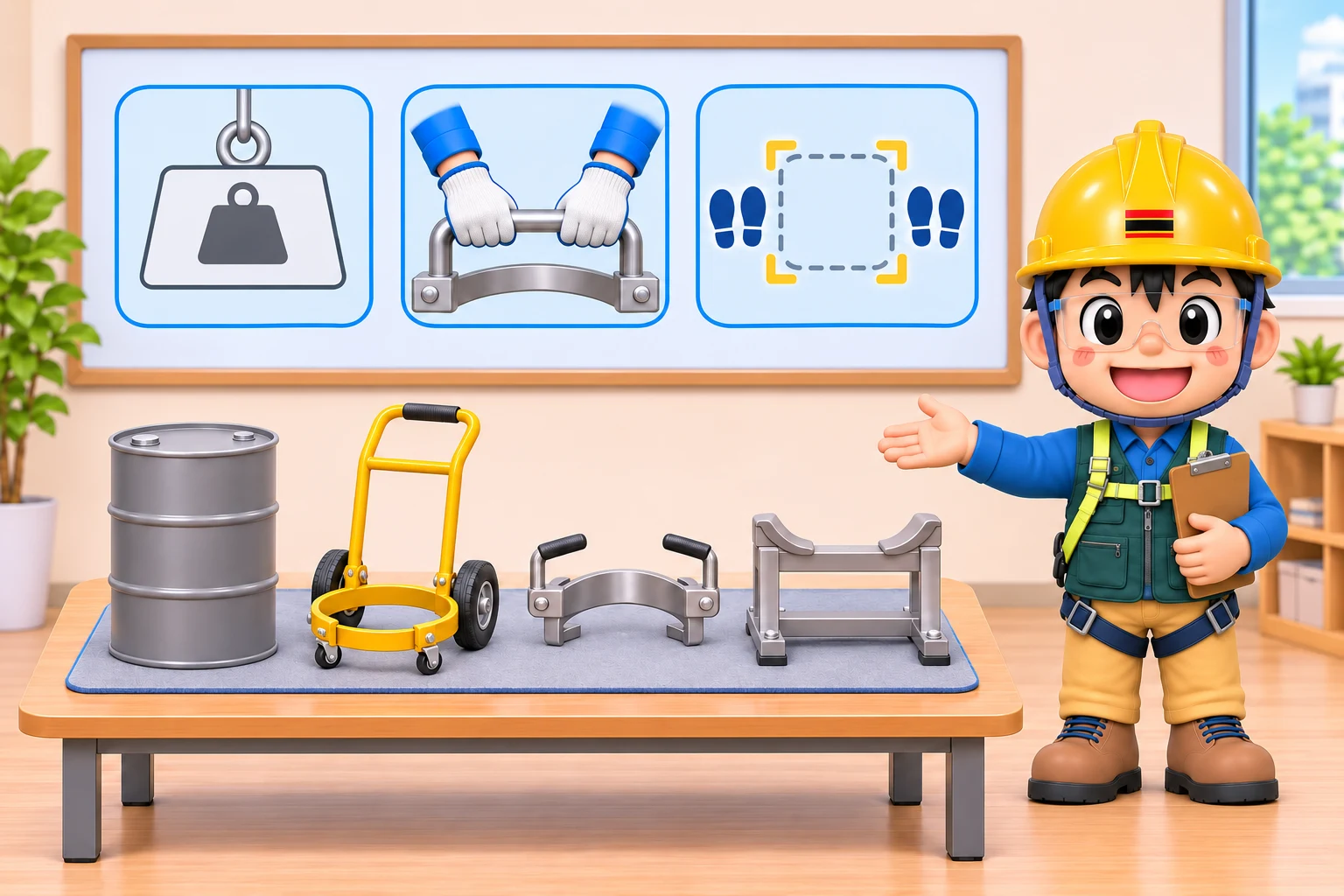
Distinguish the people handling the object from those waiting nearby. Before starting, agree who explains the sequence, who operates the aid and where others wait. Choose waiting positions outside the object’s movement or settling area without blocking passage. A nearby observer should not be counted as a load handler without an assigned role.
For coordinated lifting or placement, agree start and stop signals and check they can be heard. KOSHA’s Practical Guide advises a consistent signalling method when workers handle a load together. Enable everyone to report lack of readiness or a change in balance. Explain the sequence before starting to reduce one-sided movement.
Ask workers to restate their own action, waiting position and stopping conditions. Pointing to the stable object and clear route helps reveal missing preparation. If the planned position restricts reach or visibility, change the arrangement and check again. Record the agreed roles and unresolved measures separately from attendance at instruction.
Adjust repetition and working time together
After checking a single load, examine how often the task repeats. Article 664 requires appropriate allocation of work and rest based on weight, handling frequency, distance, speed and other burdens. Include collection, placement and return of empty containers or aids when reviewing the actual repetition.
If incoming items dictate the pace before workers are ready, assign responsibility for controlling that pace. Review supply intervals, bench height, intermediate storage and handling frequency before focusing only on posture. A-G-17-2026 also considers work rate, recovery time and repetition. Reassess time allocation when the workload changes.
Identify whom workers contact about fatigue or difficulty and connect pain or handling problems to work adjustment. Address detailed personal information through the appropriate responsible process; share the operational conditions, such as revised roles and equipment, with the team. Readiness depends on a workable method, not merely filling the planned headcount.
Check changed conditions immediately before movement
Connect the weight information, grips, aid, destination and roles in a final readiness check. A change in object orientation or supports can alter hand and foot positions even after individual checks. The preparation owner checks the changed condition and completed measures before signalling the start. Assigning an action owner and completing the action are separate states.
Article 666 requires workers to be informed of postures that reduce physical strain during manual lifting. Apply this to the actual object and working height. Where there is no space to stay close to the load, change the layout or equipment too. Difficulty gripping with protective equipment or standing securely belongs in the preparation actions to resolve.
Use the agreed stopping method and notify the responsible person if unexpected resistance, balance changes, loss of visibility or an obstructed destination arise. Share the stabilisation method beforehand. Maintain assigned roles so hands and feet stay out from beneath moving objects and extra people do not suddenly intervene. Review the changed cause and method and inform the team before restarting.
Confirm stable placement and hand over the next action
Finish handling after confirming stable placement on the intended supports. Where rolling or overturning remains possible, involve the person responsible for restraint suitable for the object and storage conditions. A state that requires continuous hand support is not a completed handover. Also check the next person’s access and grip space.
Return equipment to its designated storage position and separate devices with damage or malfunction from usable equipment. Repeated stopping points and difficult grips provide input to the next plan. Review aid suitability and bench layout before asking workers simply to become more accustomed to the movement. A-G-17-2026 also calls for review of control effectiveness and assessments.
Link the object, receiving position, remaining securing or checking actions and next owner in the handover record. Distinguish normal completion from outstanding work. Preserve the preparation linking weight, equipment, roles and stable placement. Clear ownership of remaining conditions helps prevent the next team from moving an object solely because an earlier task is marked complete.