Match maintenance steps to hazards and controls
Define the scope, divide work into actions, and connect each step with exposure conditions, controls, owners and field verification.
Agree the beginning and end of the assessed task
Define what people will actually do, beyond an equipment name and maintenance label. Distinguish the starting condition from the handover condition and identify the handling, access, operation and clearing activities between them. Position, tools and dismantling scope can change when exposure occurs. Compare the request with the equipment so the team can describe the same scope and its limits.
Article 36 of the Occupational Safety and Health Act requires identification of hazards associated with equipment, substances and work activities, assessment of risk, and implementation of improvement measures. Each step should therefore identify who acts, where and when. Check familiar work against current conditions, and compare any previous analysis with today’s equipment, tools and surrounding work.
Combine the knowledge of the people doing the work with information from the equipment owner. Worker participation helps reveal hand access and body clearance that drawings may omit. Different assumptions about scope can disconnect hazards from controls. Record the object, starting conditions, end state and participants before dividing the task into steps.
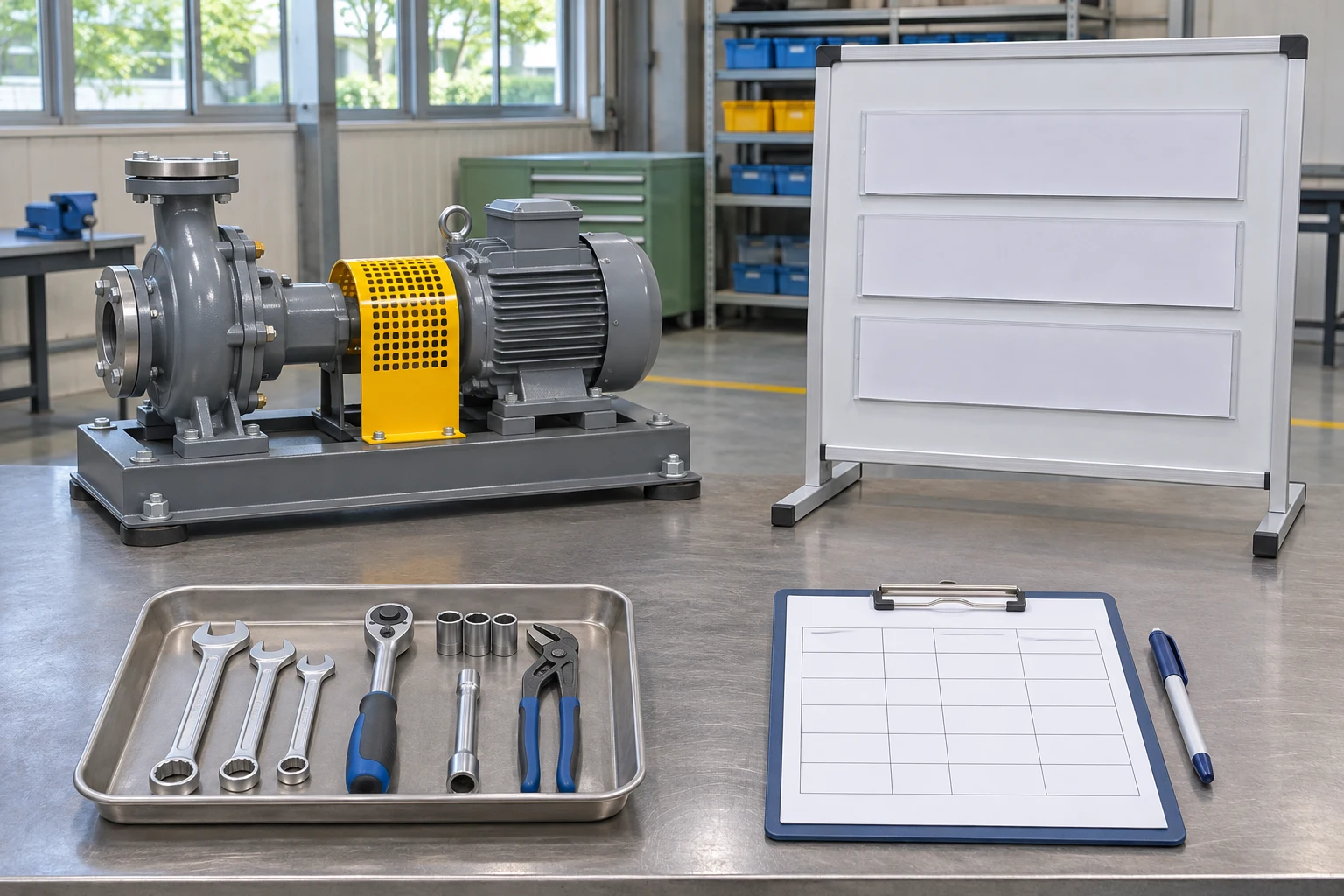
- Maintenance model: match the starting state and end scope to equipment information.
- Step board: distinguish the action sequence and changes in condition.
- Tool tray: check how tools and working positions affect each step’s hazards.
- Analysis record: connect each step with hazards, controls, owners and field checks.
Divide work into observable actions
Name each step using an action and its object. Broad labels such as preparation, maintenance and completion can hide the point at which exposure occurs. Excessive detail can also obscure important transitions. Adjust the steps when worker position, tool use, component support or interaction with other people changes.
KOSHA’s Practical Guide describes selecting the work and observation scope, identifying its steps, and examining hazards and causes. Compare the procedure with safely observable repeated work to find omissions. Never remove safeguards or reenact dangerous actions to obtain information. Where observation is unavailable, examine technical information and worker explanations and retain unresolved conditions.
Check the first and last steps as well as the main operation. Bringing tools, temporarily placing components and clearing residues can expose other people. Reconnect preparation and clearing if the table covers only the central maintenance action. Choose enough steps to distinguish hazards and controls, and identify the condition needed before progressing to the next action.
Identify how each step exposes people to a hazard
Identify who occupies each position, including assistants, inspectors and adjacent workers. Compare tool travel and possible component movement with body positions. Rather than naming only an outcome such as crushing or impact, record the contact or change in condition that could cause it.
Where substances or energy are involved, examine both the current state and the information supporting it. A maintenance label does not establish that hazards have been removed. Follow the applicable isolation and verification procedures, and connect required states with their verification owners in the step table. Retain missing evidence or mismatches as unresolved readiness conditions.
Connect surrounding conditions to the particular step. Shared access or temporary storage can change posture, escape space or the reach of adjacent work. Communicate the cause and required conditions to the responsible departments. Identifying the exact interaction makes it easier to assign a control and a person to verify it.
Handover sequence
| Stage | Owner | Decision or check | Record |
|---|---|---|---|
| Define scope | Requester and workers | Match object, start and end states | Scope and participants |
| Divide steps | Assessment team | Identify actions and transitions | Sequence and evidence |
| Identify hazards | Workers and relevant departments | Locate exposure interfaces | Conditions and unknowns |
| Assign controls | Implementer and verifier | Match measures to causes and owners | Controls, owners, checks |
| Verify on site | Relevant people and workers | Compare documents, objects and implementation | Results, holds, time |
| Communicate and improve | Instructor and participants | Review changes, understanding and actions | Current revision, understanding, owners |
Match controls to the cause of each hazard
Connect every hazard to a measure that reduces its cause or prevents exposure. Consider changes to the method and layout, then specify required equipment measures and conditions. Generic instructions to be careful do not identify what to prepare. State what must be installed, which space must be available and which state must be verified, including whether the hazard continues into the next step.
Distinguish the person implementing a measure from the person checking it. Where one person prepares equipment and another starts work, define the information to be handed over. Completion should identify the object and scope checked. Communicate open conditions to the readiness decision owner and check implementation alongside assignment of responsibility.
The Act requires both establishing and implementing improvement measures. Confirm that the measures recorded in the analysis have been prepared and remain suitable for the actual task. Reconcile interacting controls with position and sequence. Resolve uncertain risk decisions with the responsible reviewer and supporting information before authorising the affected activity.
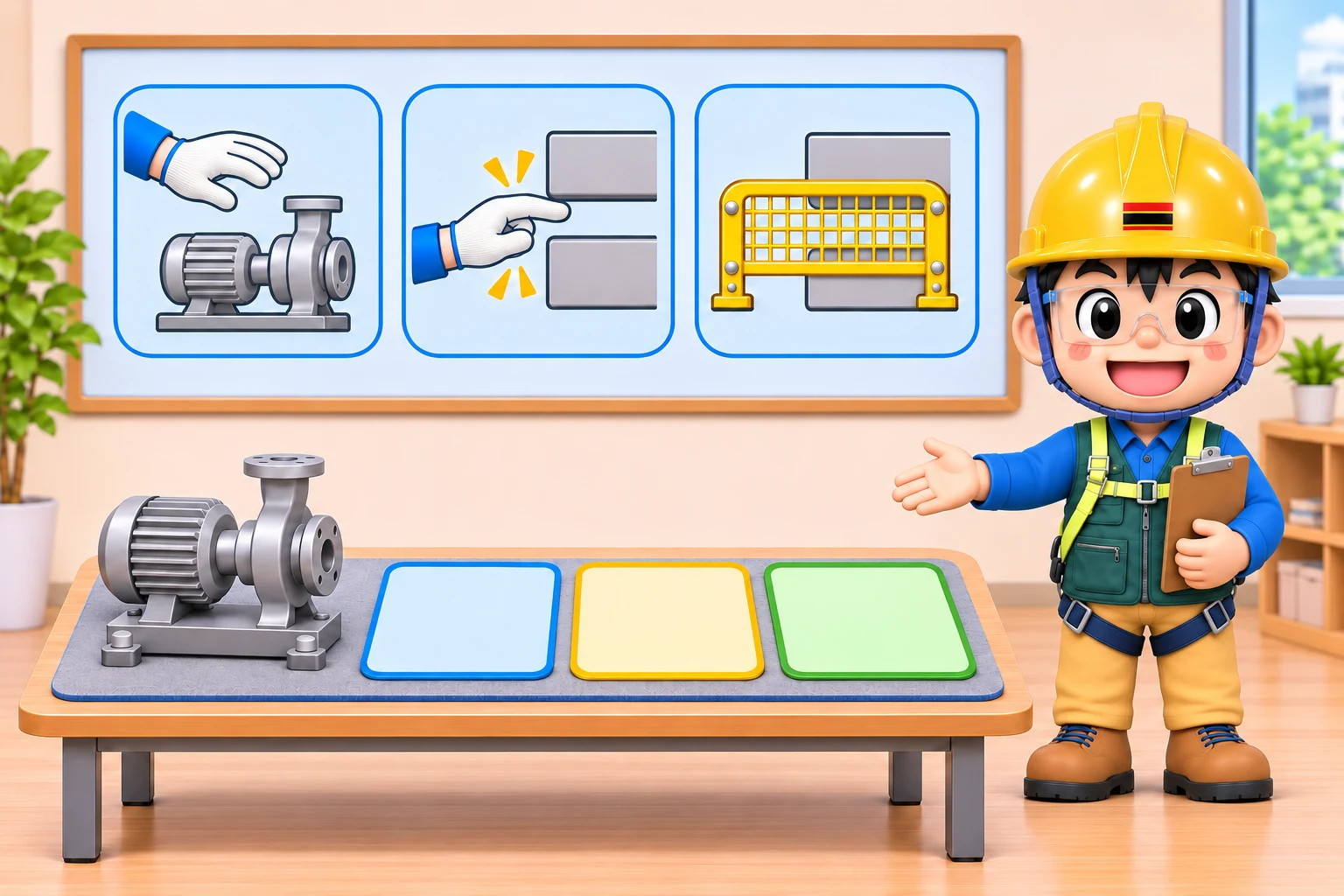
Cross-check recorded controls against the equipment
KOSHA Technical Support Regulation (KOSHA GUIDE) C-C-49-2026 includes joint field checks and comparison of risk assessments, work plans, technical information and site conditions. Verify that the step analysis concerns the same object and scope. Resolve conflicting equipment identification or location information with the responsible people at the equipment.
Check the location of each measure against where workers will stand. Having an item available is different from being able to use it where needed. Resolve blocked space or unclear responsibility for maintaining a control. Link the checked object, open actions and verification time so the next person can understand the same condition.
Separate unresolved checks from completed ones. Record which step remains on hold, who must verify what, and who receives the result. Communicate the reason for holding so workers do not improvise around missing preparation. After verification, update the analysis and explain the applicable sequence and controls.
Review the preceding and following steps after a change
When the object, tools or sequence changes, compare the affected steps with the existing analysis. Check whether preparation from the preceding step remains valid and whether the next handover condition has changed. Carry hazards and open actions across changes in responsibility, with workers and relevant departments agreeing the same revised scope.
Connect the change-related permit reissue provisions in C-C-49-2026 with the site’s permit procedure. Use the step analysis to clarify changed conditions and verify that relevant permits and plans reflect them. Distinguish the current documents from superseded copies. Participants need to understand the reviewed sequence and controls before taking part.
For a new participant, verify understanding as well as adding a name. Explain their steps, measures assigned to others and conditions for stopping and reporting using the actual equipment. Let the person describe or point out their role and the next-step condition. Resolve differences in understanding or missing information before starting.
Link communication and field checks to the same steps
Explain each hazard alongside its control in work order. Separate long lists can obscure which measure belongs to which action. Let the person responsible for a step check the information against their position and behaviour, followed by the assistant’s and verifier’s roles. Confirm that the equipment used in the explanation matches the actual object.
KOSHA’s Practical Guide connects analysis with training, communication, field checks and records. During execution, check whether the planned sequence and controls remain practicable. Record why a condition cannot be maintained and examine space, tools and work allocation rather than attributing every deviation to carelessness. Link findings to their steps for the next review.
Organise information so participants can find what applies to their work when meeting Article 36’s communication and record requirements. Use the site’s appropriate training, explanation or posting methods and verify key conditions before the task. Distinguish completed controls from open reviews, and link the document revision with explanation and verification times.
Leave records that support the next task
After the work, compare the steps performed with the controls prepared. Link departures, additional measures and impractical conditions to the relevant rows. Assign improvements and retain supporting information. Distinguish the completed task from open improvement actions so the next owner can find what remains necessary.
Retain the scope and conditions of an analysis intended for reuse. The same equipment name may involve different working heights, access directions or attachments. The next user should compare present conditions and identify revisions and field checks. Preserve the previous review as evidence while connecting the current participants and verification time.
Check whether another planner can follow the relationship between the task, its steps, exposure conditions, implemented controls and verification results. Give unresolved items an owner and disposition and communicate them. Revisit these links when site conditions change so the analysis continues to support actual preparation.