Toolbox talks: check changed conditions and stop-work triggers
In 30 seconds: make today’s changes clear
A toolbox meeting (TBM) brings a work team together before starting to align the day’s hazards and controls. If the location, sequence, nearby activities or people have changed, first check whether the previously learned method still applies. Bring the controls from the risk assessment to the worksite and invite workers to add hazards that were missed.
A completed signature sheet is not the test for closing the meeting. Workers should be able to explain the hazards and controls at their own work positions. If an action remains open or a question is unanswered, revisit preparations for that task. Ending the meeting does not authorise exposure to an unresolved hazard.
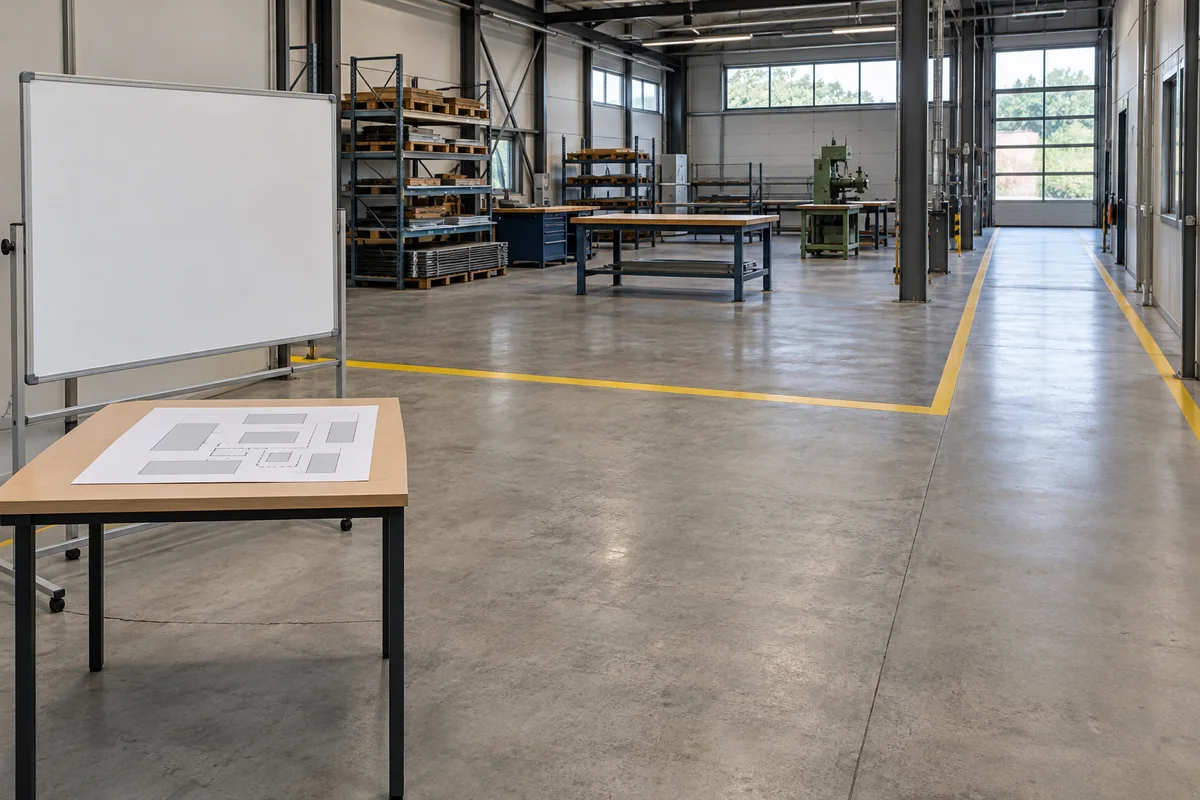
- Briefing board: check where shared material can be seen and communicate the explanation to the whole group.
- Work layout: prepare a reference for today’s work location and adjacent activities.
- Gathering space: check for a place to hear the briefing without obstructing work or traffic.
- Route: check whether access paths and boundaries have changed before entering the work area.
Conditions can change under the same job title
The actual conditions can change even when the equipment and job title stay the same. Changes to the procedure, new team members, new equipment, weather, seasonal conditions and handover warnings are suitable TBM topics. Define today’s task precisely enough to notice those differences. Reading the job title and moving straight to a PPE check leaves little room to discuss change.
Explain separately what has been eliminated or guarded by equipment and what depends on people following a method. Controls such as waiting outside an exclusion zone or coordinating the sequence with another crew need to identify who acts and where. A warning to be careful cannot replace isolation or physical protection where those measures are needed.
Even familiar information has a purpose when linked to today’s conditions. Pointing out a changed location on a drawing or showing the tools and PPE can reveal that people were imagining different things. The MOEL guide suggests using relevant props, such as having a ladder nearby when explaining its hazards.
The legal link between risk assessment and TBM
Article 36(1) of Korea’s Occupational Safety and Health Act requires employers to identify hazards, determine risk, and establish and implement improvement measures. Paragraph 2 addresses worker participation, and paragraph 3 requires participation by a workers’ representative when requested. Merely mentioning a hazard in a meeting does not complete assessment or improvement.
Article 36(4), introduced by the amendment of 19 February 2026 (Act No. 21374), requires employers to communicate risk-assessment matters to workers. It also requires them to endeavour to keep workers routinely informed of hazards that could lead to a serious accident, through toolbox meetings and other means. The duty to communicate information and the wording on ongoing familiarisation are distinct; they do not establish an identical meeting timetable for every workplace.
The February 2023 MOEL–KOSHA Guide to Toolbox Meetings recommends an approach covering preparation, delivery and feedback. Its recommendations on short meetings, small groups and relevant daily topics support implementation. Counting TBM towards safety and health training requires a separate check of the current recognition conditions for that training. Attendance signatures or meeting duration alone do not settle eligibility.
Prepare today’s work before preparing the talk
The leader first establishes the quantity, scope and location of the work, the team and the PPE needed. When contractors are involved, include their activities. Then select the day’s messages from the relevant risk assessment, procedures and recent accidents or near misses. Start by removing material that does not match today’s task rather than merely changing the heading on an old talk.
Reduce each message to something workers can use. Keep the hazard and its control together at the relevant work step: where the problem could arise, what must be completed beforehand, and who checks that condition. If the leader cannot yet explain a point, resolve it with those involved in planning or assessment before presenting it to workers.
There is no need to read every risk-assessment entry aloud. The MOEL guide recommends focusing on a small number of topics relevant to the day’s work, particularly hazards capable of causing serious injury. When too many notices bury the main point, workers may struggle to identify what they must do differently today.
Figure 3 marks visible references and boundaries.
Use open questions where everyone can hear
Even near the worksite, move the meeting if noise or other activities make it difficult to hear. People need to see the speaker and the shared material. Include those who will arrive at the task after the meeting: if they were absent, arrange to communicate the same hazards and controls before they start.
After explaining the hazards, allow workers to describe what they can see from their positions. Immediately dismissing a comment makes it harder for an unresolved concern to surface. Questions are not a test of the worker; they help find conditions missing from the plan. Act on workable suggestions and report the outcome so people have a reason to contribute at the next meeting.
Questions that invite an explanation are more useful for checking understanding than a yes-or-no response. Ask, for example, what change would require work to stop or where the access boundary lies. If answers differ, align the terminology and location, then consider whether the task can proceed before the hazard is resolved.
Language and literacy are part of the delivery method. Arrange interpretation or translation where needed and support technical terms with short explanations and illustrations. Important steps can be communicated both verbally and in simple written material. Posting a sign does not finish the conversation. Check whether workers can explain or point out the control, because the same material can be understood differently.
Figure 2 follows the checks through to the decision.
- 1 Today’s workidentify the day’s task together so the discussion has a shared focus.
- 2 Review changesexamine changed conditions to check whether existing controls still apply.
- 3 Discuss controlstalk through hazards and responses to make the checks relevant to the task.
- 4 Resolve questionsaddress uncertainties before work to reduce differences in understanding.
- 5 Check understandingconfirm how workers have understood the information and compare readiness conditions.
Fitness for today’s task is part of preparation
Check workers’ condition before explaining the job. The MOEL guide identifies factors such as heavy drinking, fatigue associated with medication and fever as potentially affecting safe work, and advises against assigning affected workers to high-risk tasks. This is a check to consider work allocation and necessary action, not an occasion to diagnose illness.
Attending the meeting does not justify leaving an unwell person on the same task. Reassess suitability and arrange necessary rest or changes to the team. Recording attendance and judging readiness to perform safely are separate decisions.
Field practitioner note
Return to preparation when a new hazard appears
Hazards not known at the TBM can emerge during work. The guide describes a sequence of stopping, looking, assessing and managing. Stop the affected task and identify what has changed. Then consider whether the knowledge, skills, training, PPE and tools needed for safe work are available, and establish measures to reduce the risk.
Workers should report problems they cannot resolve themselves so management can arrange action. Do not continue merely because a meeting was held earlier when the current conditions no longer match the agreed method. A change in scope also requires any necessary review of the work plan or permit under the applicable procedure. A short additional discussion can communicate the revised controls; it does not replace required authorisation.
After the task, review whether the agreed controls worked in practice. Carry newly identified hazards, difficult-to-implement measures and open actions into preparation for the next job. The guide recommends recording the time, task, location, participants, hazards, actions and information shared, then reporting follow-up results to workers. Follow the record through to action and communication of the result.
The DuPont incident: related plant problems treated separately
At DuPont La Porte, efforts to clear blocked piping were connected to a pressure problem inside the manufacturing building. The CSB explained that workers treated the pressure issue as routine and unrelated; methyl mercaptan escaped when they attempted to drain liquid. A useful TBM question is whether the current abnormal condition is connected to another activity. The investigation also found design and safeguard failures, so a meeting alone should not be presented as a cure for every cause. See the [DuPont final investigation case](/en/briefings/?id=SM-023).
Choose a question from this incident that relates to today’s task. Do not transplant toxic-release procedures into work without that exposure. Use the case to ask who knows about changed plant conditions and whether that information has reached the work team.
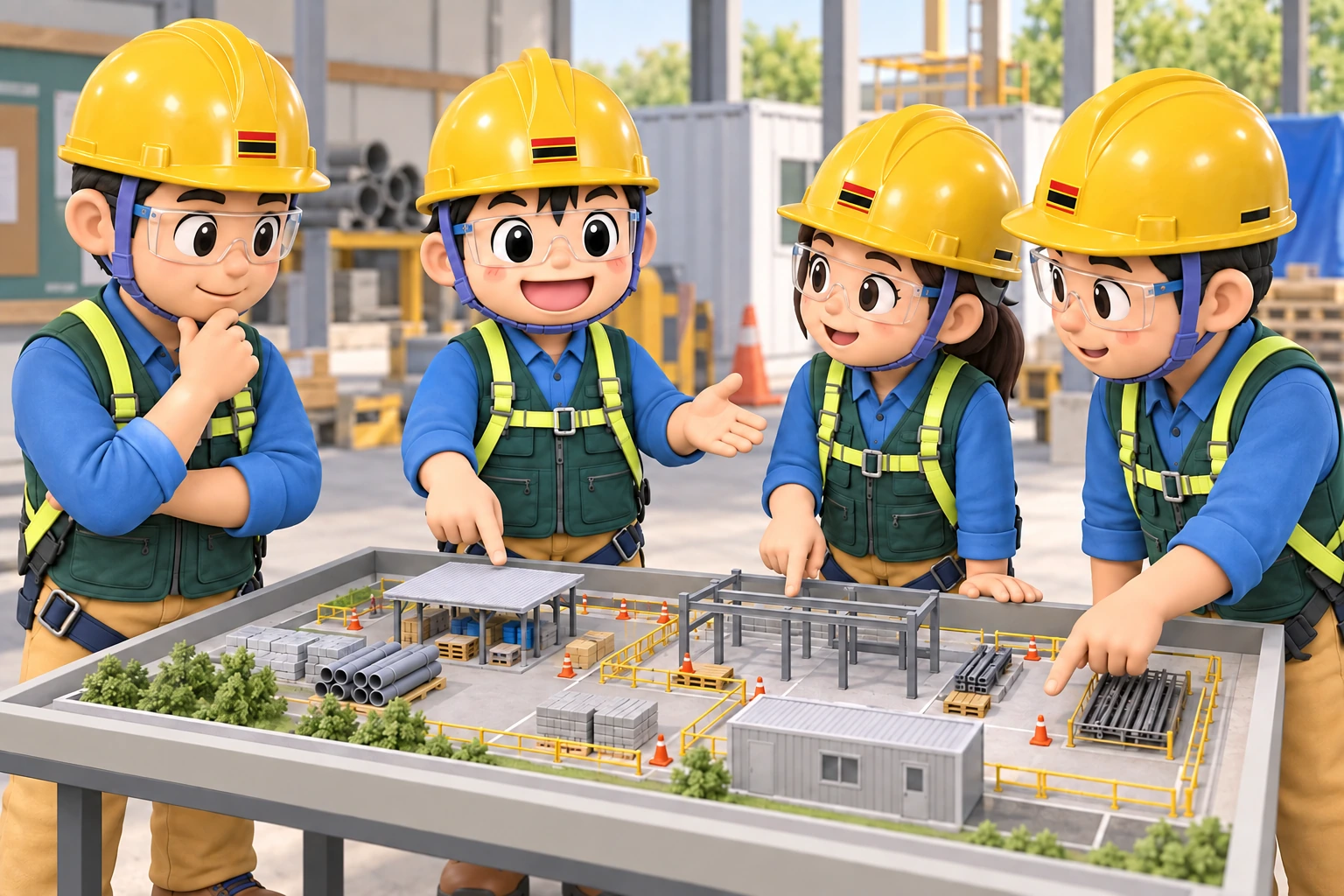
Check whether the discussion reached the task
The questions below link the discussion to actual preparation. Use them with the task-specific risk assessment and workplace procedures; they are not a substitute for identifying all hazards.
| Point | Question for the meeting | When to revisit preparation |
|---|---|---|
| Today’s changes | What has changed in location, sequence or people? | The change is missing from assessment or explanation. |
| Location of controls | Who checks which action, and where? | People understand the target or responsible person differently. |
| Participation and understanding | Can workers explain the hazards and response in their own words? | Noise, language or explanation prevents understanding. |
| Late arrivals | What will be communicated to those absent from the meeting, and how? | Information has not been shared before they start. |
| New hazards | Who receives the report after work stops, and arranges action? | A hazard emerges that the current method does not control. |
| Feedback | Has the outcome of a reported problem reached the work team? | A record exists but action or feedback remains open. |
Keep it focused without starting on unanswered questions
Set the meeting length and participation method to suit the task. Do not turn the 2023 guide’s recommendations on time or group size into a statutory minimum or maximum for every workplace. If someone does not understand the safe method, do not end the explanation simply because the planned meeting time has elapsed.
Process design, gas testing, isolation status and permit conditions each require the appropriate specialist review and verification. TBM helps people understand those results and identify missing questions. Sharing a hazard verbally does not complete preparation when the physical control is still absent. The discussion reaches the job only if people can stop and reassess when conditions change.