Prepare access and readiness of emergency washing facilities
Connect work locations to washing facilities, check access and operating space, and hand over verified supply and control readiness with open actions.
Connect substances and possible contact points
Identify where a chemical could contact the skin or eyes and which emergency washing facility serves that work. Locate the actual opening, sampling or connection point and trace access to the facility. A listing in an equipment register does not establish that workers can reach and operate it.
Article 451(3) of the Occupational Safety and Health Standards Rules requires washing facilities for immediate washing with water where controlled hazardous substances may contact the skin or eyes directly. Establish the applicable substance and work conditions. Recheck suitability when the work location or handling method changes.
Link substance information and work locations so the responsible people identify the same objects. Review relevant safety data and site procedures, and refer facility requirements to the safety and health owner. Record the area, intended facility and unknown conditions separately. Do not improvise supply conditions or operating methods from assumptions about the substance.
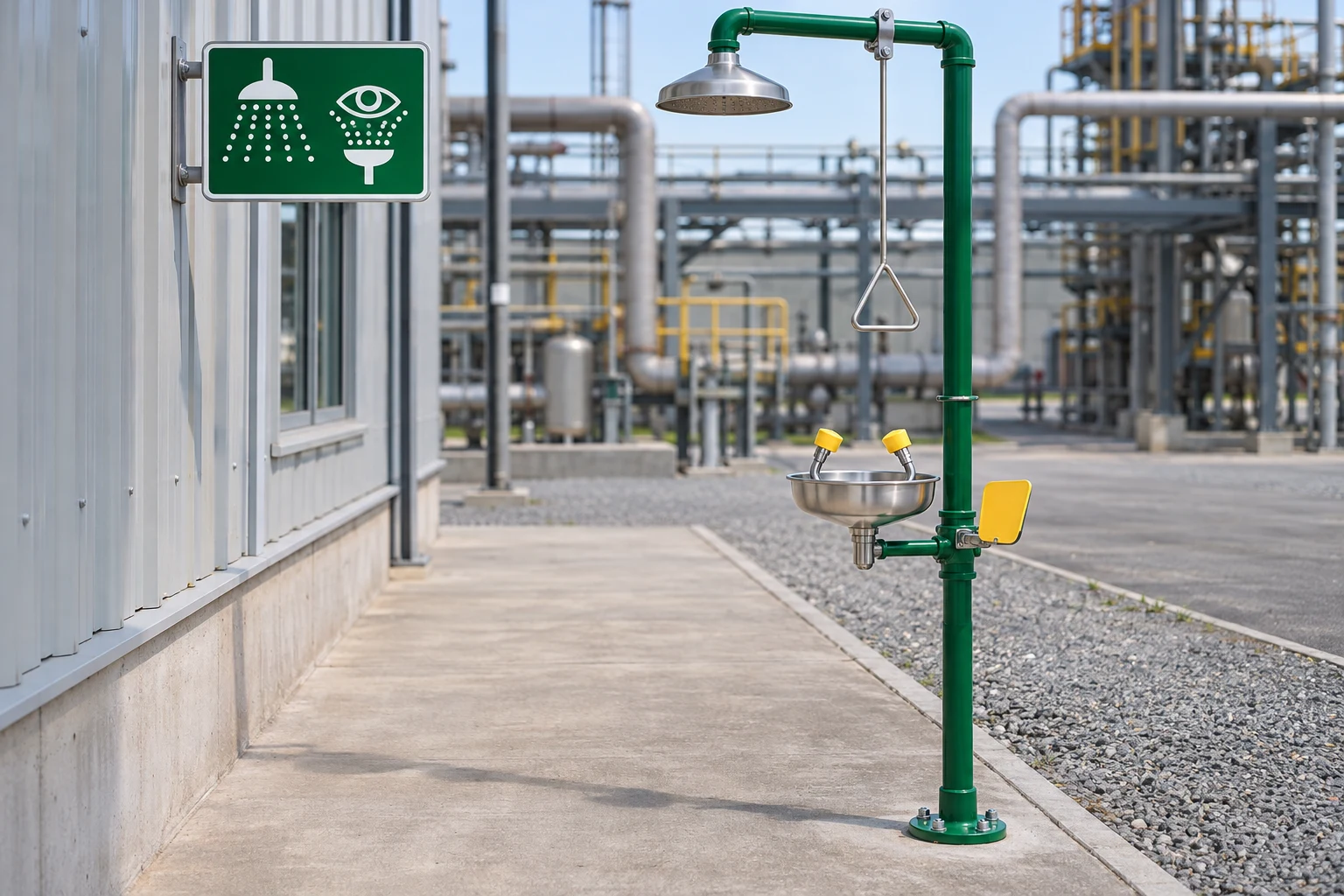
- Shower handle: identify the control and obstruction or damage, and refer required functional checks.
- Eyewash bowl: check usable space and visible abnormalities and connect supply and operation results.
- Location sign: check recognition from work positions and approaches.
- Approach space: check obstacles along the route and in the operating space.
Assign applicable requirements and owners
For workplaces manufacturing or using substances subject to permission, also review Article 465. It addresses readily usable emergency washing and eyewash facilities and maintenance of a clear water supply. Distinguish these requirements from those for controlled hazardous substances when linking facility records.
For laboratories and related facilities, review Article 508. Establish the actual facility and work scope and have the responsible person verify applicability rather than relying only on a site label. Identify the area served by each facility where several types of workplace coexist.
Define communication between equipment management and work preparation. Equipment owners verify supply arrangements and maintenance history; site owners check access and layout changes. Refer installation questions to competent specialists. Record responsibilities and checked scope so one person does not merely assume another has verified it.
Check access from the work position
Trace the route from the actual work position. Look for stored materials, mobile equipment, temporary pipes or hoses, and consider doors and access restrictions. A clear space immediately around the fixture is insufficient if the route is blocked. Coordinate conditions when the route crosses another work area.
KOSHA Technical Support Regulation (KOSHA GUIDE) C-C-16-2026 addresses eyewash and related equipment performance and installation, including unobstructed access and signs. Compare the installed layout with current conditions. Assign removal of new obstacles and verify the route after action.
Record both the work point and the intended facility. Check the designated facility and connecting route rather than selecting one solely because it looks nearby. Reassess previous checks when routes close or storage changes. Assign monitoring of temporary arrangements so renewed obstruction can be detected after work starts.
Handover sequence
| Stage | Owner | Decision or check | Record |
|---|---|---|---|
| Scope and work point | Work and safety owners | Substance, contact point, facility | Location, fixture, unknowns |
| Access and signs | Site owner | Route, obstruction, changes | Route, issue, action owner |
| Space and controls | User and equipment owner | Space, appearance, controls | Checked scope, open checks |
| Supply and maintenance | Equipment and supply owners | Supply, maintenance, evidence | Fixture results, holds |
| Recovery handover | Action owner and verifier | Affected work, controls, recovery | Owner, timing, completion |
| Shift and change | Site owner and recipient | Current conditions and open work | Receipt and next check |
Recognise signs and controls together
Check that location signs remain visible from work positions and approaches and are not hidden by storage or competing information. Match the sign to the facility currently intended for use. Correct both location information and access when layouts change or equipment occupies the space.
Distinguish the shower control from the eyewash control. C-C-16-2026 addresses easily operated valves that remain open after activation. Workers should learn locations and operation under site procedures. Where functional checks are needed, ask the responsible person to use methods suited to manufacturer instructions and site conditions.
Hanging objects on controls or using the surrounding space for storage can impair access and operation. Report visible damage or obstruction against the identified fixture and part. Separate external appearance from verified operating performance. Keep untested functions open for the appropriate check.

Connect usable space and supply readiness
Check that users can approach the eyewash and occupy its intended operating space. Identify structures obstructing controls or position and report covered or visibly damaged washing components. Review provision for both eyes and usable space against the eyewash conditions in C-C-16-2026.
Match supply information to the actual fixture. Check for interruptions, pipe maintenance or open work affecting readiness. Obtain the relevant equipment-specific result rather than relying on a general statement that water is connected. Refer conditions beyond the site owner’s verification scope to the responsible department.
C-C-16-2026 addresses securing supply isolation valves in the open position and protection against freezing. Have the supply owner verify applicable arrangements and prevent unauthorised changes to locks or valve positions. Recheck affected facilities when weather or maintenance changes supply conditions and communicate results to work owners.
Reassess work preparation when a facility is unavailable
Connect a failed or unavailable washing facility to the work relying on it. Identify affected areas and tasks and notify site and safety owners for reassessment. Distinguish marking a defective fixture from providing the required usable washing arrangements for the work.
When considering another facility, check its location, route and suitability for the substance and work conditions. Another eyewash’s existence alone does not establish an acceptable substitute. Refer the decision to competent owners. Maintain necessary protection, including work holds or access restrictions where appropriate, until remaining risks are addressed.
Record the fixture, confirmed abnormality, affected work and actions already taken. Separate action and verification responsibilities and identify the recipient of recovery results. Match completion notices to evidence of readiness for that facility. Keep unresolved items open and assign their next owner.
Retain differences between equipment and completion records
Record discrepancies when records show normal status but access is blocked or supply-related work remains open. Distinguish the previous check from later layout or maintenance changes and identify what needs rechecking. Connect current verification to the work-readiness decision.
Identify checked objects rather than recording only a general satisfactory result. State which owner’s information supports location and route, signs and controls, operating space and supply status. Use this as a site method for communicating checked scope, distinguishing internal record formats from statutory facility requirements.
The personal protection and washing facilities section of KOSHA’s Practical Guide addresses washing facilities at principal handling locations for chemical splashes. Connect that purpose to present readiness: establish that the fixture exists, then resolve unknown access, supply and operation conditions with assigned owners.
Hand over usable conditions at shifts and layout changes
Handover should include current conditions and open actions, not only a fixture location. Identify facilities and tasks affected by temporary storage, route restrictions or ongoing supply maintenance. Recipients define their verification scope and refer discrepancies back to the relevant owners.
Recheck signs and access when work positions or storage change. Compare the previously checked route with the route now required and check recognition of shower and eyewash controls. Have those communicating layout changes include effects on washing-facility access, since subsequent work can obstruct a cleared area.
Before judging work readiness, connect the substance and task, intended fixture, access and operating space, and verified supply and control conditions. Assign open actions and their next verification point while retaining necessary controls. Ensure workers know locations and procedures and site owners can identify unresolved conditions.